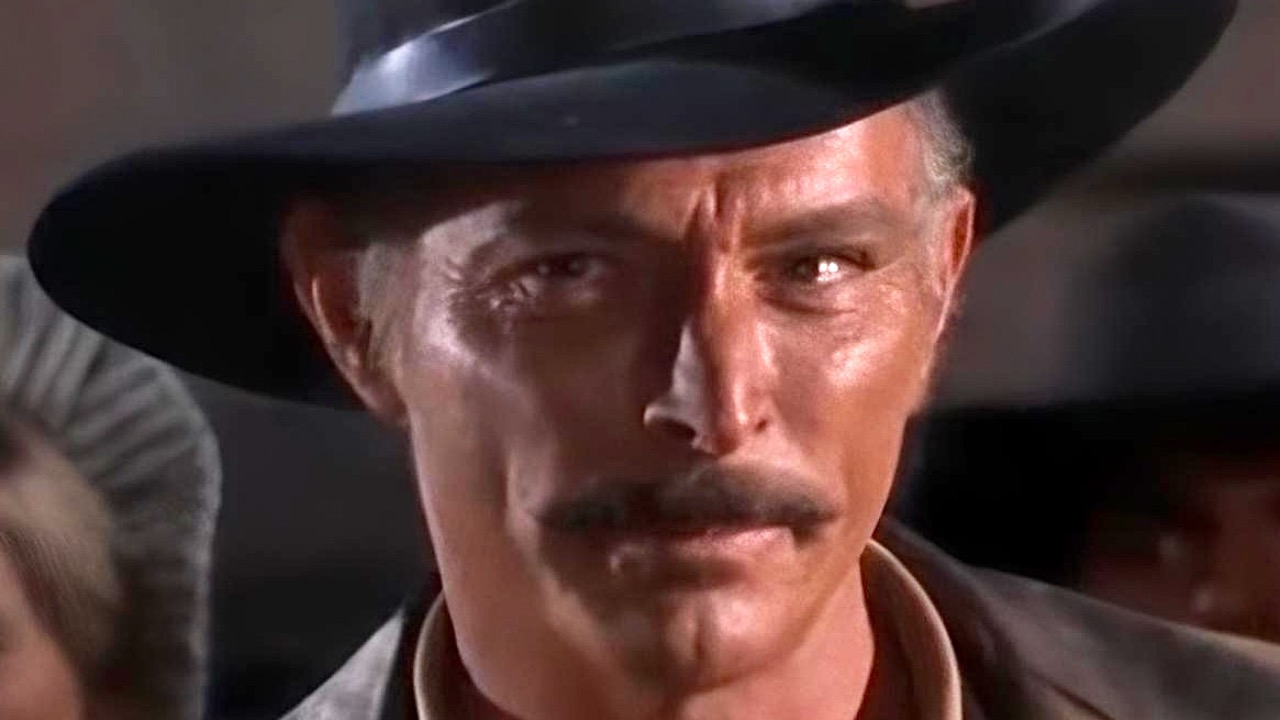
He played villains on screen — but Lee Van Cleef was a decorated WWII veteran in real life
On screen, Lee Van Cleef perfected the look of a cold-eyed killer, the man audiences instinctively pegged as the villain the moment he stepped into frame. Away from the cameras, Clarence LeRoy Van Cleef Jr. had already faced real danger as a decorated United States Navy sailor in the Second World War.
His path from teenage sonarman in the Atlantic and Mediterranean to iconic Western antagonist traces a life that was tougher and more complex than his most famous roles ever suggested.
From Somerville kid to teenage sonarman

Clarence LeRoy Van Cleef Jr. was born in Somerville, New Jersey, in January 1925, the only child of Clarence and Marion Van Cleef. Biographical listings describe him as an American actor who would later become a familiar face in Westerns and crime dramas, but his first uniform was Navy blue rather than a cowboy’s dust coat, a detail that sits quietly behind his public profile on search records.
He enlisted in the United States Navy while still a teenager, part of the wave of young Americans who joined up after the country entered the war. According to service summaries, he trained as a sonar technician, a role that demanded calm focus and technical skill as ships hunted German U-boats in the Atlantic.
Personnel files collected on veteran platforms describe Van Cleef’s assignment to a minesweeper, where sonarmen listened for the telltale signatures of submarines and mines. The job placed him at the center of some of the most hazardous work at sea, since minesweepers operated close to enemy defenses and in waters seeded with explosives.
War at close range in the Atlantic and Mediterranean
Accounts of his military record show that Van Cleef served in both the Atlantic and Mediterranean theaters. On Atlantic patrols, his ship took part in anti-submarine work as Allied forces tried to keep supply lines open against German U-boat attacks, a campaign outlined in detail in profiles of his wartime service.
Later, the Navy sent his minesweeper into the Mediterranean, where Allied planners were preparing for amphibious operations against German and Italian positions. Sources that reconstruct his ship’s movements place it in the waters off southern France during Operation Dragoon, the Allied landing on the French Riviera that supported the push from Normandy by opening a second front.
Operation Dragoon itself was a complex amphibious assault that involved naval bombardment, airborne drops and coordinated landings along the coast. Historical summaries of the campaign describe how minesweepers moved in ahead of the invasion fleet to clear channels of mines and guard against submarines, work that exposed crews to shore batteries and air attack, as documented in overviews of the Dragoon landings.
Van Cleef’s role as a sonarman put him in the middle of that effort, listening for threats in shallow, contested waters while his ship maneuvered under the risk of artillery and mines.
Other narratives of his service describe operations in the Pacific after his time in European waters, with his ship reportedly joining efforts to secure sea lanes and support island campaigns. A veteran profile that traces his postings lists participation in missions that carried the same mix of monotony and sudden danger that defined naval patrol work across the war.
Bronze Star and campaign medals
For his actions during the conflict, Van Cleef received the Bronze Star Medal, one of the United States military’s decorations for heroic or meritorious service in a combat zone. Coverage of his Navy years notes that the award recognized his contribution as a sonarman during operations that targeted enemy submarines and protected Allied shipping, crediting him with work against German U-boats in the Atlantic and Mediterranean, as detailed in accounts of his anti-submarine duty.
Alongside the Bronze Star, his record includes the Asiatic-Pacific Campaign Medal, the American Campaign Medal and the World War II Victory Medal, a combination that reflects service in multiple theaters. Veteran registries and naval museum writeups describe him as a decorated sonarman on a minesweeper, a far cry from the outlaw personas that later defined his film career.
Social media tributes from military memorabilia groups have highlighted this side of his life, noting that the man known for playing ruthless gunfighters with Clint Eastwood first wore the uniform of the United States Navy. One commemorative post about his centennial birthday points out that he was born in Somerville, New Jersey, in 1925 and died at age 64 in 1989, and emphasizes his status as a Navy veteran before he ever appeared on screen.
Other posts that circulate around anniversaries describe how Van Cleef faced real explosions and real fear long before he worked with special effects, and stress that his Bronze Star came from combat conditions rather than studio publicity.
Discharge, stage work and a Hollywood break
Van Cleef left the Navy in 1946, after the war ended and his ship returned to the United States. Service profiles note that he was discharged with the rank of Sonarman First Class, a petty officer grade that reflected technical proficiency and leadership within his specialty.
After the war, he did not immediately head for Hollywood. Biographical entries describe him trying civilian work, then drifting into local theater, where his sharp features and intense presence quickly drew attention. He joined a touring company and eventually reached Broadway, where he appeared in productions that caught the eye of film scouts.
Filmographies compiled on reference sites show that his first significant movie appearance came in the early 1950s, when he was cast in a Western that set the tone for much of his later work. His angular face and piercing stare made him a natural choice for outlaws and hired guns, and casting directors leaned into that image.
By the middle of the decade, he was a regular presence in Westerns and crime pictures, often uncredited or in supporting roles but instantly recognizable to audiences. The war veteran who had listened for submarines now stood on dusty backlots, playing men who drew pistols instead of sonar headphones.
The “Bad” and the weight of typecasting
Van Cleef’s breakthrough came when Italian director Sergio Leone cast him in a string of Spaghetti Westerns alongside Clint Eastwood. In the most famous of these, he played the character widely remembered as the “Bad,” a ruthless professional killer whose black-clad figure helped cement the film’s place in cinema history, a role that biographical entries on Lee Van Cleef describe as central to his legacy.
His performance in those films turned him into an international star, particularly in Europe, where audiences embraced his steely persona. That success also locked him into villainous roles, a pattern that later career summaries on reference pages describe as both a blessing and a constraint.
Through the 1960s and 1970s, he worked steadily in Westerns and action films, often shot in Italy and Spain. He occasionally played more ambiguous or even heroic figures, but the public image that stuck was that of the cold-eyed antagonist, the man audiences assumed would be on the wrong side of the law.
Promotional material and fan retrospectives often highlight his collaboration with Clint Eastwood, framing him as the harder, more ruthless counterpart to Eastwood’s laconic antiheroes. At the same time, military-focused tributes remind readers that the actor who embodied the “Bad” on screen had once been a decorated teenager in uniform.
Remembering the sailor behind the stare
Today, online biographies and encyclopedic entries still introduce Clarence LeRoy Van Cleef Jr. primarily as an American actor known for Westerns and villain roles. Deeper in those same profiles, however, the record of his Navy service, Bronze Star and campaign medals sits as a kind of quiet counterpoint, accessible through detailed biographical listings and veteran databases.
Naval museums and veteran communities have increasingly foregrounded that history, using his story to illustrate how wartime service shaped a generation of performers. One museum blog, for example, walks through his assignments and decorations, then connects them to the discipline and composure that defined his screen presence.

Asher was raised in the woods and on the water, and it shows. He’s logged more hours behind a rifle and under a heavy pack than most men twice his age.