A Doomsday Prepper Ready for WW3 Reveals His Surprising #1 Survival Rule
As nuclear anxiety rises again, one longtime survival enthusiast argues that the smartest preparation for World War Three starts with something far more ordinary than a bunker or a bug-out bag. Derrick James, a 51-year-old doomsday prepper who has spent decades planning for worst-case scenarios, says his top rule is deceptively simple and built around technology people already carry every day. His approach reframes survival not as a fringe obsession but as a series of small, practical steps that any household can take before a crisis hits.
Instead of stockpiling exotic gear, Derrick James urges people to think about how they will stay informed, sheltered and solvent if the world suddenly changes. From a basic hand-cranked radio to a charged phone and a little cash, his advice focuses on information, timing and mindset as the real life-or-death variables in a nuclear emergency.
The prepper behind the rule

Derrick James has been interested in prepping since childhood and has carried that fascination into adult life, where he now treats it as a structured discipline rather than a hobby. At 51, he has spent years refining his routines, evaluating gear and stress-testing different scenarios in which basic services fail or a wider conflict disrupts daily life. His outlook is shaped by the idea that modern societies are more fragile than they appear, especially when they depend on long supply chains and digital infrastructure.
Recent coverage describes a man who has boiled decades of trial and error into a short list of priorities. Rather than bragging about hidden bunkers or elaborate escape plans, he focuses on what an ordinary person in a city flat or a suburban semi could realistically do in the hours before and after a major attack. That lens is important because it keeps his advice grounded in what most readers can actually change, rather than in fantasies about remote compounds or military-grade equipment.
According to one account of his preparations, Derrick James still sees the smartphone as central to his strategy. He argues that virtually every person already owns a device that can store maps, documents and offline instructions, and he encourages people to keep a way to charge it even if the power goes out. In that same profile, he frames his philosophy as a push for simple readiness steps that spread across communities and keep costs lower for everyone, a point captured in his comments about simple ways to part of everyday life.
The surprising number one rule
For all the talk about bunkers and bullets in prepper culture, Derrick James says his number one survival rule is to secure a reliable, non-digital source of information. His advice is blunt. He tells people that the most straightforward thing they can do in an emergency is to buy a hand-cranked radio, something that does not rely on the grid or a phone network. In his view, that single purchase can decide whether a family reacts calmly to official instructions or stumbles blindly into danger.
He stresses that a radio which charges through a crank or a small solar panel can keep working even if a blast or cyberattack knocks out electricity and mobile towers. That device becomes a lifeline to public alerts, evacuation orders and updates on fallout patterns. In one interview, Derrick said that people need to think ahead about how they will hear those messages when usual channels fail, and he paired that warning with a reminder to keep some physical money on hand. His comments about a hand-cranked radio and the need to make sure you frame information and liquidity as twin pillars of resilience.
That focus on a single, low-tech gadget might surprise people who associate preppers with elaborate arsenals or underground shelters. Derrick James argues that none of that matters if people do not know where the danger is moving, which areas are being evacuated or when it is safe to leave shelter. He treats the radio as a compass in the fog of a nuclear event, something that lets an ordinary household match their actions to the best available data rather than to rumors or panic.
How a childhood obsession became a survival system
Derrick James did not arrive at this rule overnight. According to reporting on his background, he has been planning how to survive the end of the world since he was a child. Over time, that early fascination hardened into a methodical approach that breaks big fears into small tasks. He has studied different types of conflict, from conventional wars to nuclear exchanges, and has tried to identify what consistently separates those who survive from those who do not.
One profile notes that he has distilled that lifetime of thinking into bite-sized guidance for people who are only now considering preparedness. Rather than overwhelming newcomers with lists of specialist gear, he introduces them to a few core ideas: stay informed, shelter effectively and manage resources. The same report explains that he has watched global tensions rise and fall and believes that hoping the threat will go away is not a plan. That sentiment is captured in coverage that describes how Derrick James has since childhood and now urges others not to assume that geopolitical risks will simply fade.
His long view makes his current advice more than a reaction to a single news cycle. Derrick James has watched the end of the Cold War, the rise of new nuclear states and repeated scares over missile tests and proxy conflicts. Through each phase, he has tried to adjust his plans to reflect new technology and new vulnerabilities. The prominence he now gives to a hand-cranked radio and a charged smartphone reflects that evolution, since both tools connect directly to the modern information environment that will shape any future crisis.
Why information may matter more than gear
The heart of Derrick James’s argument is that survival in a nuclear event is mainly about timing and decisions, not just about what is in a closet. Information is what allows a person to decide whether to shelter in place, head to a basement or move away from a plume. Without it, even a well-stocked home can become a trap if the occupants walk outside at the wrong moment or flee into a traffic jam that turns into a target.
Emergency planning experts often stress that official broadcasts will direct people to safer areas and warn them about secondary hazards like contaminated food or water. A hand-cranked radio can capture those signals when other systems fail, while a smartphone with emergency alerts turned on can serve as a backup if networks hold. Derrick James’s insistence on keeping a phone charged and accessible aligns with that logic. In one interview he noted that virtually every person has a cell phone and he still sees it as an important survival tool, especially if people keep a way to charge it when the power grid is compromised. His comments on how virtually every person are part of a broader push to turn everyday devices into lifelines.
Information also shapes how people interpret the first flash of an event. If they know what a nuclear detonation looks and sounds like, and if they have heard public guidance on immediate steps, they are less likely to waste seconds on confusion or denial. Derrick James’s focus on radios and phones is therefore not just about hardware but about building a mental habit of looking for verified instructions instead of rumors or social media speculation.
The life or death decision in a nuclear blast
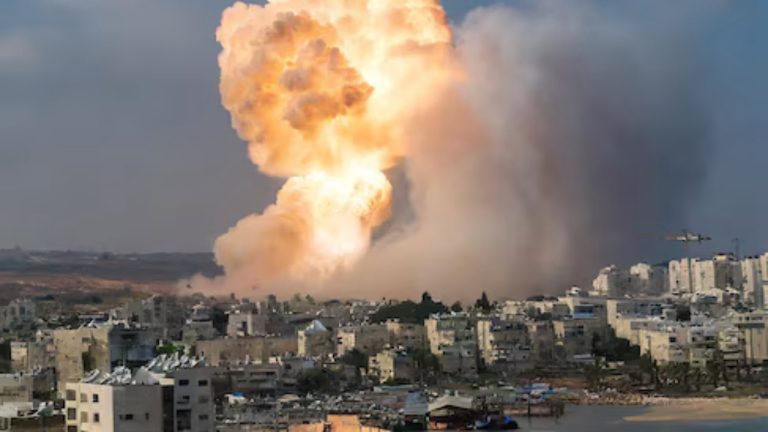
Alongside Derrick James’s personal rule, recent guidance on nuclear survival highlights one particular choice that can determine whether a person lives or dies in the first minutes after a blast. Analysts warn that many people may instinctively try to flee by car or on foot when they see a bright flash or hear an explosion. That reaction feels natural, but it can be fatal if it exposes them to the pressure wave, flying debris or later to radioactive fallout.
Expert advice instead tells people to get inside as fast as possible, ideally into a basement or the center of a concrete building, and to stay there. One report on nuclear safety explains that the key to survival is to move indoors quickly and remain there while staying alert to news. It stresses that solid walls and distance from windows can drastically reduce exposure to radiation and blast effects, especially in the first hours. That guidance is captured in detailed instructions that describe the key to survival as getting inside quickly and staying tuned to official updates.
Those same instructions warn against trying to outrun the event. Attempting to drive or run away can leave people exposed in the open while fallout begins to descend, and it can clog roads that emergency vehicles need. Instead, the advice is to cover the head, take shelter immediately and only move again when authorities say it is safe. Guidance also recommends staying indoors, keeping windows and doors shut and using available media to track the situation. One detailed summary explains that people should avoid the impulse to flee, protect their head, take cover immediately and then stay indoors while monitoring news.
That life-or-death decision connects directly to Derrick James’s priority on information tools. A person who has heard this advice ahead of time and who can receive follow-up alerts through a radio or phone is more likely to make the right call under stress. Without that preparation, panic can drive them into the open at precisely the wrong moment.
Inside the 90 day mindset
Beyond the first hours, Derrick James thinks in terms of weeks and months. He has spoken about planning for a 90-day disruption in which supply chains are broken, banks are offline and basic services are unreliable. In that scenario, he believes households should be able to feed themselves, stay warm and manage basic health needs without assuming that supermarkets or cash machines will work as usual.
His emphasis on finances is especially pointed. In one interview about broader World War Three preparations, he warned that people need to protect their finances and make sure they have cash on hand. He suggested that they diversify into tangible assets like silver in case the banking system freezes or a currency loses value. His advice to protect your financesfits with his broader push to think beyond food and water.
Planning for 90 days does not necessarily mean hoarding vast quantities of supplies. Derrick James tends to frame it as smoothing out shocks. A family might build up a small pantry of shelf-stable foods they already eat, rotate them regularly and keep enough to avoid panic buying during a crisis. They might also keep a modest emergency fund in small notes at home, separate from digital accounts that could be frozen or inaccessible during a cyberattack.
Everyday tech as survival gear
One of the more relatable aspects of Derrick James’s philosophy is his focus on turning ordinary technology into survival tools. He sees the smartphone as a portable library that can hold PDFs of first aid manuals, offline maps, copies of identity documents and checklists for different emergencies. Paired with a small power bank or a solar charger, that phone becomes more than a communication device. It becomes a reference guide when the internet is patchy or down.
He also views simple electronics like battery-powered lanterns, LED torches and compact radios as smarter investments than exotic gadgets. These items are inexpensive, widely available and easy to use under stress. His argument is that people are more likely to rely on tools that feel familiar and that fit into existing routines, such as using a radio in the kitchen or a lantern in the hallway during a blackout.
In interviews, Derrick James has tried to demystify preparedness by pointing out that most households already own much of what they would need for the first phase of a crisis. The missing piece is often power. That is why he repeatedly mentions hand-cranked or solar-powered devices, which do not depend on a functioning grid. A compact radio with a crank handle, a basic power bank and a small solar panel can keep phones and lights running through prolonged outages.
Low tech backups: radios, lamps and blankets
Alongside digital tools, low-tech backups still matter. Emergency planners often recommend that households keep alternative light sources that do not rely on the grid. One widely shared preparedness discussion notes that kerosene lamps are cheap and use very little fuel to light rooms. It also encourages people to think about whether they have food stored that does not require cooking and whether they have a few warm blankets to get through cold nights. That advice on kerosene lamps and blankets fits neatly into Derrick James’s focus on simple, accessible gear.
These items are not glamorous, but they solve concrete problems. Light reduces accidents in dark stairwells and allows people to cook, clean and care for children after sunset. Warm blankets reduce the risk of hypothermia if heating fails, especially for older adults and infants. Shelf-stable foods that can be eaten cold or with minimal preparation keep people from opening a fridge repeatedly and wasting limited generator fuel.
Derrick James’s approach suggests that households should look around their homes and identify which of these low-tech tools they already have and which they might add gradually. A basic kit might include a couple of kerosene or LED lamps, a supply of matches or lighters, extra blankets, a manual can opener and a stash of canned or dried foods that fit the family’s usual diet.
Where to live and how to think about risk
Some of the reporting around nuclear preparedness extends beyond household gear to questions of geography. Analyses of nuclear scenarios often map out which regions would be most affected by direct blasts, which by fallout and which might see secondary disruptions like mass migration or food shortages. One set of reports, discovered through coverage of Derrick James’s comments, examines which states in the United States might be relatively safer in a nuclear conflict and how radiation plumes could spread across the country.
Those reports use models of blast radii, prevailing winds and population centers to outline relative risk. One analysis looks at safest US states to live in a nuclear war, while another maps how a nuclear explosion radiation pattern might translate into death tolls across different regions. A third report focuses on how emergency kits that include radios are being promoted in the context of tensions with Iran, highlighting official concern about how civilians would receive warnings and instructions in a fast-moving crisis, as seen in analysis of emergency kits that emphasize radios.
Derrick James’s personal advice does not try to settle where people should live. Instead, it assumes that most readers will stay where they are and should focus on what is within their control. Geography matters, but so does mindset. He encourages people to acknowledge risk without becoming paralyzed by it. That balance is reflected in his mix of practical tips and his insistence that small steps, taken early, can dramatically improve outcomes even in high-risk areas.
Money, banks and the digital trap
Financial systems are another weak point in a major conflict. Derrick James repeatedly warns that digital money can become inaccessible if banks close, networks fail or governments impose capital controls. In that context, a wallet full of cards and a phone with banking apps may not buy food or fuel. His call to keep some cash on hand is therefore not just about convenience but about basic survival.
He also points to the risk that a currency could lose value rapidly if a war undermines confidence in a country’s economy. That is why he suggests diversifying into physical assets like silver, which can retain value even when markets are chaotic. His comments about protecting finances and diversifying into silver are part of a larger critique of how dependent modern households have become on invisible, digital systems that can fail without warning.
In a nuclear crisis, those vulnerabilities would be magnified. Power outages could shut down card terminals. Internet disruptions could block access to online accounts. A rush on cash machines could empty them within hours. Derrick James’s advice is to treat a modest stash of cash and a few tangible assets as a form of insurance, not as an investment strategy. The goal is to have enough liquidity to buy essentials during the first weeks of disruption, not to profit from turmoil.
Official guidance and prepper culture
Derrick James’s rule about radios and his broader tips on sheltering and finances sit in an interesting space between official guidance and prepper culture. Government agencies around the world have long urged citizens to keep basic emergency supplies, including radios, water, food and first aid kits. In some cases, they have even published checklists for 72-hour survival kits that include items like torches, batteries, blankets and non-perishable food.
Prepper communities have often pushed further, advocating for months or years of supplies, remote retreats and self-sufficient lifestyles. Derrick James occupies a middle ground. He shares the prepper instinct to plan for worst-case scenarios, but his public advice focuses on steps that align closely with mainstream emergency planning. He talks about radios, cash, sheltering indoors and modest stockpiles rather than about armed compounds or elaborate escape routes.

Leo’s been tracking game and tuning gear since he could stand upright. He’s sharp, driven, and knows how to keep things running when conditions turn.