Helicopters drop thousands of logs into rivers to reverse decades of damage
Across the American West, helicopters are now hauling entire trees into remote canyons and dropping them into rivers that were stripped bare decades ago. The goal is not to clear debris but to rebuild the messy, log‑jammed channels that once sheltered salmon, cooled water, and buffered floods. By putting thousands of logs back into the water, engineers, tribes, and land managers are trying to compress centuries of natural recovery into a few intense seasons of work.
The approach looks dramatic, even counterintuitive, yet it is rooted in a simple idea: rivers need wood to function. After generations of removing fallen trees in the name of flood control and navigation, projects from the Pacific Northwest to Northern California are now betting that restoring that complexity can revive struggling fish runs and stabilize entire watersheds.
How rivers lost their wood in the first place
For much of the twentieth century, river managers treated fallen trees as a problem to be solved rather than a habitat to be protected. Logging crews pulled out snags to float timber downstream, flood engineers straightened channels and scraped away jams, and road builders armored banks so that nothing could fall in again. In the Pacific Northwest, that mindset left once‑braided salmon rivers narrowed, simplified, and cut off from their floodplains, a pattern documented in large restoration efforts that now rely on helicopter delivery to undo the damage.
Scientists now describe those interventions as a classic case of good intentions backfiring. By stripping out wood, people removed the roughness that slows water, creates deep pools, and spreads flows across side channels during high water. The result was faster, straighter rivers that scoured their own beds, warmed more quickly in summer, and left salmon and bull trout with fewer places to rest or spawn. Large projects in Washington and Oregon, including what has been called the Northwest’s largest river restoration, are explicit attempts to reverse that earlier philosophy and rebuild the log‑rich structure that used to form naturally.
Why helicopters became the tool of choice
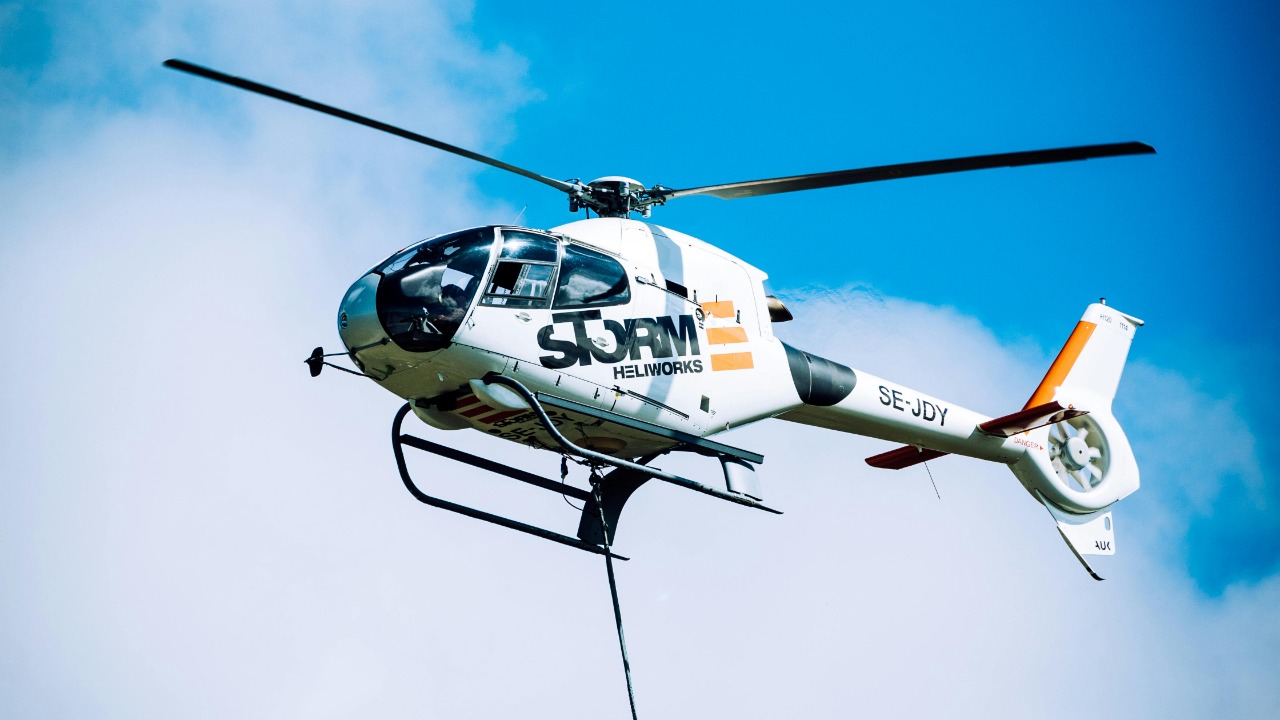
Once managers accepted that rivers needed wood, they ran into a practical problem: the best places to put it back were often the hardest to reach. Many of the most degraded salmon streams sit in steep, roadless valleys where hauling in hundreds of trees by truck would mean carving new access roads through forests and across slopes. To avoid that secondary damage, crews in the Northwest began using aircraft to sling logs from staging areas to precise points along the channel, a technique that has become central to massive restoration efforts.
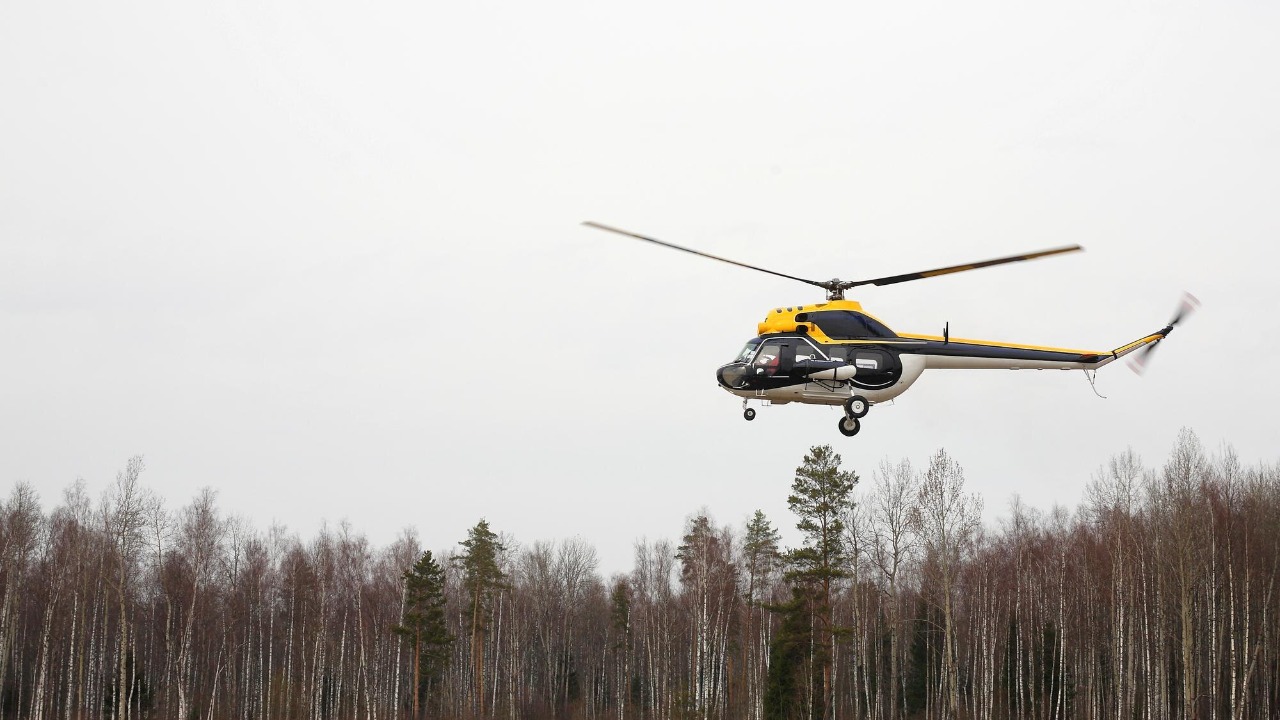
Helicopters can move quickly, placing dozens of trees in a single flight cycle and dropping them exactly where engineers and biologists want them. In some projects, pilots hover low over the water while ground crews guide each trunk into position with radios and hand signals, building engineered jams that mimic the tangle of root wads and trunks that would accumulate over centuries. The approach is expensive on a per‑day basis, but planners argue that it is cheaper and less destructive than blasting new roads into sensitive terrain, especially when the goal is to restore entire river systems rather than a few short reaches.
The Pacific Northwest experiment with 6,000 logs
Nowhere is this strategy more visible than in the Pacific Northwest, where helicopters have been used to drop a reported 6,000 logs into rivers in the name of restoration. Those numbers reflect a deliberate attempt to scale up from small pilot projects to landscape‑level change, with crews targeting long stretches of channel rather than isolated pools. The work is framed explicitly as “Fixing” a decades‑old “Mistake,” a recognition that earlier efforts to clean rivers of wood helped drive salmon declines across the region.
One of the most prominent figures in this push is Nicolai, who is helping lead a project for the Yakama Nation that uses helicopters to rebuild river complexity on tribal lands. In that work, logs are not just habitat features but tools of cultural restoration, meant to support salmon that are central to Yakama identity and treaty rights. The same story of large‑scale log placement appears in coverage of Northwest rivers more broadly, where tribal biologists, federal agencies, and local partners are coordinating to return wood to channels that have not seen natural jams in generations.
Inside the Northwest’s largest river restoration
In Washington, one high‑profile project has been described as the Northwest’s largest river restoration, with helicopters ferrying logs from upland stockpiles to a broad valley floor. There, crews arrange the trees into clusters that will catch additional debris during floods, gradually growing into sprawling structures that reshape the flow. Reporting on that effort notes that the goal is to create nooks and crannies where salmon and bull trout can swim and spawn, essentially rebuilding the underwater architecture that industrial logging erased.
Almost 40 years ago, Scott Nicolai watched these rivers change as wood was removed and channels were simplified, and he now works to put that complexity back. In interviews about Northwest streams, he has described how engineered log jams can reconnect side channels, raise water tables, and cool summer flows, all of which benefit salmon. The scale of the project, with helicopters cycling repeatedly between staging areas and river bends, underscores how far managers are willing to go to accelerate processes that would otherwise take centuries.
Remote California creeks and the Chinook helicopter
The same logic is now being applied in Northern California, where a Chinook helicopter has been used to drop giant root wads into a remote creek that once supported strong runs of coho salmon. In one operation, the aircraft reportedly dumped 125 logs into a 25‑mile stretch, placing them as deep as 45 feet in some pools. The aim is to restore coho habitat and reverse decades of environmental destruction tied to historic logging, which left the creek over‑widened and starved of structure.
Coverage of that project emphasizes the sheer scale and power of the aircraft, with the Chinook swinging massive root balls into narrow canyon reaches that would be nearly impossible to access from the ground. One report on the California work notes that the helicopter is one of the largest in operation in the United States, a reminder that modern aviation is being repurposed for ecological repair rather than extraction. For local communities and conservationists, the sight of those logs splashing into deep pools is both a spectacle and a symbol of a broader shift in how people value wild rivers.
Isolated Northwestern rivers and the push to cool water
Beyond the marquee projects, helicopters are also dropping thousands of logs into isolated rivers across the Northwestern US, where access is limited and climate pressures are mounting. Reports describe Helicopters dumping this wood specifically to reverse decades of poor river management, recreate pools, and cool the water for fish that are already stressed by warming summers. In these remote basins, even small changes in shade and depth can mean the difference between lethal temperatures and survivable ones for cold‑water species.
The strategy hinges on how wood changes hydraulics. When a large log falls into a river, it can force water to scour a deep hole on its downstream side, while also backing up flow and pushing some of it into side channels or floodplain wetlands. That combination of deeper pools and slower, more braided flow tends to lower peak temperatures, especially when combined with riparian vegetation that grows up around the new structures. The projects in the Northwestern US are explicit about using wood to engineer those outcomes, treating each helicopter load as a building block in a cooler, more resilient river corridor.
Grays River, Beaver Creek, and local proof of concept
Not all of the action is on big, headline‑grabbing rivers. On Washington’s Grays River, for example, a recent project used aircraft to place whole trees into the channel as part of a long‑planned restoration milestone. A video shared by Rayonier showed a helicopter hovering over the water while crews guided each trunk into place, with the caption noting, “Yes, that is a helicopter placing trees into a river,” and celebrating the Grays River work as years in the making. For local residents, the images offered a concrete example of how abstract restoration plans translate into on‑the‑ground change.
Over the summer, a similar scene played out on Beaver Creek in east Multnomah County, Oregon, where a helicopter hefted timber into a roughly mile‑long stretch that feeds the Sandy River. In a video of the Beaver Creek work, a project representative explains that the tributary is an important part of the Sandy River system and that the added wood is meant to improve habitat along that entire corridor. These smaller projects serve as proof of concept, showing that the same techniques used on marquee salmon rivers can also benefit local streams that flow through working forests and rural communities.
The federal test: compressing centuries into a few years
At the national level, the U.S. Forest Service is treating these helicopter projects as a test of whether massive river restoration can be scaled up across public lands. In one initiative, the agency is collaborating with tribes and partners to drop logs into key salmon rivers in an effort to revive habitat that would otherwise take centuries to recover on its own. Reporting on this Forest Service work notes that the goal is to accelerate natural processes, using helicopters to jump‑start log jams that would have formed slowly as old‑growth trees toppled over time.
In that context, the flights are less a one‑off spectacle and more a prototype for how federal agencies might respond to intertwined crises of biodiversity loss and climate stress. By coordinating with tribal nations, state agencies, and local landowners, the Forest Service is trying to align river restoration with broader watershed planning, including road removal, culvert replacement, and riparian planting. The helicopter drops are the most visible piece of that puzzle, but they sit within a larger experiment in how quickly people can help rivers remember what they once knew.
Ecological payoffs and the risks of getting it wrong
Early results from these projects suggest that the ecological benefits can be significant. In reaches where helicopters have placed dense clusters of logs, biologists report more frequent pools, greater variation in flow, and increased use by salmon and trout. On some Northwest rivers, the new structures have already begun to trap additional wood and sediment, building out the kind of multi‑layered habitat that young fish need to survive winter floods and summer droughts. Coverage of river restoration efforts emphasizes that these changes are exactly what designers hoped to see when they sketched out the first log‑jam blueprints.
There are, however, risks and trade‑offs. Poorly placed wood can redirect flow toward vulnerable banks or infrastructure, and some landowners worry about how new jams might affect flood levels or recreational access. Engineers respond that careful modeling and site selection can minimize those impacts, and that the alternative is to leave rivers in a simplified state that is already failing fish and amplifying climate extremes. As helicopters continue to drop logs into rivers from the Pacific Northwest to California, the central question is not whether people should intervene, but how precisely they can mimic the messy, dynamic systems that forests and rivers once built together on their own.

Leo’s been tracking game and tuning gear since he could stand upright. He’s sharp, driven, and knows how to keep things running when conditions turn.