How grizzly bears are steadily expanding their range in Montana
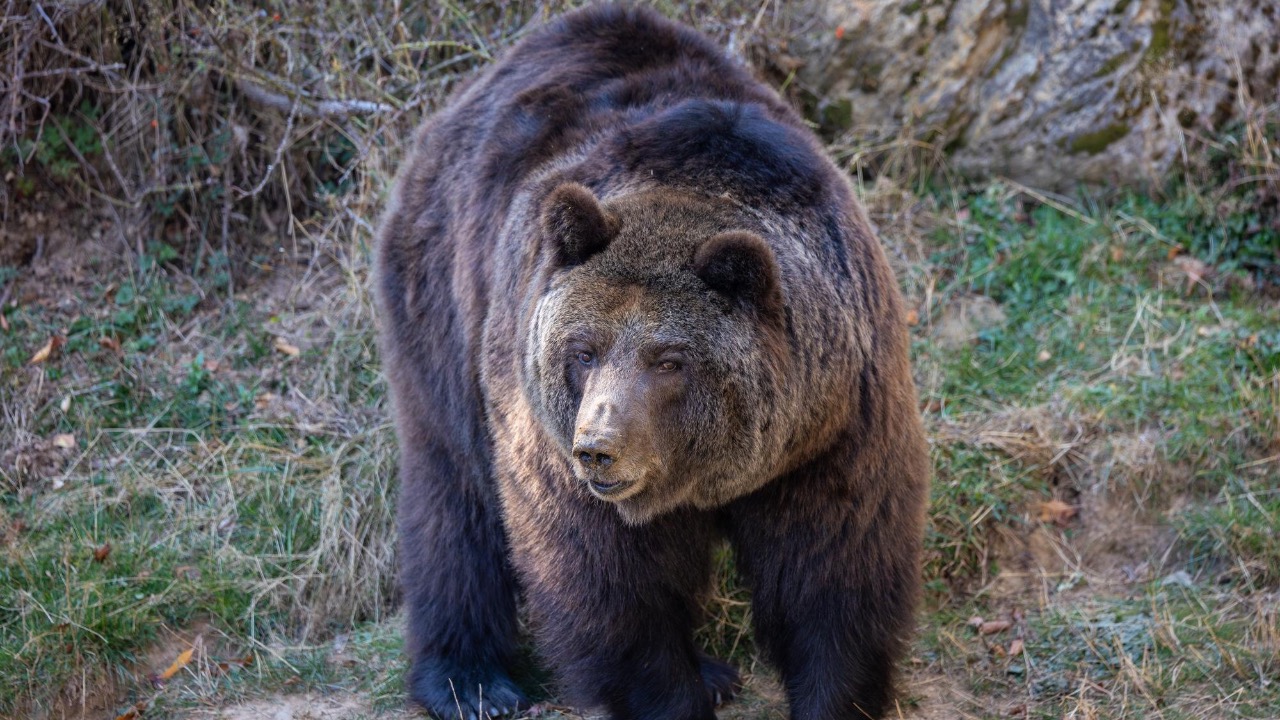
Grizzly bears are no longer confined to a few remote pockets of Montana. After decades of intensive recovery work, they are steadily reclaiming valleys, foothills, and prairie edges where they had been absent for generations, reshaping both ecosystems and daily life in rural communities. The expansion is measurable on maps and in statistics, but it is also visible in trail‑camera images, roadside sightings, and the way residents talk about living with large carnivores again.
As their range grows, so do the stakes. Wildlife managers are racing to keep conflict in check, scientists are tracking how far and how fast bears are moving, and ranchers and recreationists are adapting to a new normal in which a grizzly could appear almost anywhere in the state. I see the story of Montana’s grizzlies as a test of whether people and a recovering apex predator can share a landscape that is far more developed and fragmented than it was when bears last roamed it freely.
From strongholds to statewide presence
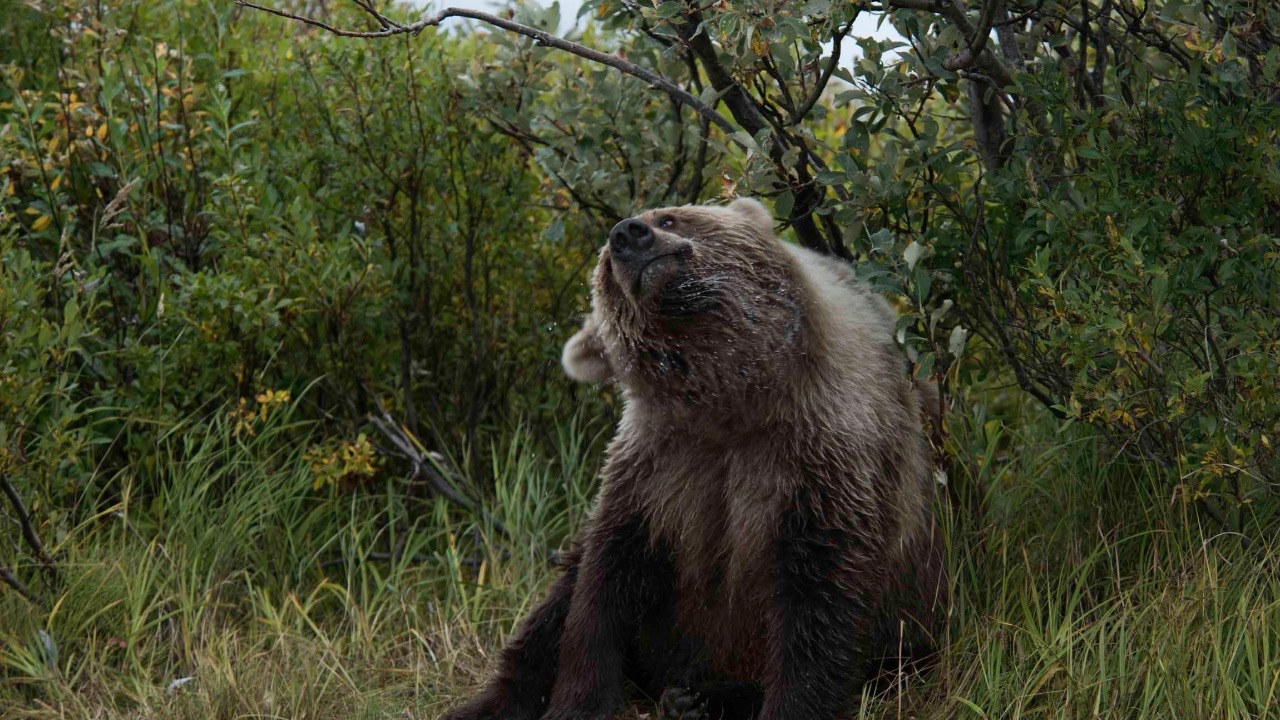
For much of the twentieth century, grizzlies in Montana survived mainly in a few rugged refuges, especially around Glacier National Park and the high country near Yellowstone. That picture is changing. The state’s own biologists describe Montana as being at the forefront of grizzly bear research and recovery, and they credit “After decades of hard work by all Montanans” for the fact that populations are now strong enough to push into new terrain. Federal recovery planning, detailed in the grizzly bear recovery program’s annual report, has reinforced that trajectory by tying habitat protection and mortality limits to clear demographic goals.
Those efforts are now visible on the ground. A recent analysis of occupied habitat found that the overall range of grizzlies in the Lower 48 increased by 4% from 2022 to 2024, covering a total of 59,057 square miles. Much of that growth is anchored in Montana, where the Northern Continental Divide and Greater Yellowstone populations form the core. As those core areas fill up, younger bears, especially males, are dispersing outward, turning what used to be isolated strongholds into a more continuous, statewide presence that now reaches well beyond traditional mountain parks into working ranchlands and small towns.
Mapping a 12 percent surge in the Northern Continental Divide
The most dramatic expansion is unfolding around the Northern Continental Divide, the sprawling ecosystem centered on Glacier and the Bob Marshall country. Researchers report that occupied habitat in this region has grown by 12%, a shift that is not just a statistical blip but a geographic leap into new mountain ranges and valleys. According to the analysis of Areas where the range expanded, bears are now using the northern Sapphire Mountains and the Big Belts north to Interst, places that only a decade ago were more associated with elk camps than with grizzly tracks. Those incursions matter because they begin to stitch together what had been gaps between major recovery zones.
Where grizzly populations are growing, the occupied range is also pushing outward from the core Northern Continental Divide Demographic Monitoring Area, a trend that managers track closely through FWP sightings and mortality data. I see this 12% surge as a sign that the population is not just stable but robust enough to send pioneers into fringe habitats, which in turn raises new questions about how far bears will go and how quickly people in those edge landscapes can adapt their practices to avoid conflict.
Yellowstone’s contraction versus Montana’s expansion
The picture around Yellowstone is more complicated. Recent monitoring shows that the Greater Yellowstone Eco population has seen its occupied range contract by 4%, even as the Northern Continental Divide bears gain 12% more ground. Reports on the Yellowstone Yellowstone region note that overall, grizzlies, which are classified as threatened, still occupy an area roughly the size of Yellowstone National Park, but the edges of that range have pulled back in some directions. Another account emphasizes that the other 29% of the occupied range fell outside of this core area on the fringes of the mountainous, public land dominated ecosystem, where habitat and human pressures are in flux.
In Montana, that contrast is striking. While parts of the Greater Yellowstone range have held steady or retreated in places, the Northern Continental Divide population has continued to push outward, tightening the gap between the two major bear strongholds. Coverage of the shifting footprint notes that the other major population of grizzlies in the region, centered on the Northern Continental Divide, has expanded even as Yellowstone’s has stayed steady and retreated in places, a pattern highlighted in both regional and state coverage. I read that divergence as a reminder that “grizzly country” is not monolithic: climate, food sources, and human land use can push a population’s edge inward in one ecosystem even as it surges outward in another.
Bangtail Range and the new frontier of sightings
Nothing captures the new geography of grizzlies quite like the recent confirmation of a bear in the Bangtail Range east of Boze. Earlier this year, Montana Fish, Wildlife & Parks staff verified that a grizzly had moved into the Bangtail Range, a forested island of mountains between the Bridgers and the Crazy Mountains. In the same release, Montana Fish, Wildlife & Parks noted that grizzlies now occupy habitat across roughly two thirds of the state, a figure that would have been unthinkable when recovery planning began. That single bear in the Bangtails is a symbol of how far individuals are willing to roam when core habitats are saturated.
Biologists who have followed this particular dispersal point out that when offspring, especially young males, leave their mothers, they are the ones most likely to push into new country that includes subdivisions, ranches, and recreation areas. A detailed account of the Bangtail bear’s journey describes how such pioneers navigate a mosaic of public land, private timber, and agricultural ground, often crossing highways and fence lines that did not exist when grizzlies last used these routes. One field report on this individual notes that “When offspring, especially young males,” disperse, they are the ones showing up near Bozeman area subdivisions, rangeland, and trailheads, a pattern explored in depth in a field dispatch.
Central Montana and the return to historic habitat
Perhaps the most profound shift is happening not in the high peaks but in the rolling heart of the state. In recent years, grizzlies began moving back into their historical habitats in central Montana, places where older residents might remember only black bears or no bears at all. Sightings near towns like Lewistown underscore how far the species has come from its mountain refuges, and they also highlight the role of prairie river bottoms and coulees as travel corridors. I see these returns as ecological homecomings, but they are also social experiments in places where livestock operations and grain fields dominate the economy.
Federal recovery planning always envisioned grizzlies using multiple ecosystems, and the official Recovery Zones map out six recovery areas, or ecosystems, in the lower 48 states. As bears move into central Montana, they are effectively testing the connective tissue between those zones, especially between the Northern Continental Divide and the Bitterroot. A new study on habitat use in the Bitterroot ecosystem in Montana predicts where bears are most likely to settle if they continue this eastward and southward push, giving managers a chance to anticipate conflicts before they erupt.
Mission Valley, Flathead and a more human dominated landscape
Nowhere is the collision between expanding bears and human settlement more vivid than in the Mission Valley and the Flathead region. These are fertile, heavily farmed landscapes framed by mountains, with towns, highways, and the Flathead Reservation at their core. As grizzlies move off the steep slopes of the Mission and Swan ranges and into hayfields and pastures, encounters with people and livestock have climbed. One detailed profile of a long lived female in this area notes that “The raw data is alarming to biologists, but in the context of a grizzly bear population expanding into an increasingly human dominated landscape, it is not all that surprising,” a line that captures the uneasy balance in the Mission Valley.
State biologists emphasize that Montana remains at the forefront of grizzly bear research today, and that After decades of hard work by all Montanans, grizzly bear populations have rebounded to the point where there is a greater potential for conflicts. That same assessment, echoed in another state overview, underlines a central tension I keep hearing from residents: success in conservation has created a new era in which bears and people share space in ways that neither side has experienced in living memory.
Public opinion and the politics of coexistence
Despite the risks, support for grizzlies in Montana is surprisingly strong. A 2023 study found that over 80 percent of Montanans think that grizzly bears have a right to exist and that residents must learn to live with them, even as conflicts increase. That level of backing gives wildlife agencies and local governments political room to invest in coexistence tools rather than defaulting to lethal control. It also shapes the tone of community meetings, where the debate is often less about whether bears should be on the landscape at all and more about how to keep them out of calving pastures and school bus stops.
I see that attitude reflected in how people talk about specific places. In the Flathead and Mission valleys, for example, residents describe grizzlies as both a source of pride and a daily management challenge, a duality that shows up in the way they support electric fencing programs and carcass pickup while also demanding swift action on problem animals. A feature on how Sep era Montanans are making space for grizzlies notes that not all the news is grim, and that many residents see coexistence as part of their identity as people who live in a wild ecosystem. A companion piece on the same survey of Sep attitudes underscores that this 80 percent support is not a fringe view but a mainstream expectation that policy will lean toward coexistence.
Conflict dashboards, data and the new management toolkit
As grizzlies spread into more populated areas, Montana has responded with new tools to track and manage conflict in near real time. In a recent initiative, the state rolled out a public facing conflict dashboard that maps where bears are getting into trouble, from chicken coops to cornfields. The announcement, shared through a Media release, framed the tool as a way for residents to see patterns and for managers to prioritize outreach. Another description of the rollout, labeled as Home / RMEF / Media Montana Unveils Grizzly Bear Conflict Dashboard, quotes FWP Director Christy Clark explaining that the goal is to give people a clearer picture of where conflicts are happening so they can adjust their own practices.
The state’s own description of the program, categorized under General and introduced with the word Below in the release from Montana Fish, Wildlife, Parks, emphasizes that In Montana, grizzly bear populations have expanded into areas where they have not been seen for decades, which in turn has increased the need for transparent information about where conflicts are occurring. I see this dashboard as part of a broader shift toward data driven coexistence, in which managers use real time reports, collar data, and public mapping to move quickly on problem spots rather than waiting for annual summaries. It also reflects a recognition that as bears occupy roughly two thirds of the state, as noted in the General January update, conflict management is no longer a niche task but a core function of wildlife agencies.

Leo’s been tracking game and tuning gear since he could stand upright. He’s sharp, driven, and knows how to keep things running when conditions turn.