Hundreds Rally for Gun Rights in Downtown Richmond, Virginia
Hundreds of gun rights supporters filled downtown Richmond, Virginia, gathering near the Virginia Capitol to protest a proposed assault weapons ban and to signal their continued influence at the seat of state government. Organizers had predicted a much larger turnout, but those who came framed the event as a test of resolve for Second Amendment activists and a direct message to Gov. Abigail Spanberger.
The rally unfolded in Capitol Square and surrounding streets, where advocates waved flags, hoisted signs, and listened to speakers who cast the legislation as an overreach that would punish law-abiding owners while doing little to curb violent crime. The crowd’s size, tone, and message offered a snapshot of how gun politics in Virginia are evolving under a governor who has backed tighter firearm regulations.
From expectations of thousands to hundreds on the ground
In the days leading up to Saturday’s gathering in Richmond, organizers publicly predicted a surge of activists. Coverage ahead of the event described how Thousands were expected to converge on downtown, with supporters treating the gathering as a major test of political strength. That rhetoric reflected the high stakes that gun rights groups attached to the proposed assault weapons ban and the broader package of firearm regulations under debate.
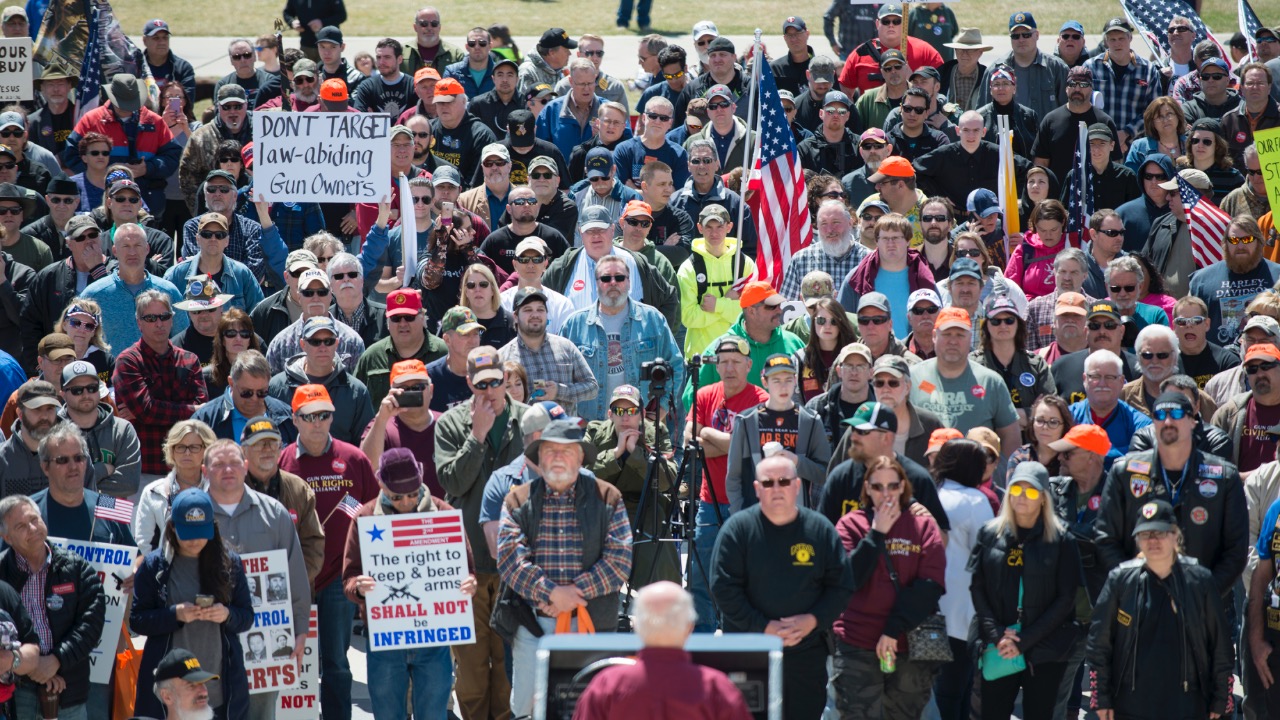
When the day arrived, the actual turnout fell short of that advance estimate. Local reporting from Capitol Square described Hundreds of advocates gathered downtown, not the thousands that had been forecast. Attendees filled a section of Capitol grounds and nearby sidewalks, but the crowd stopped well short of the overflow scenes that some activists had envisioned when promoting the rally.
The gap between expectation and reality shaped the political optics. Supporters argued that the people who did attend represented a committed core willing to show up in person, rather than simply registering their views online or through petitions. Critics, by contrast, pointed to the smaller turnout as a sign that public sentiment in Richmond and across Virginia might be shifting toward acceptance of tighter gun regulations.
Capitol Square as a stage for Second Amendment politics
The choice of location was deliberate. Second Amendment supporters gathered at a gun rights rally in Capitol Square in Richmond, Va., using the symbolic heart of state government as a backdrop for speeches that repeatedly invoked constitutional rights. The crowd positioned itself beneath the bell tower and along the walkways that lead directly to the legislative chambers, underscoring the focus on the Virginia General Assembly and the governor’s office.
Speakers and attendees framed the rally as a defense of the Second Amendment and a stand for what they described as a right to protect themselves and their families. Some participants carried signs that referenced the Bill of Rights. Others wore shirts and hats that signaled affiliation with national gun rights organizations or local grassroots groups that have mobilized around firearm legislation in recent years.
For many in attendance, the Capitol grounds represented more than a convenient venue. They treated the location as a reminder that firearms policy in Virginia is shaped within view of the same streets where they were chanting and marching. The proximity to lawmakers’ offices and the governor’s workspace gave the event a direct, confrontational edge, even as the rally itself remained peaceful.
Focus on the proposed assault weapons ban
The central policy target of the demonstration was a proposed ban on certain semi-automatic firearms that supporters of the legislation describe as assault weapons. Gun rights advocates gathered at the Capitol Saturday to urge Gov. Abigail Spanberger to veto the bill, which would prohibit the future sale of a defined category of rifles and related equipment in Virginia.
Speakers argued that the measure would unfairly target law-abiding owners and retailers while doing little to deter criminals who already ignore existing laws. They contended that the legislation would restrict access to popular rifles and magazines that many Virginians use for sport shooting, hunting, or home defense. Several advocates emphasized that the bill would allow current owners to keep their firearms, but they insisted that a ban on new sales still violated the spirit of the Second Amendment.
Opponents of the rally’s message have framed the same legislation in starkly different terms. Supporters of the proposed ban describe it as a public safety measure designed to reduce the availability of firearms that are often used in the most deadly mass shootings. In advance of the event, one supporter of the legislation called the pending vote a critical opportunity to keep communities safe from firearms that can inflict large numbers of casualties in a short period of time.
This clash of perspectives on the same bill gave the Richmond rally a sharp edge. To those on the Capitol steps, the proposal represented a first step toward broader confiscation or future restrictions. To those backing the legislation, it marked a targeted response to a subset of weapons that have become central to debates over mass shootings nationwide.
The message from the podium: “Veto it”
From the makeshift stage beneath the Capitol bell tower, speakers hammered a simple message aimed directly at the governor: veto it. Advocates who took the microphone urged Gov. Abigail Spanberger to reject the assault weapons bill and any related restrictions that they saw as part of a broader push to limit gun ownership in Virginia.
One recurring theme was the argument that responsible gun owners should not be blamed for crimes committed by others. Speakers described themselves and their supporters as law-abiding citizens who pass background checks, store firearms safely, and use them for legitimate purposes. They warned that the proposed ban would open the door to further regulations that could eventually affect handguns, shotguns, and other common firearms.
Another line of argument focused on self-defense. Advocates cited the right to protect themselves as a core reason for opposing the legislation. They contended that limiting access to certain rifles or magazines would put them at a disadvantage against criminals who obtain weapons illegally. Some speakers pointed to national debates over crime and public safety, arguing that policymakers should focus on prosecuting offenders rather than restricting firearms.
The rally also featured more combative rhetoric. A video clip from the event captured one advocate declaring that fight and that this is Virginia, language that framed the debate as a test of state identity and tradition as much as a policy dispute. That framing resonated with attendees who view Virginia’s history and culture as closely tied to gun ownership and individual rights.
Who showed up: activists, families, and political groups
The crowd in downtown Richmond reflected a cross section of the modern gun rights movement. Long-time activists who have attended previous rallies at the Virginia Capitol stood alongside younger supporters who said they were drawn by social media posts and calls from local groups. Some families brought children, treating the event as a civics lesson about the legislative process and constitutional rights.
Several organized factions were visible among the attendees. Signs and banners referenced national gun rights organizations, local shooting clubs, and regional coalitions that have formed around opposition to firearm restrictions. A post describing the rally referred to Virginia Patriots Rally and portrayed the event as a stand against what it called a gun grab at the State Capitol.
That language reflected a broader narrative that has taken hold among some activists, who see the current legislative push as part of a sweeping package of anti-gun bills. In their view, the assault weapons proposal is only one piece of a larger agenda that could include expanded background checks, waiting periods, or restrictions on where firearms can be carried. By rallying at the Capitol, they aimed to show that such measures would face organized resistance.
At the same time, the presence of families and older attendees lent the event a more traditional protest atmosphere. People stood in clusters, listened quietly to speeches, and occasionally broke into chants. While some participants were armed, reports from the scene described a peaceful gathering without major confrontations or arrests.
Law enforcement, security, and a peaceful day in Richmond
Given the charged nature of gun politics and the expectation of a large turnout, law enforcement took visible steps to manage security around Capitol Square and the surrounding streets. Officers monitored entrances to the grounds, directed pedestrian traffic, and kept watch for any signs of tension between rally-goers and passersby.
Despite the presence of firearms among some attendees, the event proceeded without major incident. Reports from the scene described a peaceful crowd that complied with instructions from officers and Capitol staff. The absence of significant confrontations allowed both supporters and critics of the rally to focus on the political message rather than any security breakdown.
For city officials and state authorities, that outcome represented a successful test of their ability to host politically charged demonstrations in the heart of Richmond. Capitol Square has seen large gatherings in the past, including events where Thousands of gun-rights activists crowded the streets, chanting and waving signs. Compared with those earlier demonstrations, the latest rally was smaller but similarly orderly.
Media, messaging, and the digital echo
The Richmond rally did not unfold in isolation. Local television crews, photographers, and independent streamers documented the speeches and crowd reactions, while social media accounts amplified selected moments to wider audiences across Virginia and beyond. Clips from the event circulated on platforms such as Facebook and YouTube, often accompanied by commentary that framed the rally in sharply partisan terms.
Some of that amplification came from personalities and pages that regularly cover gun policy debates. Posts from accounts such as ScottWiseCBS6 and VirginiaThisMorning helped spread images and quotes from the Capitol grounds, bringing the voices of speakers and attendees into the feeds of viewers who were not present in downtown Richmond.
Behind the scenes, the infrastructure that supports local coverage also played a role. The rally drew on a media ecosystem that includes digital platforms like gdmrichmond.com, broadcast operations linked to wwbt.graydigitalmedia.com, and corporate networks connected to gray.tv and zeam.com. These outlets and partners help ensure that events at the Virginia Capitol reach audiences well beyond the immediate Richmond area.
On the policy side, coverage of the proposed assault weapons ban and the governor’s decision-making process has flowed through organizations linked to nextgen TV and other broadcast and digital services. Together, these channels shape how Virginians understand both the content of the legislation and the intensity of the opposition that gathered in Capitol Square.
Organizers, logistics, and the push for a larger movement
Behind the microphones and signs, the Richmond rally reflected weeks of planning by local organizers. One of the most visible figures was Goodman, who organizing the event and has been active in mobilizing gun rights supporters across the region. Goodman and others promoted the rally as a chance to send a unified message to state leaders and to demonstrate that Second Amendment advocates remain engaged in Richmond politics.
Organizers coordinated transportation, signage, and speaking schedules, while also working with authorities to ensure that the event complied with security and permitting requirements. They used social media, email lists, and local networks to encourage attendance, often framing the day as a once-in-a-generation opportunity to influence the direction of firearm policy in Virginia.
Even with turnout in the hundreds rather than the thousands, organizers portrayed the rally as a starting point rather than a culmination. They urged attendees to stay involved by contacting legislators, tracking committee hearings, and preparing for future elections. The visible presence of structured groups, from local clubs to statewide coalitions, suggested that the movement has organizational depth that extends beyond a single gathering in Capitol Square.
Spanberger, the General Assembly, and the next steps
The political impact of the Richmond rally ultimately depends on how Gov. Abigail Spanberger and the Virginia General Assembly respond. The governor now faces a decision on whether to sign or veto the assault weapons bill that drew protesters to the Capitol steps. Her choice will shape not only the immediate legal status of certain firearms in Virginia but also the broader trajectory of gun policy in the state.
Lawmakers who supported the legislation will be watching closely to see whether the pressure from gun rights advocates affects Spanberger’s calculus. They have framed the bill as part of a broader effort to address gun violence, particularly incidents involving weapons that can fire rapidly and accept large-capacity magazines. For these legislators, a signature from the governor would validate months of work and signal that Virginia is prepared to adopt stricter firearm regulations despite organized opposition.
Opponents of the bill, including those who rallied in Richmond, argue that a veto would show that Spanberger is willing to stand up to what they describe as a sweeping package of anti-gun measures. They contend that such a move would preserve access to popular rifles and prevent what they see as a slippery slope toward more restrictive laws. Their chants of “veto it” were aimed at reminding the governor that gun rights supporters remain a vocal constituency.
Regardless of the outcome, the General Assembly is likely to remain a battleground over firearms policy. Future sessions could see renewed efforts to pass similar legislation or to roll back existing restrictions, depending on which side gains political momentum. The Richmond rally, with its mix of high expectations and modest turnout, will serve as one data point in that ongoing struggle.
How this rally fits into Virginia’s broader gun debate
Virginia has long been a focal point in national debates over gun rights and gun control. The state’s mix of urban centers, suburban communities, and rural areas has produced a complex political map in which views on firearms vary widely. In recent years, shifts in suburban voting patterns and high-profile incidents of gun violence have fueled calls for new regulations, even as rural and conservative regions continue to prioritize expansive Second Amendment protections.
The Richmond rally highlighted that tension. On one side stood activists who see the right to keep and bear arms as central to their identity and to Virginia’s history. They point to the state’s role in the founding era and to a long tradition of hunting, sport shooting, and self-defense. On the other side are residents and officials who argue that modern firearms technology and patterns of violence require updated laws that go beyond the frameworks of past decades.

Asher was raised in the woods and on the water, and it shows. He’s logged more hours behind a rifle and under a heavy pack than most men twice his age.