Why Gun Bans Fail: Tucker Carlson’s Viral Takedown of Piers Morgan on UK Crime Stats
Gun control arguments rarely go viral, but a recent on-air clash between Tucker Carlson and Piers Morgan turned a dry debate about crime statistics into a global talking point. At the center was a bold claim that strict firearm bans in Britain have failed to deliver the safety their supporters promise, and that London is far less secure than its defenders admit. The exchange distilled years of argument about freedom, policing and risk into a single, sharp confrontation over what the numbers really show.
The viral clash that reignited the UK versus US gun debate
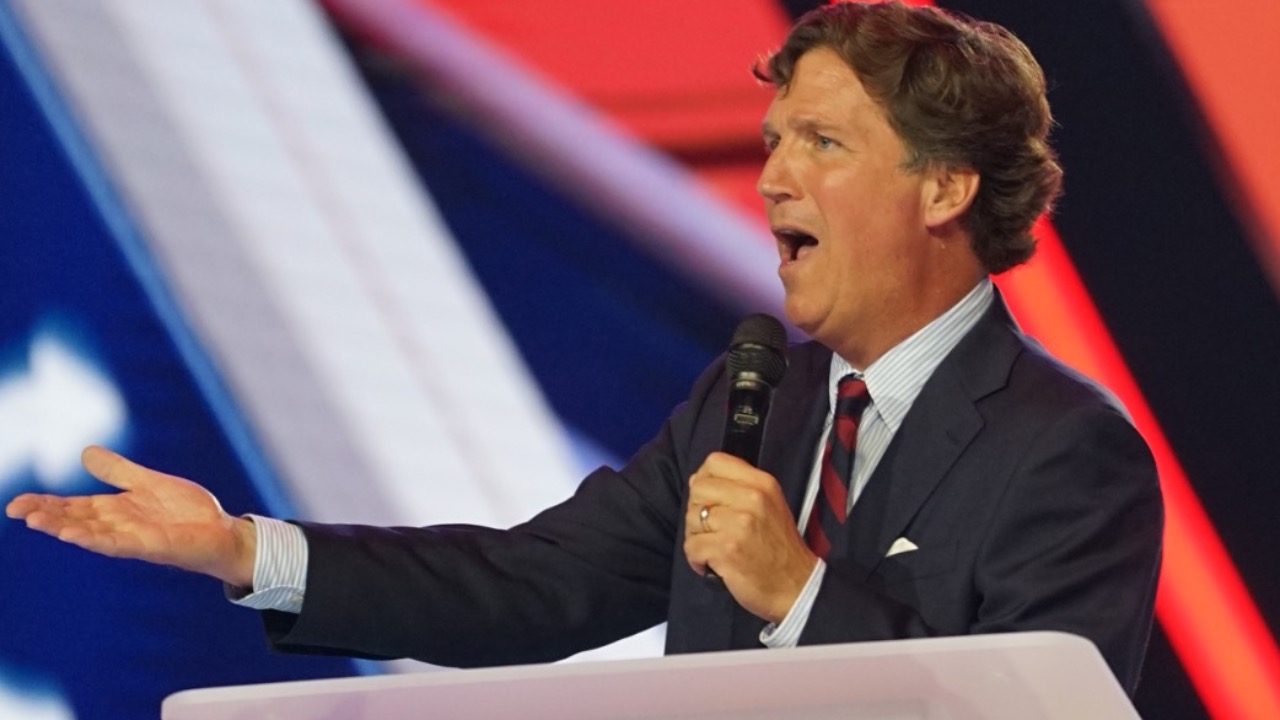
The latest round in the long rivalry between Tucker Carlson and Piers Morgan unfolded as a pointed argument over British crime, guns and civil liberties. In a segment framed around the question of whether London is safe, Carlson pressed the idea that British authorities insist “everything’s totally fine and if you complain about it you’re going to jail,” while also denying the British public any right to bear arms. That line, delivered in a video that spread quickly online, captured his core charge that British gun control is propped up by censorship and denial rather than honest assessment of risk.
The segment, which featured Carlson challenging official optimism about crime and public order, positioned London as a case study in what happens when a country chooses near total civilian disarmament. In the same context, he framed the British as subjects rather than citizens, arguing that the absence of a right to bear arms leaves them dependent on a state that insists there is nothing to worry about. The clip resonated because it did more than trade insults; it set up a stark contrast between two models of public safety, one built on individual armament and one on sweeping bans.
That contrast became even sharper in a related exchange where Carlson and Morgan sparred over freedom in England. In a short clip, Carlson pushed the idea that Americans “have so many guns cuz we’re free” and that this arsenal exists because “no one can tell us we can’t defend ourselves.” He tied widespread gun ownership directly to a national identity built on resistance to control, arguing that “we all used t…” to share that instinct before it faded in parts of the English speaking world. The viral nature of that clip ensured that the gun question could not be separated from a larger argument about what it means to be free.
Carlson’s core claim: guns as a safeguard of freedom
For Carlson, the debate is not just about crime counts or homicide charts. It is about whether a population that has surrendered its guns has also surrendered something deeper. In the short exchange where he tells Morgan “You’re a slave,” he draws a direct line from the British legal environment to a loss of autonomy. His argument is simple and deliberately provocative: if the state can forbid citizens from defending themselves with firearms, then those citizens are not truly free.
He uses the American experience as a foil. The United States, he insists, has “so many guns cuz we’re free,” and the presence of those weapons is not a regrettable side effect but a feature of a system that distrusts centralized power. In his telling, the Second Amendment is a cultural commitment to the idea that no government, however well intentioned, should hold a monopoly on force. The viral clip, which has been shared widely from its original Feb exchange, compresses this worldview into a few seconds of television.
That framing helps explain why he treats British gun policy as a cautionary tale rather than a model. If gun bans are accepted as a reasonable trade for safety, he suggests, the public may be more willing to accept restrictions on speech, protest and political dissent. In the London segment, his quip that complaining about crime can land a person in jail is meant to suggest that once the state is trusted as sole protector, it also gains leverage to police what people say about its performance. In his view, guns are a backstop against that kind of overreach.
How Morgan defends the British model
Piers Morgan, long a vocal critic of American gun culture, approaches the same facts from the opposite direction. For him, the British decision to heavily restrict firearms is a sign of a mature society that has chosen safety over what he sees as a dangerous fetish for weapons. In his exchanges with Carlson, he casts the United Kingdom as a place where people can walk the streets without the constant fear of being shot, and where police do not routinely face military grade firepower.
That stance appears again in a broader televised debate where Carlson and Morgan range across topics from foreign aid to censorship. In that program, described in a summary that notes how discuss NATO’s role in provoking war and argue over agricultural restrictions and censorship, Morgan consistently defends a more interventionist, rules heavy approach to public policy. That same instinct shapes his view of guns. He sees bans not as an attack on liberty, but as a rational response to the destructive potential of modern firearms.
Where Carlson sees British citizens as disarmed subjects, Morgan sees them as beneficiaries of a system that has dramatically reduced the risk of gun massacres. He often points to headline making shootings in the United States as evidence that widespread ownership produces intolerable harms. In his exchanges with Carlson, he leans on the idea that British streets are safer, that police rarely need to draw guns, and that the absence of a Second Amendment style right has not turned the country into a dictatorship. For Morgan, the British model is proof that a modern democracy can function well without private arsenals.
The London safety argument and UK crime statistics
The sharpest point of friction between the two men comes when they try to anchor their claims in crime data. Carlson insists that London is far from safe, and that British elites are engaged in a kind of gaslighting when they insist that “everything’s totally fine.” The video that sparked the latest round of argument, available as an London Safe?” segment, shows him challenging the idea that tight gun laws have delivered the promised security. He highlights reports of violent incidents, including knife attacks and street crime, to argue that the absence of guns has not produced a peaceful urban environment.
Supporters of British policy counter with statistics that paint a very different picture. One widely shared analysis of comparative crime risk states that “You are over four times less likely to be a homicide victim in the UK than in the US.” The same post notes that “Furthermore, major English cities like Londo…” are statistically safer than most American cities across a range of metrics, from homicide to overall life expectancy. That claim, captured in a Feb social media, has become a touchstone for those who argue that the British trade off between guns and safety has paid off.
Both sides are, in a narrow sense, correct. Britain does have a significantly lower homicide rate than the United States, and gun homicides in particular are far rarer. At the same time, London has struggled with knife crime, gang violence and public disorder in ways that contradict the image of a perfectly safe metropolis. Carlson seizes on those failures to argue that gun bans have not solved the underlying social problems that drive violence. Morgan responds that the absence of firearms has at least limited the lethality of those conflicts.
Why “gun bans fail” became the viral takeaway
The phrase “gun bans fail” spread quickly in commentary around the Carlson Morgan exchange because it captured a broader frustration with simple policy slogans. Carlson’s argument is not that British gun laws have had zero effect on crime, but that they have failed to deliver the kind of security their advocates promise when they point to disarmament as a silver bullet. He highlights London not as a war zone, but as a city where people still face real threats despite some of the strictest gun rules in the democratic world.
In his telling, the failure is twofold. First, gun bans have not eliminated violence, they have only shifted its form. Knives, blunt objects and improvised weapons still feature in serious assaults, and criminal networks adapt to whatever tools are available. Second, and more important for him, the bans have eroded a culture of self defense and personal responsibility. By making ordinary gun ownership effectively impossible, the state has taught citizens to rely entirely on police and political leaders who insist that “everything’s totally fine.”
The viral nature of the clip owes much to how cleanly it frames that critique. Viewers are presented with a choice between a society that tolerates high gun ownership in the name of freedom, and one that restricts guns in the name of safety. When Carlson insists that the British are effectively barred from complaining about crime, he is not making a literal claim that every critic is jailed. He is arguing that the same attitude that bans guns also stigmatizes dissent about law and order. The slogan “gun bans fail” becomes shorthand for a larger claim that technocratic fixes cannot substitute for deeper cultural resilience.
Freedom, censorship and the broader Carlson–Morgan rivalry
The gun argument between Carlson and Morgan does not exist in isolation. It is part of a larger pattern in their public clashes, where they repeatedly return to themes of state power, speech and national sovereignty. In the wide ranging debate where they argue over foreign aid, NATO and censorship, Carlson accuses U.S. and British policymakers of provoking conflict through interventionist policies. The summary of that program notes that discuss NATO’s role in fueling war, with Carlson blaming U.S. and British decision makers for prolonging violence.
That same skepticism of centralized power informs his view of gun control. If the state can be so wrong, in his view, about foreign policy and free speech, then it should not be trusted with a monopoly on force at home. Morgan, by contrast, tends to defend institutional authority, whether in the form of NATO commitments, public health mandates or speech regulations against what he sees as hate. For him, the British willingness to accept tight gun laws fits within a broader trust that government can and should manage complex risks.
The clash over guns therefore doubles as a clash over who should bear responsibility for security. Carlson wants individuals armed and skeptical, convinced that they, not distant officials, are the final guarantors of their safety. Morgan wants professional institutions empowered and accountable, convinced that trained police and soldiers, not private citizens, should carry the burden of force. Their arguments about London crime and American homicide rates are proxies for that philosophical divide.
What the comparative data actually suggests
When the rhetoric is stripped away, the available data points to a complicated reality that resists easy slogans. The United States does indeed have a much higher rate of gun violence and firearm ownership than the United Kingdom. The claim that a person is more than four times as likely to be a homicide victim in the U.S. than in the UK reflects a persistent gap in lethal violence. That difference is not solely due to gun policy, but firearm availability clearly plays a role in how often conflicts turn deadly.
At the same time, the British experience shows that removing guns from civilian circulation does not magically erase crime. London still faces serious challenges with youth violence, organized crime and public disorder. Knife attacks, acid assaults and other non firearm offenses can still inflict terror and trauma on communities. Supporters of British policy argue that while violence persists, its outcomes are less often fatal, which they see as a meaningful achievement. Critics respond that a society that cannot guarantee basic street safety has little right to claim victory.
The comparison between “major English cities like Londo…” and “major most American city’s” in the cited social media analysis highlights another subtlety. Safety is not evenly distributed within either country. Some American cities have homicide rates that dwarf the national average, while others are relatively safe. London itself contains neighborhoods with very different risk profiles. Gun policy interacts with these local factors rather than dictating outcomes on its own. The Carlson Morgan exchange, by necessity, compresses that complexity into a binary argument that fits within a few minutes of television.
Why the argument resonates in the United States
The viral success of Carlson’s critique reveals as much about American anxieties as it does about British policy. Many Americans who share his skepticism of gun control see in Britain a warning about where their own country might head if the Second Amendment is weakened. The image of British citizens who cannot own guns and who, in Carlson’s phrase, risk punishment if they complain too loudly about crime, feeds a narrative of creeping authoritarianism.
Americans who side with Morgan, meanwhile, see in the UK a model of what they hope their own cities could become: places where mass shootings are vanishingly rare and where day to day life is not shaped by the possibility that a minor dispute could escalate into gunfire. For them, the statistic that a person is over four times less likely to be a homicide victim in the UK than in the U.S. is a powerful argument for stricter controls.
The clash also taps into broader cultural differences. The American frontier myth, the history of armed resistance to tyranny and the legal enshrinement of the right to bear arms have created a political culture in which guns are symbols of identity as much as tools. British history, with its earlier consolidation of state power and different path to democracy, has produced a public that is more comfortable with restrictions on weapons. When Carlson says “we’re free” because “no one can tell us we can’t defend ourselves,” he is appealing to that distinct American story.

Asher was raised in the woods and on the water, and it shows. He’s logged more hours behind a rifle and under a heavy pack than most men twice his age.