U.S. Forces Conduct First Ground Operation in Ecuador Against Drug Traffickers
U.S. troops have taken part in a ground combat mission in Ecuador for the first time, joining local forces in strikes on what Washington describes as narco-terrorist infrastructure. The operation, framed as a response to drug cartels and “Designated Terrorist Organizations,” marks a sharp escalation in security cooperation between the two countries and raises fresh questions about the future of U.S. military involvement in South America.
Officials in both Quito and Washington present the campaign as a necessary answer to spiraling violence and cocaine flows. Critics inside Ecuador, along with regional observers, warn that a foreign ground presence against criminal groups could entangle the country in a longer, more complex conflict.
How the joint operation began

According to U.S. Southern Command, often referred to as Southern Command, Ecuadorian and U.S. military forces launched coordinated operations earlier this month against what the command called narco-terrorists in Ecuador. In a statement shared through an official channel that was later captured in a Mar press release, the command described a campaign that brought together American units and Ecuadorian troops on the ground.
A more detailed Southern Command announcement echoed that message, saying the joint effort targeted the “scourge of narco terrorism” and highlighting cooperation between Ecuadorian and U.S. military forces. The operation is presented as part of a broader campaign across South and Central America in which Southern Command works with partner governments to disrupt drug trafficking networks.
Reports from inside Ecuador describe the mission as a series of strikes on a drug trafficker’s camp and supply infrastructure in remote territory. One account of the initial phase said that Ecuadorean and U.S. forces carried out joint operations inside the South American country focused on drug trafficking hubs and that multiple sites were involved in the operation.
A first for U.S. ground forces in Ecuador
What sets this operation apart is not only the target set, but the presence of American personnel in land combat roles. A detailed report on the mission notes that this marks the first time U.S. forces have conducted a ground operation against cartels inside Ecuador, a point that was also emphasized by a Source familiar with who described U.S. troops working directly alongside Ecuadorian units.
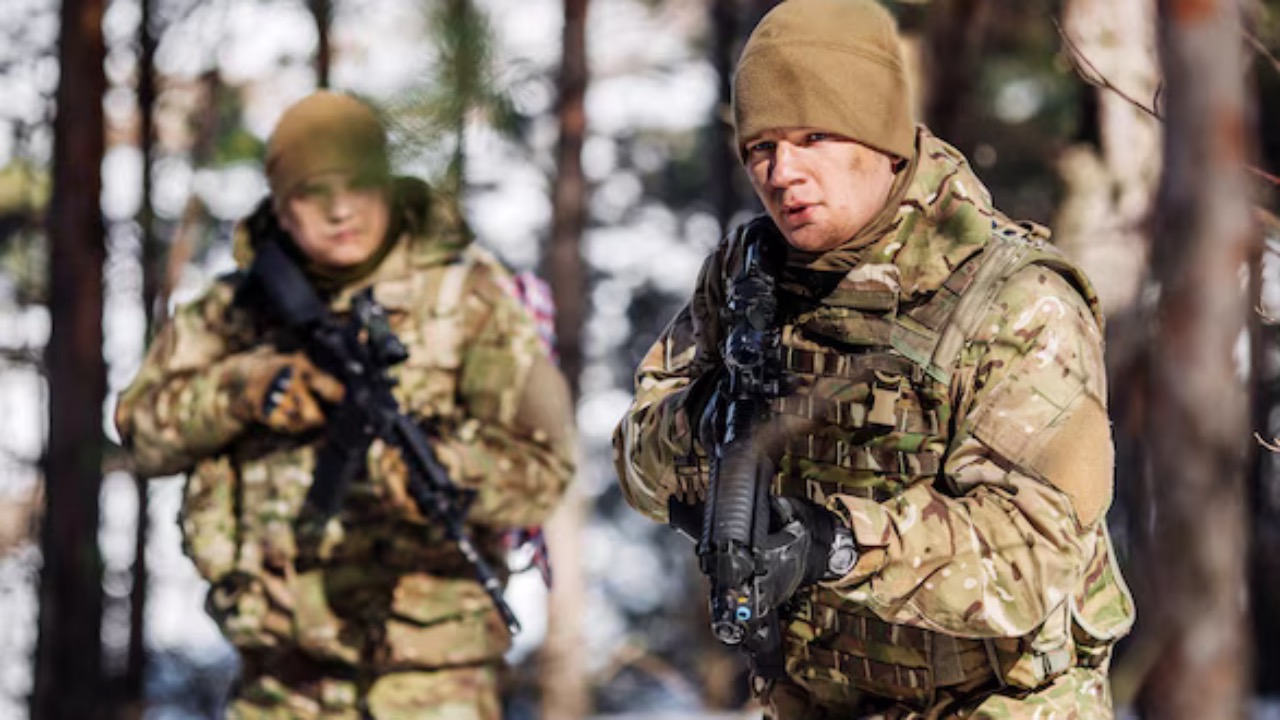
On social media, video from the mission circulated among military-focused accounts. One post stated that on March 3, 2026, American military service members with U.S. Southern Command, in conjunction with members of the Ecuadorian armed forces, conducted strikes on narco-terrorist infrastructure in the country. The footage, shared by a page that highlighted American and Ecuadorian cooperation, appeared to show heavily armed troops moving through jungle terrain supported by aircraft overhead.
Officials have not disclosed the exact number of U.S. personnel on the ground or the specific units involved, citing operational security and the classified nature of some mission details. Multiple accounts, however, agree that U.S. forces were present inside Ecuadorian territory in a combat role rather than in a purely advisory capacity.
Trump administration’s framing and objectives
The Trump administration has presented the mission as part of a wider effort to confront what it calls Designated Terrorist Organizations linked to drug trafficking in the Western Hemisphere. In a briefing cited in several reports, an official described how, on March 3, Ecuadorian and U.S. military forces launched operations against Designated Terrorist Organizations in Ecuador and argued that the action would help protect communities across the hemisphere from cartel violence.
One detailed account of the administration’s position, accessible through an interview with a, quoted a senior figure who said the goal was to strike at organizations that threaten regional stability and to support an ally facing a sharp spike in drug-related violence. The same narrative appears in another description of the, which stressed that the campaign was directed at groups already listed as terrorist entities by Washington.
From the U.S. perspective, the operation fits within a broader strategy that treats transnational drug cartels as a hybrid of organized crime and insurgent movements. By labeling targeted groups as Designated Terrorist Organizations, the administration gains additional legal authorities for military action and intelligence sharing and signals to domestic audiences that the fight against these cartels is a national security priority rather than only a law enforcement issue.
Ecuador’s security crisis and Noboa’s calculation
The joint strikes come at a time when Ecuador faces a severe security crisis. Ecuadorian President Daniel Noboa has publicly warned that drug trafficking networks have penetrated state institutions and that violence tied to cocaine routes has surged. Earlier in the week of the operation, Ecuadorian President Daniel Noboa announced that operations would be conducted with the United States and other allies to confront drug trafficking in South America, according to a statement attributed to.
In that context, inviting U.S. troops into the fight appears to be a calculated move by Noboa to show decisive action against powerful gangs. Domestic pressure on his government has mounted after prison riots, high-profile assassinations, and a series of attacks that authorities link to cartels seeking to control ports and border crossings. For Noboa, cooperation with Washington offers access to intelligence, air support, and specialized units that Ecuador’s own forces may lack.
The decision also carries political risk. Ecuador has a long tradition of sensitivity to foreign military presence on its soil, and past agreements over U.S. bases have been controversial. Noboa’s government must balance the immediate security benefits of joint operations with concerns among some Ecuadorians about sovereignty and the potential for mission creep.
Inside the strikes on narco-terrorist infrastructure
Publicly available details of the operation remain limited, but several sources sketch a picture of a coordinated campaign against a drug trafficker’s camp and associated infrastructure. A report that cited a statement on X said that The United States and Ecuador carried out joint strikes inside Ecuador against a camp linked to a group described as an offshoot of the FARC guerrilla group, and that the targets included a supply complex used to move cocaine toward export routes.
Another account, relayed through a report by Filip, said that U.S. forces conducted an operation against a narco-terrorist supply complex and that the mission was directed against “designated terrorist organizations.” That description aligns with Southern Command’s characterization of the targets as narco-terrorists and reinforces the sense that the operation went beyond a simple interdiction of drug shipments.
Visual evidence from the field, including clips referenced in a News segment, shows armed personnel advancing through thick vegetation, supported by helicopters and surveillance aircraft. Analysts who reviewed the footage pointed to the likely use of precision-guided munitions against fixed structures, along with ground sweeps designed to gather intelligence and detain suspects.
How the operation was announced and debated
The first public hints of the mission appeared on social media through official and semi official accounts. On March 3, Southern Command posted on X that Ecuadorian and U.S. military forces had launched operations against narco-terrorists in Ecuador, a message that was later referenced by The United States focused channels. The wording signaled that the campaign was not a one-off raid but part of a broader series of actions.
Soon after, a detailed report from a left-leaning outlet summarized the announcement and framed it as the start of U.S. military operations in Ecuador. That account, available through United States announces link, highlighted the Southern Command statement on X and emphasized that the Trump administration was opening a new front in its regional security policy.
The framing of the mission quickly became contested. Supporters in Ecuador pointed to the scale of cartel violence and argued that partnering with the United States was a pragmatic response. Critics, including some regional analysts, warned that labeling criminal groups as Designated Terrorist Organizations could blur the line between policing and war and might justify open-ended foreign military involvement.
Regional and domestic reactions
Across South America, the operation has drawn mixed reactions. Some neighboring governments, which also struggle with drug trafficking and armed groups, have expressed quiet support for stronger action against cartels. Others worry that U.S. ground operations in Ecuador could set a precedent for similar missions elsewhere in the region without broad regional consensus.
Inside Ecuador, reaction has been shaped by the intensity of the current security crisis. Many citizens, especially in communities hardest hit by cartel violence, have welcomed any sign that the state is moving aggressively against traffickers. Local media have carried images of Ecuadorean security forces patrolling after a violent outbreak, alongside reports that Ecuadorean and U.S. forces were involved in the operation, as described in a Mar account of.
At the same time, civil society groups and some opposition figures have raised concerns about transparency and oversight. They argue that details of the agreement governing U.S. troop presence, rules of engagement, and accountability mechanisms should be made public. Without clear information, they contend, Ecuador risks sliding into a conflict dynamic shaped more by Washington’s priorities than by domestic democratic debate.
Legal and sovereignty questions
The decision to invite U.S. ground forces into Ecuador touches on sensitive legal and constitutional issues. Ecuador’s constitution places limits on foreign military bases and has been interpreted by some legal scholars as restricting long term foreign deployments. Government officials insist that the current operation is temporary and conducted under a bilateral security agreement that respects national sovereignty.
From the U.S. side, the use of military force against cartels and Designated Terrorist Organizations in a foreign country raises questions about the legal basis under domestic and international law. The Trump administration has argued that existing authorizations and counterterrorism frameworks provide sufficient authority. Critics respond that drug trafficking, even when violent, should remain primarily a matter for law enforcement and judicial cooperation, not for extraterritorial combat missions.
Human rights advocates also warn that joint operations can complicate accountability if abuses occur. When forces from two states operate side by side, it can be difficult to determine jurisdiction and responsibility for any civilian harm. These concerns are sharpened by past experiences in the region, where counter narcotics campaigns sometimes led to allegations of wrongful killings and forced displacement.
What the operation signals for U.S. policy in South America
Strategically, the Ecuador mission signals a willingness by the Trump administration to expand direct military involvement against drug cartels beyond traditional theaters like Mexico and Colombia. A detailed overview in a report on The cooperation noted that some operations would involve U.S. forces working jointly with Ecuadorean forces, while others might be conducted by Ecuadorean units alone with U.S. support.
Southern Command, which is the U.S. military’s combatant command that encompasses 31 countries through South and Central America, has long engaged in training and intelligence sharing with partner militaries. The new ground operation in Ecuador suggests a shift from primarily advisory roles toward more direct action in select cases where partner governments request assistance and where Washington sees a strong link to its own security concerns.

Leo’s been tracking game and tuning gear since he could stand upright. He’s sharp, driven, and knows how to keep things running when conditions turn.