Hunter Says His Friend Fired Toward His Blind — Then Acted Like It Was No Big Deal
A hunter in a ground blind hears a rifle crack, then a bullet snaps through the brush in his direction. When he confronts the friend who fired, the response is a shrug and a joke. Shared in hunting circles as both cautionary tale and social minefield, that scenario captures a problem that goes beyond one bad shot: what happens when someone treats a near miss as no big deal.
At its core, the story is about more than one unsafe pull of the trigger. It is about the fragile trust that makes shared hunting possible, and the difficulty of calling out dangerous behavior when the person at fault insists everyone should just move on.
What happened
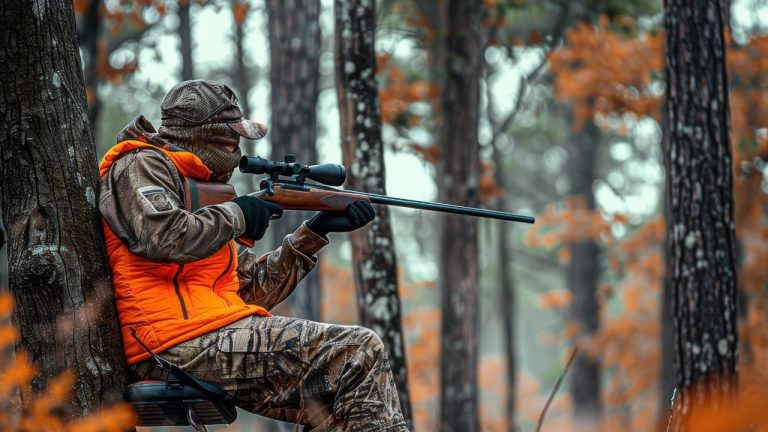
In the account that has circulated among deer and turkey hunters, two friends head into the woods before daylight. One sets up in a pop-up blind along a field edge, the other still-hunts a nearby ridge. They agree on basic positions, but they do not draw a detailed map of shooting lanes or hard no-fire zones. The morning stays quiet until the hunter in the blind hears a close rifle report, followed almost instantly by the sharp hiss of a round cutting through branches near his hide.
He freezes, waits for a second shot that thankfully never comes, then texts his friend to ask where he is shooting. The answer comes back casually. The roaming hunter claims he saw movement in the brush and took a quick shot, confident he was aiming away from the blind. When they meet at the trucks, the friend waves off concern, says the bullet was nowhere near the blind, and jokes that if it had been close, the other hunter would have “felt the breeze.”
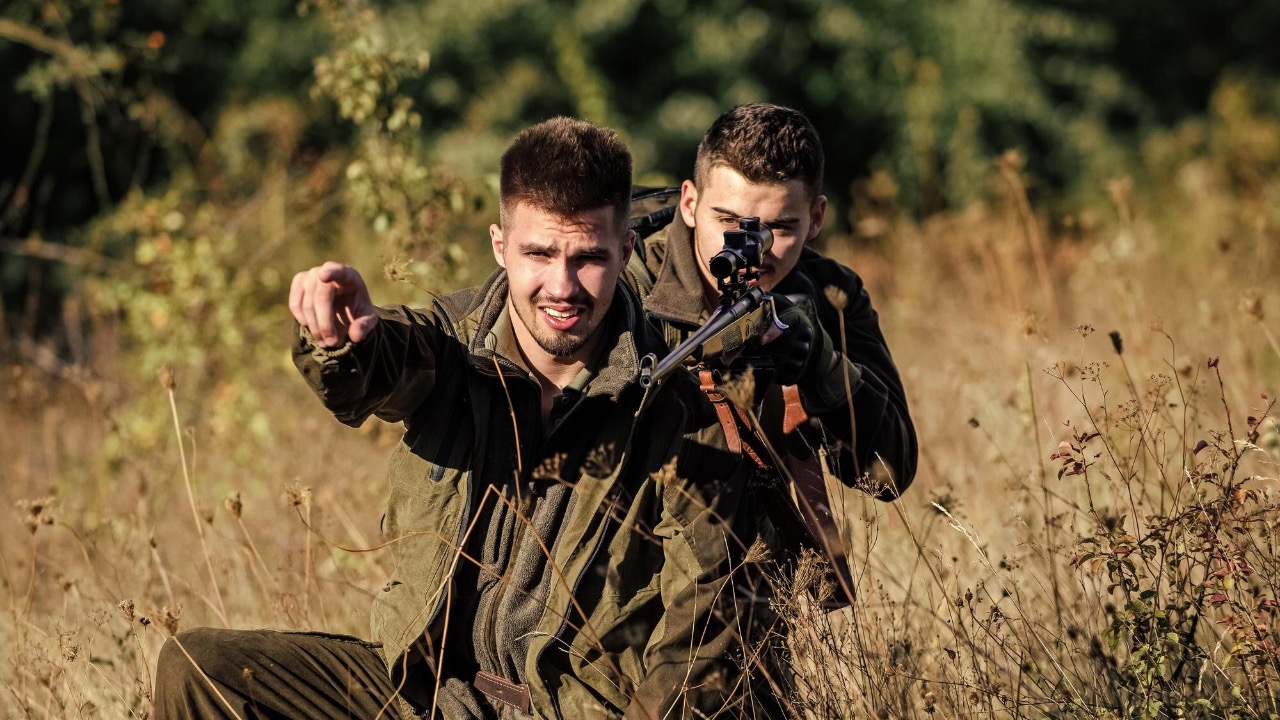
Accounts like this usually unfold in familiar stages. The hunter in the blind replays the sound of the shot and the crack of the bullet, convinced it passed within a few yards. The friend insists the angle was safe and that the ground blind was outside the danger zone. Neither has a precise GPS track or laser-measured diagram to prove the other wrong. What remains is a gut-level sense that something nearly went very wrong, colliding with the other person’s need to save face.
The pattern is not unique to hunting. People who experience a near miss often describe the physical reaction first: a spike of adrenaline, a rush of heat, a tremor in the hands. Only later do they sort out how to respond socially. That same tension showed up in a very different context when Survivor 48 contestant Eva Erickson described how a chaotic tribal council and sudden rule shifts collided with her autism. She told Entertainment Weekly that the sensory overload and rapid-fire twists left her feeling overwhelmed while others treated the moment as routine drama. The mismatch between internal alarm and external nonchalance is a common thread, whether the setting is a television set or a tree line.
In the hunting story, the mismatch is sharpened by ballistics. Modern centerfire rifles can send a bullet more than a mile. Even a shotgun slug or muzzleloader round carries lethal energy far beyond typical shooting lanes. The hunter in the blind hears the bullet’s sonic crack close enough to identify its direction. That sound alone signals that the shot path intersected his general position, even if the exact distance is hard to judge in thick cover.
Why it matters
Every hunter safety course drills the same four rules: treat every firearm as loaded, keep the muzzle pointed in a safe direction, keep your finger off the trigger until ready to shoot, and be sure of the target and what lies beyond it. Firing toward a location where a partner is set up, even if the shooter believes the angle is safe, collides with that last rule. When the shot path and partner’s position are even slightly uncertain, the correct response is not to shoot.
Near misses rarely show up in official statistics, which tend to track only incidents where someone is hit. Yet instructors and game wardens often describe these unreported scares as the real warning system. A bullet that snaps past a blind, a slug that slams into a tree a few feet from a stand, or a turkey load that scatters pellets into a partner’s cap brim all reveal a breakdown in planning and communication before someone ends up in a hospital report.
The friend’s casual reaction matters as much as the original mistake. When someone shrugs off a dangerous shot, it sends three signals. First, it tells the person who was nearly hit that their fear is an overreaction. Second, it normalizes risk for any younger or less experienced hunters who might be watching. Third, it reduces the chance that the shooter will change behavior, since admitting fault would require acknowledging that the outcome could have been a fatality.
Social pressure cuts the other way too. Many hunters are reluctant to confront a buddy, especially if that friend is older, more experienced, or the one who invited them to the property. Challenging unsafe behavior can feel like ingratitude or disrespect. The result is an unspoken calculation: accept the risk to preserve the relationship, or draw a hard line and risk awkwardness or even a permanent rift.
That calculation also shapes how hunting communities talk about safety in public. Online forums and campfire conversations often celebrate marksmanship, big bucks, and long shots far more than they dissect close calls. When someone does speak up about a partner who fired too close, responses can split between those who say the complainer is being soft and those who insist they would never hunt with that friend again. The lack of consensus keeps the issue in a gray zone, where each group quietly sets its own threshold for what counts as unacceptable.
Liability and property access add another layer. Landowners, especially those who lease ground or allow multiple groups to hunt, have a strong incentive to demand strict safety practices. A single incident where a guest fires toward another hunter can lead to revoked permission for everyone. Insurance providers and hunting clubs often write explicit rules about shooting lanes, minimum distances between stands, and bans on ground-level still-hunting in areas with blinds. Those rules exist precisely because informal trust is not always enough.
What to watch next
The immediate question for any hunter in this situation is simple: hunt with that friend again, or not. Some choose a middle path. They may agree to share camp but not the same property, or to hunt only in open fields with clearly separated zones. Others decide that a partner who treats a near miss as a joke has already answered the question for them.
Going forward, the most practical safeguard is a more formal pre-hunt briefing, even among close friends. That can include:
- Marking each blind, stand, and travel route on a mapping app such as OnX or HuntStand.
- Drawing hard no-fire sectors where any shot in that direction is off limits, regardless of perceived angle.
- Agreeing on check-in times and a protocol for moving during shooting light, such as texting before leaving a stand.
- Setting a shared rule that any shot that feels even slightly uncertain simply does not get taken.
Technology can support that discipline, but it cannot replace judgment. GPS pins and digital boundaries help, yet terrain, brush, and ricochet risks still require conservative decisions in the moment. A hunter who already dismissed one close call might ignore digital boundaries as easily as verbal ones.
For the broader hunting community, the next step is cultural rather than technical. Stories like the blind incident can be used as teaching tools instead of punchlines. Hunter education classes, youth mentoring programs, and conservation groups can encourage participants to share near misses without shame, then walk through what should change next time. When respected mentors treat those conversations as normal, younger hunters are more likely to speak up if they ever feel unsafe.

Leo’s been tracking game and tuning gear since he could stand upright. He’s sharp, driven, and knows how to keep things running when conditions turn.