Important Native American spiritual sites across the continent
Across North America, Native nations have treated mountains, caves, rivers, and hand‑built earthworks as living relatives rather than scenery. These places anchor creation stories, guide seasonal movements, and hold ceremonies that still shape daily life. When I walk into these landscapes with that in mind, the continent feels less like a map and more like a network of spiritual homelands that deserve the same respect we give any house of worship.
What follows is a look at some of the most important Native American spiritual sites, from high peaks to underground chambers and sprawling ceremonial cities. It is not a complete list, but it sketches out how sacred geography stretches across the continent and why responsible visitors need to tread carefully.
Sacred geography and why place matters
For Native communities, spirituality is tied to land in a way that is hard to grasp if you grew up thinking of wilderness as empty. Many Indigenous cultures describe a web of specific sacred sites that are linked to creation stories, ancestral spirits, or key historical events, and those places guide how people understand land use and responsibility. That idea of sacred geography shows up in everything from mountain origin stories to the way a river bend becomes the proper place for a ceremony, as outlined in work on how Many Indigenous nations relate to their homelands.
That connection is not abstract. For tens of thousands of years, the sky, Nature, the mountains, and the Plains have been described as a vast sheltering cathedral for Nati peoples, a phrase that captures how ceremony and daily life are woven into the land itself rather than separated into buildings and weekends. Indigenous North Americans occupied the length and breadth of this continent, so it is no surprise that sacred places are everywhere, even if many remain in the margins of collective memory, as one overview of Indigenous North Americans points out. When you start to see the land that way, a hike or a road trip becomes a visit to someone else’s sacred ground, not a blank canvas for recreation.
The Black Hills, Bear Butte, and Wind Cave
In the northern Plains, the Black Hills rise out of grassland like an island, and for many Native nations they are far more than a scenic backdrop. The Black Hills, South Dakota, are often described as “the heart of Everything that is” by Lakota people, language that signals how central this landscape is to stories of origin, identity, and law. The Black Hills and the surrounding area are spiritually and emotionally significant to numerous Native nations as sites of historic events, star knowledge, and ceremony, a point underscored in National Park Service work on how Black Hills and wider region function as a living memorial.
Within that larger sacred landscape, Wind Cave and Bear Butte carry their own deep stories. Wind Cave, along with Bear Butte, are integral to the Lakota people and hold significance for a number of other tribes as well, with Wind Cave tied to emergence stories and Bear Butte serving as a place for vision quests and offerings. Preservation advocates have highlighted how visitors who walk the trails at Wind Cave and Bear Butte are moving through active ceremonial ground, not relics. When I have hunted or camped near the Hills, that knowledge changes how I move, how loud I am, and whether I treat a prayer tie on a branch as trash or as a sign to step back.
Devils Tower and the high volcanic peaks
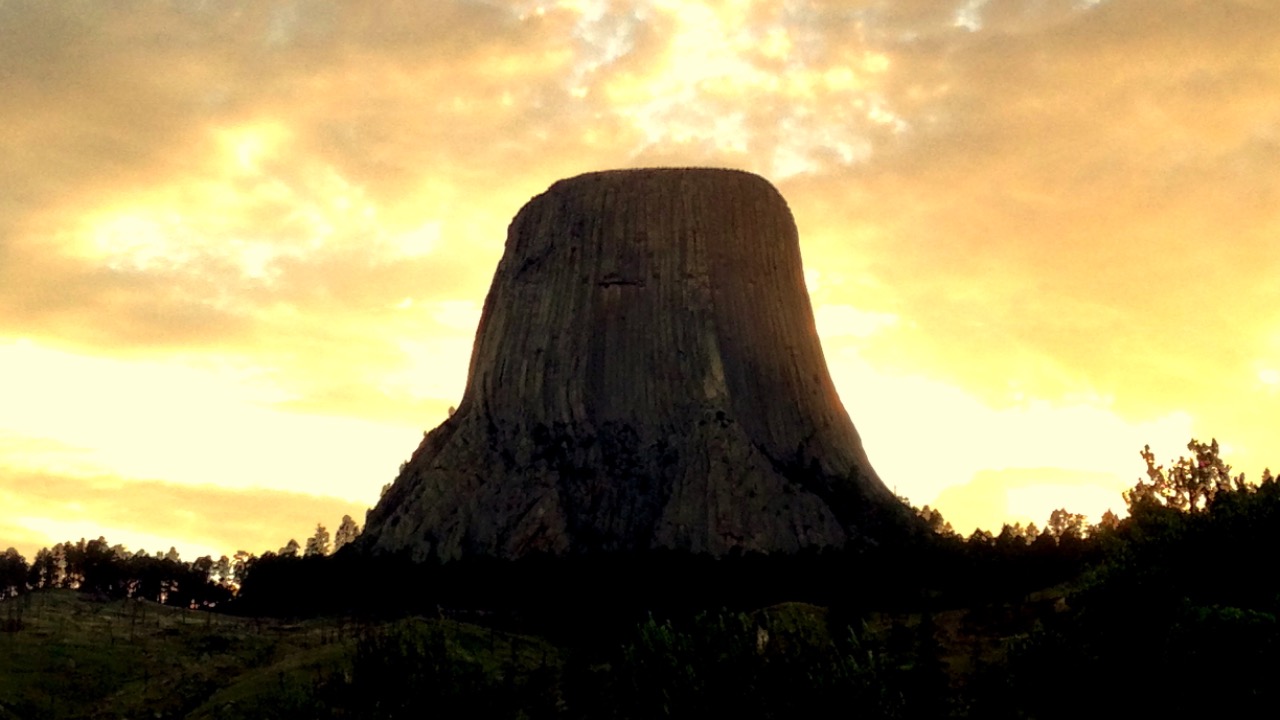
Farther west, a single column of igneous rock rises out of the Wyoming prairie, and it has been a spiritual magnet for generations. Long before it, Devils Tower National Monument, became a U.S. national monument, the tower held deep spiritual significance for Native nations who see it as a sacred place often linked to creation stories and powerful beings. Accounts of Lakota and other tribal traditions describe how people still make pilgrimages to Devils Tower National, leaving prayer cloths and holding ceremonies at the base while climbers inch up the columns.
That pattern repeats along the volcanic spine of the West. Northwestern California Native American tribes traditionally view Mount Shasta as home to spiritual and energetic forces, and they see the mountain as a center of power that radiates northwards and southwards of their tribal territories, a relationship described in coverage of how Northwestern California Native communities talk about the peak. Like the Black Hills farther east, Devils Tower has been sacred to Native American groups for generations, and the Lakota people know it as a place where they and other Native peoples regularly make pilgrimages, as one account of Like the Black puts it. When I glass those peaks from a distance, it is worth remembering that someone else is looking at the same skyline as a relative, not a route.
The Navajo sacred mountains and high country
In the Four Corners region, the land itself is mapped through sacred peaks that define a homeland. The Navajo attribute supernatural power to geographic features, especially mountains, which they consider to be living beings that mark the boundaries of their world and anchor ceremonies. Traditional teachings describe four sacred mountains named in sunwise order, and those teachings are laid out in detail in work on the Four Sacred Mountains and their colors and directions.
One of those peaks, Hesperus Peak, North of Durango, is known in English as Hesperus Mountain and rises to 13,237 feet, a high point that carries stories of the Holy People, or Diyin, and the boundaries of Navajo space. A photo shared of Hesperus Peak drenched in fall color hints at how that mountain is read as both a physical landmark and a spiritual marker. Academic work on sacred geography notes that Hamey Peak in the Black Hills of South Dakota, like Mount McKinley or Denali in Alaska and Mount Katahdin in Maine, are also treated as spiritually charged high points, a comparison made explicit in a study that cites “4.9” while listing Hamey Peak, Denali, and Mount Katahdin together. When I am in that high country, the idea that a mountain is a being rather than a backdrop changes how I talk, where I camp, and whether I treat a summit as a place for a beer or a prayer.
Ancient earthworks: Hopewell, Ohio mounds, and Effigy Mounds
Not all sacred places are vertical. In the woodlands of the Midwest and Ohio River valley, spiritual architecture runs along the ground in the form of mounds, embankments, and effigies that line up with stars and solstices. Indigenous Americans for thousands of years have created sanctuaries of earth and sky to commune with Spirit, and the Hopewell Earthwo are described as magnificent examples of such holy places, with geometric enclosures and animal shapes that still puzzle archaeologists, as one reflection on Indigenous Americans for emphasizes.
In Ohio, those designs reach a global level of recognition. Ohio Mounds are described as a Testament to Ancient Genius, and the Hopewell Ceremonial Earthworks have been honored as UNESCO World Heritage sites, a nod to their precision and spiritual importance, as highlighted in a profile of Ohio Mounds. Canyons of the Ancients National Monument in Colorado, which contains thousands of archaeological sites linked to ancestral Puebloan communities often referred to as “Anasazi,” shows how these sacred landscapes extend west into canyon country, as described in a piece on Canyons of the. Along the Upper Mississippi, the Effigy Mounds are considered a sacred space with strong cultural ties to around 20 Native American tribes in the region, and visitors are reminded that the The Effigy Mounds are not simply hiking destinations but active spiritual ground.
Cahokia, Chaco, Mesa Verde, and the ancient cities
Some of the most powerful Native spiritual sites are full‑blown cities that once held tens of thousands of people and still shape tribal identities. Over a millennium ago, Cahokia was a huge settlement across the river from what is now St. Louis, Missouri, with massive platform mounds and plazas that functioned as both political and ceremonial centers, as travel coverage of Cahokia Mounds explains. Those mounds are not random piles of dirt, they are carefully aligned structures that once supported temples and elite homes, and they remain sacred to descendant communities who see them as proof of Cahokia’s sophistication and spiritual reach.
Farther southwest, Chaco Culture National Historical Park is a World Heritage site that is thought to be the center of what was once a hub of Indigen civilization, with great houses, kivas, and roads that tie into solstice markers and distant shrines. Tribal leaders have stressed that Chaco Culture National remains a place of ceremony and pilgrimage for many Tribal nations to this day, not a dead ruin. Nearby, Mesa Verde, Mesa Verde National Park, is described as a sacred homeland to 26 different Native American tribes, and the park protects the heritage of cliff dwellings, towers, and kivas that still carry prayers, as one guide to Mesa Verde notes. When I walk through those stone rooms, it feels less like touring an abandoned village and more like passing through a house where the owners have stepped outside for a moment.
Earth, stone, and quiet architecture of ceremony
Not every sacred structure towers over the landscape. Across the Northeast and other regions, many of the numerous and varied stone structures in certain conservation preserves are understood as remains of ceremonial architecture of tribal peoples who lived there thousands of years before white settlers came. A local interpretive sign on Many of the stone rows, chambers, and cairns urges visitors not to treat them as random rock piles or colonial leftovers, but as possible prayer sites and alignments that deserve the same care as any churchyard.
That respect extends to more recent structures as well. In the desert Southwest, ancient canal systems and village sites are interpreted in museums that stress how these are ancestral lands and sites with deep spiritual significance for contemporary Native American communities, and exhibits at one Hohokam museum explicitly urge visitors to Respect Indigenous Perspectives and Remember that they are walking through living heritage, as a guide to Respect Indigenous Perspectives puts it. Even far from North America, travel writing on ancient sandstone villages in India notes that They, ancient sandstone villages, stand as historic monuments preserving age‑old customs, architectural finesse, and traditional ways of life, each telling a story of perseverance and cultural pride, as described in a piece on how They function. That global comparison drives home the point that low stone walls and earthworks can be as spiritually loaded as any cathedral spire.
Living sacred sites in today’s park system
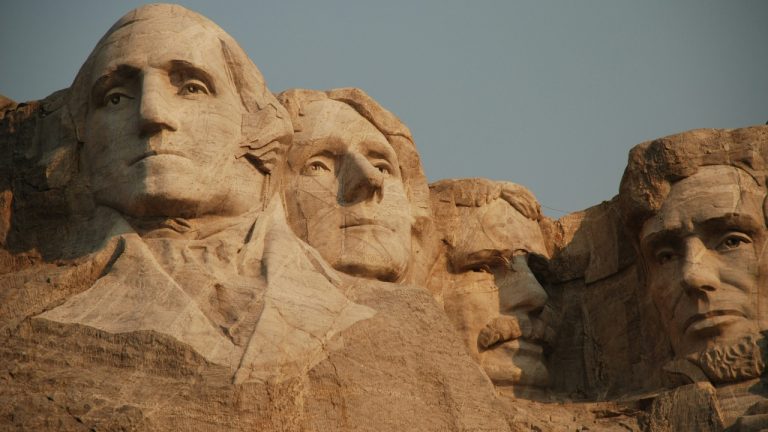
Many of the most visited national parks double as active holy ground, which creates tension and opportunity. Mesa Verde National Park is one example, but it is far from alone. A travel feature on Native American holy ground in U.S. parks notes that, like the Black Hills farther east, Devils Tower has been sacred to Native American groups for generations and that the Lakota people know it as a place where they and other Native peoples regularly make pilgrimages, a reminder that Devils Tower is not just a climbing crag. Similarly, interpretive work at Mount Rushmore and other sites in the Black Hills has started to foreground how The Black Hills and the surrounding area are spiritually and emotionally significant to numerous Native nations, including Oglala Lakota leaders who describe the region as a stone hoop garden and living memorial, as detailed in National Park Service material on Black Hills and ceremonial landscape.

Asher was raised in the woods and on the water, and it shows. He’s logged more hours behind a rifle and under a heavy pack than most men twice his age.