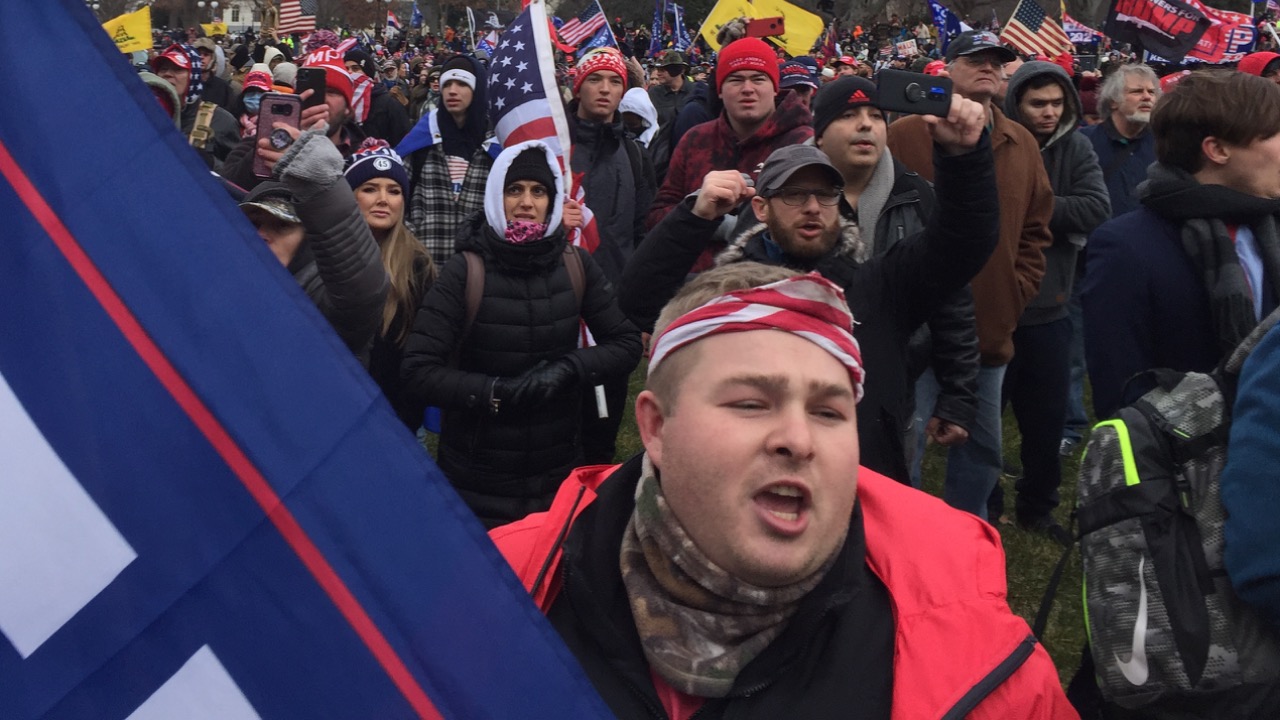
Jan. 6 rioter pardoned by Trump pleads guilty to threatening a top lawmaker
A New York man who once stood on the Senate dais during the Capitol attack and later received a presidential pardon is back in the criminal justice system, this time for targeting one of Congress’s most powerful Democrats. Christopher Moynihan has pleaded guilty to harassing House Minority Leader Hakeem Jeffries after a string of menacing messages that put fresh attention on the risks elected officials face in a climate still shaped by Jan. 6.
The case ties together three volatile threads in American politics: the lingering fallout from the Capitol riot, the reach of President Donald Trump’s pardon power, and the growing wave of threats aimed at lawmakers. It also raises a blunt question about accountability, because a man forgiven for trying to keep Trump in power is now admitting he turned his anger on a top member of the House.
The man at the center of the case
The defendant at the heart of this story is Christopher Moynihan, a 35-year-old from Dutchess County who has already been through one high profile criminal saga tied to national politics. Reporting describes Christopher Moynihan, 35, as a participant in the January 6, 2021, Capitol breach who was photographed on the Senate floor, standing on the Senate dais during the height of the chaos, before he later secured a pardon from the White House. That earlier brush with federal prosecution did not end with a conviction, but it clearly did not end his involvement with law enforcement.
In the new case, Moynihan is not accused of physical violence, but of a pattern of harassment that prosecutors say crossed the line into criminal threats. He pleaded guilty to a misdemeanor harassment charge in a hearing in Clinton, New York, acknowledging that his conduct toward a sitting member of Congress was unlawful. Court records and local reporting from Clinton, New York, describe a man who had already been given a second chance after Jan. 6 and still chose to channel his political rage directly at an elected official.
From the Senate dais to a presidential pardon
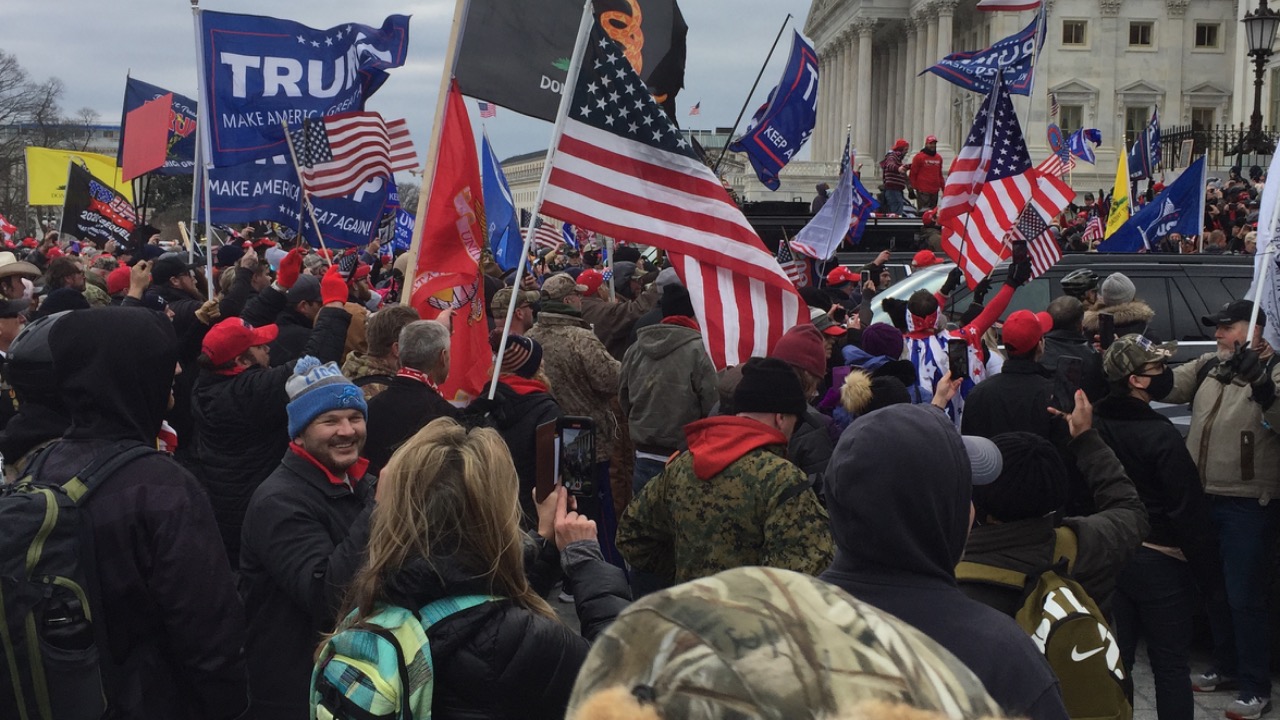
To understand why this guilty plea is drawing national attention, you have to go back to the Capitol itself. During the Jan. 6 attack, images captured Christopher Patrick Moynihan on the Senate dais, a spot normally reserved for the vice president or presiding officer, as rioters tried to halt the certification of the presidential election. That image became one of many symbols of how far some supporters were willing to go to keep Trump in power. Federal investigators identified him as one of the people who had breached the Senate chamber during the Capitol assault.
Despite that role, Moynihan later received clemency from President Trump, who used his pardon power to wipe away certain Jan. 6 related exposure for allies and supporters. A social media post from Christopher P. Moynihan’s case notes that he was among those pardoned for actions during the Capitol riot that were intended to keep Trump in power. That decision effectively closed the book on his federal Jan. 6 liability, but it also set the stage for the current debate over what happens when a pardoned rioter reoffends.
How the threats against Hakeem Jeffries unfolded
The new criminal case centers on a series of messages aimed at House Minority Leader Hakeem Jeffries, a Democrat from New York who leads his party in the House. According to police reports and court filings, Moynihan contacted Jeffries’s office with language that authorities interpreted as threatening, targeting the congressman personally rather than simply criticizing his politics. One account describes Moynihan referring to Jeffries in hostile terms and making statements that staff and investigators viewed as menacing enough to trigger a criminal probe.
Investigators traced the harassment to Moynihan in New York, where he was already known for his role in the Capitol riot. A detailed account of the case notes that he admitted to harassing the House minority leader as part of a plea deal with prosecutors, acknowledging that his messages were directed at the congressman. In that plea, described in coverage of Christopher Moynihan, he conceded that his conduct went beyond protected speech and into criminal harassment.
What prosecutors say happened
From the law enforcement side, the story is straightforward and troubling. A police report obtained by reporters describes how a New York man, already known as a Jan. 6 rioter, contacted Jeffries’s office with messages that were alarming enough that staff alerted authorities. In the account summarized by Ryan Mancini, officers documented the content of those communications and linked them back to Moynihan, building a harassment case under New York law.
Prosecutors ultimately charged him with a misdemeanor, not a felony, but they emphasized that targeting a member of Congress is a serious matter, especially in the wake of the Capitol attack. A separate summary of the case notes that Moynihan pleaded guilty to a harassment count in Clinton, New York, and will be sentenced later, with the conviction on his record even if he avoids prison time. That account, drawn from coverage of Christopher Moynihan, underscores that even a misdemeanor can carry lasting consequences when it involves threats against an elected official.
How Hakeem Jeffries fits into the story
Hakeem Jeffries is not a backbencher who might slip under the radar of political extremists. He is the House Minority Leader, the top Democrat in the chamber and a central figure in negotiations with Republicans and the White House. As a high profile Black lawmaker from Brooklyn, Jeffries has become a frequent target of partisan attacks, and his leadership role makes him a natural focus for those who see the Democratic Party as an enemy. That visibility is part of why threats against him carry such weight in Washington.
Public biographical information on Hakeem Jeffries notes his rise from New York state politics to the top of the House Democratic caucus, where he now serves as the counterpart to the Republican speaker. Coverage of the Moynihan case repeatedly identifies Jeffries by his formal title as House Minority Leader Hakeem Jeffries, underscoring that the target of the harassment was not only a member of Congress but the leader of one of the two major parties in the chamber. That status helps explain why federal and local authorities took the threats seriously and why the case has drawn national coverage.
The guilty plea and what it means
When Moynihan appeared in court in Clinton, New York, he did not fight the charge. Instead, he entered a guilty plea to a misdemeanor harassment count, admitting that his conduct toward Jeffries met the legal definition of harassment. That plea spares Jeffries and his staff from a drawn out trial, but it also locks in a conviction that will follow Moynihan long after the headlines fade. In practical terms, a guilty plea is an acknowledgment that the line between heated political rhetoric and criminal threats was crossed.
Details of the plea agreement indicate that Moynihan will avoid jail time and instead face probation and other conditions, a resolution described in local coverage of the Dutchess County Jan. 6 rioter who threatened Jeffries. One report notes that the Dutchess County Jan. 6 rioter gets probation in the Hakeem Jeffries case, highlighting that the court opted for supervision rather than incarceration. That outcome, reflected in accounts of Christopher Moynihan, has already sparked debate over whether a man with his history should have received a stiffer sentence.
Why the Trump pardon looms over the case
Hovering over every detail of this story is the fact that Moynihan had already been granted extraordinary leniency once. A January 6, 2021, rioter who was pardoned by President Donald Trump and then later pleaded guilty to threatening Jeffries is not a routine defendant. The earlier decision by Trump to extend clemency to a man involved in efforts to keep him in power is now being revisited in light of Moynihan’s new conviction, raising questions about how the pardon power was used in the aftermath of the Capitol attack.
Accounts of the case emphasize that a man pardoned by President Trump for his actions during the Capitol riot has now admitted to harassing a top House Democrat. One summary of the situation, shared in a social media post about Christopher Moynihan, underscores that he was pardoned for actions during the Capitol riot that were intended to keep Trump in power. That history is why his new guilty plea is being read not only as an individual failure but as a data point in the broader argument over whether some Jan. 6 pardons signaled impunity to those who received them.
Threats against lawmakers in the Jan. 6 era
From where I sit, having watched political tempers flare for years, the Moynihan case fits into a larger pattern that should worry anyone who cares about representative government. Threats against lawmakers have surged since the Capitol riot, with members of both parties reporting a steady stream of menacing calls, emails, and social media posts. When someone who once stood on the Senate dais during the Capitol attack later turns his anger on the House Minority Leader, it shows how the energy of that day has not fully dissipated.
Several detailed write ups of the case frame Moynihan’s harassment of Jeffries as part of the lingering fallout from Jan. 6, noting that he was among the rioters who breached the Capitol and that he later focused his ire on a high profile Democrat. One account of a man pardoned in who pleaded guilty to threatening Jeffries notes that the same forces that drove people to Washington on Jan. 6 are still animating some of the threats lawmakers receive today. When you combine that with the fact that Moynihan had already been forgiven once, it paints a picture of a political environment where some people feel emboldened to cross lines that used to be unthinkable.
What this case signals about accountability
Looking at the full arc of Moynihan’s story, from the Senate dais to a presidential pardon to a harassment conviction, I see a test of how seriously the system takes political violence and intimidation. On one hand, he has now been held criminally responsible for threatening a top lawmaker, with a guilty plea on the record and probation that will keep him under supervision. On the other hand, critics will argue that a misdemeanor and no jail time for a repeat player in the Jan. 6 universe sends a mixed message about consequences.
Coverage of the sentencing outcome notes that the Dutchess County Jan. 6 rioter gets probation in the Hakeem Jeffries case, and that he will avoid jail time despite his history at the Capitol. That detail, reflected in reporting on a man pardoned in who pleaded guilty to threatening Jeffries, will fuel ongoing debates about whether the justice system is calibrated correctly for politically motivated threats. For lawmakers like Jeffries, and for the staffers who field calls and messages every day, the hope is that even a misdemeanor conviction will deter others from following the same path.
The lingering shadow of Jan. 6
More than three years after the Capitol was breached, cases like Moynihan’s are reminders that Jan. 6 is not a closed chapter. The people who surged through the Capitol that day, including those who stood on the Senate dais or roamed the halls, did not all fade back into private life. Some, like Moynihan, remained engaged in politics in ways that brought them back into conflict with the law, whether through online harassment or direct threats. That continuity matters because it shows how the mindset that fueled the riot can spill over into later confrontations with elected officials.

Asher was raised in the woods and on the water, and it shows. He’s logged more hours behind a rifle and under a heavy pack than most men twice his age.