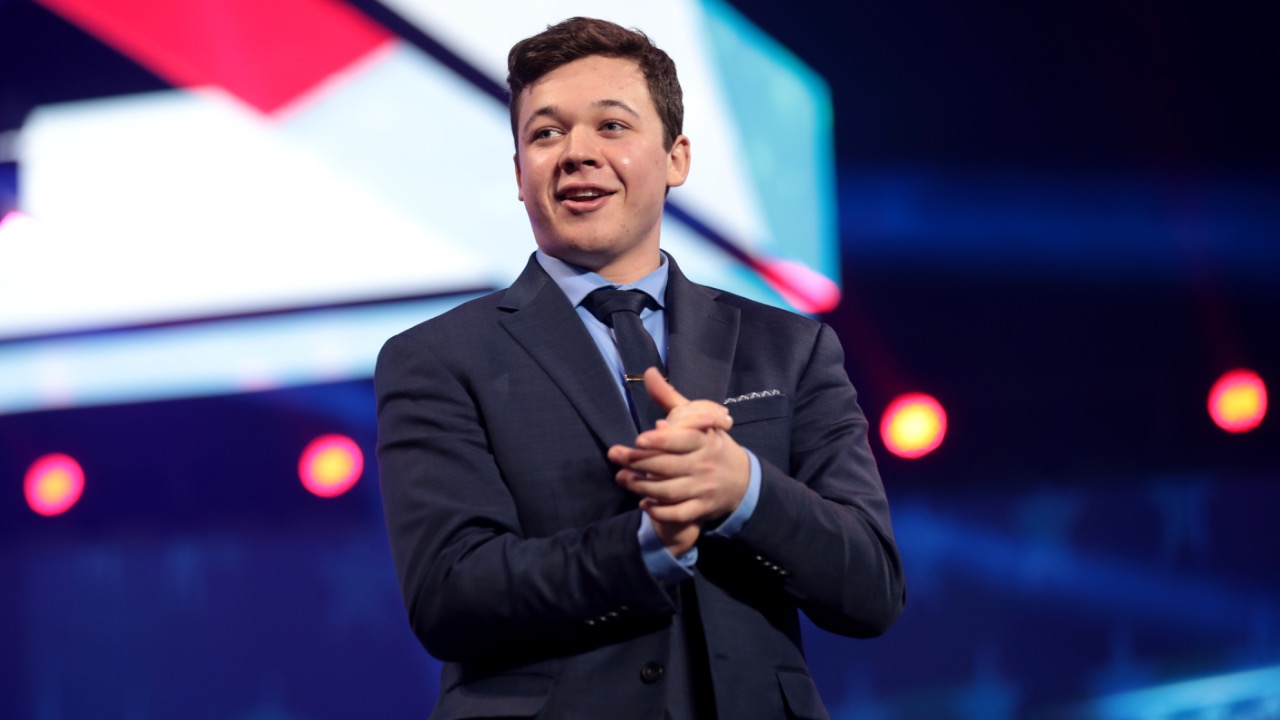
Kyle Rittenhouse urges gun owners to carry regularly, breaking with Trump
Kyle Rittenhouse is again at the center of America’s gun debate, this time for publicly urging firearm owners to carry their weapons as often as possible even as President Donald Trump questions whether a young protester should have been armed at all. The split has exposed a rare rift between a Republican president who has long styled himself as a champion of the Second Amendment and one of the movement’s most polarizing grassroots figures. I see that clash as a revealing test of how far gun rights activists are willing to go in defending armed self‑defense in public spaces, even when it means contradicting a president many of them otherwise support.
Rittenhouse’s call to “carry everywhere” did not emerge in a vacuum, but in the charged aftermath of another deadly confrontation involving a young man with a gun at a protest. By insisting that lawful gun owners should be armed in more places, more often, he is pressing a maximalist vision of the Second Amendment that goes beyond Trump’s more cautious comments about when it is wise to bring a firearm into volatile situations. That divergence is now rippling through conservative politics, gun culture, and the broader fight over how far self‑defense rights should extend into the public square.
The “carry everywhere” call and why it matters now

The immediate spark for this clash was a short but pointed message from Kyle Rittenhouse on X, where he wrote “Carry everywhere. It is your right.” According to reporting on his post, Rittenhouse framed the statement as a direct defense of everyday gun carrying, presenting it as a core constitutional entitlement rather than a choice to be weighed against public safety concerns. His language was absolute, with no caveats about context, training, or judgment, and it came as emotions were already running high over another fatal encounter involving a young armed man at a protest.
Rittenhouse’s message landed in the wake of the death of Alex Pretti, who, according to accounts of the incident, was killed by a border patrol officer after bringing a firearm and spare magazines to a protest in Minnesota. Coverage of the episode notes that Pretti’s decision to be armed has become a flashpoint in a renewed debate over whether carrying a gun into a tense demonstration is an act of prudence or recklessness, especially when the carrier is a young civilian. By insisting that people should “carry everywhere” in that context, Rittenhouse aligned himself squarely with those who see any criticism of armed protest attendance as an attack on lawful gun ownership, a stance that is now being echoed in a petition defending the legality of carrying a firearm with spare magazines in Minnesota and most states, and condemning efforts to treat such conduct as inherently suspect.
Trump’s criticism of Alex Pretti and the new fault line
President Donald Trump has taken a notably different tone about the same incident, criticizing Alex Pretti’s decision to bring a gun to the protest. In an interview cited in recent reporting, Trump said of the situation that he does not like “any shooting” and questioned the wisdom of a young person arriving at a volatile demonstration armed, even if the weapon itself was legally possessed. Those comments, which singled out Pretti’s choice to be armed, marked a rare moment when Trump publicly distanced himself from the most expansive interpretations of open carry and protest gun rights.
Gun rights advocates have bristled at Trump’s remarks, with coverage noting that comments suggesting Pretti should not have had his gun have rankled groups that see such criticism as a slippery slope toward broader restrictions. One detailed account of the uproar explains that Trump’s comments are colliding with a party culture in which support for the Second Amendment’s protection of gun ownership is foundational, and where activists are quick to frame any suggestion that someone “shouldn’t” have carried as a betrayal of core principles. It is into that breach that Rittenhouse has stepped, effectively telling those activists that the correct response to the Pretti case is not caution but a renewed insistence on carrying firearms in more places, more often.
How Rittenhouse’s own past shapes his message
To understand why Rittenhouse’s words carry such weight, it helps to recall his own trajectory from obscure teenager to national lightning rod. He first gained notoriety as the teen who brought an AR‑15 style rifle to a protest in Kenosha in 2020, where he fatally shot two people and wounded a third, later arguing that he acted in self‑defense. One widely shared social media post still describes him as “the teen who brought his AR‑15 to a Kenosha protest in 2020 and murdered two people,” a characterization that underscores how deeply divided public opinion remains about his actions and his acquittal. That history means that when he urges others to carry guns into public conflicts, he is speaking not as an abstract commentator but as someone whose own armed presence at a protest ended in bloodshed.
Since his trial, Rittenhouse has embraced a role as a conservative activist and gun rights advocate, appearing at events such as the Rally Against Censorship in Conroe, Texas, where photographs show him listening to the national anthem as part of a program that featured other right‑leaning figures. His presence at such gatherings, and his continued invocation of his experience in Kenosha, have made him a symbol for those who argue that armed civilians can and should step into chaotic situations to protect property and themselves. When that same figure now tells followers to “carry everywhere,” in the wake of Alex Pretti’s death, it reads as a direct endorsement of the idea that what he did in Kenosha should not be seen as an aberration but as a model for how young gun owners might respond to unrest.
From reluctant to loyal: Rittenhouse’s evolving stance on Trump
The current disagreement between Rittenhouse and Trump over protest gun carrying is especially striking given their recent political history. In the summer of 2024, Rittenhouse initially signaled that he would not endorse Trump, prompting a fierce online backlash from parts of the right that had previously championed him. Reporting from that period describes how he reversed course after the pile‑on, ultimately backing Trump despite his earlier hesitation, and how the episode highlighted the intense pressure on conservative influencers to fall in line behind the president.
Another account from the same period notes that Rittenhouse publicly u‑turned after saying he would not vote for Trump, with coverage from Bern detailing how quickly he shifted once criticism mounted. That reversal cemented an image of Rittenhouse as someone willing to align himself with Trump when it came to electoral politics, even if he had private reservations. The fact that he is now openly contradicting Trump on a core cultural issue like gun carrying suggests that, at least on this question, he is prepared to prioritize his reading of the Second Amendment over deference to the president he ultimately endorsed.
Inside the gun rights movement’s “prove‑it” moment
Rittenhouse’s intervention comes at a time when gun rights activists are already under scrutiny for how they respond to high profile shootings involving civilians who claim self‑defense. One detailed political analysis describes the current period as a kind of “prove‑it” moment for the movement, with figures like Kyle Rittenhouse facing questions about whether their rhetoric encourages risky behavior or simply defends constitutional rights. In that piece, Rittenhouse is shown at the Rally Against Censorship in Conroe, Texas, in a photograph by Mark Felix, a visual reminder of how he has been embraced by parts of the conservative base as a symbol of resistance to what they see as censorship and overreach.
At the same time, the institutional gun lobby continues to promote a broad vision of armed citizenship, with organizations like the National Rifle Association using their platforms to argue that responsible gun ownership is a safeguard against both crime and government overreach. The official NRA site, for example, highlights training, advocacy, and political messaging that frame carrying a firearm as both a right and a civic responsibility. Rittenhouse’s “carry everywhere” line fits comfortably within that maximalist tradition, but his personal history and the specific context of Alex Pretti’s death make his version of the message far more combustible than a generic call for concealed carry.
Alex Pretti, protest guns, and the Second Amendment debate
The death of Alex Pretti has quickly become a new touchstone in the national argument over guns at protests. Detailed local reporting explains that Pretti was shot and killed by a border patrol officer after arriving at a demonstration in Minneapolis with a firearm and spare magazines, a scenario that has drawn immediate comparisons to Kyle Rittenhouse’s presence in Kenosha. One account notes that such comparisons have renewed the debate over how the Second Amendment’s protection of gun ownership applies when civilians bring weapons into crowded, emotionally charged public events, and whether doing so heightens the risk of deadly misunderstandings.
In that same coverage, observers point out that such comments from political leaders about whether Pretti should have been armed are notable in a party where support for the Second Amendment is foundational. The report quotes voices who insist that “being a gun owner is not a death sentence,” a phrase that captures the anger among activists who see Pretti’s killing as evidence that lawful carriers are being treated as threats simply for exercising their rights. By aligning himself with those critics and explicitly tying his “carry everywhere” message to the Pretti saga, Rittenhouse is helping to turn a specific tragedy into a broader test case for how far protest gun rights should extend.
Trump’s Second Amendment record meets a new challenge
Trump’s criticism of Alex Pretti has not erased his long standing claim to be a staunch defender of gun rights, but it has complicated that image. A detailed political analysis of the current uproar notes that a senior figure close to the president insisted there has been “no greater supporter or defender of the right to bear arms than President Donald J. Trump,” underscoring how central the Second Amendment is to his political brand. That same report explains how the controversy over Pretti and protest gun carrying is beginning to encroach on Trump’s efforts to keep the national focus on his immigration crackdown, forcing the White House to navigate tensions between law and order messaging and gun rights absolutism.
Another examination of Trump’s stance on the Second Amendment walks through his comments about Alex Pretti in more detail, highlighting how his suggestion that Pretti should not have had his gun has unsettled gun rights groups. That piece frames the question “What did Trump say about Alex Pretti?” as a key to understanding whether his administration’s rhetoric is drifting away from the movement’s expectations. When the president who once promised that “your Second Amendment rights are under siege” now appears to question the wisdom of a young man carrying at a protest, activists like Rittenhouse see an opening, and perhaps an obligation, to restate the most expansive version of the right to bear arms.
Online backlash, petitions, and the “carry everywhere” campaign
Rittenhouse’s short post on X has already spawned a broader campaign, including a petition that quotes his “Carry everywhere. It is your right.” line in its title. The petition argues that carrying a firearm with spare magazines while possessing a valid permit is completely legal in Minnesota and most states, and insists that treating such conduct as inherently suspicious is “wrong” and an “attack on lawful gun ownership.” By invoking Rittenhouse’s words directly, the petition’s authors are turning his personal slogan into a rallying cry for those who fear that the fallout from the Pretti case could be used to justify new restrictions on where and how people can carry.

Asher was raised in the woods and on the water, and it shows. He’s logged more hours behind a rifle and under a heavy pack than most men twice his age.