
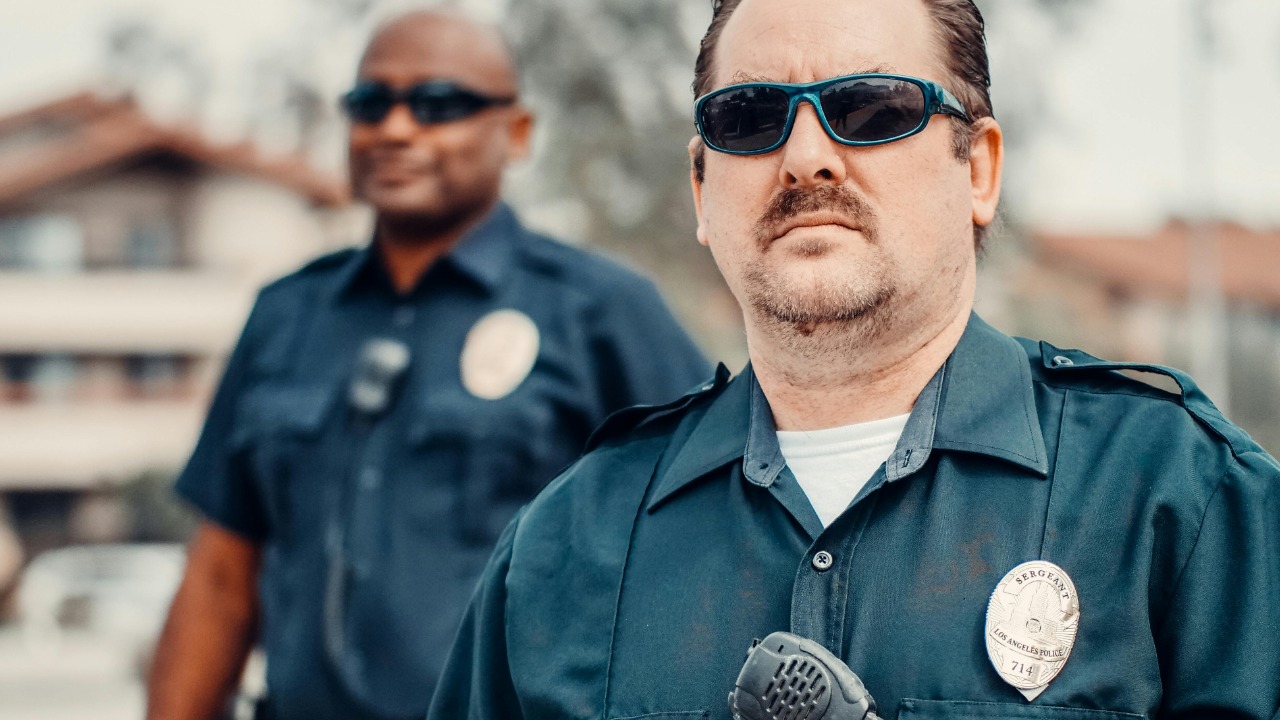
Legal experts weigh in on high-risk police encounters
High-risk police encounters sit at the fault line between public safety and civil rights, where split-second decisions can mean life or death and years of litigation. Legal experts say the rules that govern those moments are clearer on paper than they often look on body camera footage, especially when officers confront moving cars, mental health crises, or improvised restraints. As departments face renewed scrutiny, the debate is shifting from whether force is technically justified to whether it is truly necessary and avoidable.
I see that shift most vividly in the way courts, investigators, and reformers are reexamining the standards that guide officers in the field. From the Supreme Court’s Graham v. Connor framework to warnings from The DOJ about prone restraint, the law is slowly absorbing lessons from hundreds of fatal encounters. The question now is whether those lessons will reach the street in time to change the next high-risk stop, search, or crisis call.
The legal lens on split-second force

When lawyers dissect a high-risk encounter, they usually start with the same touchstone: the Supreme Court’s decision in Graham v. Connor. Under that case, judges ask whether an officer’s force was “objectively reasonable” in light of the severity of the suspected crime, whether the person posed an immediate threat, and whether they were actively resisting or fleeing. Training materials for officers emphasize that in cases involving law enforcement, vehicles, and use of force, the legal lens is almost always Graham, which means juries are told to stand in the officer’s shoes, not to second-guess with hindsight.
That standard gives officers significant legal protection, but it also narrows the focus of many investigations to the final seconds before a shot or takedown. In one California case involving a man named Scott, a three-judge panel, in keeping with U.S. Supreme Court precedent, weighed the type and level of force used against the severity of his crime and the threat he posed, rather than broader questions about policy or alternatives. Legal scholars argue that this Graham and Connor framework, while clear, can obscure systemic issues like inadequate training or flawed tactics that lead up to the moment of force, even as courts continue to apply it to encounters involving cars, foot pursuits, and other rapidly evolving situations described in Connor.
Why deadly encounters keep breaking basic safety rules
Even when the law sets a relatively forgiving standard, many fatal encounters still fall short of basic safety guidance that departments themselves have adopted. An Associated Press investigation found that police across the United States violated well-known guidelines for safely restraining people, including warnings about keeping handcuffed suspects off their stomachs and avoiding pressure on the back or neck. In hundreds of cases reviewed by reporters, officers ignored or overrode those rules in chaotic scenes that ended with people saying “I can’t breathe” and then going still, a pattern that has fueled calls for stricter oversight of safety guidelines.
The DOJ has repeatedly warned that prone restraint can be more dangerous to a broad category of people police often confront, including those on drugs, in mental health crisis, or with underlying medical conditions. Federal guidance stresses that officers should move restrained people off their stomachs as soon as possible and monitor their breathing, yet The DOJ has documented cases where officers kept people pinned long after they were subdued, sometimes telling them to “stop struggling” even as they lost consciousness. Legal experts say those findings, detailed in federal reviews of local departments, are increasingly cited in civil lawsuits that argue officers and cities ignored clear warnings from The DOJ about positional asphyxia.
Inside a federal shooting that tests use-of-force rules
High-risk encounters involving federal agents are drawing similar scrutiny. In Minneapolis ICE, a recent shooting by immigration officers raised questions about whether federal use-of-force rules were followed when agents opened fire during an arrest operation. A Kansas City defense attorney, asked to assess the incident, said the shooting may violate use-of-force law and cautioned that while he would never like Monday morning quarterbacking, the law still requires that deadly force be limited to situations where a suspect poses an imminent threat of death or serious injury to themselves or others, a standard that applies to Kansas City and beyond.
Legal analysts note that federal policies often mirror or even exceed local standards on paper, but real accountability can be harder to secure when incidents involve agencies like Immigration and Customs Enforcement. In the Minneapolis ICE case, investigators will likely examine whether agents had safer options, such as containment or waiting for backup, and whether any warning was given before shots were fired. The fact that a defense lawyer is publicly questioning the legality of the shooting underscores how contested these encounters have become, with critics arguing that federal officers should be held to the same Graham and Connor benchmarks that govern local police, even when operations unfold far from traditional patrol settings and spark Monday debates about Minneapolis ICE.
When “legal” force still looks unnecessary
One of the sharpest critiques from legal experts is that the law’s focus on reasonableness can bless shootings that departments themselves later regret. In Wisconsin, a review of fatal police encounters highlighted a pattern in which prosecutors declined to charge officers because their actions met the Graham standard, even as community members and some officials questioned whether the shootings could have been avoided. Commentators in that debate often repeat a blunt assessment: a shoot can be legal, that does not mean it was necessary, a distinction that has become central to policy reform efforts in states like Illinois.
Illinois lawmakers later enacted laws to harmonize use-of-force policies statewide and require officers to intervene if they witness excessive force, an attempt to move beyond bare constitutional minimums. Those statutes push departments to ask not only whether a shooting would survive a lawsuit, but whether tactics like slowing down, using cover, or calling specialized units could have prevented the need for deadly force at all. Legal scholars say that shift reflects a growing recognition that Graham and Connor set a floor, not a ceiling, and that internal policies can and should demand more restraint than the Constitution strictly requires, especially in recurring high-risk scenarios that have produced controversial deaths in Aug.
Guidelines ignored: Tasers, traffic stops, and positional risk
Beyond firearms, legal experts are increasingly focused on how officers use so-called “less lethal” tools and vehicle tactics in ways that contradict manufacturer and departmental guidance. In one case highlighted by investigators, a man was driving erratically on his way home to celebrate his wedding anniversary and appeared intoxicated when officers stopped him. Prosecutors decided not to charge the officers after the encounter turned deadly, but critics argued that the officers escalated too quickly and ignored training on safer approaches to impaired drivers, a concern that has surfaced in other incidents where Prosecutors cleared officers despite broken protocols.
Technology companies have tried to reduce those risks with clearer instructions. In 2009, Axon first recommended that police aim Taser darts at the back or abdomen instead of the chest whenever possible, warning that chest shots could increase the risk of cardiac complications. While that guidance has been circulated widely, investigations into hundreds of deadly encounters found officers still firing Tasers at the chest and combining electrical shocks with prone restraint, a combination that safety experts say departments should have known to avoid. Legal analysts point out that when officers disregard explicit warnings from Axon about Taser targeting, it strengthens civil claims that agencies failed to train or supervise their personnel adequately, especially in cases where multiple safety rules were broken Axon.
Mental illness, restraints, and the limits of police response
High-risk encounters are especially fraught when they involve people with mental illness. A peer-reviewed Abstract on police encounters and injury found that such interactions are believed to be particularly dangerous for people with mental illness and for Police officers themselves, in part because symptoms can be misread as defiance or aggression. Despit growing awareness of these risks, many departments still rely on standard patrol officers as front-line crisis responders, even though researchers have documented elevated rates of injury and death in these situations for both sides of the encounter, as detailed in the Abstract.
Some use-of-force experts say specialized restraints can make those encounters even more volatile. Some have warned that using The Wrap, a full-body restraint device, in chaotic moments can be dangerous because it can restrict movement and breathing if applied to Someone in the midst of a mental health breakdown who is already struggling to breathe. Legal analysts note that when officers deploy tools like The Wrap without adequate medical monitoring or de-escalation, they may expose their agencies to liability for failing to accommodate disability-related needs, especially when the person’s psychiatric condition is obvious, a concern that has surfaced in litigation over fatal restraint cases involving The Wrap.
Why officers rarely face legal consequences
Even when high-risk encounters end in death and clear policy violations, criminal charges against officers remain rare. One major reason is a doctrine called qualified immunity, which protects government officials from being sued if there is not a violation of clearly established law. As one analysis put it, this doctrine, called “qualified immunity,” shields officers unless a court has already found nearly identical conduct unconstitutional, a hurdle that can block civil suits even when judges criticize the underlying behavior in Jun.
On the criminal side, prosecutors must convince juries that an officer’s fear was not just unreasonable but criminally so, a high bar under the Graham and Connor framework. That is one reason why, in the case of the man driving erratically to his wedding anniversary, prosecutors decided not to charge the officers even though investigators concluded they broke multiple safety guidelines they should have known to avoid. Critics argue that this gap between policy and prosecution erodes public trust, especially when An Associated Press review shows officers repeatedly violating the same rules on prone restraint and Tasers without facing serious discipline, a pattern documented in both national investigations and local cases tied to hundreds of encounters.
High-risk warrants, drug raids, and tactical choices
Some of the most dangerous encounters unfold during high-risk search warrants and drug raids, where officers expect resistance and often arrive heavily armed. A federal study analyzing the characteristics of encounters between police and citizens in five types of high-risk situations found that careful planning, clear communication, and disciplined tactics can resolve even volatile searches with the minimum use of force possible. Researchers emphasized that when teams slow down, gather intelligence, and coordinate roles, they are more likely to complete high-risk warrants without shots fired, a finding that has informed training for specialized units handling high-risk searches.
Drug trafficking operations add another layer of complexity. This activity is taken very seriously by law enforcement and can involve complex networks operating within the state or across state lines, which means officers often execute raids on homes, vehicles, and stash houses where weapons may be present. Defense lawyers who handle these cases say they must provide informed and adaptable legal representation because a single misstep in a raid, such as failing to knock and announce or using excessive force on occupants, can shape both the criminal case and any civil rights lawsuit that follows, especially when the underlying allegations involve drug trafficking.
Mental health calls and the push for co-response
As mental health crises consume more 911 bandwidth, legal experts are questioning whether traditional patrol responses are appropriate at all. Police as Crisis Responders Everyone, from behavioral health providers to advocates to criminal justice professionals, including the Police themselves, now recognize that officers are routinely dispatched to people with mental disorders in crisis, even though they may lack specialized training. That recognition has fueled calls for alternative models that reduce the likelihood that a confused or frightened person will be met with commands, handcuffs, or force instead of clinical support, a concern detailed in guidance on Crisis Responders Everyone.
Rewriting the rules for crisis encounters

Leo’s been tracking game and tuning gear since he could stand upright. He’s sharp, driven, and knows how to keep things running when conditions turn.


