Most Popular Calibers That Underperform in Reality
Plenty of calibers earn a following because someone’s uncle swore by them, or because they’re stacked to the ceiling at the local store. But popularity doesn’t always line up with real performance once you’re in the field. Some cartridges look great on a chart but struggle when wind picks up, animals move, or distances stretch out. Others don’t fail outright, but they make you work harder than necessary for clean results. When you rely on a caliber season after season, you eventually learn which ones pull their weight and which ones only seem to.
.243 Winchester
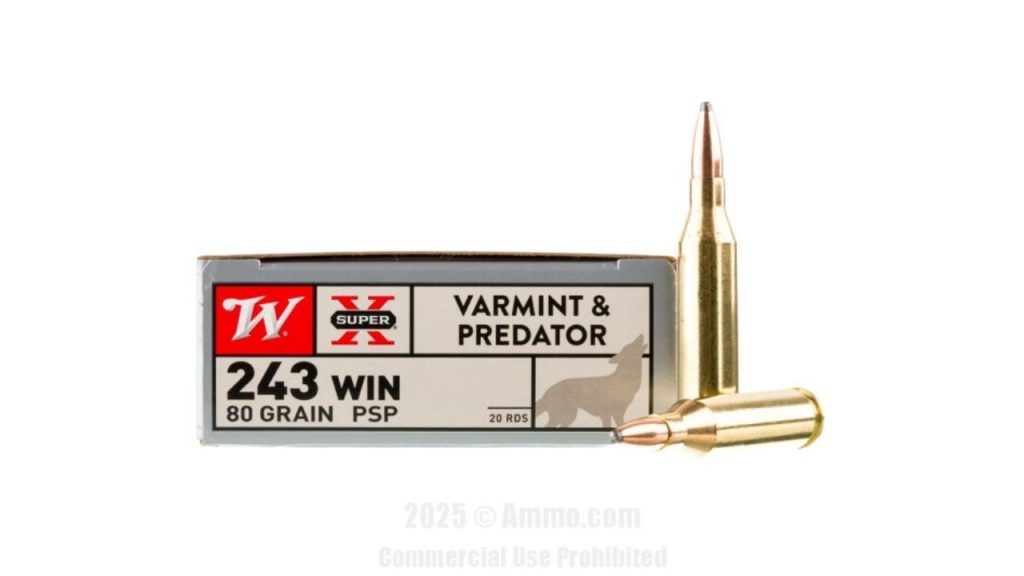
The .243 Winchester has filled countless deer tags, and that helps keep its reputation strong. But when you look at its real-world performance, especially on larger-bodied deer or in wind, the shortcomings show up. Light bullets drift more than many hunters expect, and even quality loads can lack the penetration needed when angles get tough.
It’s a capable cartridge in the right hands, but many hunters treat it as more versatile than it is. If you push shots past moderate distances or deal with unpredictable winds, you’ll notice that the .243 demands perfect execution where other calibers offer more margin.
.270 Winchester
The .270 Winchester is as popular as anything Jack O’Connor ever wrote about, but modern hunters often find it doesn’t match the hype. Its bullet selection is broader than it once was, yet many factory loads still favor lighter weights that lose steam quicker than today’s heavy-for-caliber options. On longer shots, energy drops sooner than many shooters expect.
Recoil isn’t punishing, but it’s enough to slow follow-up shots for hunters who aren’t well practiced. A lot of people carry the .270 because it’s familiar, not because it outperforms newer or better-balanced rounds designed for modern hunting scenarios.
.30-30 Winchester
The .30-30’s popularity is well earned historically, but its performance ceiling becomes clear the moment you stretch past 150 yards. The round was built for brush and timber, not the wider shots that today’s open-country hunters commonly face. Even with modern bullets, velocity and energy fade quickly outside its comfort zone.
Many hunters still treat it as capable in terrain where it was never intended to shine. It’s dependable at close range but limiting when deer or hogs don’t cooperate. The .30-30 stays iconic, but it underperforms compared to modern mid-range cartridges.
.22-250 Remington
The .22-250 built its fame on blistering speed, but speed doesn’t solve everything. Lighter bullets struggle in strong wind, and shot placement becomes more demanding as distance grows. Even with tougher bullet designs, you’re working with limited mass and energy on anything bigger than varmints.
Plenty of hunters push the cartridge into deer-sized game, and that’s where the problems show. It requires near-perfect hits, and the margin for error is smaller than most hunters want to admit. When conditions aren’t ideal, the .22-250 shows its limitations quickly.
.223 Remington
Few cartridges are more common, and that popularity leads many hunters to assume the .223 can handle more than it really should. Bullet technology has improved, and it’s no longer the unreliable choice it once was on deer-sized game—but it’s still narrow in capability.
Wind drift remains an issue with most loadings, and penetration can fall short on hard quartering angles. The .223 excels in the right hands with premium bullets, but it’s far from forgiving. Hunters expecting it to act like a mid-size round often end up disappointed in challenging conditions.
6.5 Creedmoor
The 6.5 Creedmoor dominates the conversation, and while it’s accurate and easy to shoot, its popularity has exaggerated its strengths. Hunters often treat it like a long-range hammer, when in reality it loses energy faster than larger 6.5s and requires disciplined shot selection.
The Creedmoor performs well with the right bullets, but it doesn’t magically overcome wind drift or marginal angles. Many shooters discover that its strengths lie more in recoil control and ease of practice, not raw hunting performance. Its reputation sometimes sets expectations the cartridge doesn’t realistically meet.
7mm-08 Remington
The 7mm-08 is a balanced cartridge, but balance doesn’t always translate to standout performance. Many factory loads run on the mild side, leaving the round closer in energy to the .308 than charts suggest. At distance, lower velocities limit expansion for some bullets designed for magnum speeds.
Hunters who expect magnum-like handling are often let down, especially on larger game. The cartridge works, but it requires careful bullet selection and realistic shot choices. Its popularity sometimes masks its need for a more thoughtful setup.
.308 Winchester
The .308 Winchester remains a go-to choice, but its real-world performance has aged compared to modern cartridges. Its trajectory is noticeably arched beyond 300 yards, and wind drift is more pronounced than many hunters realize. Heavier recoil also slows some shooters who aren’t used to managing it.
It’s still capable on deer, elk, and similar game, but it doesn’t outperform newer rounds designed for cleaner ballistics. Many hunters choose it because it’s everywhere, not because it’s the best tool for long or challenging shots.
.300 Blackout
The .300 Blackout’s popularity skyrocketed in the tactical world, and that carried over into hunting in a way that created inflated expectations. At close range with supersonic loads, it’s fine. Beyond that, the limitations become obvious. Velocity drops fast, and energy fades before most hunters expect it to.
Subsonic loads only make the problem worse. They’re quiet, but they lack the speed for reliable expansion on game. Many hunters buy into the trend, then quickly realize the Blackout is far more specialized than its popularity suggests.
.45-70 Government
The .45-70 is loved for nostalgia and power, but its performance story is more complicated. Heavy bullets hit hard at close range, yet the trajectory is steep, and wind drift becomes a serious factor even within moderate hunting distances. Shots beyond 150 yards require considerable compensation.
Many hunters buy it expecting a “big hammer” for all situations, only to find it performs best in very specific ones. It’s excellent in tight cover but limited anywhere else. Popularity and tradition often overshadow those constraints.
6mm Creedmoor
The 6mm Creedmoor has become popular with target shooters, and that has spilled over into hunting circles. While extremely accurate, it relies on lighter bullets that shed energy quicker than most mid-size game cartridges. Wind drift is also more noticeable, and long-range hits require careful judgment.
On deer-sized game, it can work well with the right bullets, but it’s not nearly as forgiving as many expect. Hunters who pick it for its target pedigree often find themselves wishing they had more mass and energy once they’re in real field conditions.
350 Legend
The 350 Legend earned its popularity in straight-wall states, but outside of those regulations, its performance feels limited. The velocity is modest, and bullet options are restricted compared to bottleneck cartridges. Beyond 150 to 200 yards, drop and drift make clean hits more challenging.
Hunters sometimes assume its popularity means it behaves like a traditional deer cartridge, but in harsher terrain or longer shots, it quickly shows its boundaries. It fills a niche well but underperforms when taken outside of that intended role.

Leo’s been tracking game and tuning gear since he could stand upright. He’s sharp, driven, and knows how to keep things running when conditions turn.