
Rare wildlife sightings that scientists still struggle to explain
Every so often, a hiker’s phone photo or a researcher’s field note captures something that seems to slip out of the rulebook of modern biology. Some of these encounters involve species thought to be vanishing; others show familiar animals behaving in ways that look almost supernatural. Together they reveal how much of the planet’s wildlife still moves just beyond the edge of scientific certainty.
From fanged deer that appear and vanish in remote mountains to seabirds and songbirds that outwit expectations, these rare wildlife sightings continue to puzzle researchers even as technology improves. They are not mythic monsters but real animals whose habits, migrations, and sudden appearances refuse to fit neatly into existing theories.
Ghosts in the snow: the Kashmir musk deer
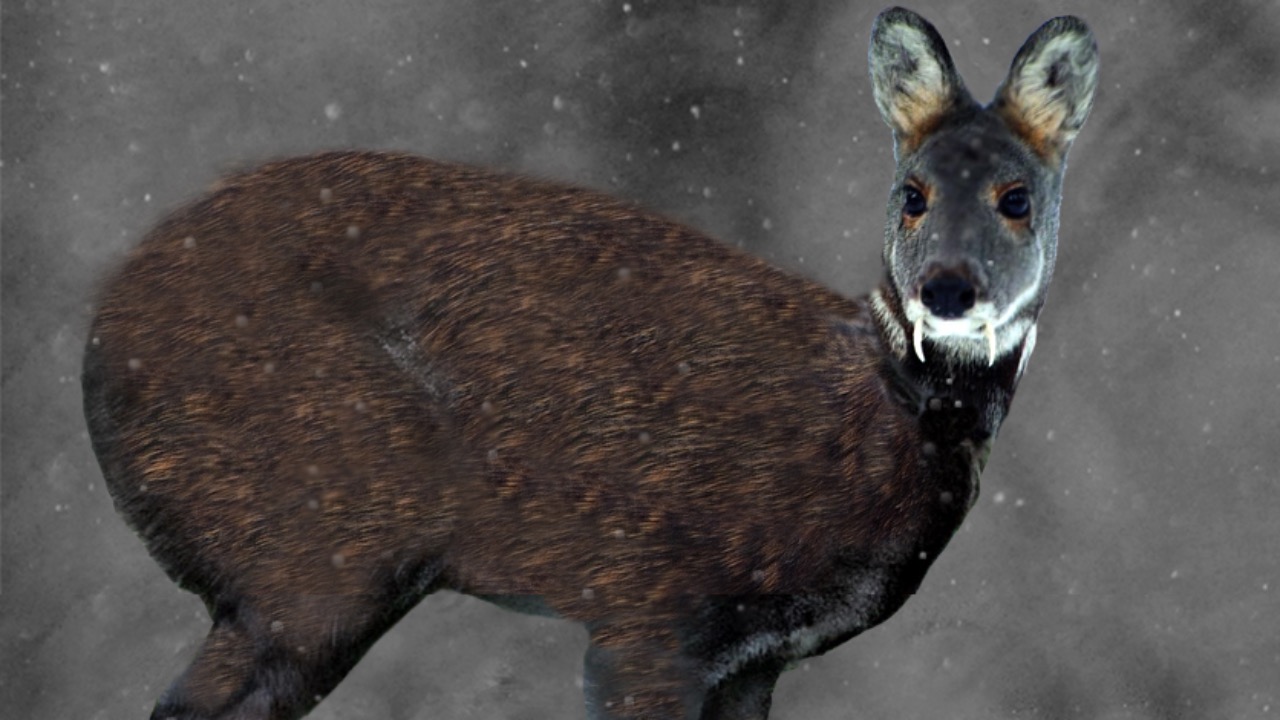
Few animals capture the idea of a “now you see it, now you do not” species like the Kashmir musk deer. This small, shy ungulate lives in steep, high-altitude forests and is instantly recognizable by the long, saber-like fangs that protrude from the males’ mouths. Those teeth look like something from a vampire legend, yet they are used in real territorial battles and mating contests, not in predation.
For long stretches of time, field biologists could not confirm whether the Kashmir musk deer still survived in parts of its historical range. Habitat loss and hunting for the musk gland, which is valued in perfumery and traditional medicine, pushed it into such low numbers that even local communities reported only occasional glimpses. When camera traps and direct observations finally documented the species again in some regions, the images felt less like routine data and more like evidence that a ghost had stepped briefly into the frame.
The scientific puzzle is not the animal’s existence but the pattern of its appearances. Populations seem to blink in and out of view, with years of silence followed by a burst of sightings. Researchers suspect a mix of factors, including poaching pressure, patchy alpine habitat, and the difficulty of surveying steep slopes in bad weather. Yet the intervals between confirmed records are long enough that conservation assessments often lag behind reality. The Kashmir musk deer has become an emblem of how incomplete monitoring can make a living species look functionally mythical.
Once-in-a-lifetime encounters that feel impossible
For many wildlife watchers, the rarest sightings do not involve obscure species but familiar animals in unfamiliar colors, places, or combinations. A report of people “stunned to spot extremely rare once in a lifetime animals” captures this emotional jolt. In that account, shared by By Maeve Dunigan, an observer describes a moment that was “breathtaking” and left them struggling to gather themselves after seeing an animal so unusual it felt almost unreal.
These encounters often involve albinism or leucism, where pigment is missing from fur or feathers, or unusual hybrids that blur species boundaries. In other cases, the rarity comes from timing rather than genetics, such as a normally solitary creature traveling with a calf or hunting in a location where it has hardly ever been recorded. The science behind such sightings is straightforward at the level of individual mutations or dispersal events, yet the combination of circumstances that brings them together in front of a human observer is incredibly unlikely.
Researchers treat these one-off reports carefully. A single photograph can expand known ranges or reveal behavior that challenges assumptions, but it can also be a statistical outlier that never repeats. The tension between anecdote and pattern is part of what makes these sightings so compelling. They hint at a hidden layer of ecological variation that standard surveys rarely capture.
Whales that strand together and refuse to leave
Some of the most haunting rare events involve animals that come ashore when they should be in deep water. Accounts of two pilot whales lying dying on a beach along with 10 others, described in one overview of Animal Behaviors ThatExplain, illustrate how mass strandings turn a mystery into a tragedy.
In many such cases, rescuers manage to push some animals back into the surf, only to watch them re-strand hours later. The whales appear physically capable of swimming away, yet they circle back to the same deadly shoreline. Scientists have proposed explanations that range from disorientation by underwater noise to infections that affect navigation. Social bonds are another strong candidate, since pilot whales are known for tight-knit pods in which healthy individuals may follow sick leaders into shallow water.
Despite decades of study, no single factor explains every event. Some strandings cluster around areas with complex underwater topography; others coincide with seismic activity near the coast. This has led researchers to examine data from programs such as the earthquake hazards monitoring network to see whether subtle tremors or seafloor shifts could confuse echolocating animals. The evidence remains inconclusive, and each new mass stranding adds another data point without closing the case.
European eels that vanish into the Atlantic
On land, many rare sightings involve single animals. In the ocean, entire life cycles can disappear from view. European eels are a classic example. Adults that grow up in rivers and lakes across Europe eventually migrate thousands of kilometers to the Sargasso Sea, where they spawn and die. Yet for all the tagging and tracking work, scientists still have not fully mapped how these fish navigate or exactly where in that vast patch of the Atlantic the spawning occurs.
One survey of natural enigmas describes how ancient Greek philosopher Aristotle wrote about eels and how the expression “slippery as an eel” captures the difficulty of studying them. Modern researchers echo that frustration. Even with satellite tags, many devices detach before the eels reach their destination, leaving a gap in the story. The long journey, combined with the fact that eggs and larvae are tiny and scattered, makes direct observation extremely rare.
Reports that group European eels with other natural mysteries highlight how even common species can hide key phases of their lives. Every tagged eel that makes it a little farther into the Atlantic gives researchers more clues, but the spawning grounds themselves remain almost mythical, a place inferred from fragments rather than directly seen.
Cuckoos that outsource parenting in ever stranger ways
Among birds, few behaviors baffle people more than brood parasitism, where one species lays eggs in the nest of another and leaves the host to raise its chicks. Cuckoos are the most famous practitioners. Females stealthily deposit their eggs in the nests of warblers, pipits, and other small birds, often timing their visits to moments when the rightful parents are away.
What continues to surprise scientists are the fine details of this strategy. In some populations, cuckoo eggs mimic the color and speckling of a particular host species so closely that even experienced ornithologists struggle to tell them apart. In others, chicks hatch earlier and grow faster than their nest mates, then push rival eggs or chicks out of the nest. Each of these tactics has an evolutionary explanation, yet the precision with which they match local host defenses suggests a dynamic arms race that plays out at the level of individual valleys and hedgerows.
Field projects that monitor bird behavior have documented how host species sometimes fight back by evolving better egg recognition or by mobbing adult cuckoos near nesting sites. Yet new reports continue to surface of hosts that seem unusually tolerant, or cuckoos that shift to novel hosts in regions where traditional targets have become too vigilant. The pattern is not static, and each rare observation of an odd pairing or a new mimicry pattern forces scientists to update their models of how brood parasitism spreads.
Even within the same group, variation can be striking. Separate research threads on cuckoo species highlight how some lineages rely heavily on stealth, while others use aggressive tactics such as destroying host eggs to force renesting. The rarest sightings, such as a cuckoo chick raised successfully by an unusual host, are often the ones that reveal the next twist in this evolutionary contest.
Crows that solve puzzles and act like pranksters
Not every unexplained sighting involves a rare species. Sometimes it is the behavior that is rare. Corvids, especially crows, have become famous for their intelligence, yet individual incidents still catch researchers off guard. Reports that compile puzzling animal actions often include crows that use tools, cache food in elaborate patterns, or appear to play games with other species.
One category of sightings involves crows dropping hard-shelled nuts onto roads so that passing cars crack them open, then waiting for traffic lights to change before retrieving the food. Another involves birds bending wires or twigs into hooks to fish insects out of crevices. Controlled experiments have confirmed that some crow populations can understand multi-step problems and even plan ahead, but casual field observations sometimes show behaviors that look like improvisation or even mischief.
Part of the challenge is separating anecdote from repeatable behavior. A single crow that seems to tease a cat or slide down a snowy roof might be an outlier. Yet when similar scenes appear in multiple locations, they suggest that play and innovation are more widespread than once thought. Long-term projects that track crow populations show that these birds can learn from one another and pass on new tricks, which means a single creative individual can change the behavior of an entire flock.
Even with that framework, some reports still defy easy categorization. Observers describe crows apparently recognizing specific human faces, leaving small objects near people who feed them, or adapting to urban hazards in ways that suggest a flexible understanding of cause and effect. The science of animal cognition has advanced quickly, yet each new rare behavior pushes the boundaries of what researchers expect from a bird brain.
Fish that climb waterfalls and wolves that rethink territory
In 2025, several field reports captured animal behaviors that scientists had not predicted. A review of Animal Behaviors Scientists to See described a massive fish aggregation climbing waterfalls in Brazil. The image of hundreds or thousands of fish surging up vertical rock faces like a living ladder challenged assumptions about what species could manage such feats of upstream travel.
In the same set of observations, wolves were documented behaving in ways that complicated traditional ideas about rigid territories and fixed pack structures. These Wolf records hinted at more fluid social arrangements and long-distance movements that may be responses to changing prey distributions or human pressures.
Such events are rare enough that they can look like anomalies. Yet they may be early signs of how species adapt to altered rivers, warming climates, and shifting landscapes. Fish that learn to exploit new migration routes, even if they involve climbing waterfalls, could open up habitats that were previously inaccessible. Wolves that adjust their social rules might cope better with fragmented forests and expanding road networks. For now, each sighting is a puzzle that raises more questions than it answers about the pace and direction of behavioral change.

Leo’s been tracking game and tuning gear since he could stand upright. He’s sharp, driven, and knows how to keep things running when conditions turn.