Rifles That Aren’t Worth Hauling Uphill
Anyone who spends enough time climbing ridges with a rifle on their shoulder eventually figures out which guns pull their weight and which ones feel like they’re fighting against you. Some rifles might shoot well on the bench, but once you start gaining elevation, their downsides show up fast. Weight, awkward balance, and clunky handling turn into real problems when your lungs are burning and the trail keeps climbing. A rifle that drags on you all day doesn’t earn much love, no matter how well it groups at 100 yards.
You learn to recognize when a rifle makes the work harder than it needs to be. The rifles below have their uses, and many have their fans, but hauling them uphill isn’t something you look forward to. The mountains reward guns that carry light and move quick, and these don’t always fit that bill.
Barrett M82A1

The Barrett M82A1 has a place in the shooting world, but carrying it uphill feels like punishing yourself for no reason. At around 30 pounds with a loaded magazine and optic, it wears you down before you’ve even covered a mile. The bulk makes it tough to sling comfortably, and the long barrel doesn’t play nicely with tight terrain or steep ground. You end up adjusting it every few steps because it never settles well on your shoulder.
Even if you manage to haul it up a mountainside, it’s not a rifle meant for quick, steady shots in rough country. Its recoil system and overall footprint favor open ground and stable positions. In rugged terrain, it becomes more baggage than tool, and you feel every extra pound it brings along.
M1 Garand
The M1 Garand is a piece of history, but its weight adds up fast when the slope tilts upward. The steel and walnut construction holds up well, yet the mass becomes a burden after a few hours on steep ground. You can appreciate its reliability and accuracy, but the balance isn’t built for long climbs. It tends to pull at your shoulder, especially when the terrain forces you to use your hands for balance or footholds.
Even once you reach higher ground, the eight-round clip system and length make it slower to handle in tight spots. It’s still a fine rifle in its own right, but hauling it uphill is a reminder that older designs didn’t worry much about saving ounces. That weight wears on you long before you see a shooting position.
M1A Standard
The M1A Standard delivers solid performance, but its size and heft make it a challenging partner on steep climbs. Slinging it across your back or shoulder never feels quite right, and it tends to shift as you move through uneven terrain. The wood or synthetic stock options still leave you carrying a rifle well over nine pounds before adding optics or accessories. That extra mass becomes noticeable once your legs start burning.
Even after reaching your spot, the rifle’s length makes it less maneuverable in brush or on narrow ledges. The action is dependable, but the overall package isn’t designed for covering vertical ground with ease. It excels in more forgiving terrain, yet it feels like too much rifle when the mountain makes you earn every step.
FN FAL 50.00

The FN FAL 50.00 earned respect in its day, but its weight makes it a tough uphill companion. With a full-length barrel and steel receiver, it pushes past nine pounds before you add a loaded magazine. That becomes noticeable when you’re climbing loose rock or brushy inclines. The rifle’s balance is serviceable on level ground, but going vertical exposes how front-heavy it can feel over time.
Even when you reach your vantage point, handling the rifle in tight, uneven country takes more effort than you’d prefer. It performs well mechanically, yet the overall bulk makes it better suited to flat or rolling terrain. On a steep climb, it feels like it’s working against you rather than helping you get the job done.
HK G3A3
The HK G3A3 is known for durability, but its weight and length turn it into a burdensome carry on mountain trails. The stamped receiver may shave a little weight compared to some battle rifles, but it still lands well into the heavy category. The balance leans forward, which becomes more noticeable when your footing is uneven. Even with a good sling, you spend a lot of time adjusting it as it shifts on your shoulder.
Once you finally crest the ridge, the recoil impulse and size make quick handling in rough ground a bit clumsy. It certainly performs, yet in steep terrain it feels out of place. You end up feeling the rifle more than you benefit from it, which isn’t what you want on a hard climb.
PSL-54C
The PSL-54C extends your reach, but hauling it uphill can feel like dragging a beam through the woods. The long barrel and stretched-out receiver create an awkward carry that snags on brush and throws off your balance. Its weight isn’t outrageous, but the length makes it feel heavier than it looks. On steep terrain, the rifle constantly shifts, forcing you to readjust your sling or grip while climbing.
At the top, the rifle works well for distance, yet maneuvering it around rocky cover or tight shooting angles can be frustrating. The PSL has its role, but it wasn’t designed with mountain mobility in mind. Its size alone makes you think twice about dragging it up another ridge.
Mosin-Nagant 91/30

The Mosin-Nagant 91/30 is built like a tool that never breaks, but carrying it uphill reminds you why lighter rifles took over. Its sheer length makes it awkward on steep trails, and the weight begins to pull at your shoulder as the climb drags on. The steel and wood construction lasts forever, yet it offers no kindness to your legs or back during a long ascent.
Even when you find your shooting spot, the bolt throw and overall size slow you down. The rifle can take punishment, but it doesn’t carry smoothly in rugged terrain. It’s dependable in harsh conditions, though it asks more of you than most hunters or hikers want to give on an uphill push.
VEPR .308
The VEPR .308 is built tough, but toughness often comes with mass, and this rifle proves it. The reinforced RPK-style receiver adds weight that becomes noticeable the moment the trail tilts upward. Even with a comfortable sling, the rifle’s chunky profile never settles against your body. It shifts as you climb, making each adjustment feel like more work than it should be.
Once you’re on top of the ridge, the rifle’s accuracy is fine, but the overall handling feels slow in tight cover or uneven ground. You can rely on its function, yet you pay for it every step of the climb. It’s better suited to flatter country where weight matters less.
Springfield 1903A3
The Springfield 1903A3 carries plenty of history, but on a long ascent its weight becomes hard to ignore. The steel receiver and full-length barrel create a package that feels heavier as the miles add up. With traditional sling points and stock geometry, it doesn’t ride as comfortably as more modern mountain rifles. You spend more time shifting it around than you’d like.
At elevation, it still shoots well, but the long bolt throw and overall length slow things down when you’re working around rocks or brush. The rifle has proven itself in hard conditions, yet climbing with it feels like stepping back into a time when nobody cared what a rifle weighed on steep hills.
Swiss K31

The K31 is admired for precision, but it wasn’t designed for steep, punishing terrain. The rifle has a dense, solid feel that turns into a burden as you climb. Its straight-pull action is smooth, though the weight makes it tough to carry for long stretches. The stock shape also isn’t friendly for slinging during strenuous uphill travel, shifting more than you want it to.
When you reach your spot, the K31 performs well, but maneuvering its long profile in tight, rocky pockets takes effort. It shines on moderate terrain and at the range, yet it loses its charm when the mountain demands more than level footing. The weight becomes a constant reminder that precision sometimes comes with a cost.
Remington Model 760 Gamemaster
The Remington 760 Gamemaster cycles fast, but its weight and balance can feel clunky on a steep climb. The pump mechanism, while reliable, adds forward mass that becomes noticeable as you gain elevation. With a scope mounted, the rifle shifts slightly during each step, making you readjust your sling more often than you’d like. Over time, that gets old.
At the top, the rifle still performs well for mid-range shots, but the overall handling feels dated in rugged terrain. The stock and fore-end don’t exactly hug the body when slung, adding to the fatigue. It’s accurate and dependable, yet it doesn’t shine when the trail makes your legs work overtime.
Marlin 1895 (Guide Gun Excepted)
The Marlin 1895 in its full-length versions brings extra weight and a long barrel that isn’t suited to steep hills. While the rifle is sturdy and hits hard, the longer configurations snag on brush and become a chore to sling uphill. The balance shifts forward, adding to fatigue on climbs that already stretch your lungs. Even with a padded sling, it wears on you faster than expected.
Once you crest the ridge, it still handles business at closer ranges, but the length makes it tough to maneuver around thick cover. The Guide Gun versions fix much of this, yet the full-size models punish anyone hauling them uphill for long distances. They perform well, but they’re not friendly to anyone climbing serious elevation.
Winchester Model 70 in Wood-Stocked Heavy Barrels
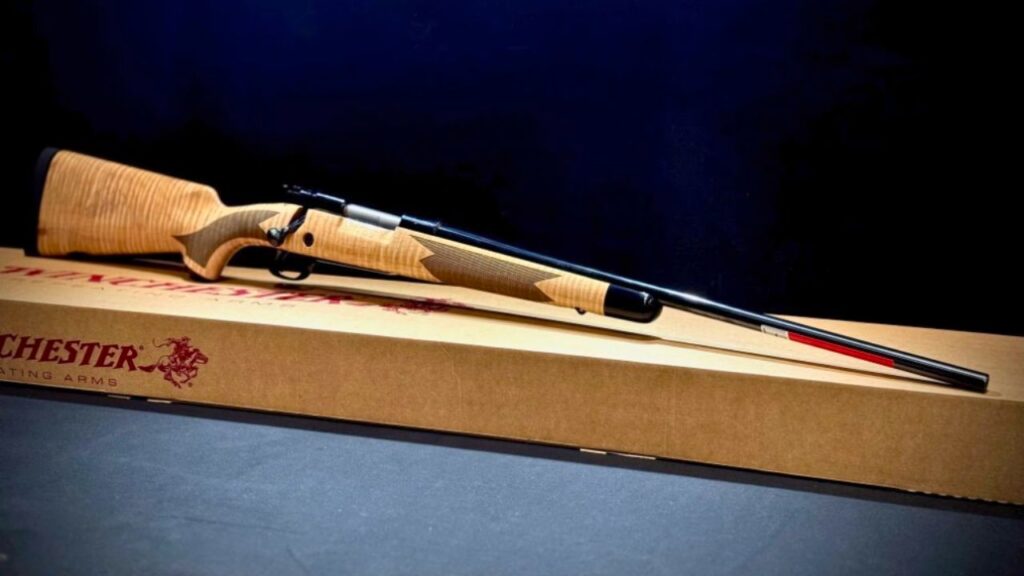
A heavy-barrel Winchester Model 70 in a walnut stock brings accuracy, but it also loads your shoulder with more weight than is practical for climbing. The combination of steel, wood, and a thick barrel profile adds up quickly. With glass mounted, the setup becomes something you feel deeply on long ascents. The rifle doesn’t settle against your body as cleanly as lighter mountain rifles, leading to constant adjustments.
When you finally make elevation, the accuracy is there, but getting it into position in tight or rocky pockets feels slower than it should. The rifle excels at steady shooting, yet carrying it uphill is more punishment than payoff for most terrain-focused hunters.
Savage 110 Tactical
The Savage 110 Tactical brings precision features, but most of them come with extra mass that turns into a chore on an uphill hike. The chassis-like stocks, heavy barrels, and accessory rails all add weight that becomes more noticeable as the trail steepens. Even with a comfortable sling, the rifle doesn’t carry lightly or settle smoothly against the shoulder during strenuous climbs.
At higher ground, the rifle shoots well, but you’ll feel the fatigue setting in before you even set up. It’s a capable platform for flat or moderate terrain, yet it’s more rifle than you need when the mountain forces you to earn every step. The precision is undeniable, but hauling it uphill takes a toll.
Ruger Mini-30 (Older Heavy Variants)
Older heavy-barrel Mini-30 configurations may look manageable, but once you start climbing, their weight distribution becomes obvious. The forward-heavy feel makes the rifle shift as you move, forcing you to keep adjusting your sling on steep ground. Even though the overall weight isn’t extreme, the way it carries becomes tiring much faster than expected. The longer barrel versions feel unsteady on your back when the terrain gets uneven.
At the top, the rifle operates fine, but the handling feels slightly sluggish compared to modern lightweight carbines. It’s dependable and useful in many situations, yet the older heavy-barrel setups don’t shine when the mountain demands long, steady climbs.

Asher was raised in the woods and on the water, and it shows. He’s logged more hours behind a rifle and under a heavy pack than most men twice his age.