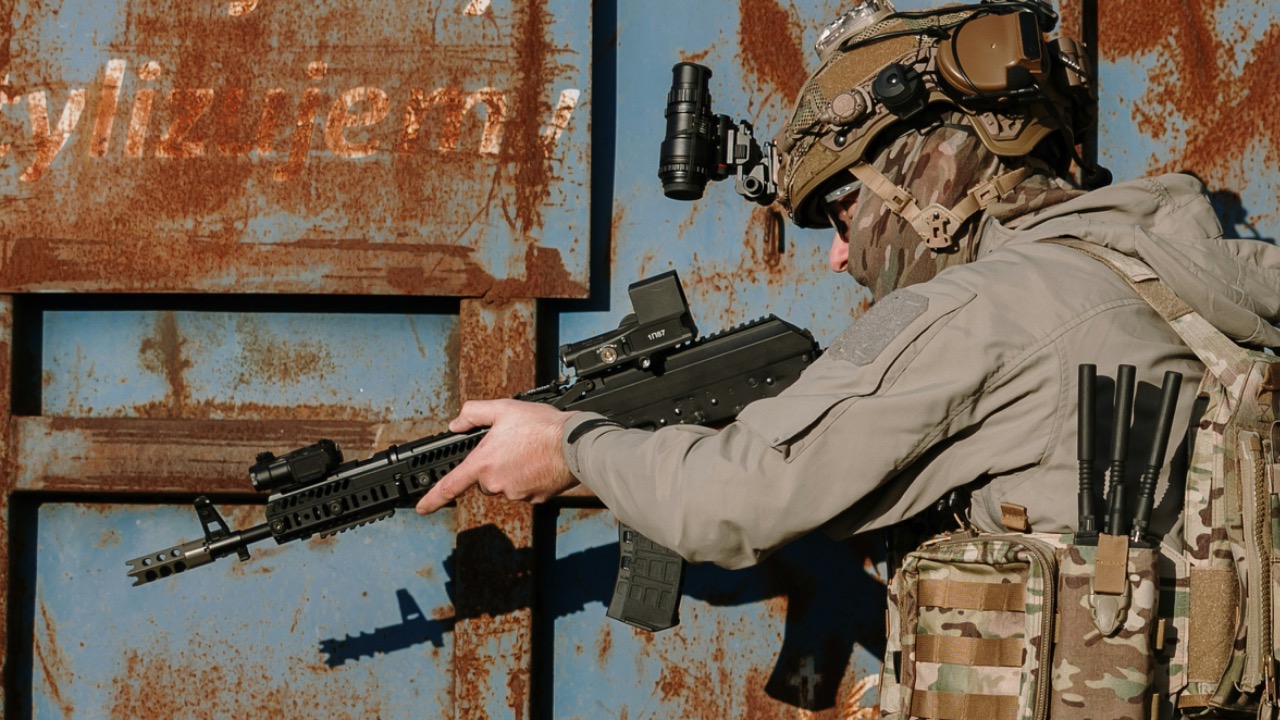
Second Amendment Advocate Suggests Machine Gun Ban Could Face Future Challenges
Legal fights over the Second Amendment are moving rapidly from handguns and rifles into far more controversial territory, and the federal machine gun ban is suddenly near the center of that shift. As gun rights groups test new theories and courts split over how far constitutional protections extend, at least one prominent Second Amendment advocate is openly predicting that the long standing restrictions on automatic weapons may not be as secure as they once seemed. The result is a high stakes contest that could eventually force the Supreme Court to decide whether machine guns belong inside or outside the modern understanding of the right to keep and bear arms.
That possibility no longer looks theoretical. Recent rulings, fresh lawsuits, and behind the scenes strategy from gun absolutists are converging on the National Firearms Act and the federal machine gun ban, raising the prospect that a law many viewed as settled could face serious challenges in the years ahead.
From fringe argument to live constitutional question

For decades, the federal prohibition on new civilian machine guns was treated as a political lightning rod but a legal near certainty. Advocates who pressed the claim that automatic weapons are protected by the Second Amendment were often dismissed as outliers. That posture is changing as litigators draw on the Supreme Court’s modern Second Amendment cases and push courts to decide whether the right covers weapons that fire multiple rounds with a single trigger pull. One lawsuit filed in federal court argued that a law largely banning the sale of machine guns is unconstitutional under the Second Amendment and pressed the Bureau of Alcohol, Tobacco, Firearms and Explosives to reconsider how it defines and regulates these weapons, according to an attorney challenge.
The arguments are no longer confined to academic briefs. A major ruling from the Southern District of Mississippi, described in coverage of a decision titled “Federal Court Declares Machine Gun Ban Unconstitutional,” reported that a Judge in that court concluded the federal machine gun ban could not be squared with the current reading of the Second Amendment. The analysis in that decision referenced earlier disputes such as Hollis v. United States and signaled that at least some federal judges now see the ban as vulnerable, a development highlighted in a detailed account of the.
Sixth Circuit draws a hard line against machine guns
Not all courts are moving in that direction. In a high profile prosecution, Bridges was indicated on one count of possessing a machine gun and tried to knock out the charge by arguing that the federal ban violated his constitutional rights. A district judge rejected his argument, and on appeal the Sixth Circuit agreed that the federal machine gun ban is constitutional. The appellate panel treated the statute as a valid exercise of government authority and declined to extend Second Amendment protections to the weapon at issue, according to a report on the Bridges appeal.
The same conflict came into sharper focus in another description of the Sixth Circuit’s reasoning, which emphasized that the court saw no Second Amendment coverage for automatic weapons. One judge, identified as Gri, wrote that “the machine gun’s historical connection to crime in the United States illustrates its lack of connection to lawful purposes,” a line quoted in coverage of the decision that rejected the notion that such firearms are in common lawful use. That summary of the panel’s view of the Second Amendment and machine guns appeared in an analysis of how the Sixth Circuit approached the case.
Gun absolutists target the National Firearms Act
Behind the courtroom clashes sits a broader strategy from advocates who describe themselves as gun absolutists. Their goal is not only to chip away at isolated regulations but to dismantle core pillars of federal firearms law. One detailed account of their plans explains that they are working to weaken or overturn the National Firearms Act, often referred to as the NFA, which has long governed machine guns, short barreled rifles, and other tightly regulated weapons. That reporting notes that the absolutists see the NFA as a central obstacle to a maximal reading of the Second Amendment and are crafting cases that invite judges to treat its restrictions as historically unsupported.
Opponents of that agenda have started to voice a specific worry. According to the same account, some gun control advocates fear that “Overturning the NFA altogether” could lead to a loosening of restrictions on machine guns as well, a scenario described as a nightmare for those who support strict limits on automatic weapons. The report adds that these activists expect gun rights litigators to attack machine gun rules in a separate lawsuit, indicating that the current wave of challenges is part of a staged campaign rather than a one off effort, as outlined in the description of Overturning the NFA.
NRA’s new lawsuits widen the battlefield
Major legacy groups are now moving in parallel with the absolutists. The NRA has begun to treat the National Firearms Act itself as a target, not just individual applications of it. In a detailed announcement, the NRA described a new case under the headline “NRA Announces Third Lawsuit Challenging the National Firearms Act” and framed the litigation as part of a broader push against federal taxation and registration requirements. The group said that the NFA tax no longer fits within the historical tradition of firearm regulation and signaled that it intends to use the courts to narrow the law’s reach.
A similar message appeared in a social media post that opened with the word “BREAKING” and declared that The NRA had filed a third lawsuit challenging the National Firearms Act of 1934. That post stressed that “With the NFA tax now” at the center of the dispute, the group believes modern Second Amendment doctrine gives it new leverage to argue that the law is unconstitutional, and it urged supporters to rally behind the case, as described in the BREAKING announcement. The NRA’s formal legal arm echoed that framing in its own summary of the litigation, which carried the title “NRA Announces Third Lawsuit Challenging the National Firearms Act” and argued that the NFA tax conflicts with the historical tradition of firearm regulation, according to the group’s NRA Announces Third statement.
Second Amendment on the Supreme Court’s doorstep
These moves are unfolding as the Supreme Court prepares to take up new Second Amendment disputes that could reshape the legal environment in which machine gun cases are decided. A detailed preview of the Court’s 2025 to 2026 term noted that the Second Amendment is again in the spotlight, with multiple petitions asking the justices to clarify how far the right extends and what kinds of historical analogues are required to uphold modern gun laws. That overview described the Second Amendment as a recurring theme in the term’s docket and suggested that the justices are being asked to decide whether lower courts have applied the Court’s precedents too narrowly or too broadly, according to a Second Amendment in analysis.
A separate preview, framed as a “Quick summary,” reported that the Supreme Court is scheduled to hear early 2026 arguments in Second Amendment challenges that will test several state level restrictions, including a permit to purchase requirement. That report stressed that the outcomes of those cases will influence how lower courts evaluate other gun regulations that rely on similar historical justifications. Advocates on both sides see those hearings as a bellwether for how the justices might eventually treat a direct challenge to machine gun laws, according to the Quick summary of the upcoming docket.
Technology blurs the line between semi automatic and automatic
While lawyers argue over statutory text and historical analogues, technology is steadily eroding the practical distinction between semi automatic firearms and machine guns. One recent report highlighted that there is a small device, commonly called a forced reset trigger, that can enable a firearm to shoot up to 900 rounds a minute. The video explained that regulators and state officials are wrestling with whether these add ons should be treated as machine gun conversion devices and whether existing law is equipped to handle accessories that push semi automatic rifles into functional parity with banned weapons, as illustrated in a Nov report on forced reset triggers.
The questions are not confined to obscure hardware. As forced reset triggers and similar devices spread, they create test cases that could force courts to decide whether the Second Amendment protects not only traditional firearms but also accessories that dramatically increase their rate of fire. Advocates challenging the federal machine gun ban sometimes point to these technologies as evidence that the current regulatory regime is inconsistent and ripe for revision, while defenders argue that the existence of such devices only strengthens the case for strict controls on anything that approximates automatic fire.
Why advocates believe the machine gun ban could be next
In this environment, the suggestion from a leading Second Amendment advocate that the machine gun ban might not survive future litigation reflects more than rhetorical bravado. Supporters of that view point to the combination of a federal Judge in the Southern District of Mississippi who has already declared the ban unconstitutional, a growing number of lawsuits that treat the National Firearms Act as incompatible with the Second Amendment, and a Supreme Court that has insisted on a tight fit between modern gun laws and historical practice. They argue that if courts accept the premise that the Second Amendment protects weapons in common lawful use and that historical analogues must be close to modern regulations, then machine gun restrictions could face the same scrutiny now being applied to other firearms rules, as indicated in the Sixth Circuit debate over historical connections.
Opponents counter that the Sixth Circuit’s reasoning in the Bridges case, which emphasized the machine gun’s historical connection to crime in the United States and its lack of connection to lawful purposes, offers a clear path for courts that want to uphold the ban. They also stress that the NFA has been on the books for generations and that even aggressive readings of the Second Amendment leave room for governments to regulate particularly dangerous weapons. For now, the split between decisions like the Mississippi ruling and the Sixth Circuit’s opinion, combined with fresh challenges from the NRA and gun absolutists, ensures that the question will not fade away. Whether or not the Supreme Court eventually agrees with the advocates who see the machine gun ban as the next domino to fall, the legal and political groundwork for that fight is already being laid.

Asher was raised in the woods and on the water, and it shows. He’s logged more hours behind a rifle and under a heavy pack than most men twice his age.