The Outlaws Who Shaped Frontier Justice
Frontier justice in the American West emerged in a world where courts were distant, law officers were scarce, and violence often passed for order. In that vacuum, outlaws and gunfighters did more than rob banks or settle scores; they forced communities to decide what justice meant when survival was on the line. The legends that formed around these figures still shape how the public imagines crime, punishment, and authority on the edge of state power.
The outlaws who shaped frontier justice were not just criminals or heroes, they were catalysts. Their raids, duels, and defiance of authority pushed towns toward vigilante committees, inspired new lawmen, and hardened ideas about who deserved protection and who could be hunted down. In many ways, the story of the Old West is the story of how these figures tested the limits of law and helped define where justice ends and vengeance begins.
The Meaning of Frontier Justice
Frontier justice was a response to scarcity: scarce judges, scarce jails, and scarce faith that distant institutions could protect isolated communities. In practice it meant extrajudicial punishment that arose when law and order were weak or when citizens were angry at formal courts, a pattern captured in definitions of frontier justice as punishment carried out outside legal procedure. Hangings from cottonwood trees, summary shootings, and vigilante posses were treated as practical solutions rather than aberrations, especially where the nearest judge might be weeks away by horse.
Formal law enforcement struggled to keep pace. Accounts of the period describe how U.S. Marshals could travel widely and enforce federal law, yet if a crime was not Federal they had to hand suspects over to local systems that barely existed. Research into territorial courts in places such as New Mexico notes that citizens often could not rely on their local officers or judges, which encouraged private retaliation and vigilante committees, as detailed on Page of one study. In that environment, the line between criminal and community protector blurred, and reputations for toughness sometimes mattered more than badges or statutes.
Civil War Roots of the Outlaw Era
The chaos of the American Civil War did not end neatly at Appomattox; it bled into the cattle trails and mining camps of the West. Veterans carried combat skills, trauma, and political grudges into frontier regions, and some turned those skills toward banditry. A video examination of Civil War Origins traces how guerrilla warfare tactics, such as hit and run raids and reliance on local sympathizers, migrated into postwar outlaw gangs. In many communities, former bushwhackers and raiders were either branded criminals or quietly celebrated as avengers, depending on which side of the war locals had backed.
The transition from soldier to outlaw was especially visible in border states and territories where loyalties had been split. Men who had fought irregular battles under loose command structures often found the discipline of peacetime law intolerable and returned to the only work they knew, armed raids on trains, banks, or rival ranchers. In regions like the The Outlaw Era around Hole in the Wall Valley, locals who felt unfairly targeted as rustlers by powerful interests sometimes sheltered these men. The result was a culture where Civil War grievances, economic hardship, and weak institutions fused into a semi-organized outlaw resistance that forced towns and ranchers to improvise their own brand of justice.
Jesse James and the Politics of Banditry
Few figures illustrate the political edge of outlawry as clearly as Jesse Woodson James. Described as an American outlaw and bank and train robber, Jesse James emerged from Missouri, a state scarred by guerrilla warfare, with a reputation shaped as much by Confederate sympathies as by crime. Biographical accounts of Jesse James and describe how the brothers, along with the Younger Brothers, robbed banks and trains across the Midwest while presenting themselves as avengers of Southern grievances. Their raids were not random; they often targeted institutions tied to Reconstruction authority or Northern capital, which helped them cultivate a Robin Hood image among some sympathizers.
That image, however, collided with the reality of violence and death. The question of What it meant to be an outlaw in this context was not abstract; communities had to decide whether Jesse and Frank James were political rebels or dangerous criminals. Explanations of Why Jesse and Frank James turned to crime point to a mix of postwar resentment and personal ambition, and descriptions of Jesse and Frank emphasize that their robberies often ended in civilian casualties. Modern searches on Jesse James highlight how the legend has outgrown the crimes, while another overview of Jesse James underlines the enduring fascination with a man whose life forced communities to choose between legal procedure and targeted manhunts.
Billy the Kid and the Youthful Face of Violence
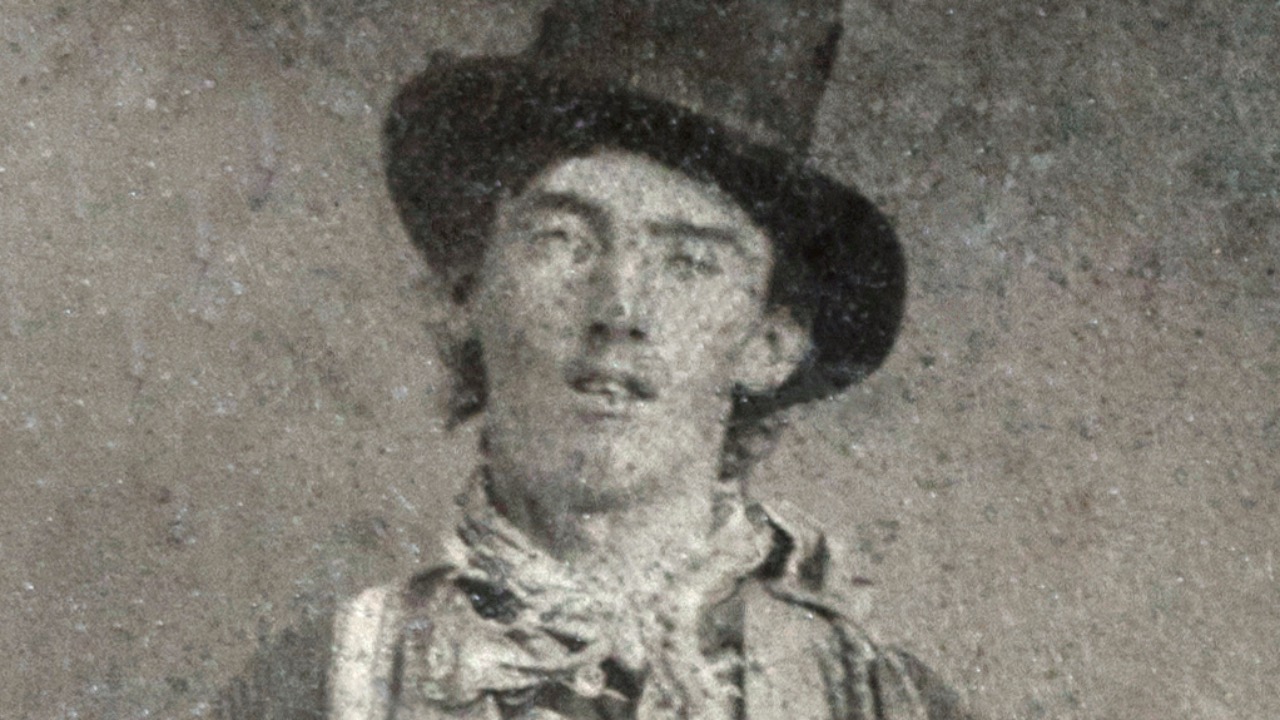
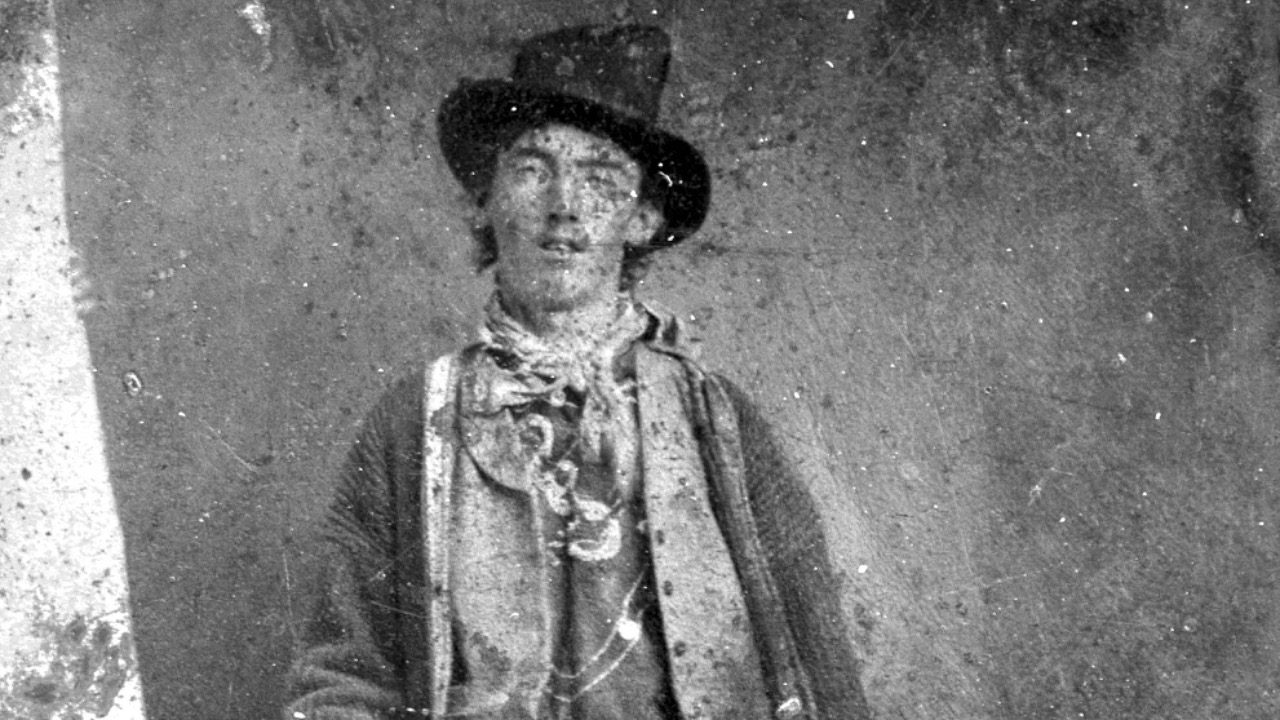
If Jesse James embodied political outlawry, Billy the Kid gave frontier lawlessness a youthful, almost reckless face. Known in records as William H. Bonney and also as Henry McCarty, Billy the Kid has been remembered as one of the most famous gunslingers of the Old West, with accounts stressing his quick draw and multiple killings before the age of twenty one. Biographical summaries of Billy the Kid identify him as Henry McCarty and trace his involvement in the Lincoln County War, a conflict where business rivalries and weak territorial courts turned a cattle dispute into open combat.
The Kid’s story reveals how thin the boundary could be between hired gun, factional fighter, and wanted criminal. In New Mexico Territory, where one study notes that citizens could not always rely on their courts in New, Billy’s actions were interpreted through local alliances as much as through statutes. Some ranchers saw him as a useful enforcer, others as a menace who had to be eliminated for order to return. Modern profiles of Henry McCarty emphasize how his legend grew after his death at the hands of Sheriff Pat Garrett, a killing that itself carried the flavor of frontier justice: a lawman tracking a young fugitive through a landscape where formal trials were more aspiration than reality.
Butch Cassidy, the Hole in the Wall, and Corporate Fear
As the frontier economy matured, outlaws increasingly collided with corporate power, and no figure captures that collision better than Butch Cassidy. Described in historical summaries as a notorious American train and bank robber, Butch Cassidy led the Wild Bunch, a gang that used remote hideouts and fast horses to rob railroads and financial institutions. Their operations intersected with the story of the Hole in the Wall Valley, a region described in accounts of Hole in the Wall Valley as a refuge for people labeled rustlers by powerful cattle interests and attacked by groups described as the Inva, shorthand for invading forces backed by large outfits.
For ranchers and railroad companies, Cassidy’s raids were not romantic adventures but direct threats to property and authority, and they responded with private detectives, hired gunmen, and pressure on local sheriffs. These corporate campaigns influenced frontier justice by effectively outsourcing law enforcement to private interests that were less constrained by due process. The same valley that sheltered Cassidy and his associates became a symbol of resistance to outside control, while also justifying aggressive manhunts that blurred the line between legal pursuit and private war. Later retellings of the Wild Bunch story, including optional profiles of Butch Cassidy, highlight how his legend grew in parallel with rising corporate fear of organized outlawry.
Belle Starr and Gendered Notions of Lawlessness
While most frontier outlaw stories center on men, Belle Starr forced communities to confront what female criminality looked like in a culture built on rigid gender roles. Often labeled “The Bandit Queen,” Note on one compiled list of outlaws explains that Belle Starr appears there because of her association with other criminals who operated on Texas soil. Searches focused on Belle Starr present her as an outlaw connected to horse thieves and bandits in Indian Territory, someone who navigated both criminal networks and domestic life.
Her notoriety came not only from alleged crimes but from the shock of a woman riding, shooting, and commanding respect in circles usually reserved for men. References to The Bandit Queen show how later writers and filmmakers used her story to challenge or exploit gender expectations, often exaggerating her role to fit popular narratives. On the ground, though, Belle Starr’s presence in outlaw circles complicated the work of lawmen and vigilantes, who had to decide whether to treat her as a full participant in crime or as an accessory shielded by social norms. That tension added another layer to frontier justice, where judgments about guilt and punishment were filtered through views of femininity as much as through evidence.
Clay Allison, Vigilantes, and the Cult of the Gunslinger
Clay Allison embodied the raw, personal violence that often substituted for formal justice in cattle towns. Described in one profile as the “Wildest Gunman of the Old West,” accounts of Allison portray a man whose name lingered in folklore like the echo of a six shooter, a figure both feared and admired. Search results for Clay Allison identify him as a gunfighter with a reputation for unpredictable, often drunken violence, yet some stories insist he “never killed a man who did not need killing,” a phrase that captures how frontier communities rationalized extrajudicial killings as rough justice.
Allison moved through towns where vigilante committees were common and formal trials were rare, a pattern echoed in discussions of how Vigilante actions and lynchings were common and seldom prosecuted. In such places, law enforcement could be as brutal as the crimes it pursued, and individuals like Allison could shift roles, sometimes acting as informal enforcers, sometimes as targets. Additional references to Old West gunmen show how later generations turned these figures into icons, smoothing over the terror they inspired among neighbors who had to live with the consequences of their quick tempers and ready revolvers.
Wyatt Earp, Bat Masterson, and the Professionalization of Law
As frontier towns grew, some communities tried to move from ad hoc posses to professional law enforcement, and figures such as Wyatt Earp and Bat Masterson became symbols of that shift. Biographical sketches of Wyatt Earp present him as a lawman and gambler whose legend of the American frontier began in Monmouth, Illinois, then spread through posts in Dodge City and Tombstone. A social media reflection on Wyatt Earp describes him as a lawman in frontier boomtowns whose actions at events such as the Gunfight at the O.K. Corral helped define the American West in popular memory.
Bat Masterson followed a similar path from buffalo hunter and gambler to lawman and later writer. A search profile of Bat Masterson identifies him as a frontier lawman and sports writer, while a social media post on his legacy notes that After years of chasing outlaws, dealing cards, and upholding justice in places like Dodge City and Tombstone, Masterson left behind more than one legend. Another overview of Masterson reinforces his dual identity as both participant and chronicler of the West. Together, Earp and Masterson represent a move toward salaried, recognizable law officers, yet their reliance on gunfights and personal reputations shows how far frontier justice still leaned on individual force rather than institutional safeguards.
Native American Rebels and the Edges of the Law
Any account of frontier justice that ignores Native American rebels leaves out a crucial part of the story. A survey of Outlaws of the titled The Untold Stories of Native American Bandits and Rebels highlights figures such as The Elusive Ned Christie, described as a Cherokee Outlaw and resistor of federal authority. These men were often labeled bandits by U.S. officials and local newspapers, yet within their own communities they could be seen as defenders of land and sovereignty against encroaching settlers and agencies.

Asher was raised in the woods and on the water, and it shows. He’s logged more hours behind a rifle and under a heavy pack than most men twice his age.