The Firearms That Helped Navy SEALs Operate in Urban Combat
Urban combat forced Navy SEALs to trade long-range firepower for weapons that could be carried into tight stairwells, cramped apartments, and crowded streets without sacrificing precision. The firearms they chose reflect a broader shift in warfare, where compact carbines, adaptable optics, and reliable sidearms matter more than sheer range. Those choices helped SEAL platoons move faster, hit harder at close distances, and survive complex raids in cities from the Middle East to beyond.
From open terrain to dense cities
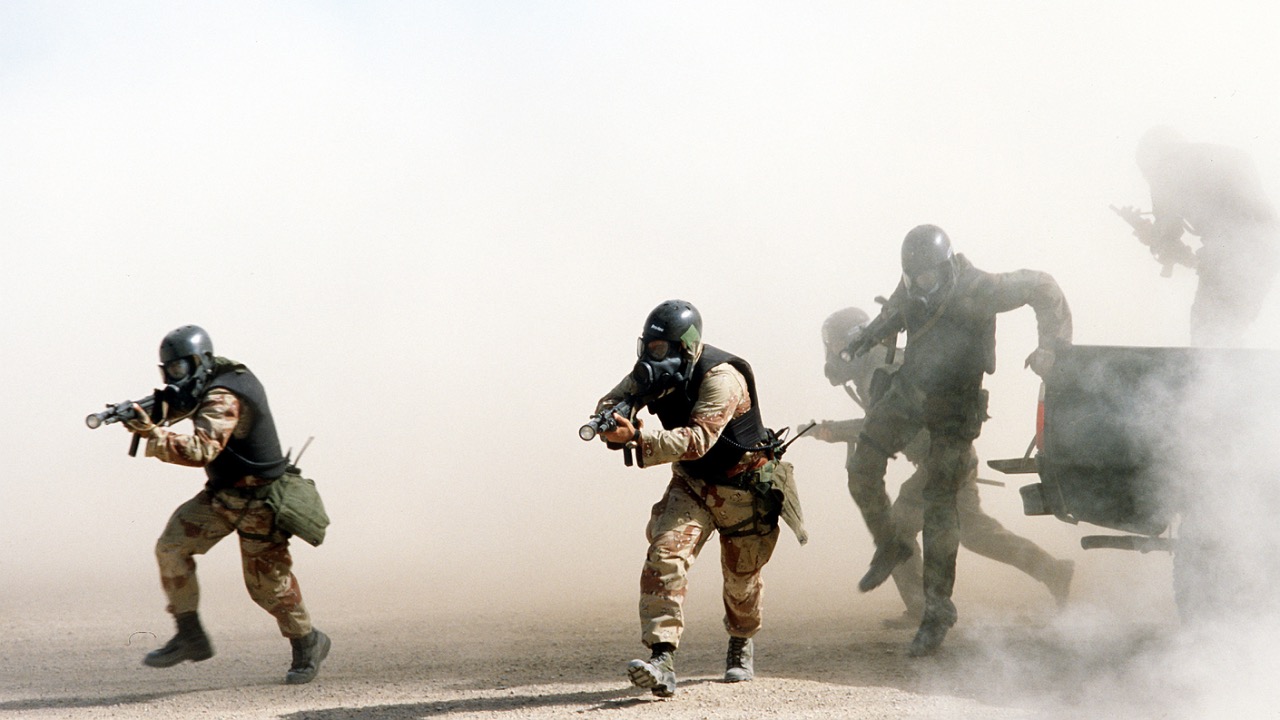
Modern special operations have steadily moved away from open deserts and jungles toward dense neighborhoods, industrial zones, and sprawling megacities. Analysts describe how warfare transitioned from open battlefields to urban environments, a change that pushed elite units to favor compact carbines with shorter barrels that clear doorways more easily and bring the muzzle closer to the operator’s body. For SEALs, who might fight from rooftops one hour and clear basements the next, that evolution turned weapon handling and speed into life-or-death variables rather than secondary concerns.
The shift also elevated the importance of modular rifles that can be tuned to each mission instead of carrying separate guns for every role. Reporting on SEAL armories notes that platforms like the M4A1 and its derivatives replaced full-length rifles because they accept suppressors, infrared lasers, and variable optics while still staying short enough for vehicle interiors and narrow hallways. As operations pushed deeper into cities, SEAL teams increasingly built their loadouts around that kind of adaptable carbine, then added specialized weapons such as precision rifles or breaching shotguns only when a mission demanded it.
M4A1: the urban workhorse
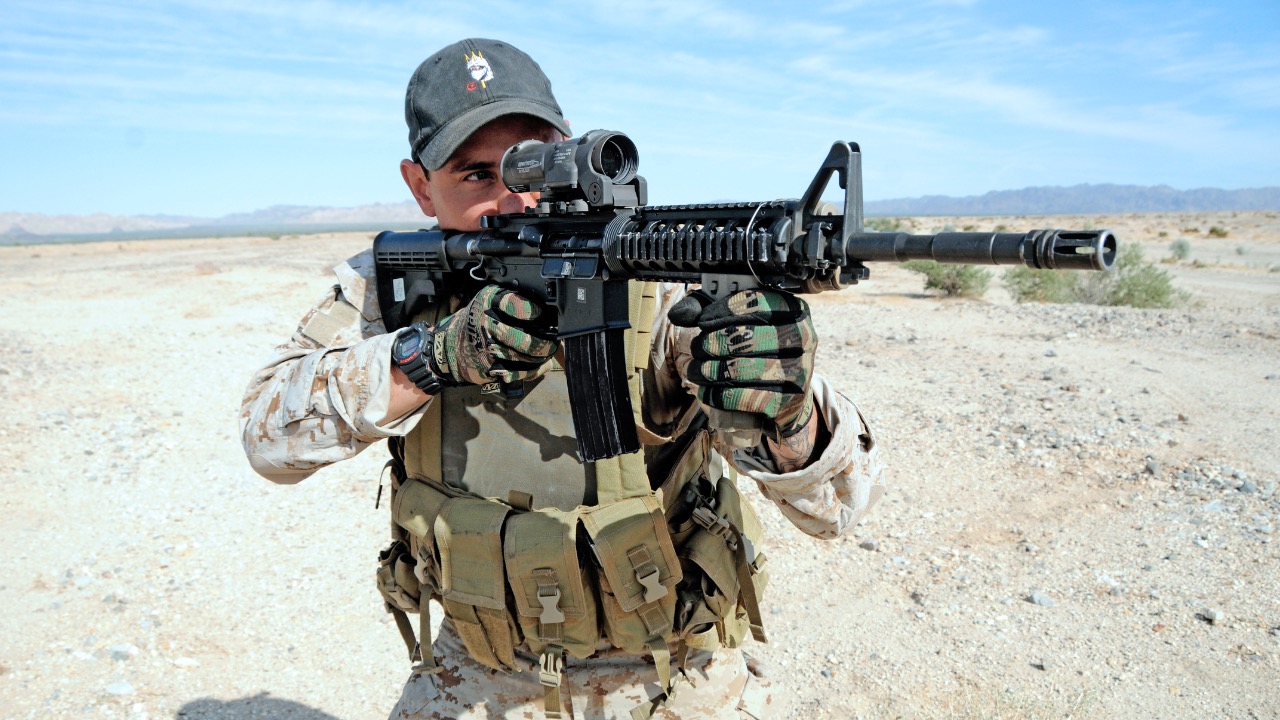
The M4A1 carbine became the backbone of SEAL urban firefights because it hits a balance between compact size and effective range. Chambered in 5.56 NATO with a shorter barrel than older service rifles, it gives operators rapid follow-up shots and manageable recoil, which is essential when multiple targets appear in windows or doorways at once. Analysts describe how the M4A1 reflects the shift toward lighter, more adaptable rifles, explaining that it allowed operators to carry one primary weapon instead of juggling role-specific guns that might be ideal in one scenario but clumsy in another, a change that directly supported fast-paced city raids where conditions change from room to room.
SEAL units often field the M4A1 with the SOPMOD accessory package, which adds rails, optics, night-vision aiming devices, and suppressors to increase effectiveness in low light and confined spaces. A detailed overview of special operations M4A1 setups explains how these carbines are configured with red dot sights for quick target acquisition, backup iron sights, and adjustable stocks that shorten the overall length when operators wear body armor. Within Naval Special Warfare, that combination turned the M4A1 into a default choice for urban missions, with individual SEALs tailoring sling positions, foregrips, and optics to their personal shooting style while keeping the same basic platform across the platoon.
Mk 18 CQBR and the rise of ultra-short carbines
If the M4A1 is the standard city rifle, the Mk 18 CQBR represents the extreme end of compact design for close-quarters battle. The Mk 18 is a short-barreled variant of the M4 carbine, and assessments of Special Operations Forces Carbine Explained describe how it is Chamb in 5.56 NATO with a barrel that cuts overall length to the minimum needed for reliability. Analysts note that this configuration was intended for engagements expected to be less than 300m, which aligns closely with urban gunfights that unfold across streets, inside buildings, or along alleyways rather than across open valleys.
Recent reporting on SEAL operations highlights how The Mk 18 CQBR became closely associated with SEAL urban operations because its extremely short barrel made it easier to maneuver through doorways and around tight corners where speed and handling mattered most. A detailed look at modern SEAL weapons argues that The Mk 18 epitomizes the shift toward carbines optimized for close-quarters work, where a lighter front end allows faster transitions between multiple targets and reduces the chance of snagging on doorframes or vehicle interiors. Analysts link that trend back to the broader evolution of warfare, in which compact platforms like the Mk 18 CQBR replaced heavier rifles that once dominated open terrain but proved unwieldy in dense city fighting.
DEVGRU’s specialized carbines and suppressed rifles
Within Naval Special Warfare, the unit commonly referred to as DEVGRU pushed urban weapon development even further by fielding a wide mix of carbines and suppressed rifles. An overview of DEVGRU weapons lists short-barreled AR-pattern rifles, integrally suppressed carbines, and designated marksman rifles tailored for precise shots across courtyards and from rooftop to rooftop. That mix allowed assault teams to bring heavy firepower into tight spaces while sniper and overwatch elements provided controlled, longer-range support without revealing their positions through loud muzzle blast.
Special operations inventories also include unique systems reserved for SOCOM, such as integrally suppressed carbines and 7.62 NATO rifles described in analyses of SOCOM weapons. Those reports point to HK417 and M110K1 variants that combine the punch of a full-power rifle cartridge with optics suited for mid-range engagements, a pairing that fits overwatch roles in cities where lines of sight might stretch a few hundred meters down a boulevard. For SEALs, especially in DEVGRU, such rifles complement carbines like the Mk 18, giving the same assault force the ability to dominate both doorways and distant windows during a single operation.
Sidearms: last-resort tools in tight spaces
While carbines dominate SEAL firefights, sidearms remain essential when a primary weapon fails or a room is too cramped to bring a rifle on target quickly. Overviews of SEAL armories describe a range of pistols, including SIG Sauer designs and other modern polymer-framed handguns, which give operators a compact backup that can be drawn one-handed while controlling a suspect or climbing a ladder. A reference guide on special operations firearms notes that Navy SEALs commonly use firearms such as the SIG Sauer pistol family alongside carbines and shotguns, with the handgun typically riding on a thigh rig or belt holster where it can be reached even if body armor or breaching gear blocks other equipment.
Public interest has long focused on the question of What Handgun Do Navy Seals Use, and one detailed breakdown of Navy Seal Weapons explains that Navy SEAL weapon choices are critical because they directly impact the success of missions in confined environments. That analysis notes that Navy SEAL operators are renowned for selecting sidearms that balance capacity, stopping power, and reliability in wet, sandy, or dusty conditions that are typical of SEAL missions. The same report also describes how some SEALs have experimented with specialized pistols such as the FN Five-seveN as a primary or backup weapon in certain roles, though carbines remain the main tools for most urban fights.
Legacy handguns and the HK Mk 23 SOCOM .45 ACP
Before lighter polymer pistols became standard, SEAL teams tested and fielded larger handguns designed specifically for special operations. One of the most distinctive examples is the HK Mk 23 SOCOM .45 ACP, a pistol developed for maritime and covert missions that demanded exceptional accuracy and durability. A detailed feature on Weapons of the Navy SEALs lists the HK Mk 23 SOCOM .45 ACP under HANDGUNS and explains that The HK Mk 23 was engineered to function in extreme temperatures ranging from 25 degrees to minus 60 degrees Fahrenheit, with a large frame that accommodates a suppressor and laser aiming module.
Although the HK Mk 23 SOCOM .45 ACP offered impressive performance on the range, its size and weight made it less convenient for everyday carry on long urban patrols. Analysts note that many operators gravitated toward more compact pistols that were easier to conceal under clothing or body armor and less likely to snag on doorways or vehicle interiors. Even so, the Mk 23 program helped establish design standards for suppressed pistols and accessories that later influenced more practical sidearms, and its .45 caliber heritage still appeals to some SEALs who prefer heavier bullets for close-quarters stopping power.
Shotguns, breaching, and room entry
Urban missions often require SEALs to defeat locked doors, gates, and barricades quickly, which is where shotguns enter the picture. Reference material on Weapons Of The explains that these operators often have to switch between different combat scenarios rapidly, so their weapons must be versatile. Shotguns provide that versatility by serving as both breaching tools, using specialized slugs to blow hinges or locks, and as devastating close-range weapons for room entry when loaded with buckshot or other tactical ammunition.
In practice, a single SEAL might carry a compact breaching shotgun slung across the back or attached to their kit, handing it off to a teammate once the entry is complete and then transitioning back to a carbine. Urban operations also sometimes call for less-lethal shotgun rounds during detainee operations or crowd control, giving commanders more options in complex environments where lethal force might not always be appropriate. That flexibility, combined with the raw stopping power of a 12 gauge at close range, keeps shotguns relevant even as carbines like the M4A1 and Mk 18 dominate most gunfights.
Sniper and marksman rifles in the concrete jungle
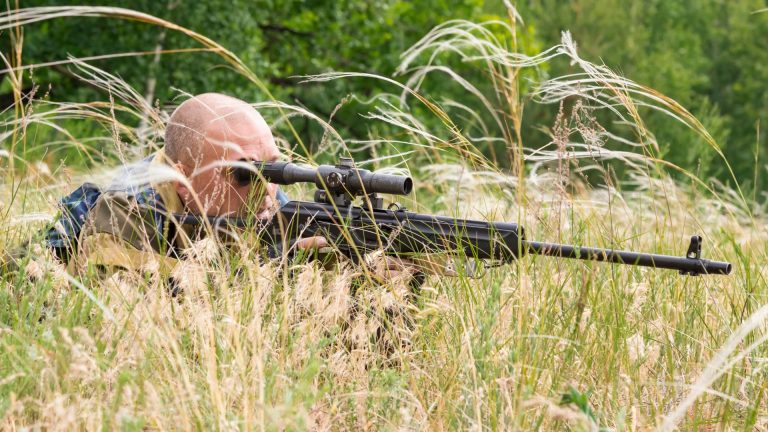
Despite the focus on close-quarters battle, SEAL snipers and designated marksmen play a central role in urban missions by controlling streets, intersections, and high-value vantage points. Analyses of advanced SEAL equipment highlight rifles such as the McMillan TAC-338, noting that McMillan TAC-338 represents the kind of long-range precision system that gives SEALs a decisive edge in complex environments. A detailed assessment of advanced systems emphasizes that such rifles allow snipers to engage threats that appear on distant rooftops or behind cover, shaping the entire battle long before assault teams reach a building.
Urban overwatch roles often rely on semi-automatic 7.62 NATO rifles in addition to bolt-action magnum systems, since rapid follow-up shots can be more valuable than extreme range inside a city. Evaluations of SOCOM rifles describe HK417 and M110K1 variants that provide accurate fire at intermediate distances while remaining compact enough to move through stairwells and across rooftops. When combined with carbines on the assault element and suppressed weapons for stealth, these precision rifles complete a layered approach to urban firepower, allowing SEAL commanders to assign each shooter a specific zone of responsibility from street level up to the highest vantage points.
Training, adaptability, and the future of SEAL firearms
The effectiveness of SEAL firearms in urban combat depends as much on training as on hardware. Background material on the United States Navy and the about Navy SEALs mission explains that these operators endure intensive selection and instruction before ever stepping into a city fight. That pipeline includes live-fire shoot houses, force-on-force scenarios, and constant repetition of room-clearing drills that teach operators how to move with carbines like the M4A1 and Mk 18 CQBR in tight formations without flagging teammates or losing awareness of doorways and windows.
Analysts tracking the evolution of SEAL weapons argue that future developments will likely push carbines and pistols toward even greater modularity and integration with optics, suppressors, and digital aiming aids. A detailed overview of modern SEAL armories notes that Special Operations Command standard-issued rifles already use the SOPMOD II upgrade, which adds a variety of accessories to the M4A1 platform. Combined with the trend toward compact carbines highlighted in Mk 18 CQBR analysis and the broader shift described in M4A1 reflects the reporting, that trajectory suggests SEALs will continue to refine a toolkit built around maneuverability, suppression, and precision. In urban combat, where every doorway can hide an ambush, the firearms that SEALs carry will remain as carefully selected and relentlessly tested as the operators themselves.

Asher was raised in the woods and on the water, and it shows. He’s logged more hours behind a rifle and under a heavy pack than most men twice his age.