The Forgotten Military Strategy Behind America’s “Nuclear Sponge”
During the Cold War, you were told America’s nuclear arsenal existed to deter war, not fight one. That’s true. But buried inside that strategy was a colder calculation: geography itself could be weaponized. The term “nuclear sponge” refers to vast stretches of the American West filled with hardened missile silos, positioned so an enemy would have to expend a large portion of its warheads destroying them first.
The idea was grim and mathematical. If incoming missiles had to target remote missile fields instead of cities, you complicate enemy planning and reduce the damage to population centers. It was never a slogan, never a public campaign. It was an underlying layer of deterrence thinking that shaped basing decisions for decades.
The Geography Was the Strategy

When you look at the placement of intercontinental ballistic missile fields across Montana, Wyoming, and the Dakotas, the pattern wasn’t random. The silos were spaced miles apart across open land, forcing an attacker to use multiple warheads to ensure destruction of each hardened site.
The physical distance between silos mattered. An enemy couldn’t wipe out dozens with one blast. They’d need dedicated strikes for each location, and that consumed their arsenal. You were turning empty prairie into a shield of sorts, not because it stopped weapons, but because it absorbed them.
Why the Great Plains Made Sense
The American West offered low population density, stable geology, and wide open space. States like Montana and North Dakota became home to missile wings operated by the U.S. Air Force. Harsh winters and isolation were seen as operational features, not flaws.
You weren’t protecting farmland as much as you were protecting cities elsewhere. By placing missiles in remote areas, planners reduced the likelihood that an enemy would prioritize New York, Chicago, or Los Angeles first. The geography bought time, complicated targeting, and forced adversaries to burn through precious warheads.
The Math Behind Mutual Assured Destruction
The sponge concept tied directly into the logic of mutually assured destruction. If an adversary launched a first strike, they’d still face devastating retaliation from submarine-launched missiles and bombers. The silos were part of that equation.
Even if many land-based missiles were destroyed, enough would survive—or launch on warning—to guarantee retaliation. The presence of hundreds of fixed targets meant an enemy couldn’t gamble on disarming the United States cheaply. You were making the cost of a first strike prohibitively high in both numbers and consequences.
Hardening the Silos
Missile silos weren’t simple concrete tubes. They were engineered to withstand nearby nuclear blasts. Reinforced doors weighing dozens of tons sealed the top. Underground launch control centers were buried deep and isolated.
The idea wasn’t that they were invulnerable. It was that destroying them required accuracy and yield. An enemy would have to commit significant resources to each target. That forced them into a massive, visible strike pattern rather than a limited one, reinforcing the deterrent effect.
The Psychological Component
Deterrence has always been as much psychological as physical. By spreading missile fields across rural America, planners ensured that any attack would visibly target American soil on a wide scale.
That carried political weight. An adversary couldn’t frame a strike as “limited” when it required detonations across multiple states. You were signaling that escalation would be immediate and catastrophic. The sponge wasn’t only absorbing warheads; it was absorbing illusions about a clean or controlled nuclear exchange.
The Shift Toward Submarines
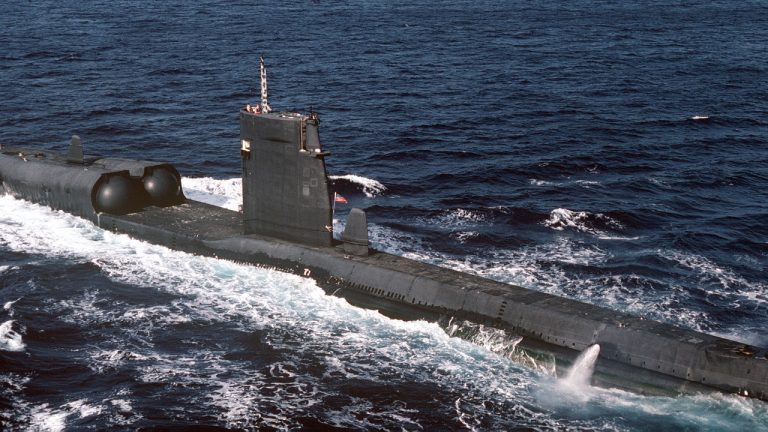
Over time, the strategic balance shifted toward ballistic missile submarines. Unlike fixed silos, submarines are mobile and difficult to track. They became the most survivable leg of the nuclear triad.
As that shift happened, some questioned whether land-based ICBMs were still necessary. Critics argued that fixed silos made tempting targets. Supporters countered that their very vulnerability was the point. You forced an enemy to attack them first, draining their arsenal before touching command centers or cities.
The Debate That Never Fully Ended
The “nuclear sponge” idea never disappeared; it simply faded into background policy discussions. Modern debates over maintaining or replacing aging ICBMs often circle back to the same question: are they stabilizing or dangerous?
If you remove land-based missiles entirely, you reduce the number of fixed targets on American soil. That sounds safer on the surface. But you also remove the sponge effect that complicates enemy planning. The argument remains unsettled, because it rests on assumptions about how a nuclear war would unfold—something no one truly wants to test.
What It Meant for the People Who Lived There
Communities near missile fields lived with the knowledge that their counties were prime targets. Ranchers, farmers, and small-town families became part of global deterrence without volunteering for it.
At the same time, those bases brought jobs, infrastructure, and a steady military presence. For many, the missile fields were both a burden and a point of quiet pride. You were living on ground that shaped global strategy, even if most Americans rarely thought about it.
The nuclear sponge wasn’t dramatic. It wasn’t cinematic. It was a calculated, uncomfortable layer of Cold War thinking. And even today, its logic still lingers beneath America’s nuclear posture, largely unnoticed by the public but embedded in the land itself.

Asher was raised in the woods and on the water, and it shows. He’s logged more hours behind a rifle and under a heavy pack than most men twice his age.