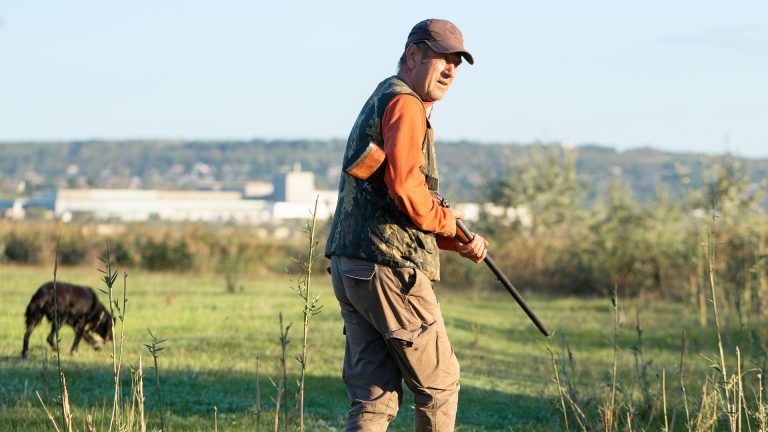
The growing debate over public land access for hunters
Across the American West and beyond, a growing share of the hunting conversation is no longer about gear or game populations, but about gates, fences and legal fine print. Hunters see public land as a birthright, while landowners and some politicians argue that private property lines should be inviolable. The result is an increasingly sharp debate over who can reach public ground, how they get there, and what role hunting should play on those shared acres.
The scale of America’s public hunting grounds
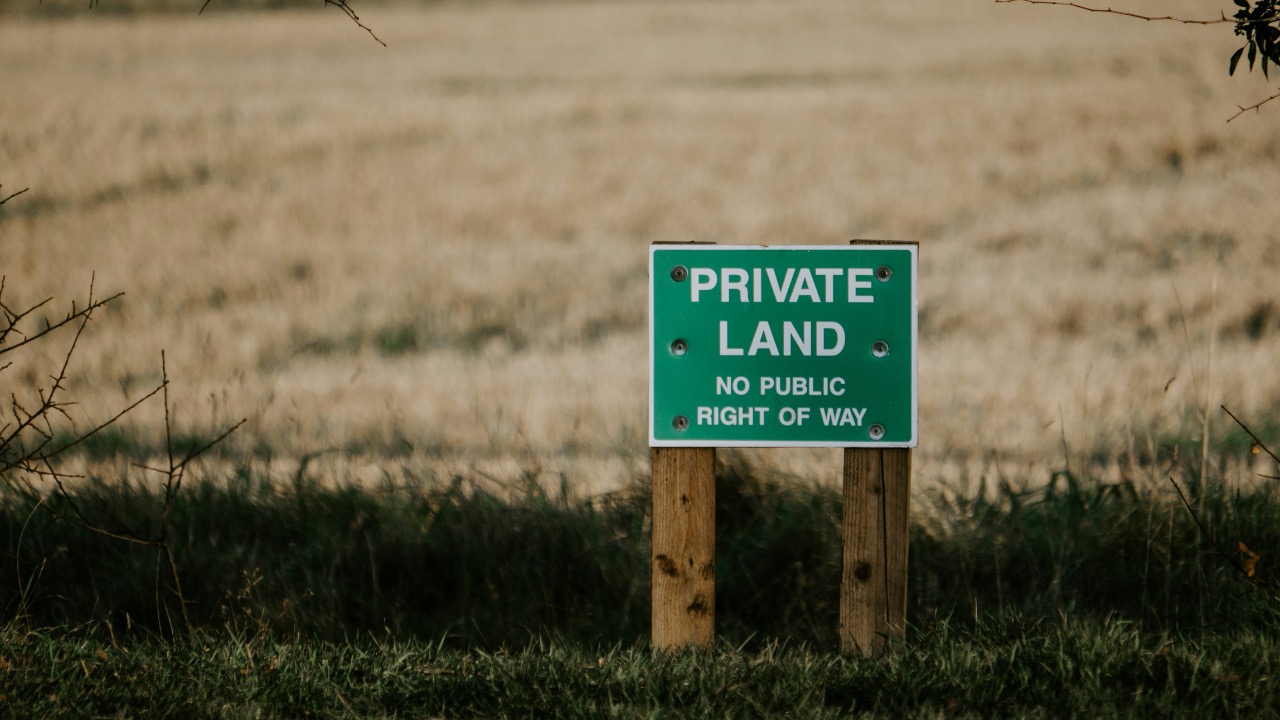
Any discussion of access starts with the sheer size of the national estate. Advocates point to America’s 640 m acres of national public lands that provide hunting and fishing opportunities across the country. Those acres sit at the center of a cultural tradition in which ordinary residents can walk onto public ground and try to put meat in the freezer without needing to own a ranch or pay a lease.
Federal agencies are moving to lock that tradition more firmly into policy. The Department of the Interior has prepared a directive that would make hunting and fishing the default use on federal public lands unless specific closures are justified for safety, conservation or other reasons. A related initiative, reflected in Secretarial Order 3447 from the Department of Interior, directs that lands managed by DOI should be open to hunting and fishing unless lawful exceptions exist. Supporters say this approach treats hunting as a standard, not a special favor.
Conservation groups have welcomed the shift. One national organization praised an Interior decision to expand hunt and fish opportunities on public land, tying that expansion to broader goals like habitat protection and wildlife corridors. In that statement, the group again highlighted America’s 640 m acres of public lands as irreplaceable ground for Hunting and Fishing Access, arguing that these areas anchor both outdoor recreation and rural economies.
Corner crossing and the “checkerboard” fight
Even with millions of acres technically open, access often hinges on how hunters can physically reach them. Nowhere is that clearer than in the fight over “corner crossing” in the checkerboard of the West. In parts of states like Wyoming, federal and private parcels alternate like a chessboard. Four hunters became the focus of a national test case when they used a ladder to move from one square of federal land to another at a shared corner, without setting foot on the private ground owned by Iron Bar Holdings, LLC.
The landowner argued that the move violated airspace rights and amounted to trespass. A federal appeals court disagreed and held that corner crossing that occurs entirely from one public parcel to another, with no contact on the private land, does not create liability. When the Supreme Court later declined to review the appeal of that decision, it left the lower court’s reasoning in place and effectively solidified access to a huge block of public land in the region.
One analysis of the ruling notes that the 10th Circuit’s decision now provides legal access to roughly 3.5 m acres within the six-state region under its jurisdiction. That figure covers a patchwork of land that had been practically unreachable because it was “gridlocked” by private holdings. Advocates for public access describe the Supreme Court’s refusal to take the case as a significant victory for American hunters who want to reach public lands without requiring permission from adjacent private landowners.
The legal questions are not entirely settled. A detailed law review discussion of Bar Holdings v. Cape traces how courts have wrestled with whether airspace above private land can be treated like a fence line that blocks movement between public parcels. The analysis notes that in jurisdictions outside the 10th Circuit, such as Washington and Idaho, the issue remains unresolved, leaving hunters uncertain about whether a similar move could lead to criminal charges. In those states, public land access advocates continue to push for clear rules that would allow corner crossing to reach public land that is otherwise blocked.
Gridlocked acres and the private property argument
Corner crossing is only one facet of a broader conflict about “landlocked” public ground. One widely shared account points out that Over eight million acres of public lands are gridlocked by private property, which means they exist on paper but cannot be reached without crossing private land. When a group of hunters jumped from one plot of federal land to another at a shared corner, that story became a symbol of how much public ground is effectively off limits.
Landowners argue that this framing ignores the legal and economic weight of private rights. In the United States and Australia, property owners enjoy very extensive control over their land, and public right of access to private parcels does not practically exist outside of specific easements or designated trails. From that perspective, any move that allows the public to pass at corners or along disputed roads can feel like an erosion of long-standing legal protections.
Some politicians have gone further, pushing proposals that would transfer federal land to state control or even sell off large blocks. A recent episode of Fresh Tracks Weekly the focused on how Mike Lee has advocated selling millions of acres of public land, which alarmed hunters and conservation groups who see such sales as a permanent loss of access. For these critics, land transfer and privatization represent a larger threat than any single corner crossing case.
At the same time, organizations that represent hunters and anglers warn that privatization and development pose an ever increasing threat to wild places that should remain open to the public. One national group urges supporters to push back against proposals that would fragment habitat and close off access, arguing that these landscapes should be enjoyed by hunters and anglers for generations to come.
County roads, maps and the quiet barriers to access
Even where there is no legal fight over corners, access can be murky. Many hunters rely on county and state roads to reach public parcels, only to find locked gates or confusing signage. A detailed report on road access describes how Lack of readily available information about unpaved roads means hunters and anglers cannot easily tell which routes are public, which are private, and which are subject to seasonal or administrative closures.
The problem often starts with incomplete or outdated records at county, state, and local levels. Anyone who has tried to navigate a maze of gravel roads with a mix of faded signs and conflicting digital maps knows how quickly a trip can turn into a legal gamble. A road that appears on an app as public might in fact be a private easement, and a route that locals have used for decades might never have been formally recorded as a public right-of-way.
Access groups have called for better mapping, more consistent signage, and clear coordination among agencies so hunters can understand where they are allowed to drive or walk. Without that clarity, even lands that are technically open can feel out of reach, especially for newer hunters who do not have decades of local knowledge to draw on.
Policy moves in Washington and the states
While individual hunters fight access battles on the ground, federal and state policymakers are reshaping the legal framework from above. At the federal level, the Department of the Interior has signaled that hunting and fishing should be treated as priority uses on public lands, subject to specific conservation needs. Secretarial Order 3447, issued by the Department of Interior through DOI and Secretary Doug Burgum, directs that federal lands managed by the agency are to be open for hunting and fishing unless lawful exceptions exist.
Another policy track focuses on expanding specific opportunities. An Interior decision to open additional refuges and other units to hunting and fishing drew praise from sporting groups, who framed it as a way to connect more people to public lands and to support communities that rely on outdoor recreation. These moves align with a broader push to treat hunting as both a management tool and a public service.
At the same time, some state officials are pursuing a very different agenda. In August 2024, Utah elected officials petitioned the Supreme Court to require the transfer of 18.5 m acres of federal public land to state control. Advocates of that petition argued that state management would be more responsive to local needs, while opponents warned that such a transfer could lead to increased development, more restrictive access rules, or outright sale of parcels that are currently open to all.
Conservation organizations see these state-level moves as part of a long-running effort to shift control of public land away from the federal government. They argue that once lands are transferred, there is no guarantee that access will remain, especially when state budgets are tight and the temptation to sell or lease becomes stronger.
Montana as a case study in crowding and shrinking options
No state illustrates the tension between growing hunter interest and shrinking private access more clearly than Montana. A detailed report on that state’s flagship access program describes how, much like the current U.S. economy, Montana’s most-prized hunter access program is facing a K-shaped contraction. On one side, demand from hunters is rising. On the other, the supply of private land enrolled in access agreements is flattening or declining.
Montana Fish, Wildlife & Parks has long relied on voluntary partnerships with landowners to open private ground to public hunting. Those agreements provide payments or other incentives in exchange for allowing hunters to cross or use specific parcels. Recently, however, rising land values, increased recreational leasing, and changing ownership patterns have made some landowners less willing to participate. As more properties are purchased for high-end recreation or investment, traditional access deals can be pushed aside.
The result is crowding on the remaining accessible lands. Hunters report more vehicles at trailheads and more competition for limited spots, which can strain relationships with landowners who still participate in access programs. The Montana agency is under pressure to adjust payment structures, improve enforcement, and find new ways to spread hunting pressure more evenly across the landscape.
These pressures spill over onto nearby public lands as well. When private access closes, displaced hunters often shift to national forest or Bureau of Land Management parcels, which can quickly feel overloaded. That feedback loop illustrates how private decisions about access can have broad consequences for public ground.
Local reporting from Bozeman captures the human side of this shift. One story describes how Montana’s access program is struggling to keep pace with demand, and how residents are asking the agency to address their crowding concerns. The piece notes that Support Local Journalism is essential to keep attention on these issues, since they shape not only recreation but also wildlife management and rural economies.
Why access matters to hunters and communities
For many hunters, the access debate is not abstract. It is about whether they can afford to participate in a tradition that once felt open to anyone with a tag and a tank of gas. A commentary from Wyoming captures that sentiment directly, stating that Access to land is essential for the commoners to still get a chance to put meat in their family’s freezer. The writer describes how, for many including his own family, public land and accessible private parcels are the difference between hunting as a realistic option or a luxury.
The same piece argues that lawmakers need to have the backs of hunters who are fighting for public lands, not only through court cases but also through everyday advocacy. It points to practical obstacles like blocked roads, contested easements, and confusing regulations that can keep people off land that is supposed to be open. The author calls for policy changes that would remove those barriers and ensure that public land remains genuinely accessible, not just a green patch on a map.
Economic considerations are intertwined with these cultural arguments. Rural communities often rely on visiting hunters for seasonal income, from motel bookings and restaurant tabs to fuel and gear purchases. When access shrinks, those dollars can disappear. Conversely, when new areas are opened or when rules are clarified, communities can see an uptick in visitors who are willing to spend money locally.
There is also a conservation dimension. Many wildlife agencies depend on license sales and excise taxes on firearms and ammunition to fund habitat work and research. If access barriers discourage participation, those revenue streams can erode, which in turn affects the capacity to manage game populations and protect non-game species that share the same habitats.
Grassroots organizing and the politics of public land
In response to these pressures, hunters and anglers have become increasingly organized. Groups that once focused mainly on habitat projects now run sophisticated advocacy campaigns. One national organization, for example, maintains a “take action” portal that urges supporters to contact elected officials about specific bills, attend public meetings, and oppose efforts to privatize or fragment public lands. The group warns that privatization and development pose an ever increasing threat to wild places that should remain open to the public and enjoyed by hunters and anglers.
Another major conservation group has built a public land access program that tracks threats across the country. The program highlights court cases, legislative proposals, and administrative decisions that could either expand or limit access. It points to the Utah petition to transfer 18.5 m acres of federal land as a prime example of how quickly the map could change if such efforts succeed.
Social media has become a key tool in this organizing. Accounts like TheTRCP on Facebook and thetrcp on Twitter share alerts about public meetings, comment periods, and on-the-ground conflicts. Similarly, Backcountry_H_A on Twitter and the LinkedIn page for Backcountry Hunters & Anglers help coordinate volunteers, promote restoration projects, and amplify stories from local chapters. These networks can mobilize thousands of comments or phone calls in a short period, which can influence how agencies and lawmakers approach access decisions.
Local news outlets and small-town papers also play a role. The Twitter account kemmererPlainsman, for instance, shares updates about regional developments, including public land issues. When the Supreme Court declined to take up the corner crossing case, regional outlets and their social feeds helped translate a complex legal decision into practical terms for residents who want to know where they can hunt without risking a citation.

Leo’s been tracking game and tuning gear since he could stand upright. He’s sharp, driven, and knows how to keep things running when conditions turn.