The overlooked deer cartridges that make sense right now
Deer hunters tend to cluster around a few familiar chamberings, but the landscape of regulations, bullet design, and rifle options has shifted faster than habits have. There is a growing set of cartridges that sit in the shadow of the usual suspects yet fit today’s real-world needs for recoil, reach, and versatility better than many realize. I want to look at the rounds that rarely get top billing but, based on current reporting and field experience, make a lot of sense for modern deer seasons.
These are not wild experiments or boutique curiosities. They are practical cartridges with proven track records that have been overshadowed by the marketing gravity of the 30-06 and the 308, even as new straight-wall rules, youth hunters, and crossover varmint seasons change what “ideal” looks like. The overlooked options below are where performance, shootability, and availability intersect in ways that are easy to miss if you only shop the top shelf at the big-box counter.
Why the usual deer rounds no longer tell the whole story
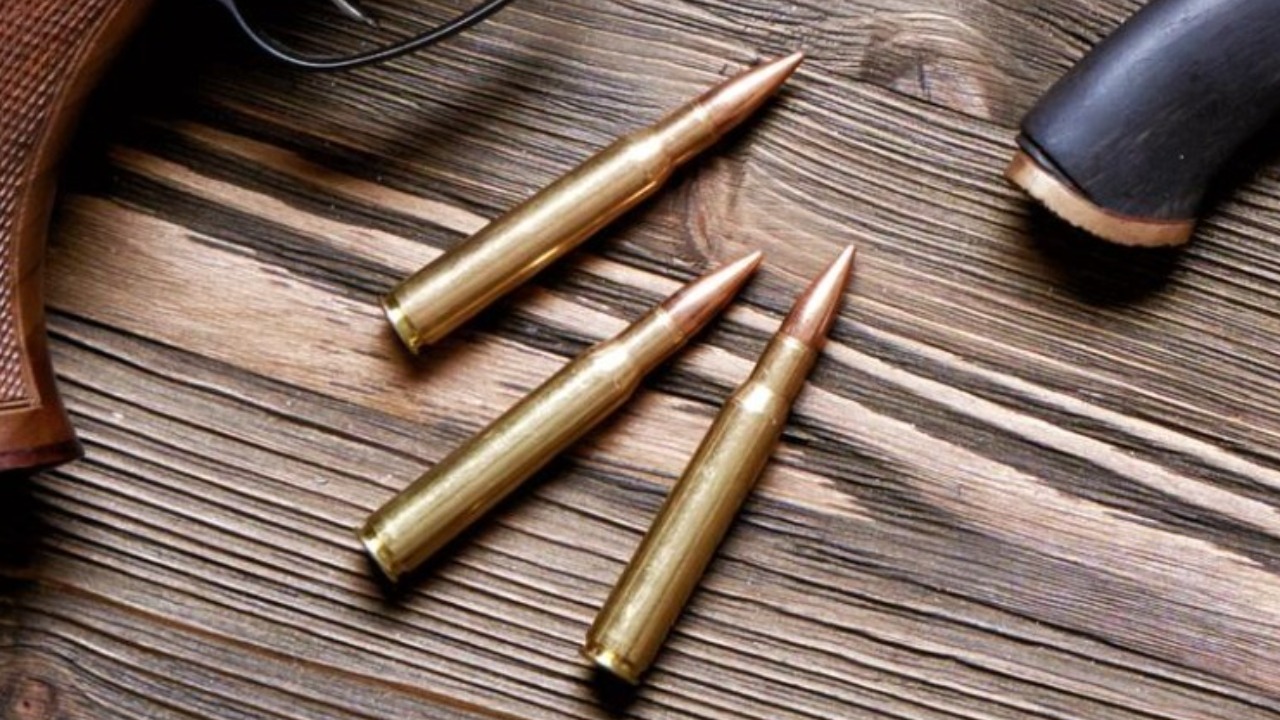
For generations, the default advice has been simple: take a 30-06 or a 308 into the deer woods and do not overthink it. That pattern still holds in many camps, where a hunter starts with a hand-me-down rifle, shoots a couple of bucks, and never feels a reason to change. One recent analysis described how Deer hunters are creatures of habit, noting that when Somebody hands you a 30-06 or a 308 and you fill tags, you tend to stop shopping around. That inertia is powerful, and it explains why racks of rifles in 30-06 still dominate even as other cartridges quietly solve problems those classics never had to face.
The old standbys still work. One veteran voice recently argued that you cannot go wrong with the classic big-game quintet and singled out the 30’06 as the most versatile of the group, suitable for all but the biggest animals, before signing off with a simple “Good huntin’.” That endorsement of the Nov era cartridges is still valid, but it coexists with a new reality of recoil-sensitive shooters, tighter ranges in thick cover, and regulations that favor straight-wall cases. In that environment, clinging only to the 30-06 and 308 risks ignoring tools that better match how many people actually hunt today.
Target darlings that quietly shine on deer
Some of the best deer rounds right now started life on the firing line rather than in the timber. A good example is the 6.5 Swede, often referred to as the 6.5×55, which has long been a superlative target and hunting cartridge dating back to the 1890s. One recent discussion opened with the line, “Oh dear, have we forgotten the 6.5 Swede?” and reminded viewers that this mild recoiling round has been a superlative target and hunting cartridge since the 1890’s, underscoring how the 6.5 Swede remains relevant despite its age. In practical terms, that means flat trajectories, deep penetration, and manageable recoil in a package that is easy for newer shooters to handle.
Another pair of cartridges that bridge target and hunting roles are the 7×57 Mauser and the 7mm-08 Remington. Both have been highlighted together as top-tier all-around hunting rounds, with the 7×57 Mauser dating back to 1892 and the 7mm-08 Remington offering similar ballistics in a modern short action. Both push sleek 7 mm bullets with high ballistic coefficients, which translates into reliable expansion and wind resistance at typical whitetail distances. In my view, their long history on the range has obscured how well they fit the needs of a deer hunter who wants precision without punishing recoil.
Underrated 7 mm workhorses that fit real-world deer hunting
The 7 mm family has always had a loyal following, but some of its most practical members rarely get the spotlight. The 7mm Rem. Mag. is often framed as the glamorous long-range option, and one detailed breakdown noted that the 7mm Rem. Mag became the world’s most popular magnum and that Remington‘s Big Seven was and is a marvelous cartridge. That same analysis pointed out that Remington’s Big Seven has been a benchmark for at least 15 years, which matters for hunters who want a proven track record before trusting a round on a hard-earned tag.
Yet the quieter star in this family might be the 7mm-08, sometimes nicknamed the “O-Eight.” One evaluation of low-recoil big-game rounds described the Eight as perhaps the most underrated cartridge on its list and noted that In the 1980s, Remington developed it to piggyback on 7 mm bullets and their high ballistic coefficient. Another rundown of whitetail cartridges emphasized that the 7mm-08 is more than manageable for experienced shooters, placing it among the best options for deer-sized game and highlighting how Here the cartridge stands out for its balance of recoil and performance. For a hunter who wants a single rifle to cover whitetails, mule deer, and even lighter elk, that balance is hard to ignore.
Classic “forgotten” deer rounds that deserve a second look
Some cartridges are not new at all, they are simply overshadowed by louder marketing. The 6.5×55 and its Scandinavian cousin, the 6.5×55 Swedish Mauser, fall into that category, as do mid-century rounds like the .257 Roberts. In one conversation about underrated hunting rounds, a commenter argued that the most overlooked options are the . 257 Roberts and the 6.5x55mm Roberts, noting that these cartridges have historically been overshadowed despite offering an excellent blend of recoil and performance for deer hunting. That same discussion highlighted the 6.5x55mm Swedish Mauser, which pairs mild recoil with deep-penetrating bullets that have anchored European moose and red deer for generations.
These “forgotten” rounds also show up in more formal rundowns of underrated cartridges. One survey of centerfire options framed its list as “Here are 10 more underrated centerfire rifle cartridges that can still get it done,” explicitly stating that Here the focus was on rounds that readers had championed and that still perform in the field. The common thread is that these cartridges were designed in an era when hunters expected to shoot moderate velocities with heavy-for-caliber bullets, a recipe that still works on whitetails even if it does not generate the same buzz as the latest short magnum.
Straight-wall cartridges and the rise of the 350 Legend
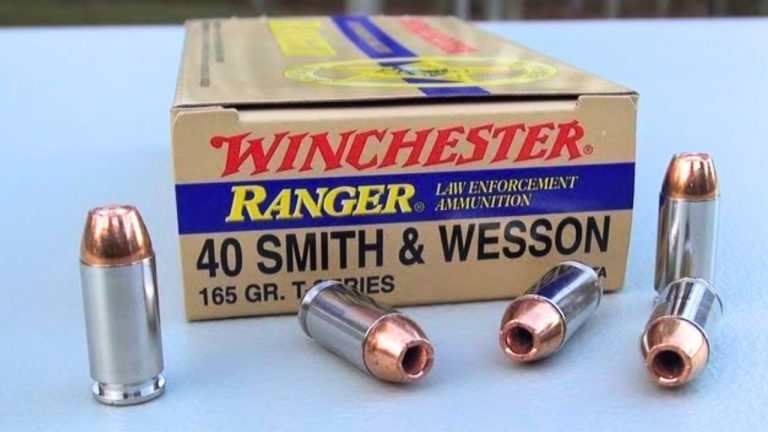
As more Midwestern and Eastern states have opened rifle seasons under straight-wall-only rules, a new class of deer cartridges has emerged. Perhaps the most exciting of these is a new straight-wall centerfire cartridge from Perhaps the Winchester Ammunition, which was designed specifically to meet those legal requirements while still offering ethical performance on deer. That cartridge, the 350 Legend, has quickly become a fixture in new rifle catalogs and is increasingly common in blinds and box stands where bottleneck rounds remain off limits.
One technical breakdown described the 350 Legend as “Arguably the” most successful of the modern straight-walled cartridges, noting that it was developed by Winchester and optimized around 150 or 160 grain bullets. Another whitetail-focused rundown listed the 350 among the best rifle cartridges for deer and pointed out that 150 years separate some of the top performers, yet the 350 350 Legend still earns a spot. In my view, that combination of legal compliance, low recoil, and modern bullet design explains why so many hunters who once relied on slug guns are now quietly switching to straight-wall rifles.
Dual-purpose cartridges that cover pests and deer
For hunters who want one rifle to handle coyotes in summer and whitetails in fall, certain mid-caliber rounds are especially compelling. A recent analysis of crossover calibers argued that “Why . 243 Winchester Sits At The Center Of The Conversation” is simple: it offers enough bullet weight and velocity for deer while staying flat and light recoiling for varmints. That piece noted that if you want a single rifle that can spend summer on coyotes and fall on deer, the 243 is hard to beat and that Jan voices with decades in the field still rely on it. The same discussion emphasized that “Winchester Sits At The Center Of The Conversation” because of how widely available .243 ammunition and rifles remain, which matters when shelves run thin during peak season.
Other modern designs push this dual-purpose idea further. One overview of contemporary hunting cartridges noted that the 25 Creedmoor probably deserves to be on any list of top performers, even if it is newer than the 22 ARC. That piece pointed out that Aug wildcatters have been necking down and experimenting with cases like the Creedmoor and the 22 ARC in the last 20 years, and that Wildcatters have driven much of this innovation. For a hunter who wants a flat-shooting rifle that can ring steel at the range, drop coyotes at distance, and still anchor a whitetail cleanly, these newer 6 mm and 6.5 mm options are worth more attention than they currently receive.
Real-world choices: youth rifles, recoil, and straight-wall experience
When families pick a first deer rifle for a new hunter, the conversation often shifts from raw ballistics to recoil and confidence. One parent recently compared mid-caliber options and noted that a certain cartridge stands in essentially the same relation to the . 270 Winchester that the . 308 has to the . 30-06, adding that there are few things the 7mm-08 cannot do in the deer woods. That comment, framed as Essentially the same relation between the 270 and 308, came in a discussion about a son’s first rifle and emphasized that Winchester style mid-bores offer a sweet spot. The same thread underscored that There are few things the 7mm-08 cannot do, which echoes the professional assessments of its versatility.
On the straight-wall side, field experience is starting to catch up with the marketing. One hunter who regularly uses a 7mm-08 Remington for deer in the Southeast described trying modern straight-wall rifles at a managed hunt and concluded that, while they were Probably not ready to trade in their 7mm-08 entirely, they had no doubt that the modern straight-walls are “the ticket” where regulations require them. That kind of on-the-ground feedback, paired with the technical praise for cartridges like the 350 Legend, suggests that many hunters are quietly building two-rifle batteries: a mild, efficient bottleneck for open country and a straight-wall for thick, regulated zones.

Leo’s been tracking game and tuning gear since he could stand upright. He’s sharp, driven, and knows how to keep things running when conditions turn.