Military veteran charged after allegedly threatening the president while stockpiling firearms, DOJ says
A military veteran with years of weapons training now faces federal charges after authorities say he stockpiled firearms and talked openly about killing the president. Prosecutors describe a man who moved from online rage to concrete preparation, blurring the line between heated rhetoric and an actual assassination plot. The case has set off fresh debate over how the Department of Justice handles threats from trained veterans who know exactly how to turn anger into lethal action.
Investigators say the defendant built up an arsenal while posting detailed fantasies about political violence, including threats against President Donald Trump and other national leaders. For people who spend their lives around guns, the allegations land differently: this is not a story about casual bravado, but about someone with real skills, real hardware, and, according to the indictment, a willingness to use both.
The veteran at the center of the case

Federal filings describe the accused as a former service member who, like many veterans, carried his training and discipline into civilian life but then veered into a darker lane. In one case that has become a key reference point for investigators, a former U.S. Coast Guard lieutenant was described as a trained sharpshooter who had moved from military service into a life that still revolved around weapons and tactical planning. That veteran, identified in separate reporting as Stinson, served in the Coast Guard from 1988 to 2021 and also worked with the Federal Emergency Management Age, a background that gave him both technical skills and insight into how federal agencies respond to crises.
Authorities say the defendant in the current case fits a similar mold: long service, deep familiarity with firearms, and a habit of thinking in terms of targets and missions rather than disagreements and debates. In Washington, federal investigators have been especially alert to veterans who combine that mindset with explicit political rage, a concern that grew after one Coast Guard veteran was arrested in the capital region on allegations that he had drawn up hit lists and stockpiled weapons while talking about killing Trump. That earlier arrest, described in detail by FBI case summaries, set a template for how the government now approaches similar threats.
Alleged threats against the president
According to the Department of Justice, the heart of the new case is a series of threats directed at President Donald Tr that prosecutors say went far beyond heated political talk. In one incident described by Authorities, investigators say they recovered shotgun shells that had threatening messages written directly on them, specifically naming President Donald Tr and leaving little doubt that the ammunition itself was meant as a kind of manifesto. Those same Authorities said the threats were not vague slogans but direct statements of intent tied to a recognizable target.
The language in these threats echoes earlier cases where veterans allegedly mixed their operational knowledge with explicit talk of killing national leaders. In the Washington investigation into a Coast Guard veteran, for example, federal agents cited online posts where the man allegedly wrote that he was plotting a political attack that would be “yuge,” a phrase that appeared in charging documents as evidence that the writer was focused on Trump as a personal target. That allegation appears in a detailed summary of the, which prosecutors used to argue that the threats were specific and intentional, not casual venting.
Stockpiled firearms and tactical capability
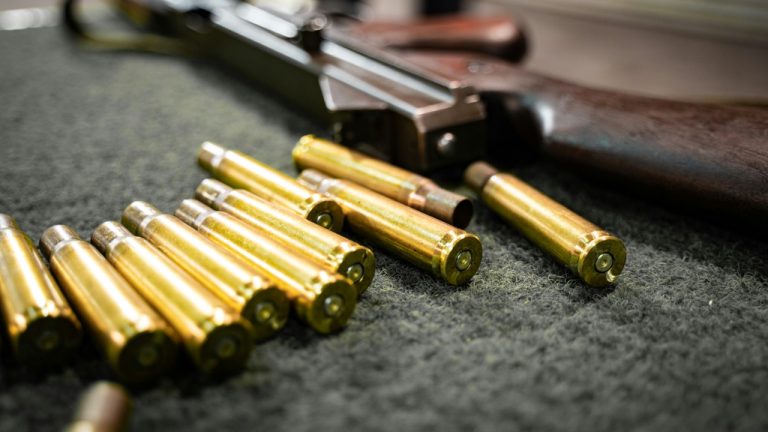
What raises the stakes in this case is not only what the veteran allegedly said, but what he allegedly had on hand to carry it out. Investigators describe a cache of firearms, ammunition, and tactical gear that looked less like a hobbyist’s collection and more like a kit for a sustained attack. That pattern mirrors earlier incidents where veterans with advanced marksmanship skills were found with multiple rifles, thousands of rounds, and detailed notes on how to stage an ambush. In the Coast Guard case, Stinson was described as a sharpshooter, and his long tenure in the Coast Guard from 1988 to 2021 suggested years of practice with precision weapons and small-unit tactics.
For people who grew up around guns, the difference between a safe full of hunting rifles and an arsenal meant for political violence is obvious. Civilian shooters might own a couple of bolt-action deer rifles and a 12 gauge for turkey season. By contrast, investigators say the veteran in this case had collected weapons that made sense only in a paramilitary context, a pattern that echoes the earlier Washington investigation into a Coast Guard veteran who allegedly combined his sharpshooter background with a similar stockpile. Reporting on Stinson’s service record and later conduct, including his time with the Federal Emergency Management Age, appears in veteran-focused coverage that has become a touchstone for how these cases are understood.
How the DOJ builds a threat case
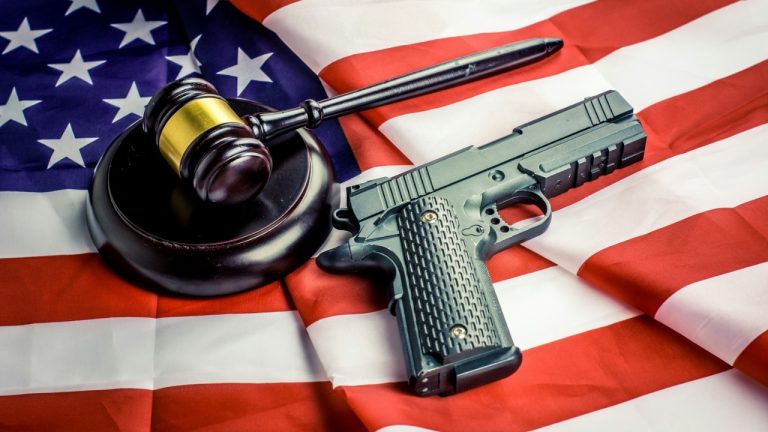
From the outside, it can be hard to see where the line sits between ugly talk and a prosecutable threat, but inside the Department of Justice the threshold is carefully defined. Prosecutors look for direct statements of intent, a clearly identified target, and concrete steps that show the speaker is moving from fantasy to action. In the current case, officials point to the combination of written threats naming President Donald Tr, the stockpiled weapons, and the defendant’s training as a veteran as evidence that the risk was more than theoretical. They have taken a similar approach in other recent cases involving threats against high-level officials.
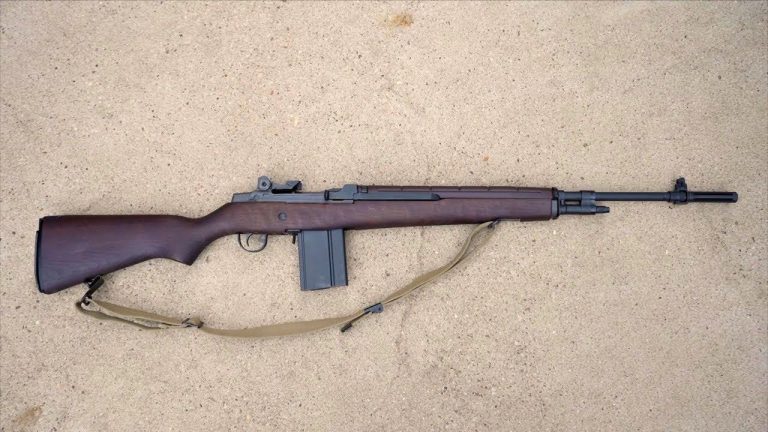
One example comes from Ohio, where federal prosecutors say a man named Mathre threatened to “use my M14 automatic gun and kill him” while Vice President Vance was visiting his home state. According to a federal indictment, the threat was made on or about Jan 21, 2026, while Vance was in northwest Ohio, and the language was specific enough that agents treated it as an immediate danger rather than online bluster. That case, detailed in a detailed indictment summary, shows how prosecutors weave together the words used, the timing of a visit, and the type of weapon mentioned to argue that the speaker had crossed the legal line.
A pattern of violent rhetoric around national leaders
The veteran’s case does not stand alone. Over the past year, federal agents and local police have dealt with a string of incidents where individuals focused their anger on President Donald Tr and other national figures, sometimes with deadly consequences. In one case in the Pacific Northwest, Authorities said a man who was later killed by officers had written threats against President Donald Tr directly on shotgun shells, then confronted law enforcement while armed. Investigators said the threatening messages on the shells left no doubt about his intent, and the encounter ended in gunfire after he refused to stand down. That sequence is laid out in a report that credits Authorities with recovering the shells and documenting the statements.
Similar patterns have emerged around Vice President Vance. In addition to the Mathre indictment, another report described how the U.S. Vice President, JD Vance, spoke from behind bulletproof glass during the 53rd annual March for Life while an Ohio man was charged with threatening him with an automatic weapon. That case, summarized in an account of the, shows how security protocols around national leaders have hardened in response to this wave of threats. Taken together, these incidents form a backdrop for the current veteran prosecution, suggesting that federal authorities now treat any detailed threat against a top official as part of a wider pattern rather than a one-off outburst.
The role of online posts and radicalization
In case after case, investigators trace the path from private anger to public threat through a trail of online posts. The Coast Guard veteran arrested in Washington had allegedly written online that an attack on political enemies was going to be “yuge,” language that prosecutors said was aimed squarely at Trump and his allies. Those posts, described in charging documents, gave agents a window into his mindset long before they seized any weapons. In the current veteran case, officials say the defendant followed a similar path, talking in graphic terms about killing the president while also discussing gear, tactics, and target locations.
For seasoned gun owners, that mix of bravado and planning is a familiar red flag. Hunters and competitive shooters might talk about ballistics or range conditions, but they do not usually mix that with fantasies about murdering named public figures. When someone with a background like Stinson’s in the Coast Guard and Federal Emergency Management Age starts posting about political enemies in the same breath as rifles and ammunition, investigators see a convergence that cannot be ignored. Social media, private chat groups, and fringe forums have become the modern equivalent of a manifesto, and prosecutors now treat those digital footprints as core evidence when they argue that a veteran has crossed from protected speech into a prosecutable threat.
Why veteran status changes the risk calculus
Veteran status does not make someone more likely to commit a crime, but it does change how law enforcement reads a threat. A person who has served in the Coast Guard from 1988 to 2021, like Stinson, has spent decades around firearms, tactical planning, and chain-of-command decision making. That experience means that when such a person starts talking about killing Trump or President Donald Tr, prosecutors assume they understand what it would take to carry out that plan and have the skills to do it. The same logic applies when a veteran references specific weapons, such as an M14, or uses language that reflects formal training rather than pop culture.
In rural communities and small towns, where veterans often serve as range officers, hunting mentors, or volunteer firefighters, that dual identity can be jarring. One day a man might be helping a neighbor sight in a .270 Winchester for whitetail season, and the next he is in federal court accused of plotting to assassinate the president. The Department of Justice has made clear through cases like the Coast Guard investigation in Washington and the Mathre indictment in Ohio that veteran status will be treated as a factor that increases concern, not as a shield. The veteran in the current case is facing that same reality, as prosecutors point to his training and stockpile to argue that his threats were more dangerous than those of an untrained civilian.
Community reactions in the gun world
Among gun owners, the reaction to these cases has been a mix of anger, embarrassment, and unease. Many lifelong shooters see people like the accused veteran, Stinson, and Mathre as outliers who give ammunition to those who want to clamp down on firearms. At the same time, they recognize that when Authorities recover shotgun shells with threats against President Donald Tr written on them, or when a man in Ohio talks about using an M14 to kill Vice President Vance, law enforcement has little choice but to respond aggressively. The fact that some of these defendants wore uniforms in the Coast Guard or other branches only deepens the sense of betrayal.
Gun clubs and veteran groups have quietly started talking more about how to spot the warning signs when a buddy drifts from dark jokes into serious planning. Some point to the Washington case of the Coast Guard sharpshooter, described in law enforcement job and training materials, as a reason to take online rants seriously. Others share links to resources like veteran support services that can help someone who is spiraling before they reach the point of writing threats on bullets or fantasizing about killing national leaders. The overall mood is less about defending the accused and more about trying to keep the next veteran from ending up in the same position.

Asher was raised in the woods and on the water, and it shows. He’s logged more hours behind a rifle and under a heavy pack than most men twice his age.