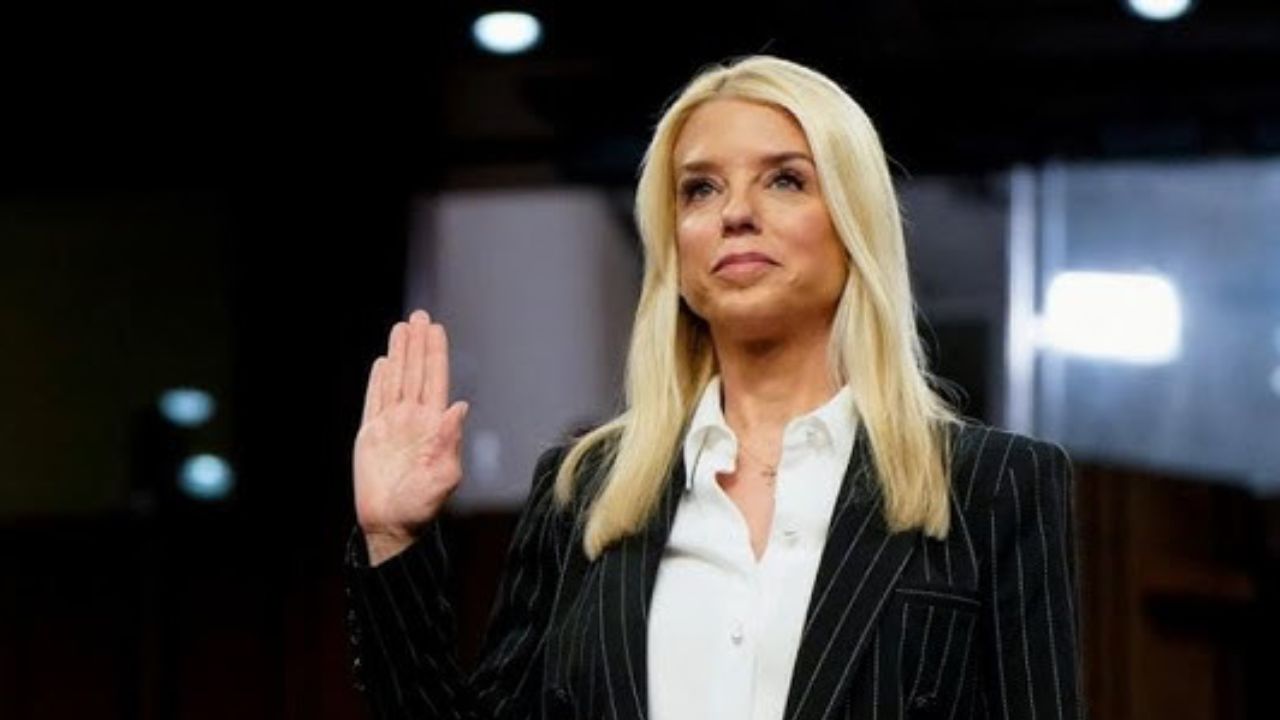
Trump appoints former attorney general Pam Bondi to White House AI advisory council alongside Zuckerberg, Jensen Huang and Ellison
Donald Trump has named former Florida attorney general Pam Bondi to a new White House advisory council on artificial intelligence, placing a loyal political ally alongside some of the most powerful executives in tech. The move pairs Bondi with figures such as Mark Zuckerberg, Jensen Huang and Larry Ellison on a body that will help shape how the administration approaches AI policy, regulation and national competitiveness. It also returns Bondi to a high-profile federal role shortly after her controversial stint at the Department of Justice and renewed scrutiny of her past handling of Jeffrey Epstein-related records.
What happened
According to administration officials, Trump has appointed Pam Bondi to a revamped White House AI advisory council that will report through the President’s Council of Advisors on Science and Technology, often referred to as PCAST. The council is expected to focus on generative AI, national security applications and the impact of automation on jobs. Bondi, who served as Florida’s attorney general and later became a prominent Trump defender during his first impeachment, is one of the few members without a deep technical background in computer science or AI research.
The membership list pairs Bondi with high-profile industry leaders. Meta chief executive Mark Zuckerberg, Nvidia founder Jensen Huang and Oracle co-founder Larry Ellison are described in administration materials as key private sector voices on the council. Reporting on the announcement notes that the group also includes venture investor David Sacks and other Silicon Valley figures who have aligned themselves with Trump’s agenda on technology and regulation. One account of the rollout frames Bondi’s selection as part of a broader push to put loyalists in influential advisory roles on science and technology policy.
The decision comes only weeks after Bondi’s exit from a senior role at the Department of Justice. She had been brought into DOJ as a political appointee and left amid internal friction over her influence on politically sensitive investigations. At the same time, she faced renewed criticism over her office’s past handling of records tied to Jeffrey Epstein when she was Florida attorney general. Critics and victims’ advocates argued that her office resisted fuller disclosure of files related to Epstein’s prosecution and alleged accomplices, and they renewed those complaints as the Trump White House elevated her to a new AI-focused role.
One detailed account of the appointment notes that the White House announcement was timed to showcase Trump’s outreach to the tech industry, with Bondi’s name appearing alongside Zuckerberg, Huang and Ellison in the same release. That report describes the council as part of a larger “AI and emerging technologies” initiative that also includes working groups on cybersecurity, critical infrastructure and federal data strategy. In that framing, Bondi functions as a political and legal strategist on the panel rather than a technical architect of AI models or infrastructure.
Another report characterizes the appointment as an attempt to “rehabilitate” Bondi after the backlash over Epstein-related records and her abrupt DOJ departure. It notes that the White House AI council seat gives her a prestigious platform while also signaling to Trump’s allies that loyalty during politically charged investigations will be rewarded with new opportunities. The same coverage points out that her name is now listed alongside globally recognized technology executives, which could help rebrand her image around innovation and national competitiveness instead of controversy at the Justice Department.
Some coverage also highlights that the new AI council will feed into PCAST, which historically has advised presidents on issues such as semiconductor policy, pandemic response and climate science. In this iteration, the body is expected to emphasize AI safety, data privacy and competition with China. Bondi’s portfolio on the council has not been fully detailed, but aides describe her as focused on legal risk, civil liability and law enforcement uses of AI, areas that intersect directly with her background as a prosecutor and attorney general.
Why it matters
Bondi’s appointment matters on two levels: the direction of federal AI policy and the message it sends about how Trump values political loyalty in science and technology roles. On policy, the council will be one of the main venues where industry leaders and the administration negotiate guardrails for AI systems that touch everything from consumer apps to military targeting. With Zuckerberg, Huang and Ellison at the table, the largest AI infrastructure and platform companies gain a direct line into White House thinking on regulation, liability and federal purchasing.
Her presence on that same panel injects a distinctly political voice into what is nominally a science advisory process. Bondi’s career has centered on law enforcement, partisan legal advocacy and media defense of Trump, not on AI research or engineering. Supporters argue that this background positions her to scrutinize how AI tools affect criminal justice, civil rights and consumer protection. They point to her experience overseeing statewide investigations in Florida and later her role shaping Trump’s public defense strategy as evidence that she can translate complex legal and ethical questions into policy recommendations.
Critics counter that elevating a close political ally with limited technical expertise risks turning AI policy into another front in partisan warfare. They argue that the council’s recommendations could tilt toward protecting favored companies, limiting oversight of law enforcement use of AI or downplaying civil liberties concerns. The timing of Bondi’s appointment, coming shortly after backlash over her handling of Epstein-related files and her DOJ exit, has intensified those concerns. Some see the AI council seat as a reward for loyalty rather than a merit-based selection grounded in expertise.
The composition of the council also reflects the growing concentration of AI power in a small group of companies and investors. Nvidia, through Jensen Huang, controls the chips that train most large-scale models. Meta and other large platforms control vast datasets and distribution channels. Larry Ellison’s Oracle has become a key cloud provider for government contracts. By placing these executives on a White House advisory body, Trump is effectively acknowledging that any national AI strategy will be negotiated with this concentrated group of corporate actors.
Bondi’s role may be to bridge that corporate influence with the administration’s political goals. She has already shown a willingness to defend Trump’s positions aggressively in public and in legal forums. On the AI council, that could translate into strong support for domestic AI champions in competition with China, skepticism of strict federal regulation and a preference for voluntary industry standards. Her experience as Florida attorney general also suggests she may focus on issues such as online child exploitation, human trafficking and fraud, areas where AI tools are both a risk and a potential enforcement asset.
At the same time, the controversy around Epstein-related records means Bondi will likely face intense scrutiny on any recommendations that touch on transparency, victims’ rights or data access. Advocacy groups that criticized her past handling of Epstein files are already questioning whether she should help shape national policy on AI systems that can profile individuals, analyze sensitive data or automate parts of the criminal justice process. That tension could shape public hearings, congressional oversight and the reception of any formal recommendations the council produces.
What to watch next
The first key test will be the council’s initial meetings and whether the White House releases detailed agendas or working papers. Observers will look for which issues Bondi is assigned to lead, such as law enforcement applications, content moderation or civil liability for AI-generated harms. If she chairs or co-chairs a subcommittee, that would signal a stronger policy role than a purely symbolic appointment.
Another focal point will be how often the council’s recommendations align with the interests of companies represented by Zuckerberg, Huang and Ellison. Guidance on export controls for advanced chips, rules for AI-generated political ads or liability shields for online platforms will reveal how the administration balances corporate influence against consumer and national security concerns. Any pattern that consistently favors industry positions will likely intensify criticism that the panel is too closely tied to the companies it is supposed to help regulate.

Leo’s been tracking game and tuning gear since he could stand upright. He’s sharp, driven, and knows how to keep things running when conditions turn.