U.S. states struggling with growing damage from invasive European rabbits
European rabbits are not native to North America, yet they have repeatedly found footholds in pockets of the United States where they can reshape landscapes and budgets. The most visible problems today are highly localized, but the biology of these animals and the history of past introductions show how quickly small releases can turn into long‑running management headaches.
I focus here on the specific places and policies that are documented, from island infestations in the Pacific Northwest to historical warnings in the Mid‑Atlantic, and on what those cases reveal about the broader risk. The picture that emerges is not of a nationwide explosion, but of scattered trouble spots that demand sustained attention if states want to avoid the kind of damage seen overseas.
From European warrens to global invader
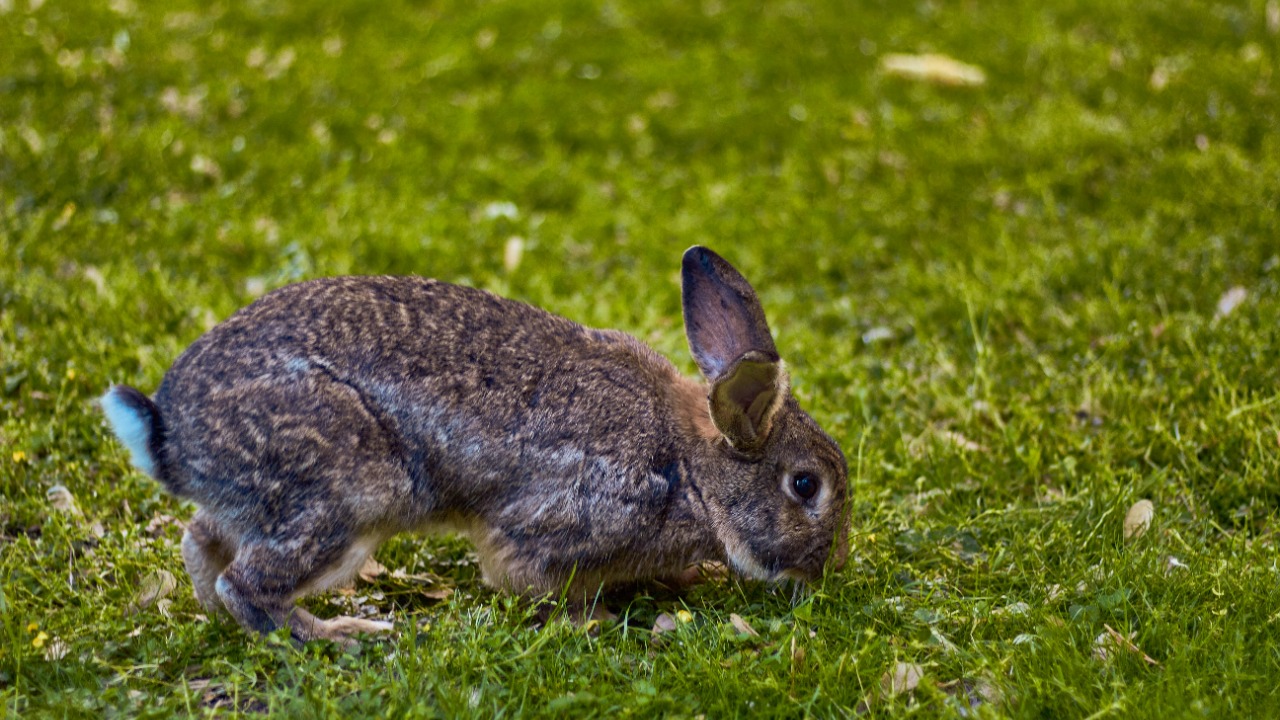
The wild European rabbit, known scientifically as Oryctolagus cuniculus, began as a species native to the Iberian Peninsula, then spread widely with human help. Historical accounts describe how, later, the Phoenicians and the moved rabbits around Mediterranean Europe, and how, in the Middle Ages, people created rabbit gardens and warrens that seeded feral populations across much of the continent. That long history of deliberate transport is a reminder that this animal’s global reach is not accidental, it is the product of repeated human choices.
Modern ecology texts underline how successful that spread has been. Biologists note that Oryctolagus cuniculus has been highly successful in most places where it has been introduced, and that it is considered an agricultural pest and a serious threat to native ecosystems in many of those regions. That combination of rapid reproduction, flexible diet and burrowing behavior is exactly what worries land managers in the United States when even a small feral colony appears.
San Juan Island: Washington’s cautionary tale
Nowhere in the United States illustrates the risk of localized establishment more clearly than the San Juan archipelago in Washington. On San Juan Island itself, residents have documented non‑native European rabbits grazing lawns and fields, with local posts describing non‑native European rabbits around Friday Harbor and nearby properties. Those sightings are not just a curiosity, they are a sign that a species which has caused major problems overseas is already loose in a sensitive island landscape.
Federal land managers are dealing with a related issue on nearby protected areas. The National Park Service has prepared an environmental assessment for rabbit control at San Juan Island National Historical Park, explaining that National Park Service is proposing to control the population of non‑native European rabbits, identified as Oryctolagus cuniculus, at San Ju sites because of damage caused by the rabbits. That work sits within a broader state context, as agencies in Washington weigh how to prevent similar problems on other islands and mainland parks.
Island parks learning from past eradication efforts
The San Juan situation is not the first time U.S. park managers have grappled with feral European rabbits on islands. Off the coast of California, rabbits were introduced to Santa Barbara Island, part of Channel Islands National Park, where they stripped vegetation and destabilized soils. An environmental assessment from the early 1980s recounts how repeated control campaigns were mounted and notes that these efforts have been periodically successful, to the point that it was once believed that the rabbits had been eliminated, but then adds that, Howe, later surveys found survivors and renewed impacts, underscoring how hard it is to fully remove them Howe.
Those experiences are shaping current strategies on San Juan Island and elsewhere. The rabbit management plan for the San Juan Island National Historical Park emphasizes that European rabbits are non‑native and that their burrowing and grazing are damaging cultural landscapes that the park was created to protect. Managers are also looking at how other island jurisdictions, such as British Columbia, have responded, with provincial alerts warning that the PRIMARY THREAT from European rabbits is that they compete with many native species for food and shelter and that their burrowing behaviours also cause considerable soil erosion.
Why European rabbits are so hard on landscapes
Ecologists who study invasive mammals describe European rabbits as a textbook example of how a small herbivore can transform a habitat. One invasive species database notes under the heading Ecological Threat that Ecological Threat European rabbits are aggressive foragers that threaten biodiversity when they become established in new non‑native areas, because they can remove vegetation faster than it can regrow. In open grasslands or coastal bluffs, that grazing pressure can leave bare soil, which then erodes under wind and rain.
Australian research, where rabbits have been a dominant pest for more than a century, offers a preview of what unmanaged populations can do. A national toolkit on invasive rabbits explains that, in the section titled Environment, Environment European rabbits’ impact on natural environments and native species is a leading threat to biodiversity, and that rabbits damage vegetation through grazing and browsing and disturb landscapes when they burrow and disturb landscapes. Those same behaviors are what worry landowners in places like San Juan Island, even if the scale there is far smaller than in Australia.
Economic stakes: lessons from overseas and historical warnings
While current U.S. rabbit problems are localized, the economic stakes are easier to see by looking abroad. Australian analysts estimate that rabbits graze on native and introduced vegetation, crops and pastures, and that rabbit grazing can prevent seedlings from establishing, leading to large production losses each year, a pattern summarized in a section on Economic impacts. Those figures are a warning sign for any region that relies on grazing lands or perennial crops and is tempted to ignore a small feral colony.
In the United States, professional societies have been sounding the alarm for decades. A resolution on wild European rabbits notes that, WHEREAS the wild European rabbit (Oryctolagus) has proven detrimental to the economic and aesthetic interests of man wherever it has been introduced and still persists, and that attempts to establish it for sport have not been economically or aesthetically successful. That same document records that individuals and clubs in some States have seen fit to import for sport this species from San Juan Islands, Washington, and that it has been introduced and still persists in several areas, a warning captured in the clause beginning WHEREAS individuals and clubs in some WHEREAS States have done so.
Mid‑Atlantic and Great Lakes: policy responses, not current outbreaks
The same resolution shows how some eastern states chose to respond before rabbits became a larger problem. It urges that the Pennsylvania Game Commission, the New York Game Commission, and the Ohio Game and Fish Commission take steps to prevent further releases and to remove existing populations where feasible, language that explicitly names the Pennsylvania Game Commission, the New York Game Commission, and the Ohio Game and Fish Commission. Those references indicate that introductions had occurred in parts of the Mid‑Atlantic and Great Lakes regions, but they do not document large, ongoing outbreaks today.
State‑level references confirm that these places are watching the issue rather than battling major infestations. General overviews of Pennsylvania, New York and Ohio do not describe current, expanding European rabbit plagues, and I have not found recent evidence of widespread damage in those states. Unverified based on available sources are any claims that these regions are now struggling with large feral rabbit populations, which makes their early policy stance look more like precaution than crisis response.
Western states: scattered risks and disease surveillance
Across the American West, the main rabbit story in recent years has been disease, not invasive European rabbits overrunning cities. Wildlife agencies in Utah have warned of outbreaks of highly contagious rabbit hemorrhagic disease, with one alert describing Utah wildlife officials warn of outbreak of highly contagious rabbit hemorrhagic disease and noting that it affects both wild and domestic rabbits Dec. Similar reports from Arizona describe how Anne Justice‑Allen, a wildlife veterinarian with the Arizona game and fish department, has watched the disease move across parts of the Southwest, with native cottontails and hares also vulnerable to the virus Anne Justice.
Those disease events matter for European rabbits because the virus, known as RHDV‑2, was first recognized in domestic European rabbits and can spill into wild populations. A report on how the disease came to the U.S. notes that it likely originated around a decade ago in European rabbits, which comprise most domestic rabbits, and that it has been detected in western states including parts of California How the. Veterinary guidance from Florida underscores that testing rabbits is key to monitoring the disease spread and that Testing rabbits helps identify RHDV as a disease source to the domestic rabbits. None of these disease reports, however, document large feral European rabbit populations in states like Arizona, New Mexico or Colorado; the concern there is more about protecting native species and domestic animals than about invasive European rabbits reshaping landscapes.
Texas and the Southwest: risk awareness more than active invasion
In the southern Plains and Southwest, European rabbits are on the radar of invasive species specialists, but again, the evidence points to risk awareness rather than a current, widespread invasion. The Texas Invasive Species Institute maintains a detailed profile of the European rabbit that explains how Oryctolagus cuniculus behaves in non‑native environments and why it is considered a threat. That same database notes that a virus used in Australia to control rabbits was highly effective, but that 0.02% of the population survived and developed a resistance, a figure that highlights how even aggressive biological control can leave a remnant population that rebounds 0.02%.
State‑level references to Texas and its neighbors do not describe European rabbits as a major current pest, and I have not seen documentation of large feral populations on the mainland of Texas itself. Unverified based on available sources are any claims that ranchers there are already facing the kind of rabbit‑driven erosion seen in Australia. Instead, the focus is on preparedness, with agencies in states like Utah and Arizona tracking disease and watching for any sign that domestic rabbits are being released into the wild.
What homeowners and local governments can do now
Even in places without large feral populations, individual choices can determine whether European rabbits gain a foothold. Invasive species councils stress simple steps for the public, with one outreach campaign framed around the question What Can We and urging, Never release your pets into the wild, because they can rapidly reproduce and adapt to new environments, which allows them to become invasive. That message is particularly relevant in suburban areas where domestic rabbits are popular pets and where a handful of abandoned animals can quietly establish a breeding population.
For property owners who are already seeing rabbits, practical guidance focuses on damage prevention rather than eradication. Extension specialists in California note that Damage from rabbits can be very destructive in gardens and landscaped places, particularly where wild or uncultivated land is nearby, and that one of the most reliable ways to protect plants is to build a fence. Those recommendations apply whether the animals are native cottontails or non‑native European rabbits, and they show how, at the household scale, the line between invasive species policy and everyday pest control can blur.
Global research and the limits of biological control
Scientists are still learning how best to manage rabbit populations without causing new problems. In Australia, where rabbits have been a national issue for generations, researchers have tracked the long‑term impact of RHDV‑2 on wild populations. One study describes how Parallel surveys at the long‑term rabbit monitoring sites, where population abundance was measured and up to 20 apparently healthy rabbits were sampled, were used to assess how the virus affected numbers from east to west Parallel. Those data show sustained reductions in some areas, but they also highlight how quickly rabbits can rebound when conditions are favorable.
Leo’s been tracking game and tuning gear since he could stand upright. He’s sharp, driven, and knows how to keep things running when conditions turn.