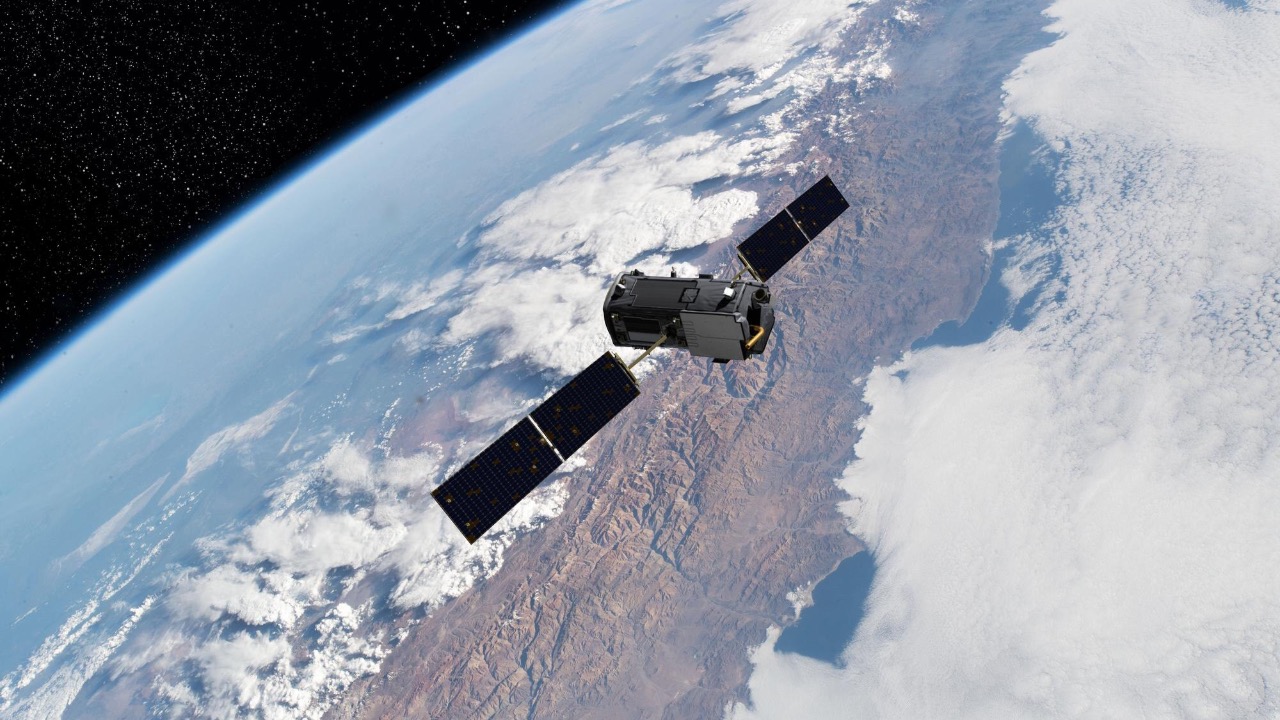
US Navy satellite launched in 1964 still orbiting and transmitting with no one in charge
You might not expect a piece of Cold War hardware from the 1960s to still send signals after more than six decades, yet one does. Launched by the U.S. Navy in December 1964, Transit 5B-5 was built as part of the first operational satellite navigation network. Its designers aimed to give submarines accurate position fixes anywhere on the planet without surfacing. The system relied on Doppler shifts in the satellite’s radio signals as it passed overhead. Today the satellite itself has outlived its original mission by generations, continuing to transmit on its own while the Navy long ago moved on.
Origins in the Navy’s navigation push
The Transit program emerged from urgent needs during the nuclear submarine era. Polaris boats required precise location data to aim their missiles accurately. Ground-based methods fell short over vast oceans, so engineers at Johns Hopkins Applied Physics Laboratory developed a constellation of orbiting beacons. Transit 5B-5 weighed around 70 kilograms and rode a Thor-Able Star rocket into a near-polar orbit from Vandenberg Air Force Base. Within weeks its primary navigation payload stopped working properly, yet the basic telemetry transmitter kept operating whenever sunlight hit its panels.
That limited functionality proved enough to keep the satellite relevant in an unexpected way. Decades later, its faint but steady signal still reaches Earth. No ground controllers send commands or monitor health data. The spacecraft simply follows its orbital path, broadcasting when conditions allow. You can track its passes with basic equipment that hobbyists already own for weather satellites.
What you hear when it passes
Tuning to roughly 136.65 MHz during a sunlit pass reveals a distinctive sound—sometimes described as musical or rhythmic ticking mixed with modulated tones. The signal carries basic telemetry rather than navigation data. Solar panels, battered by radiation and micrometeorites, still generate enough power for the transmitter during daylight portions of the orbit. At night the signal fades. This on-off cycle has continued for sixty years, surprising engineers who expected total silence long ago.
Amateur listeners record the audio and analyze shifts in frequency or strength. The patterns reveal details about the satellite’s tumbling or temperature swings. None of this information serves official purposes anymore. Instead it offers a live window into hardware built when slide rules guided spacecraft design. You experience a direct link to 1964 technology that refuses to quit.
The amateur radio connection
Radio enthusiasts have kept tabs on Transit 5B-5 for years using handheld antennas and software-defined radios. Many got their first taste of satellite reception through NOAA weather birds and discovered this older signal by chance. Online forums share pass predictions, recordings, and decoding tips. The satellite appears in public databases as an active transmitter, even though its operators retired decades earlier.
Participation requires no special license for listening in most places. You point a simple antenna skyward at the right moment, and the signal arrives if the sun illuminates the panels. Some operators have followed it across continents, building personal archives of its behavior over solar cycles. Their collective effort documents longevity that professional space agencies rarely track in such detail for non-operational objects.
Lessons from an unintended survivor
The satellite’s persistence highlights how early space hardware sometimes exceeds expectations. Designers planned for a few years of service, not half a century. Radiation-hardened components and conservative power systems contributed to its endurance. At the same time, its continued presence adds to the growing catalog of orbital debris that future missions must avoid. You see both engineering success and a reminder that objects in space do not simply vanish when funding ends.
Transit itself paved the way for GPS and modern GNSS constellations. Millions rely daily on satellite navigation that traces its roots to these Navy prototypes. Knowing one physical ancestor still circles above connects today’s seamless positioning apps to their gritty beginnings. The contrast between billion-dollar modern fleets and this lone holdout feels striking.
Why nobody pulls the plug
After the Transit system retired in the 1990s, official oversight shifted elsewhere. No one maintains a control center for 5B-5. Its transmitter cannot be turned off remotely at this point. The spacecraft follows natural orbital decay, expected to remain aloft for many more years before atmospheric drag brings it down. In the meantime it serves as an accidental beacon for anyone curious enough to listen.
You encounter a piece of history that operates without bureaucracy or budget. Its signal carries no secrets, only basic status tones from an era when the space race shaped national priorities. Tracking it offers a quiet satisfaction—proof that some machines outlast the organizations that launched them. Next clear evening, check a satellite predictor app. You might catch it singing overhead, a quiet survivor from 1964 still making its rounds.

Asher was raised in the woods and on the water, and it shows. He’s logged more hours behind a rifle and under a heavy pack than most men twice his age.