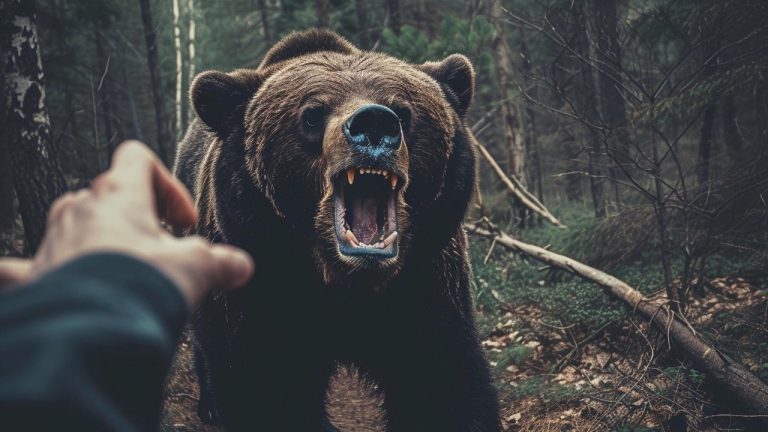
What most people misunderstand about bear encounters
Popular stories about bears tend to swing between horror and comedy, but both extremes hide a more useful truth. Most encounters never become attacks, and when they do, human behavior often plays a decisive role. Understanding what people routinely get wrong about bears can make the difference between a tense moment and a tragedy.
From the myth that bears are relentless man-eaters to the viral rhyme that claims a single rule fits every species, misinformation thrives in campsites, trailheads, and social feeds. Correcting those myths is not only fair to the animals, it is also one of the most practical forms of outdoor safety training available to the average hiker or homeowner.
Bears are not looking for a fight

One of the most persistent misunderstandings is the idea that bears are naturally aggressive and always on the verge of attacking. Guidance built around years of field observation stresses that bears usually avoid conflict whenever they can, especially if they have escape routes and are not defending cubs or food. Even a large animal that looks imposing is often trying to end an encounter, not start a battle.
Wildlife educators describe how many people misread a bear that stands on its hind legs, huffs, or pops its jaws as an inevitable attacker, when those displays are often meant to communicate dominance and scare a person away so the animal can back off without being chased. Training materials on the misunderstood bear explain that a charging animal is sometimes bluffing, and that the claim that MYTH, Once it starts to run it will never stop, does not match how these animals typically behave.
Social media outreach has tried to correct this image problem. A widely shared reel that asks Are bears dangerous and then adds Honestly, Most of them are misunderstood frames the average bear encounter as a situation where the animal is simply trying to move through its habitat while people pass through the same space. The message emphasizes that park staff want visitors and wildlife to remain safe, which starts with recognizing that a bear might view a human as a potential threat rather than prey, and will often choose to leave if given room to do so.
Why the “always unpredictable” myth persists
Another popular belief insists that bears are so unpredictable that safety advice is pointless. That idea can become an excuse for ignoring basic precautions. In reality, biologists and rangers have documented patterns in bear behavior that repeat across regions and species, even if individual animals vary.
Educational campaigns that address Aug, Bear Myths You Need, Stop Believing, Bear Expert point out that labeling bears as purely random lets people dismiss the many things they can do to prevent an encounter. Simple steps such as storing food properly, keeping dogs leashed, and paying attention to tracks or scat on the trail dramatically reduce close contacts. The same campaigns stress that visitors should always carry bear spray and know how to use it, because the tool has been shown to stop aggressive bears at close range in a high percentage of cases.
Field guidelines from interagency groups echo that pattern based approach. Encounter advice that begins During an encounter and continues with Never run away and You cannot outrun a bear is built on documented chase responses. Running can trigger pursuit in the same way it does with dogs. Rather than treating bears as random, these instructions assume that certain human actions reliably increase or decrease risk and that people can learn to choose the safer option.
Misreading bear body language
Human fear tends to flatten all bear behavior into one category: attack. Yet the difference between curiosity, stress, and predation matters. A bear that lifts its nose to smell the air, shifts its weight, or sways its head may be trying to identify what a person is and whether the situation is safe. That is very different from an animal that lowers its head, keeps its legs stiff, and pins its ears forward, which encounter guides describe as a more serious posture.
Some safety brochures explain that a bear that stands up is usually trying to get a better view or scent, not preparing to strike. The same materials describe how a bluff charge often involves the animal veering off at the last second or stopping short, a tactic meant to push a person out of the area without actual contact. Misreading that behavior as unstoppable aggression can lead someone to run or scream, which may escalate the encounter.
Local agencies that coach residents about black bears advise that When the animal is curious and continues to look in a person’s direction, smells the air, or slowly approaches, the recommended response is to Talk in a calm voice, wave arms slowly, and back away while facing the animal. That guidance is designed to reassure the bear that the human is not prey and to give both sides space to disengage.
The “if it’s brown, lie down” rhyme is dangerously incomplete
Few pieces of outdoor folklore are repeated as often as the rhyme that claims one simple rule for each species: brown means lie down, black means fight back, white means goodnight. Although the phrase is easy to remember, safety experts warn that it can be dangerously misleading because it ignores context and behavior.
Medical and safety explainers that begin with Although the catchy bear safety rhyme sounds helpful go on to stress that the best way to respond depends on what the animal is doing, not just its color. A brown bear that is curious or moving away does not call for a person to drop to the ground. A black bear that is bluff charging over a food source might be deterred by standing ground and backing away slowly, while a predatory black bear that stalks a person silently calls for a very different response.
Outdoor educators who critique Society myths about what to do if a bear approaches highlight how the rhyme encourages hikers to react automatically without reading the scene. They urge people not to follow this advice mindlessly and instead to focus on distance, escape routes, and the animal’s signals. A graphic shared by community groups notes that response should not be based on species alone and urges people to Toss from memory the oft repeated mantra so they can pay attention to what the bear is actually doing.
Running, climbing, and playing dead: the classic mistakes
Three reactions come up again and again in incident reports: sprinting away, scrambling up a tree, and dropping to the ground to play dead. All three are rooted in myth rather than in the capabilities of real animals.
State agencies in Alaska use blunt language in their advice: Never Run. You cannot outrun a bear. Bears can run much faster than a sprinter and, like dogs, they will chase fleeing animals. The same guidance adds that a key principle is You must stand your ground, which gives the animal a chance to assess and retreat instead of triggering a chase.
Regional newspapers that examine bear myths spell out why climbing is also a poor strategy. One widely cited explanation starts with MYTH, If a person can, they should climb a tree to escape from a grizzly, then counters with TRUTH, Climbing is not a good strategy. Bears, including grizzlies, can climb or knock people from trees, and a person who climbs may end up trapped with no safe way down if the animal decides to wait below.
European conservation groups have tried to dismantle the habit of collapsing in front of any bear. Their six rule guidance states that Despite its popularity, the belief that pretending to be dead is always the right move is wrong. Playing dead is recommended only in very specific situations, such as a defensive brown bear that makes contact in close quarters. For a curious or predatory animal, lying down can make a person appear more like prey.
Guns are not a magic shield
Another widespread assumption is that carrying a firearm automatically makes bear country safe. Coverage of real world incidents, however, shows a more complicated picture. In a society with hundreds of millions of guns, the most common myth is that a person can easily shoot their way out of any confrontation. In practice, high stress, short distances, and moving animals make accurate shots difficult even for trained people.
Analyses of backcountry encounters describe cases where firearms wounded animals without stopping them, or where bullets ricocheted and created new hazards for nearby hikers. By contrast, multiple field studies have found that properly used bear spray, deployed at the right distance and carried where it is immediately accessible, has been proven beyond a doubt to stop many charging animals without permanent harm.
Experienced hikers and former law enforcement figures echo that view in public forums. One widely shared answer by J Dilley, identified as Former Retired Business Owner at Arborist and Forner LEO, notes that Black Bear attacks are few and far between, and recommends that if a predatory animal does make contact, a person should fight back with everything if they want to live. That perspective highlights that tools matter, but mindset and technique matter just as much.
Not all bears, and not all attacks, are the same
Another source of confusion is the idea that all bear species behave alike. In reality, black bears, brown or grizzly bears, and polar bears occupy different habitats, have different diets, and show different patterns of aggression. Safety educators stress that the response to a defensive brown bear with cubs is not the same as the response to a black bear that stalks a person along a trail.
Guides aimed at homeowners and hikers in black bear country explain that if a Black Bear Makes Contact With You in a predatory context, the instruction is to FIGHT BACK with anything at hand and DO NOT play dead. That advice reflects data showing that predatory black bears are more likely to break off when met with strong resistance.
By contrast, many protocols for brown bears emphasize trying to avoid escalation in the first place. Online discussions among backcountry travelers describe how, When a bear bluff charges, it may have its head and ears up and forward, puff itself up to look bigger, and bound with stiff legs. Recognizing that pattern as a warning allows a person to stand firm, speak calmly, and avoid sudden moves, which can convince the animal that it does not need to follow through.
Polar bears, which are not covered in detail in these sources, are often treated as a separate category, with specialists describing them as more consistently predatory toward humans in some regions. Unverified based on available sources.

Leo’s been tracking game and tuning gear since he could stand upright. He’s sharp, driven, and knows how to keep things running when conditions turn.