What solar storms can disrupt beyond pretty auroras
When the northern lights spill far beyond the Arctic Circle, it is easy to forget that the same solar tantrums painting the sky can rattle the technology we lean on every day. The same storms that light up a backcountry campsite can knock out power, scramble navigation, and quietly chew away at hardware we never see. If you spend time in the field, on the water, or in the air, those side effects matter a lot more than a pretty photo.
I have learned to treat big aurora forecasts the way I treat blizzard or hurricane warnings: as a signal that the Sun is about to reach into our lives in ways that go well beyond the horizon glow. Understanding what solar storms can disrupt, and how, is part of basic risk management for anyone who depends on GPS, radios, or even a reliable grid connection.
How solar storms actually hit Earth
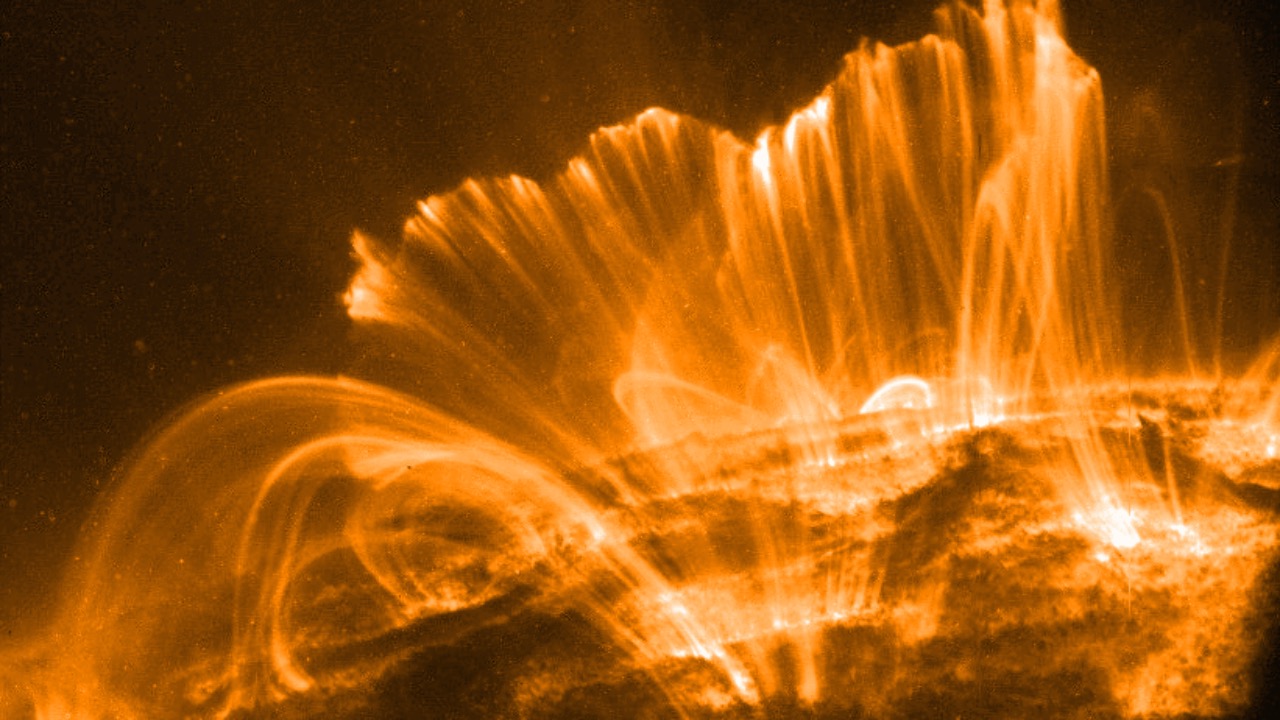
The trouble starts when the Sun hurls out a blast of charged particles, often in the form of a coronal mass ejection, or CME. When a CME is aimed our way and reaches Earth, it slams into the planet’s magnetic shield and dumps energy into the magnetosphere, which can trigger a geomagnetic storm that both powers auroras and stresses electrical systems. As one detailed explanation puts it, When a CME is directed at Earth, the shock can compress the magnetosphere and set off a chain of reactions that ripple through the upper atmosphere.
Those reactions are not rare flukes. During active periods of the solar cycle, the Sun can fire multiple CMEs in quick succession, and when faster eruptions overtake slower ones, they can merge into what space weather experts call a cannibal coronal mass ejection. A recent report described how a Cannibal Coronal Mass can drive major solar flares that threaten radio communications and satellite operations while also setting up spectacular auroras. From a distance it looks like a light show. Up close, in the systems we rely on, it is more like a slow, global power surge.
From historic storms to modern warnings
We have seen what big solar storms can do when they line up just right with our infrastructure. Historical records of major events show that strong geomagnetic storms can trigger large scale power outages, disrupt or black out radio communications, damage satellites, and interfere with navigation systems such as GPS. Those same records list multiple storms that pushed auroras deep into mid latitudes while quietly causing transformer failures and communication blackouts that took time and money to repair.
We got a fresh reminder of that risk during the solar storms of May 2024, when a series of powerful eruptions produced extreme geomagnetic activity and auroras visible across wide swaths of the Northern and Southern Hemispheres. Along with the sky show, those May 2024 solar carried the same potential for power grid stress, radio interference, and satellite issues that have defined past benchmark events. The pattern is clear: whenever the Sun turns up the volume, the odds of real-world disruption climb, and the smart move is to pay attention before the lights flicker.
Power grids and long wires in the crosshairs
Of all the systems that feel a solar storm, long-distance power grids are among the most vulnerable. When a geomagnetic storm distorts Earth’s magnetic field, it induces electric fields at the surface that can drive currents through transmission lines and transformers. One detailed analysis notes that these geomagnetically induced currents can flow through buried infrastructure, with the changing field at the surface of the earth pushing unwanted current into pipelines and power equipment alike. For grid operators, that means extra heating, misoperation of protection systems, and in the worst case, permanent damage to big transformers that are hard to replace.
The same physics that threatens power lines also affects other long conductors. Research into geomagnetic storms and buried pipelines shows that induced currents can accelerate corrosion and complicate cathodic protection systems that are supposed to keep steel intact. For anyone who cares about fuel supply, rural gas lines, or remote infrastructure, that is not an abstract problem. It is a reminder that a strong solar storm can quietly shorten the life of hardware we count on, even if the lights never go out in a dramatic way.
Satellites, GPS and the “internet apocalypse” worry
Most of us now carry a satellite receiver in our pocket, whether we are tracking a backcountry route on a phone or following a dog with a GPS collar. Solar storms can make those tools far less trustworthy. When the Sun gets rowdy and a geomagnetic storm hits, the energized upper atmosphere can bend and scatter radio signals, which is why detailed explainers warn that this is when the action really starts for Earth based technology. That can translate into GPS position errors, dropped satellite phone calls, and patchy satellite internet right when you might be trying to pull a weather update from a remote camp.
The backbone of the global internet is not immune either. While the glass in fiber optic cables does not care about magnetic fields, the electrical repeaters that boost signals across oceans do. One assessment points out that while the While the cables themselves are not vulnerable to geomagnetic storms, the repeaters are, and failures there could trigger what some researchers have described as an internet apocalypse scenario. Another technical discussion notes that Undersea communication cables and long distance fiber optic systems could suffer long lasting regional outages if enough repeaters fail at once. For anyone who works or travels in remote places, that is a good reason to keep offline maps and analog backups in the kit.
Radio, aviation and navigation in the real world
On the ground and in the air, radio is still king when things go sideways, and solar storms can make that lifeline unreliable. Strong flares and CMEs can cause high frequency radio blackouts, degrade aviation communication, and interfere with satellite based navigation that pilots and mariners use every day. One recent account of a major event warned that a powerful solar flare detected on its way to Earth could disrupt radio communications and satellite operations even as it set up bright auroras. That is the kind of event that can force airlines to reroute polar flights and push long range HF users to scramble for alternate frequencies.
We have already seen how serious forecasters treat these situations. During a recent severe geomagnetic storm, one widely shared briefing warned that a historic event was about to hit Earth and flagged an S4 level solar radiation storm, the first of that strength since 2003. For anyone flying, sailing, or guiding clients in remote airspace, that kind of warning is a cue to expect degraded navigation, patchy comms, and higher radiation exposure at altitude. It is also a reminder to keep basic skills like dead reckoning and paper chart navigation sharp, because the sky can turn your electronics into expensive paperweights for a few critical hours.
Satellites, space stations and falling orbits
Solar storms do not stop at the edge of the atmosphere. They reach right into orbit, where satellites and space stations live. When a big CME or radiation storm hits, it can heat and puff up the upper atmosphere, increasing drag on low orbiting spacecraft and slowly pulling them down. A recent analysis of the January 2026 solar radiation storm noted that unless operators take measures to boost the orbit again, as was done during the first two servicing missions, the Hubb le Space Telescope could face long term orbital decay issues. That same drag effect can force satellite operators to burn precious fuel to maintain altitude after a strong storm.
Radiation is another problem. Energetic particles can damage solar panels, scramble onboard electronics, and increase the risk to astronauts on the International Space Station or any future crewed platforms. When the Sun unleashes a powerful X flare and a huge CME races toward Earth, mission controllers have to think about putting spacecraft into safe modes, delaying spacewalks, and watching for anomalies that might show up days or weeks later. For people on the ground, the fallout can look like glitchy satellite TV, degraded weather data, or navigation satellites that are a little less accurate than usual.
Impacts on wildlife and human bodies
The effects of solar storms are not limited to metal and silicon. Earth’s magnetic field is a cue for a long list of animals, and when geomagnetic storms twist that field, they can confuse species that rely on it. One overview of ecological connections notes that Effects on Animals Navigation include disruptions for birds, fish, whales, and even insects that use the Earth magnetic field to migrate. Bright auroras can also change the natural night light environment in polar regions, which may alter hunting and mating behavior for nocturnal species that are tuned to darkness.
Humans are not immune to magnetic changes either. Medical research into the Biological Effects of Magnetic Storms and extremely low frequency magnetic fields has found that Magnetic storms change the redistribution in the activity of parts of the autonomic nervous system, increasing the contribution of some components and decreasing others. That work has linked geomagnetic disturbances to shifts in heart rate variability and other subtle physiological markers. The science is still evolving, but for people who spend long stretches outdoors or at high latitudes, it is one more reminder that space weather is not purely a technical concern.
Why forecasters treat space weather like a storm front
Given all these risks, it makes sense that space weather now has its own forecasting infrastructure. In the United States, dedicated teams monitor the Sun around the clock, track CMEs, and issue alerts when something big is headed our way. The main portal for that information is run by the Space Weather Prediction, which posts real time data, forecasts, and event summaries that anyone can check before a trip or a mission. For folks who plan remote hunts, long overland drives, or offshore runs, that site is becoming as important as a marine forecast.
Those forecasters do not work in a vacuum. They coordinate with other agencies and researchers to translate solar activity into practical guidance for power companies, satellite operators, and the public. One description of their role notes that Teams at the Space Weather Prediction Center track solar activity and provide alerts in case Earth communications, satellites, power grids, and other systems are at risk. Another product page explains how their Alerts, Watches and mirror the structure of traditional weather advisories, giving operators time to prepare for incoming storms. For anyone who likes to be self reliant, learning to read those bulletins is as useful as learning to read a barometer.
Preparing for the next big one
Solar storms are not rare curiosities. Earlier this year, Earth was hit by the most powerful solar storm in more than 20 years, a reminder that the Sun may give life but it can also take away the tools we depend on if we are not ready. One report on that event stressed that the Earth storm brought colorful lights along with real impacts, and warned that when the next big one comes, we better be ready. That preparation can be as simple as having backup power at home, surge protection on critical gear, and a plan for staying informed if the internet or cell networks hiccup.
On the professional side, people who manage infrastructure are already thinking in those terms. Space weather specialists like Brasher work with teams that predict events and help utilities and satellite operators harden their systems against a large solar storm event. For the rest of us, the takeaway is straightforward. Enjoy the auroras when they show up, but treat big solar storms with the same respect you give any other natural hazard. Keep analog backups for navigation and communication, pay attention to space weather forecasts, and remember that the most dangerous part of a solar storm is often the part you cannot see.

Asher was raised in the woods and on the water, and it shows. He’s logged more hours behind a rifle and under a heavy pack than most men twice his age.