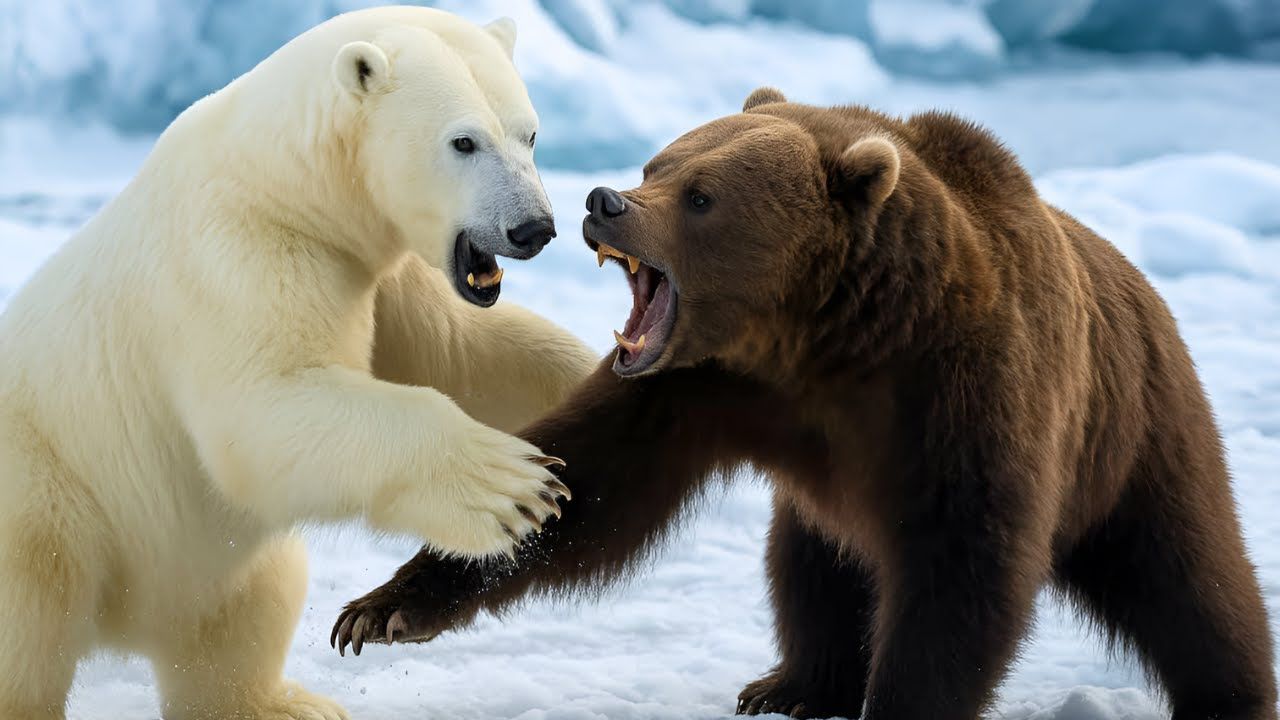
What would really happen if a polar bear fought a grizzly
Few hypothetical matchups capture the imagination like a polar bear squaring up against a grizzly. The idea sounds like pure fantasy, yet climate change is already pushing these two top predators into the same places, which means the question has real ecological stakes. To understand what would really happen if they fought, it helps to look past internet bravado and into the biology, behavior, and rare real-world encounters that scientists have actually documented.
Meet the two heavyweight predators
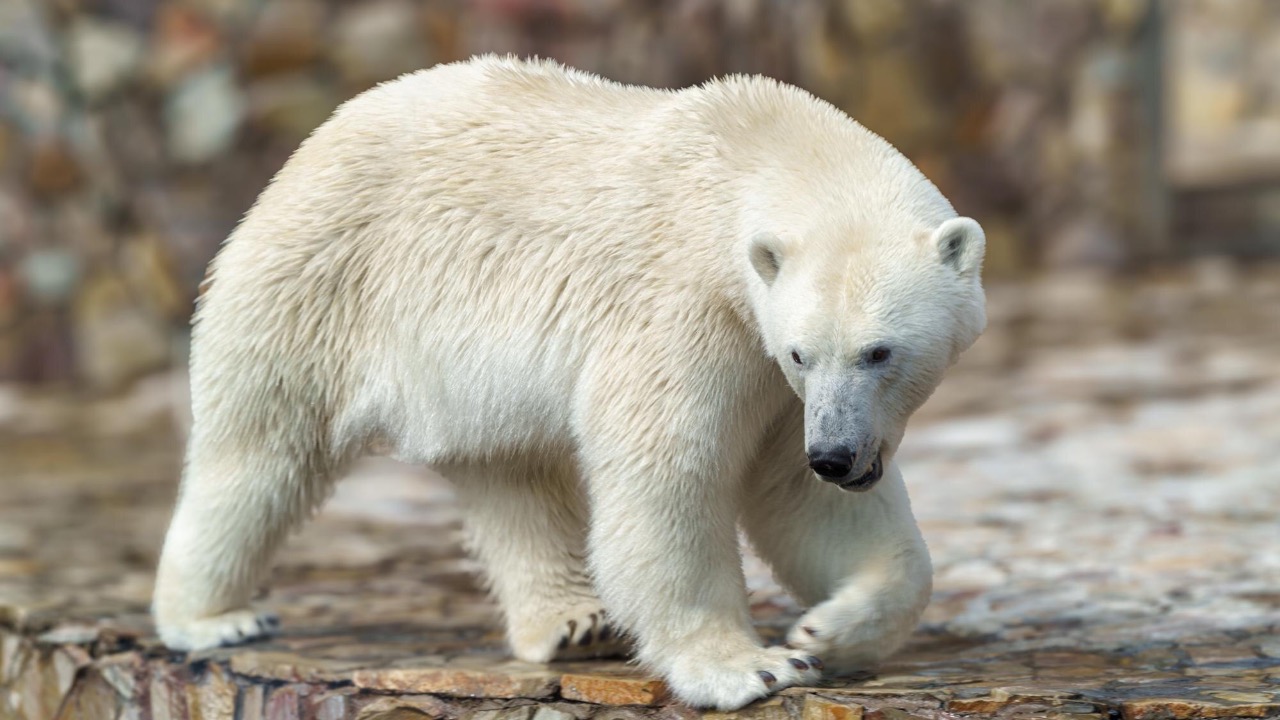
The polar bear is the largest bear on Earth and one of the most specialized carnivores on the planet. Adult males of this Arctic species can weigh from 900 to 1,600 pounds, with long necks, narrow skulls, and fur and fat that insulate them on sea ice. Their primary prey is marine mammals, especially seals, which they stalk, ambush, or haul out of breathing holes in the ice.
The grizzly bear, a North American population of brown bear, is smaller on average but built like a muscular bulldozer. Adult males usually weigh several hundred pounds, with a prominent shoulder hump that anchors powerful digging and striking muscles, a broader head, and long claws that are better suited to earth than ice. Grizzlies are dietary generalists that can switch from roots and berries to salmon runs or large carcasses as seasons change.
Both species are apex predators in their home ranges and both have reputations for aggression when threatened. Yet they evolved for very different jobs, and that contrast shapes how any confrontation would unfold.
Size, strength, and weapons
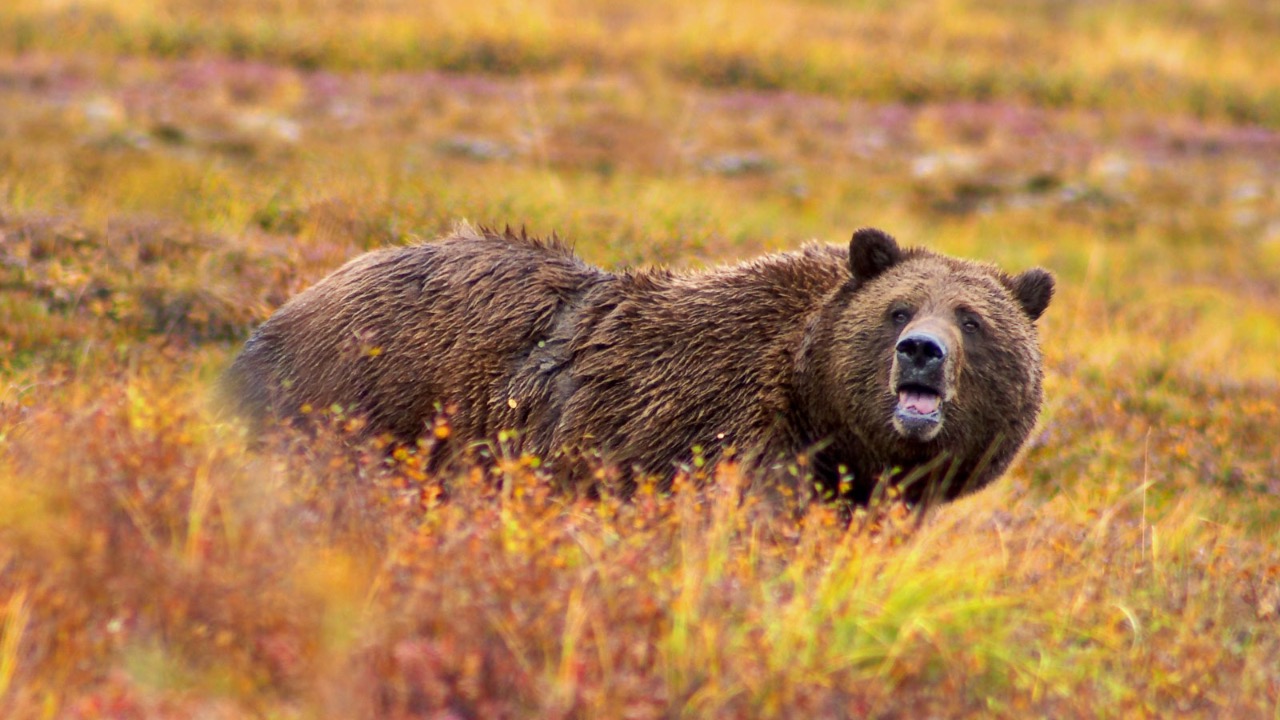
On paper, the polar bear has the size advantage. A typical adult male can reach the 900 to 1,600 pounds range and stand 8 to 10 feet tall on its hind legs, according to comparative data on the size of grizzly. Many individual grizzlies fall below that upper weight, although the very largest brown bears can approach or exceed the biggest polar bears.
Size, however, is only one part of the equation. Polar bears have long, paddle-like front paws that help them swim and distribute weight on ice. Grizzlies have shorter, broader paws with heavy claws that are better for digging and raking. One analysis of physical differences notes that the grizzly’s claws are particularly effective for hooking and slashing, while the polar bear’s are more like ice picks.
Both species have crushing bites, although their exact bite forces are not listed alongside benchmark animals like the saltwater crocodile at 3,700 psi, the great white shark at 4,000 psi, or the hippopotamus at 1,800 psi in a widely cited animal bite force comparison. What matters in a bear fight is less the exact number and more how that power is used: polar bears aim to deliver decisive, skull-crushing bites to prey, while grizzlies often combine bites with repeated swats and grappling.
Video explainers that compare bear strength, including one short that notes the polar bear can weigh up to 1,600 pounds, often frame the Arctic predator as the strongest of all bears. That sheer mass would matter in a straight-up collision or pin, especially if the fight turned into a wrestling match on open ground.
Hunting style versus fighting style
Polar bears are specialized hunters of large, often dangerous prey. Accounts from wildlife observers and enthusiasts, including a discussion by Donald S Thomas in a December thread, describe how a polar bear will sometimes attempt an attack on a full grown walrus if hungry enough. In the same conversation, Thomas notes that a polar bear can definitely get into life threatening fights when it tries such risky hunts, even though a walrus can weigh far more than the bear itself, and that the max for male polar bears is around 4,000 pounds in extreme cases, although that upper figure is not independently verified here.
Grizzlies, by contrast, are more accustomed to contests with other terrestrial mammals and with their own kind. They routinely fight over salmon streams, carcasses, and mating opportunities. Their shoulder hump and forelimb strength are built for repeated striking and grappling on solid ground, not for stealthy ambushes on ice.
A key question in any hypothetical showdown is whether a polar bear’s hunting toolkit translates into superior fighting skills. Some wildlife comparisons argue that the polar bear’s larger size and predatory focus on big, dangerous animals give it a decisive edge in a one-on-one clash, particularly if the terrain is open and cold. One detailed breakdown of who would win in a fight between grizzly and polar bears notes that the grizzly would be at a significant size disadvantage in most matchups, even though individual brown bears can be extremely powerful.
What real encounters show
Speculation is one thing. Actual interactions offer a more grounded view. As climate change lengthens the open-water season in the Arctic, polar bears are spending more time on land and sharing space with grizzlies around whale and other marine mammal carcasses. A study of polar bear and in coastal areas documented relatively large numbers of polar bears and some grizzly bears using these resources, which created a competitive environment around the carcasses.
A more detailed analysis of competitive interactions recorded 137 interactions between polar bears and grizzly bears, 137 between polar bears themselves, and additional encounters among grizzlies. The researchers reported a test statistic of 16.3 with P less than 0.001 when comparing certain behavioral patterns, which indicated a strong difference in how the species behaved around carcasses.
Surprisingly to many armchair analysts, those field observations showed polar bears acting more submissive than expected. A popular summary on a Today I Learned thread notes that a 2015 study provided evidence that polar bears often yielded to grizzlies even when the grizzlies were smaller, fewer, and on what might be considered polar bear turf. The Reddit post, titled TIL a study from 2015 showed evidence that polar bears are submissive to grizzly bears even when the latter is smaller, fewer, and in polar bear habitat, highlights how social dynamics and risk avoidance can override pure size.
Video from Churchill Manitoba adds another piece of context. In one clip, a grizzly bear and a polar bear stand less than 50 feet apart on the tundra. The footage, discussed in a September breakdown of a grizzly vs polar bear clash of the giants, shows the animals sizing each other up rather than charging. That kind of standoff supports what biologists often see in the field: both species prefer to avoid a serious fight unless the payoff is huge or escape is impossible.
Who tends to back down
The idea of a polar bear being submissive to a smaller grizzly runs against the usual online narrative. Yet the carcass studies and field reports suggest that polar bears often choose to avoid escalation. Several explanations are possible. Polar bears rely heavily on stored fat and cannot afford serious injuries that would compromise their ability to hunt seals on ice. Grizzlies, which feed on more varied foods, may be more willing to risk a confrontation over a rich carcass.
One analysis of which one would points out that while polar bears are larger on average, actual dominance in shared habitats can tilt toward grizzlies because of their more assertive behavior around food. Researchers who have watched these encounters emphasize that a fight to the death is rare. Instead, the bears posture, charge, and sometimes swat, and in many cases the polar bear eventually moves off.
Online forums echo this split view. In one debate, commenters argue that grizzlies are more aggressive by default, while others counter that polar bears, as specialized predators, can be extremely aggressive hunters when hungry. A Facebook discussion from November includes remarks that the only thing hunting a polar bear is another one and that such predation rarely happens, along with the opinion that the more aggressive individual is absolutely going to win, whether it is a polar or a grizzly.
Environment decides a lot
Context matters as much as anatomy. On sea ice or slick coastal rocks, the polar bear’s long paws, thick fur, and swimming ability give it a clear advantage. The species has no rival on sheet ice, where it gains most of its calories, as one Quora discussion about who would win in a fight between 1,000 polar bears or 1,000 grizzly bears puts it. In that environment, a grizzly would be out of its element, with less traction and no experience hunting on ice floes.
On dry tundra or in boreal forest, the equation shifts. The grizzly’s lower center of gravity, digging claws, and experience with rough-and-tumble fights over land-based food sources make it a more confident brawler. Some wildlife commentators argue that in a neutral environment, such as gravel bars or open tundra, the grizzly’s aggression and technique could offset the polar bear’s size advantage.
Climate-driven overlap zones, like the coastal areas near whale carcasses that scientists have studied, are somewhere in between. They are not pure sea ice, yet they are not deep forest either. That mixed terrain may help explain why neither species has a consistent, overwhelming dominance in observed encounters, even though the polar bear is larger on average.
Aggression, temperament, and human encounters
Human perceptions of bear aggression often come from frightening but rare encounters. A detailed FAQ on bear behavior notes that which bears are most aggressive depends on the situation. The same source explains that polar bears can be very aggressive hunters, especially when food stressed, while grizzlies may be more defensive around cubs or food sources. The discussion appears in a section labeled Frequently Asked Questions that asks which bears are most aggressive.
In human attack statistics, grizzlies are often associated with surprise encounters on trails or at campsites, while polar bear attacks tend to involve hungry animals approaching remote communities or camps on sea ice. Both species are capable of killing a human in seconds, which is why wildlife agencies stress prevention and avoidance rather than any idea of defense.
That difference in context hints at how they might approach each other. A hungry polar bear that has been fasting on land could be more likely to test a grizzly as potential competition or even prey. A grizzly surprised by a polar bear near a carcass might react defensively and charge. In each case, the bear that perceives higher stakes is more likely to escalate.
What online debates get right and wrong
Internet debates about polar bear versus grizzly often lean heavily on raw size or on dramatic anecdotes. Some threads, such as a June discussion that asks if a grizzly or Kodiak bear could beat a polar bear in a fight, feature users with backgrounds in vertebrate diversity courses explaining that outcomes would vary by individual and context. One commenter, using the handle Bodmin_Beast, mentions that in university they studied comparative anatomy and concluded that a very large brown bear might still likely win all rounds in some scenarios, although that claim is framed as opinion rather than as a direct citation of data.

Leo’s been tracking game and tuning gear since he could stand upright. He’s sharp, driven, and knows how to keep things running when conditions turn.