Why bullet construction matters more than caliber for deer
Deer hunters love to argue about caliber, but the animal on the ground rarely cares whether the headstamp reads .243, .270, .308, or 6.5. What matters is how the bullet behaves when it hits living tissue, how reliably it reaches the vitals, and how cleanly it sheds energy inside the chest cavity. The internal design, construction, and impact velocity of that bullet do far more to determine the outcome than a few thousandths of an inch in diameter.
When I look at modern field reports and ballistic research, a consistent pattern emerges. Well built bullets that expand and penetrate in a controlled way keep dropping deer quickly across a wide range of cartridges, while poorly matched bullets in “big” calibers can fail dramatically. Understanding why that happens is the key to choosing ammunition that respects the animal and stacks the odds in your favor.
Caliber myths versus what actually kills deer

Caliber debates tend to focus on diameter and raw power, but deer are relatively thin skinned animals that do not require extreme penetration or massive frontal area to die quickly. What drops a whitetail or mule deer is a bullet that reaches the heart and lungs and destroys enough tissue along the way to cause rapid blood loss and collapse. Experienced hunters in one Comments Section frame it in simple terms, urging others to Look at the problem as one of energy delivery at impact rather than just bullet width.
That view is echoed by writers who stress that Understanding Bullet Construction is more important than obsessing over cartridge labels. When a bullet is built to open up at realistic deer hunting speeds and hold together long enough to reach the vitals, modest calibers perform far above their paper ballistics. Conversely, a poorly constructed bullet from a large magnum can fragment on the shoulder or pencil through without transferring much energy, leaving a long tracking job despite impressive muzzle figures.
Why bullet construction controls expansion and penetration
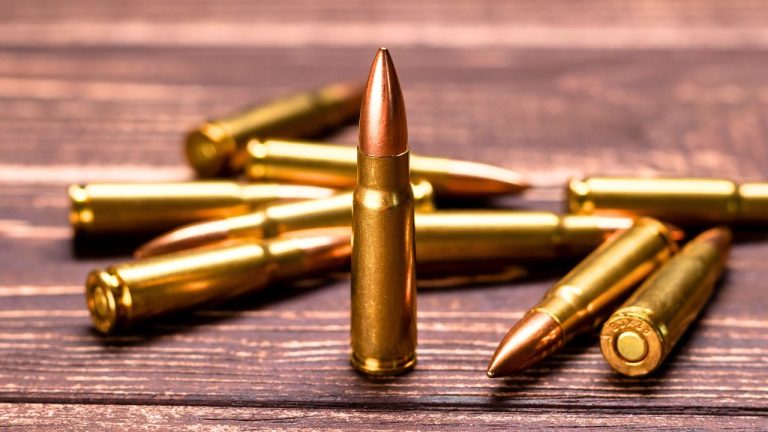
Inside the jacket, bullets are engineered to behave in very specific ways, and those design choices dictate how they expand and how deep they drive. Traditional cup and core designs use a lead core wrapped in a copper jacket, and for deer sized game they are intentionally made to open up readily so they dump energy quickly in the chest cavity. One major manufacturer notes that how-to guides for deer ammo focus heavily on matching this internal structure to the animal’s size and the expected impact speed.
More specialized bullets use bonded cores, partitioned jackets, or monolithic copper construction to control how far they mushroom and how much weight they retain. Analysts who dig into bullet construction point out that these features are what keep a projectile from blowing up on heavy bone or failing to open at lower velocities. For deer, that means choosing a design that will expand dramatically in the lungs but still penetrate at least several inches beyond, rather than relying on caliber alone to guarantee a lethal wound channel.
What makes an ideal deer bullet
For whitetail and mule deer, the sweet spot is a bullet that opens wide, creates a large internal cavity, and still tracks straight enough to exit or lodge under the offside hide. One seasoned voice, Benedikt, puts it bluntly, saying that a great Deer bullet must expand dramatically and that Penetration is important but secondary for this class of game. That reflects the reality that deer do not have the massive bone structure or thick hide of elk or moose, so overbuilt bullets can actually underperform by zipping through with minimal disruption.
General cartridge primers back this up, noting that bullets for lighter, thin skinned animals like deer and black bear do not need to retain as much of their original weight as those meant for heavier species. Instead, they are expected to expand and shed energy efficiently in the vitals, while bullets for larger game must penetrate deep to reach organs buried under more muscle and bone. That distinction is crucial: a bullet that is perfect for a whitetail at 150 yards might be a poor choice for a bull elk, even if the caliber is the same.
Sectional density, energy and why diameter is overrated
Once you move past caliber labels, two numbers start to matter far more: sectional density and impact energy. Sectional density is a measure of a bullet’s weight relative to its diameter, and it strongly influences how well a projectile holds momentum and drives through tissue. Analysts who focus on Bullet Sectional Density explain that higher values generally mean better penetration and more consistent energy transfer, which are exactly the traits you want when a shot angles through the shoulder into the chest.
Energy at impact is equally critical, and it depends on velocity and mass rather than diameter alone. The same Bullet focused analysis points out that hunters should think in terms of how much energy is available when the bullet arrives and how efficiently the design converts that into tissue damage. That is why a smaller caliber with a sleek, high sectional density bullet can outperform a larger, slower projectile at longer ranges, and why obsessing over a few hundredths of an inch in diameter misses the real physics at work.
Real world examples of construction beating caliber
Field stories drive the point home more vividly than charts. One classic case involves a magnificent Wyoming mule deer that fell to a 150-grain .30 caliber Wyoming load built around the Nosler Ballistic Tip. That bullet, often pigeonholed as a “light” choice in .30 caliber, performed flawlessly because the Nosler Ballistic Tip design balances rapid expansion with enough structural integrity to reach the vitals. The success had far more to do with that engineering than with the nominal caliber.
Another hunter recounts using a 30cal. bullet on a bull elk and a 90gr. .257cal. on a feral hog, with both shots giving complete penetration. In that same account, a 35/8mm magnum is mentioned as part of a broader lesson that premium and standard bullets can both work when their construction matches the task. The takeaway is consistent: bullet design and placement, not just cartridge size, decide whether an animal drops quickly or runs out of sight.
Shot placement, ethics and why “enough gun” starts at the bullet
Ethical hunting hinges on putting a bullet through the vitals, and that makes shot placement more important than caliber in almost every scenario. One Author with 445 answers and 106.6K answer views spells it out by noting that, Actually, both caliber and placement matter, but precise hits into the heart and lungs are the primary driver of quick kills. A poorly placed shot from a large magnum can wound and lose an animal, while a well placed round from a moderate cartridge ends things swiftly.
That same logic carries over to bigger species, where another discussion features Jan contributor David Hampton, listed as Former Owner Semi Retired at Guns and Firearms, alongside David Hawkins, another Author with 445 answers and 106.6K answer views. They emphasize that even for elk or moose, a bullet that reaches the vitals cleanly is more important than chasing ever larger calibers. For deer, which require less penetration than those giants, that principle is even more pronounced, and it reinforces the idea that “enough gun” starts with a bullet you can place accurately and trust to perform.
Community consensus: bullet type over caliber
Among experienced stalkers and rifle hunters, there is a growing consensus that bullet type is far more important than caliber. In one discussion, a contributor states, Totally agree that bullet type is far more important than calibre, citing real world performance on everything from roe to big lowland forest red stag. The same thread references Karamoja Bell, the legendary ivory hunter who took the idea to extremes by using small calibers with carefully chosen bullets and meticulous shot placement on very large animals.
Technical writers echo that sentiment in more formal terms, arguing that Why Bullet Design is More Important than Cartridge Choice comes down to how the projectile sheds energy and holds together in the animal. One of the key lessons, summarized under the phrase Credit Where Credit is Due, is that mentors who focus on bullet behavior rather than cartridge fashion tend to produce hunters who recover more animals and lose fewer to marginal hits.
Matching bullet style to realistic deer scenarios
Once you accept that construction trumps caliber, the practical question becomes which style of bullet fits your deer hunting. For most stand and still hunters inside a couple of hundred yards, traditional cup and core designs remain highly effective. One major ammo maker notes that Cup and core bullets are the backbone of deer hunting ammo, and that They remain some of the most trusted deer hunting products on the market. These loads are tuned to expand reliably at typical whitetail ranges, which is exactly what most hunters need.
For longer shots or more open country, sleeker designs with polymer tips and high ballistic coefficients come into their own. Specialists in Ballistic Tips and point out that these Ballistic designs are more aerodynamic and often more accurate than traditional cup and core bullets, but they can produce a lot of exit wound damage if impact velocity is high. That makes them excellent choices for open country deer where you might shoot past 300 yards, but it also means you must be honest about your typical distances and pick a bullet that will not be excessively violent at close range.
Cartridge choice still matters, but for different reasons
None of this means cartridge choice is irrelevant, only that its role is different from what caliber partisans often claim. Cartridges determine how fast a given bullet can be driven, how much recoil you must manage, and how flat the trajectory will be at distance. Analysts who rank popular big game rounds note that by and large, most game in North America is taken inside 300 yards, and that Many hunters opt to shoot cartridges that are well over 100 years old because they still deliver appropriate velocity and energy with modern bullets.
Writers who focus on why More Important factors exist than cartridge choice argue that the obvious answer to “what should I shoot” is a round that you can handle accurately and that drives a suitable bullet at the right speed for your hunting conditions. One of their mentors, referenced under the phrase Cartridge Choice and One of the key influences in that piece, despised certain fashionable calibers not because they were weak, but because their typical bullet pairings were poorly matched to real world hunting. The lesson for deer hunters is clear: pick a cartridge you shoot well, then spend your energy choosing a bullet that will do its job when it gets there.
Translating rifle lessons across weapons and seasons
The logic that bullet construction matters more than caliber does not stop at rifles. Bowhunters see the same pattern when they tune arrow setups for Whitetail and larger animals. In one archery discussion, a contributor notes that Whitetail deer and similar size game do not require near the penetration that bigger animals do, and advises hunters to change broadheads if going after larger species. The parallel is obvious: just as broadhead design and arrow weight matter more than draw weight alone, bullet construction and sectional density matter more than caliber stamps.
Ammo makers reinforce this seasonal, species specific thinking in their deer focused guides. One such guide explains that Cup-and-core bullets are the backbone of deer hunting ammo and that they remain some of the most trusted deer hunting products on the market, precisely because They are tuned for the penetration and expansion profile whitetails require. When I put all of this together, from rifle ballistics to archery setups, the pattern is unmistakable: success on deer comes from matching projectile design to the animal and the shot, not from chasing ever larger calibers or poundage numbers.

Leo’s been tracking game and tuning gear since he could stand upright. He’s sharp, driven, and knows how to keep things running when conditions turn.