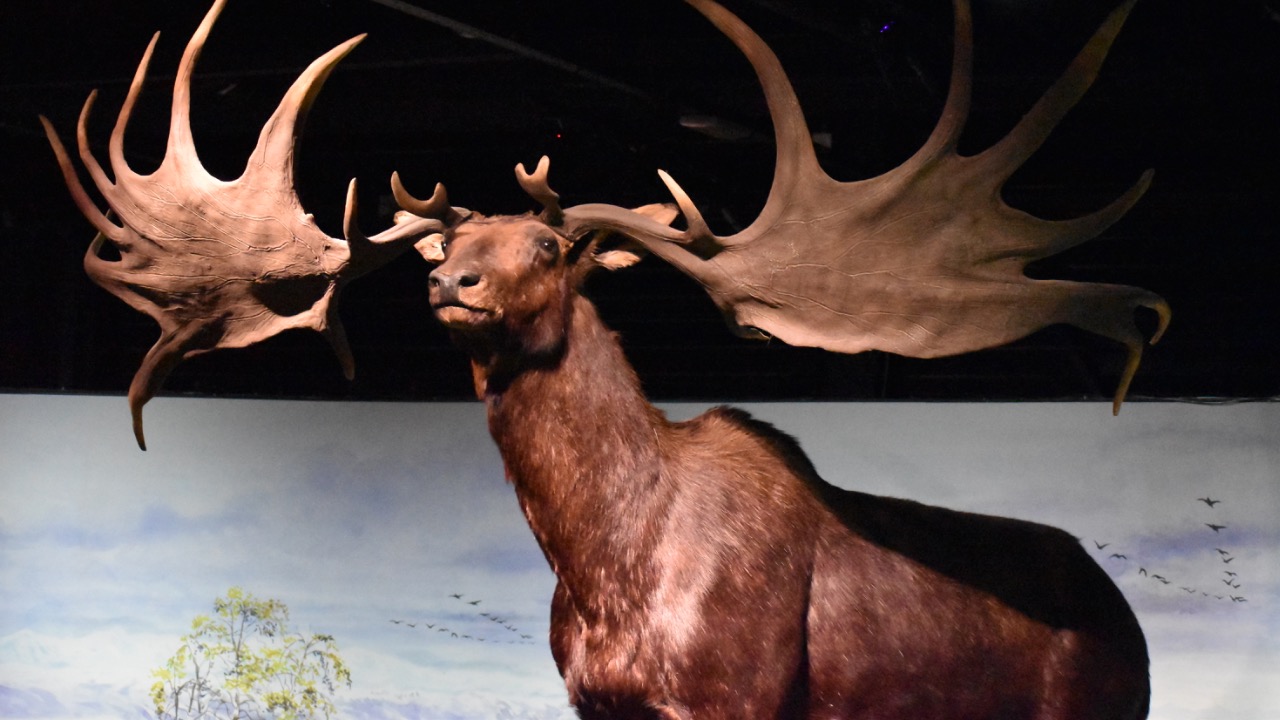
The Irish elk: when this massive deer vanished — and why it grew so large
The Irish elk was one of those Ice Age animals that seems too outsized to be real, a massive deer with antlers that could stretch wider than a pickup is long. It vanished thousands of years ago, but the questions it left behind are still very much alive: when did this giant finally disappear, and what forces pushed its antlers and body to such extremes in the first place. I want to walk through what researchers have pieced together, from its range and lifestyle to the competing theories about its growth and extinction, using the best evidence we have instead of campfire myths.
Not really Irish, not really an elk
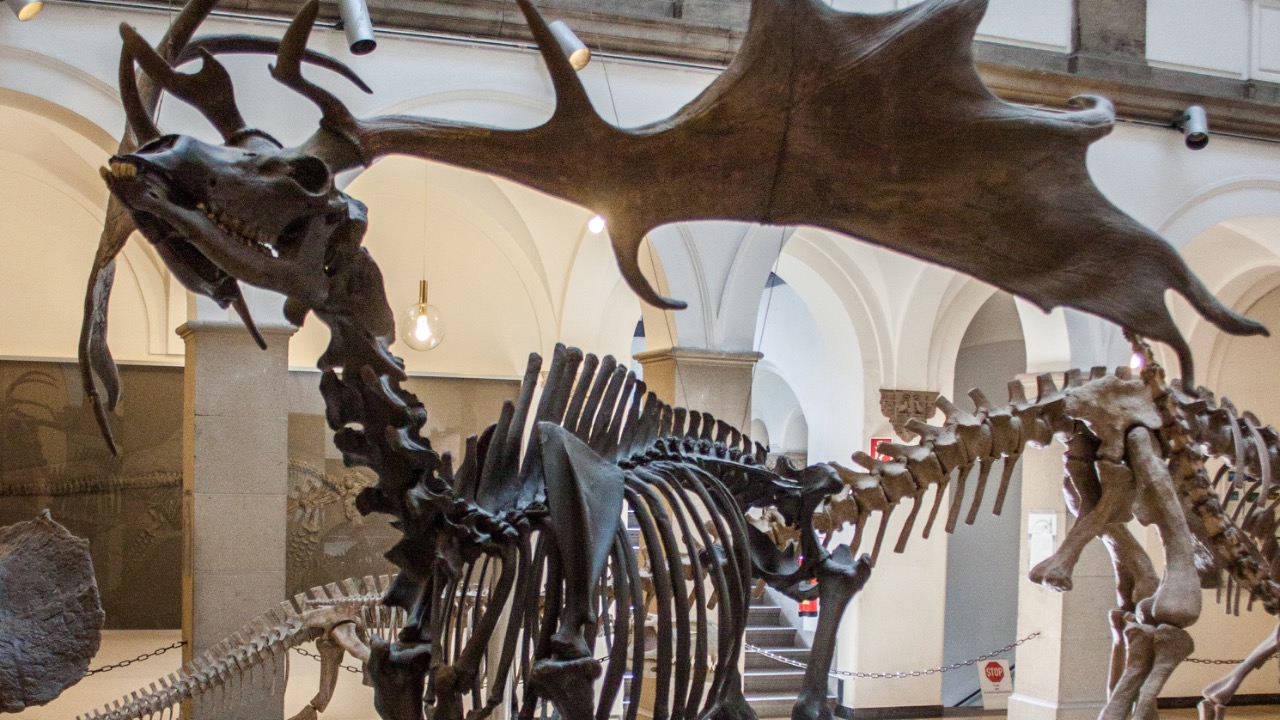
For a start, the name “Irish elk” is misleading on two counts. The animal was a true deer, not an elk in the North American sense, and its range stretched across much of Europe and Asia, not only the island that later gave it its nickname. The scientific name, Megaloceros giganteus, captures it better: a giant member of the deer family that lived alongside other Ice Age megafauna and browsed open landscapes that looked more like steppe and parkland than dense forest. Earlier naturalists wrestled with what to call it, but by the middle of the twentieth century the paleontologist George Gaylord Simpson helped cement Megaloceros as the standard label for this animal in technical work, pushing aside older, less accurate names that had been floating around.
Those early arguments over naming were not just about Latin pride, they reflected a deeper debate over how such an animal evolved. Before the modern synthesis of genetics and evolution, some scientists leaned on ideas like orthogenesis, the notion that lineages were somehow driven toward extreme traits such as huge antlers in a straight line, regardless of whether those traits were useful. As evolutionary theory matured, researchers shifted toward explaining Megaloceros in terms of natural selection and sexual selection, treating its size and antlers as traits that had to pay their way in survival or mating success rather than as the result of some built in drive toward excess, a change that is clear in historical discussions of the Irish elk’s taxonomy and evolution linked to Megaloceros.
A giant deer built for open country
In life, the Irish elk would have been an imposing sight even without its antlers. Reconstructions based on skeletons show an animal that rivaled or exceeded modern moose in shoulder height, with a deep chest and long legs that suggest it was built to move efficiently across open ground. Like all deer, Megaloceros giganteus was a herbivore, and wear patterns on its teeth point toward a mixed diet of grasses and other vegetation that would have been available in the cool, open habitats of the late Pleistocene. The overall build looks like a specialist for broad, lightly wooded plains rather than tight timber, which fits with the idea that it thrived in the mosaic of grassland and scattered trees that covered large parts of Eurasia during glacial periods.
Fossils show that the Irish elk’s range was not confined to one corner of the map. Remains have turned up from Ireland across mainland Europe and into Asia, including regions that would have offered the kind of open, productive ground a large grazer needs. That wide distribution is one reason some researchers prefer to call it the giant deer or simply Megaloceros, since “Irish” can make it sound like a local oddity instead of a widespread Ice Age player. The animal’s basic ecology, as outlined in work on Megaloceros, lines up well with what hunters and wildlife biologists see in big open country deer today, just scaled up to a size that would turn heads in any era.
Antlers as wide as a small car
The antlers are what make the Irish elk legendary. Mounted skeletons show spreads that could reach roughly 10 to 12 feet from tip to tip, a rack so wide it would hang over both sides of a compact car. These were not delicate ornaments either, they were heavy, palmated structures with multiple tines, anchored to a skull that had to carry and maneuver them through daily life. For a modern hunter used to measuring whitetail racks in inches, the idea of a deer with antlers measured in yards is hard to wrap your head around, but that is what the bones on museum walls are telling us.
Those antlers did not grow once and stay put. Like other deer, the Irish elk would have shed and regrown its antlers on a yearly cycle, pouring energy and minerals into fresh growth each season. That kind of investment suggests the antlers were doing serious work in the animal’s life, not just serving as passive headgear. Reconstructions and discussions of the giant deer’s anatomy, including descriptions of its antler span in sources that refer to the Irish Elk or Giant Deer roaming across Europe and Asia, underline how extreme those structures really were compared with anything alive today.
Why grow such massive headgear
Once you accept the size of those antlers, the next question is why they got that big. The leading explanation is sexual selection, the same evolutionary pressure that gives us peacock tails and elk bugles. In this view, male Irish elk grew huge antlers to compete with other males and to impress females during the rut, turning their racks into billboards of health and strength. The timing of antler growth and shedding in modern deer, and the likely seasonal pattern in Megaloceros, fit that story, with the antlers peaking in size and condition during the mating season in autumn when they would have been most useful in contests and displays.
Some paleontologists have floated other ideas over the years, including the notion that the antlers might have been used to fend off predators or to clear snow or brush, but those suggestions have a harder time explaining the specific shape and seasonal cycle. Analyses of the Irish elk’s antlers and skulls point toward structures optimized for visual display and ritualized combat rather than for plowing or constant fighting. Work that looks at why giant deer antlers were so large, including discussions of their role in the mating season, keeps circling back to sexual selection as the most convincing driver of that growth.
Did the antlers become a deadly burden
There is a long running story that the Irish elk was doomed by its own antlers, that they grew so large they became a fatal handicap. In that version, the animals could no longer move through forest, lift their heads easily, or find enough minerals to support antler growth, and the species spiraled into extinction under the weight of its own weaponry. It is a tidy tale, and it fits older ideas about orthogenesis, but it does not sit well with the more detailed work that has been done on the animal’s biology and environment. When you look closely, the picture is more complicated and less like a morality play about excess.
Some researchers have suggested that the antlers might have pushed the limits of what was practical, especially if habitats shifted toward denser cover where a wide rack would be a liability. Others have countered that the Irish elk’s antler mass was not wildly out of line with what large deer can carry, and that the animals were likely still effective in their preferred open habitats. Studies that weigh antler costs against benefits, including discussions of how parental genes for large antlers might have influenced offspring, show that while the antlers were extreme, they were not obviously suicidal. Work that explores these trade offs, such as analyses of how some Irish elk may have balanced antler size with survival, points away from a simple “too big to live” verdict.
Life in the Ice Age and the long fadeout
The Irish elk lived through a period of major climate swings, and its story is tied tightly to the waxing and waning of the Ice Age. During colder, drier phases, open grasslands and parklands spread, creating prime habitat for a big grazer that liked room to move and see. As the climate warmed and glaciers retreated, forests expanded in many regions, squeezing those open spaces into smaller patches. The giant Irish deer was present in Ireland both before and after the last great Ice Age, which tells us it could handle a range of conditions, but as warming continued after the last glacial maximum, the balance of habitat types shifted in ways that likely made life harder for such a specialized animal.
Radiocarbon dates from Irish sites show that the species hung on there until roughly 10,600 to 10,800 years before present, with some of the youngest bones clustering around the time when postglacial forests were really taking hold. That timing lines up with broader evidence that the species was declining across its range as the Ice Age ended, even if local pockets may have persisted a bit longer in favorable refuges. Work that tracks the presence of the giant Irish deer in Ireland before and after the Ice Age, including estimates that it survived there until roughly 10,615 plus or minus 495 years before present, helps anchor the animal’s final chapters in a specific climatic and geographic context, as outlined by the Irish deer commission.
When did the last Irish elk die out
Pinning down the exact moment a species disappears is always tricky, but the Irish elk gives us a reasonably tight window. Many discussions put its extinction around the end of the last ice age, roughly 10,000 years ago, based on radiocarbon dates from some of the youngest known remains. That figure, 10,000, has become a kind of shorthand for the species’ final fadeout, even though the real picture is a bit fuzzier, with some regions losing the animal earlier and others possibly holding on later. What matters is that the last Irish elk were living in a world that was warming rapidly, with humans spreading and ecosystems reshuffling.
Scientists still debate the exact mix of causes behind that extinction. Climate change is an obvious suspect, given the timing and the habitat preferences of a large open country deer, but human impacts are also in the frame, from direct hunting to more subtle pressures on landscapes and prey communities. Analyses that combine radiocarbon dating with ecological modeling point toward a combination of shifting climate and human activity rather than a single killer. Discussions of when the Irish elk went extinct, including summaries that note it vanished around 10,000 years ago and weigh climate change and human impacts together, reflect that more nuanced view.
What recent research says about their ecology
Newer work has tried to move beyond the old caricatures and get a clearer handle on how the Irish elk actually lived. By looking at bone structure, antler attachment, and comparisons with living deer, researchers have argued that the animal was more at home in open or lightly wooded areas than in dense forest. That matters because it shapes how we think about its vulnerability when forests expanded after the Ice Age. If you picture a big, long legged deer using its height and antlers in open country displays, the idea that it was suddenly forced into tight timber where those same antlers became a liability starts to make more sense as part of the extinction story.

Asher was raised in the woods and on the water, and it shows. He’s logged more hours behind a rifle and under a heavy pack than most men twice his age.