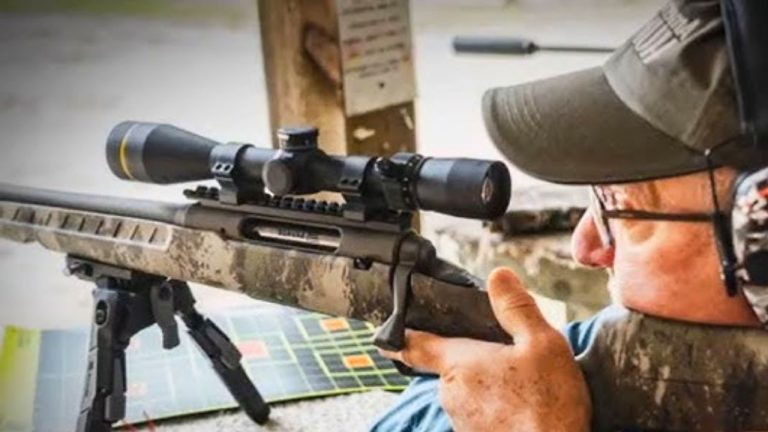
Why more hunters are downsizing calibers — and still filling tags
Across rifle ranges and deer camps, a quiet recalibration is underway. Hunters who once swore by big magnums are increasingly carrying smaller, softer shooting cartridges, yet they are still punching tags on elk, deer, and hogs with authority. I see that shift driven less by fashion than by ballistics, technology, and a growing recognition that smart shot placement with efficient bullets matters more than raw caliber size.
From “bigger is better” to “hit better with less”

For decades, North American hunting culture treated large cartridges as a kind of insurance policy, a way to make up for imperfect shots or marginal angles. That mindset is giving way to a more disciplined approach, where hunters prioritize controllable recoil, precise hits, and bullets that do more work once they arrive. The traditional image of a .30 caliber magnum flattening game at long range is being challenged by smaller rounds that deliver similar terminal performance with less punishment to the shooter.
Technical explanations of how smaller and lighter bullets kill have helped drive this change. Detailed breakdowns of wound channels and tissue disruption show that what matters is how a projectile transfers energy and penetrates vital organs, not simply its diameter. In one analysis of Key Concepts around small-caliber lethality, the emphasis falls on How modern bullets create effective wound channels, reinforcing the idea that construction and impact velocity can offset a modest bore size. As that information filters from ballistics labs and experienced guides to everyday hunters, confidence in downsized cartridges has grown.
Recoil, accuracy, and the human factor
The physics are straightforward: larger calibers produce more recoil, and more recoil makes it harder for most people to shoot well. That is not just a comfort issue, it is a performance problem. Even highly skilled marksmen are affected when a rifle kicks hard enough to induce flinching or hesitation. Reporting on small cartridges for big game highlights that More Recoil often leads to More shooter error, and that Most hunters, even with recoil-reducing devices, are more likely to make a poor shot when they are bracing for a heavy hit to the shoulder.
Smaller calibers reduce that human penalty. When a hunter can stay relaxed behind the rifle, maintain a consistent cheek weld, and watch the impact through the scope, accuracy improves. That is one reason so many whitetail and hog hunters have gravitated toward efficient mid-size rounds like the 223 and 5.56. Analyses of these cartridges point out that Accuracy and Precision are central to their appeal, and that One of the main reasons hunters choose 223 or 5.56 is their inherent shootability. When the rifle is easier to control, ethical hits at realistic hunting distances become more repeatable.
Modern bullet design is rewriting the rules
The other half of the downsizing story lives inside the bullet itself. Early hunting ammunition often relied on simple soft points that expanded unpredictably and shed weight, which favored larger bores to guarantee a wide wound channel. Today, advances in Small Caliber Ammunition have transformed that equation. Engineers focused on Key Technological Advancements in Small Caliber Ammunition, especially in Bullet Design aimed at Enhancing Performance, have created projectiles that hold together, expand reliably, and increase energy output without raising chamber pressure. Those gains let smaller cartridges punch above their historical weight class.
On the ground, that means a .22 or 6 mm bullet can now behave more like the classic .30 caliber loads of a generation ago, provided impact velocity and construction are matched to the game. Long-range hunters have embraced sleek, high ballistic coefficient bullets that resist wind drift and maintain velocity, while woods hunters lean on controlled-expansion designs that dump energy quickly in the chest cavity. In-depth discussions of why How smaller/lighter bullets kill effectively emphasize that the internal architecture of the bullet, from bonded cores to polymer tips, is what allows a modest caliber to create lethal wound channels on big-bodied animals.
New cartridges built around smaller bores
Ammunition makers have not missed the trend. Instead of only refreshing legacy magnums, they are rolling out cartridges that start from the premise that smaller bores can do big jobs. At recent trade shows, new rifle loads have headlined product announcements, including Hornady offerings that extend the family of efficient, high performance small bores. Coverage of new ammo notes that There are fresh Hornady ARC options that build on the success of the 6 mm ARC, a cartridge designed to deliver long-range capability from compact platforms.
The innovation pipeline is not slowing. Hornady has already previewed an extensive 2026 lineup that includes new DGH Bullets in multiple handgun calibers, such as 9 mm 138 G, 38 CAL 165 G, 10 mm 200 G, 44 CAL, 45 CAL, and 50 CAL, all grouped under the DGH Bullets banner. While those are not all small rifle rounds, they reflect a broader push to fine tune bullet performance across the spectrum rather than simply chasing bigger diameters. On the rifle side, the same company is also expanding data coverage for modern cartridges in its 12th Edition Hornady Handbook of Cartridge Reloading, which includes load information for more than 400 cartridges, from ARC variants to 400 Legend and others, giving reloaders the tools to optimize smaller calibers for hunting.
Case study: .22s and other “lightweights” on big game
Perhaps the most controversial piece of the downsizing movement is the rise of .22 caliber centerfires on animals that were once considered the exclusive domain of .270s and .30s. The 22 Creedmoor is a prime example. In previews of Hornady’s 2026 ammunition lineup, the company describes The Star of the Show as the 22 Creedmoor, a cartridge built to push high BC .22 bullets fast enough to maintain energy and expansion at extended ranges. In the right hands, that combination has proven effective on deer-sized game, especially where shot angles are controlled and distances are known.
Smaller .22s like the 223 and 5.56 have also earned a place in the deer woods, particularly in states that allow them for whitetail. Hunters who choose these rounds are betting on precise hits and modern bullet construction rather than frontal area alone. Detailed comparisons of 223 and 5.56 for hunting stress that, while regulations vary, both can be viable when paired with appropriate bullets and realistic expectations. One analysis of whether 223 or 5.56 is better for deer underscores the importance of checking local laws and focusing on controlled expansion loads that maximize tissue damage within the vital zone. The broader lesson is that cartridge choice is only half the equation; the other half is the hunter’s discipline behind the trigger.
Handgun hunters and the caliber rethink
The same forces reshaping rifle choices are influencing handgun hunters and those who carry sidearms in the field. For years, the default answer to “what caliber” was often “as big as you can handle,” which led many to gravitate toward heavy recoiling revolvers like 44 magnums or even larger options. Ballistics education has complicated that reflex. Explanations of caliber basics point out that the bigger the bore, the more recoil, and that massive rounds such as 50 BMG are far from ideal for 44 m agnums or 50 class cartridges in the hands of beginners or less experienced shooters. In other words, a handgun that is too powerful to control is not a practical hunting or defense tool.
Current breakdowns of the most popular handgun calibers frame the decision around context rather than ego. Analysts list Factors Determining Caliber Choice such as Purpose (hunting, Self defense, or competition), Firearm Size, and whether a Larger frame is practical to carry. For handgun hunters, that often means choosing a mid-bore cartridge that balances penetration and expansion with manageable recoil, rather than defaulting to the biggest cylinder that will fit in a holster. The same logic that leads a rifle hunter to a mild 6.5 or .243 is now guiding sidearm choices toward controllable, accurate rounds that can be placed precisely under pressure.
Manufacturers chase quieter, smarter performance
As hunters downsize calibers, they are also paying more attention to how those rounds behave with suppressors and in modern rifle platforms. Ammunition companies are responding with loads tuned for that reality. Early this year, a major announcement detailed how Remington Launches New Centerfire Rifle and Handgun Ammo Options in 2026, with a focus on consistent performance when shot through suppressors. That kind of design work matters most in small and mid-size calibers, where maintaining velocity and reliable expansion at subsonic or moderated speeds is critical.
At the same time, the broader gun-owning public is rethinking what they want from their primary calibers. Video commentary on shifting preferences notes that Americans are quietly moving away from 9 mm in some contexts, exploring alternatives that promise better terminal performance or softer recoil in compact guns. While that conversation often centers on home defense rather than hunting, it reflects the same underlying calculus: shooters are looking for cartridges that fit their real-world needs, not just their bravado. In the field, that translates into hunters pairing smaller rifle calibers with suppressors and optimized loads to create systems that are quieter, more accurate, and easier to shoot well.
Experience, not caliber, is filling tags
Ultimately, the most persuasive evidence for downsizing comes from the animals that fall to smaller cartridges every season. Guides and experienced hunters who document their kills with video and detailed shot descriptions have shown that, when impact velocity, bullet construction, and shot placement line up, small calibers can anchor big game cleanly. In one widely discussed conversation, a host named Jun walks through why smaller calibers may be better for big game in many scenarios, arguing that if you laid out ten animals taken with different cartridges and watched the footage without labels, most viewers could not reliably pick which were shot with the “big gun.” The takeaway is that performance in the field often defies caliber stereotypes.
That does not mean any small round is suitable for any animal, or that hunters can ignore local regulations and ethical limits. It does mean that the old hierarchy, where bigger was automatically better, no longer holds up under scrutiny. As I look across the latest data, from the 22 Creedmoor’s emergence as a flagship small bore to the detailed reloading information in Hornady’s 12th Edition Handbook, the pattern is clear. Hunters are choosing cartridges that let them shoot accurately, manage recoil, and take advantage of modern bullet design. The result is a generation of rifles and loads that may be slimmer on paper but are more than capable of filling tags when paired with skill and restraint.

Leo’s been tracking game and tuning gear since he could stand upright. He’s sharp, driven, and knows how to keep things running when conditions turn.