Why some calibers fail when conditions aren’t perfect
Calibers that look impressive on paper often stumble once weather, distance, barriers or human error enter the picture. The difference between a clean stop and a baffling failure can hinge on small design choices, misunderstood physics and unrealistic expectations about what a bullet can do.
From military cartridges that struggle through glass to hunting rounds that lose steam from short barrels, the pattern is clear: ammunition is engineered for specific conditions, and performance drops fast when reality does not match the lab. Understanding why some calibers fail when conditions are not perfect starts with how they are built and how they are actually used.
When “perfect conditions” only exist on paper
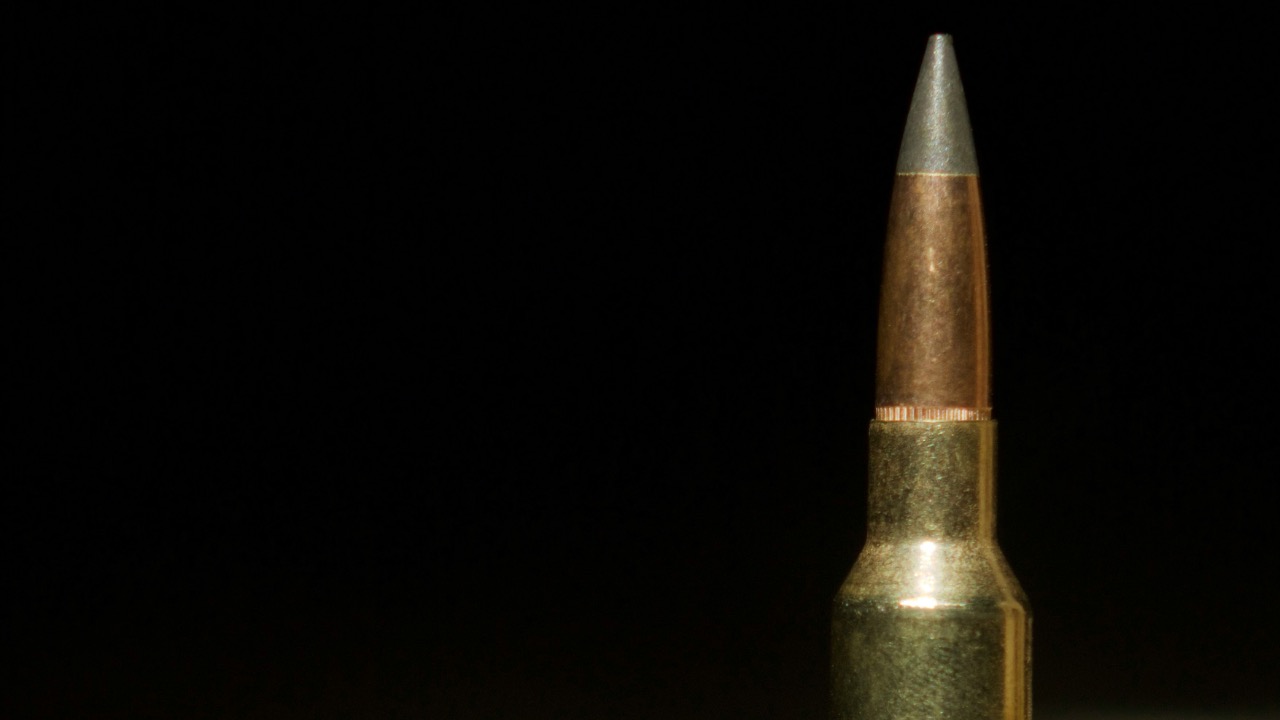
Many popular calibers are optimized around narrow test scenarios. Military engineers, for example, tuned 5.56 loads for specific barrel lengths and expected engagement distances. In practice, troops often fire at different ranges, through vehicles or walls, and from shorter carbines. One detailed review of military ammunition failures describes how the Mk262 round, despite improved accuracy and terminal effect, still shows poor performance after passing through intermediate barriers.
This kind of drop-off is not unique to 5.56. Civilian shooters see the same pattern when they choose a cartridge based solely on velocity charts or gel tests that do not include glass, sheet metal or heavy clothing. The lab scenario becomes the “perfect condition” in the buyer’s mind, and anything less in the field feels like a failure, even when the round is behaving exactly as designed.
Design tradeoffs that only show up in the field
Every cartridge reflects a set of compromises between recoil, velocity, bullet diameter and case capacity. When a company misjudges those tradeoffs, the result can be a round that shines in theory yet disappoints in the market. One analysis of why certain rifle cartridges never caught on points to a series of missteps by Remington. But Remington not only misread consumer demand, it also pushed designs that asked shooters to embrace bullets smaller than .30 caliber in roles where larger projectiles were already trusted. What looked efficient in a catalog struggled once hunters compared real-world performance to familiar standbys.
Caliber debates often ignore these engineering realities. A widely shared discussion from Jan argues that Caliber debatesare mostly fueled by emotional attachment and misleading assumptions about carry guns. Instead of weighing how bullet construction, barrel length and impact velocity interact, shooters fixate on diameter or advertised energy. When a round that looked “better” on paper fails to expand from a compact pistol or breaks apart on bone, the disappointment is baked into those early tradeoffs.
Accuracy is conditional, not absolute
Some cartridges earn reputations for exceptional accuracy, but even those reputations depend on context. One detailed look at precision cartridges states that Jun is the moment when many shooters recognized that Today, the most inherently accurate factory cartridge is probably the Creedmoor. The same source notes that the 6.5 designation is central to that performance, since the bullet’s length, diameter and sectional density help it resist wind and stay stable.
Hunting advice from Oct stresses that no cartridge is “the most accurate” in a vacuum. Several factors must come into consideration, starting with Game Type. A round that prints tiny groups on steel may be a poor choice for large elk in thick timber or for fast shots on feral hogs. Once conditions shift from a calm range to swirling mountain wind or moving animals, the “most accurate” caliber on paper can suddenly feel unforgiving.
Barriers, brush and the myth of unstoppable bullets
Real-world shootings rarely involve a clear, unobstructed path. In self-defense scenarios, an attacker may be behind drywall, auto glass or furniture. Testing of barriers and ammo shows that even premium defensive loads can deform, deflect or underpenetrate after passing through common materials. The same Mk262 example from Jul illustrates how a bullet optimized for soft-tissue fragmentation can lose its edge once it hits glass or metal first.
Hunters have long clung to the idea that heavy bullets can simply plow through vegetation. Detailed myth-busting work on Bullets Can always Punch Through Brush and Grass Some hunters rely on shows that even large-caliber projectiles tend to yaw or tumble after hitting twigs or grass. A round that groups tightly on a bench can miss vitals entirely once a small branch tips its nose a few degrees.
Weather, wind and ballistic coefficients
Environmental conditions quietly erode performance long before the shooter notices. Airgun research notes that Wind is one of the biggest challenges even at modest distances, especially for lighter projectiles. The same physics apply to rimfire and centerfire rounds. A slight crosswind that barely moves a .30 caliber bullet can push a small .22 or 5.56 significantly off course.
Ballistic coefficient, often shortened to BC, is the key metric that predicts how a bullet handles these conditions. Detailed technical guides explain that The less time bullets spend in the air, the less opportunity wind has to deflect them, and higher BC bullets retain more velocity and energy as they travel downrange. A caliber known for flat trajectory in calm air can seem erratic once gusts pick up, especially if its bullets have low BC and shed speed quickly.
Velocity loss, barrel length and distance
Velocity is another silent variable that undermines calibers outside ideal setups. Many loads are tested in full-length barrels, yet modern shooters favor compact rifles and pistols. Guidance on barrel length and bullet performance warns that At further distances that are still within normal hunting ranges, energy loss can push bullets below the minimum impact velocity needed for reliable expansion.
This effect is magnified when a cartridge already operates near the edge of its effective window. A defensive hollow point tuned to open at specific speeds may act like a full metal jacket if fired from a very short barrel or if it reaches the target after passing through intermediate cover. The shooter blames the caliber, yet the failure stems from using a load outside its design envelope.
Terminal ballistics and shot placement
Terminal ballistics research repeatedly returns to a simple principle. But the most important thing is putting a shot into something vital to crush or cut it. Rifles, particularly the 5.56 cartridge, can add wounding through upset and fragmentation at self-defense distances, yet that extra effect still depends on hitting critical structures.
Online discussions about smaller calibers echo this point. One Quora analysis notes that Mar is a reminder that There is always uncertainty when gunfire is in play, and that Small calibers may fail more often than larger ones when both hit marginal areas. A miss to the lungs with a .45 can look like a caliber problem, when in reality it is still a placement problem.
Malfunctions and the weakest mechanical links
Sometimes a caliber “fails” not because of its ballistics but due to basic ammunition defects. A widely shared Community Answer from Apr explains that Generally, the two common malfunctions associated with ammunition are misfires and squibs. A misfire occurs when the primer fails to ignite the powder, and a squib occurs when a bullet lodges in the barrel due to insufficient pressure. Neither problem is unique to a given caliber, yet shooters often remember the failure and mentally attach it to that round forever.
Rimfire shooters see a related issue with long-term accuracy. A popular video breakdown of .22 performance notes that Feb is a reminder that Everything in its analysis comes from peer-reviewed data. It argues that neglected cleaning, cheap bulk ammunition and barrel wear can slowly degrade precision. The result is a perception that .22 is “inaccurate” at distance, when the real culprit is inconsistent ignition and maintenance.
Human expectations and the data problem
Perception often lags behind evidence. A Reddit discussion on handgun performance points out that Part of the reason some calibers look bad in “failure to stop” charts is low round count and poor placement, not inherent weakness. The same thread argues that Power alone does not guarantee quick stops.

Leo’s been tracking game and tuning gear since he could stand upright. He’s sharp, driven, and knows how to keep things running when conditions turn.