Why some firearm designs last for generations
Some mechanical ideas are so sound that they outlive the people, companies, and even nations that created them. Firearms offer some of the clearest examples, with designs that remain in production and frontline service long after their inventors are gone. Understanding why certain guns keep working, selling, and fighting for generations reveals as much about engineering and economics as it does about history and culture.
From black powder muskets to polymer-framed pistols, the basic job of a firearm has not changed: ignite a charge, send a projectile down a barrel, and do it again as reliably as possible. The designs that endure are the ones that solve this simple problem with unusual efficiency, durability, and practicality, then adapt just enough to keep pace with ammunition, manufacturing methods, and user expectations.
From matchlocks to modern classics
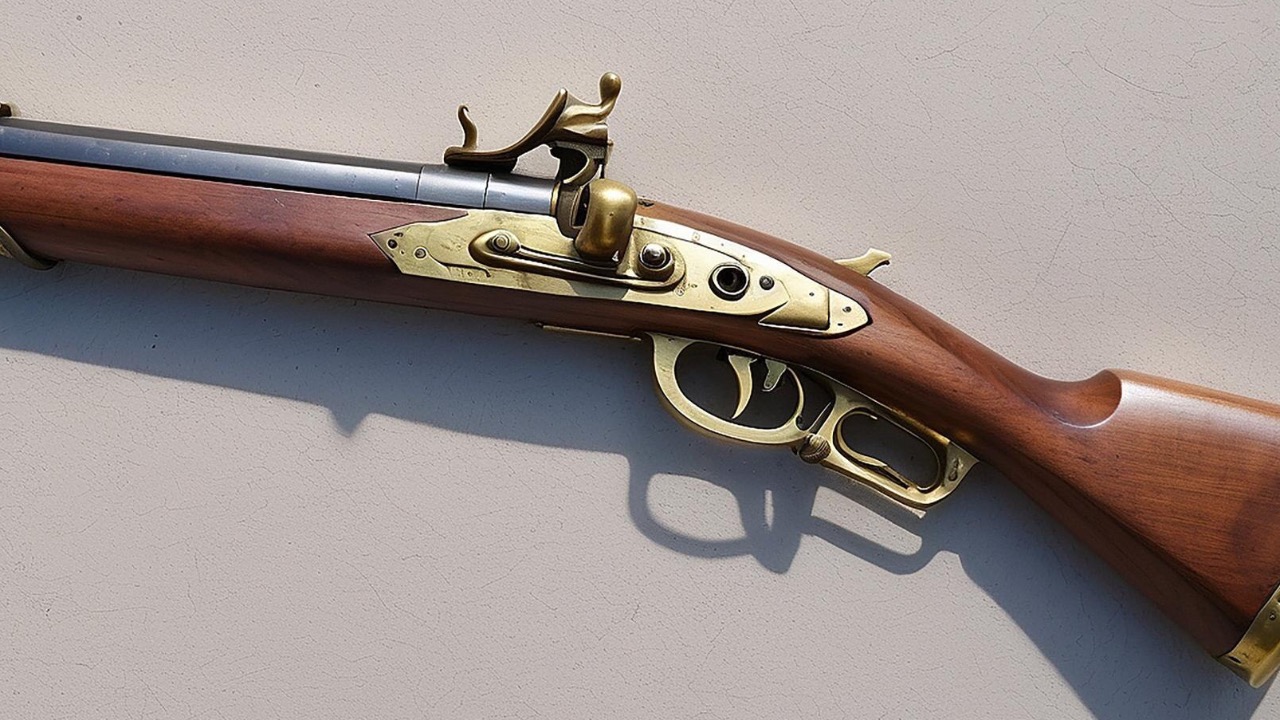
To see why some designs last, it helps to start with how firearms evolved in the first place. Early matchlock and flintlock weapons were slow, fragile, and vulnerable to weather, yet they introduced the core idea of a portable device that directed explosive force down a tube. As ignition systems improved, that basic pattern hardened into a few archetypes that still define most guns today.
A broad historical survey of firearms traces a steady progression from single-shot muzzleloaders to breechloading rifles, then to repeating and self-loading systems. Each major leap, such as the move from loose powder to fixed metallic cartridges, created new mechanical solutions that could be refined rather than replaced. Once cartridges combined primer, powder, and bullet into a single unit, designers could focus on reliable feeding, extraction, and ejection, which still dominate modern engineering choices in rifles and handguns.
Over time, a handful of operating principles emerged as especially durable. Locked breech pistols, gas-operated rifles, and simple blowback actions recur again and again in different guises. A historical overview from the NRA museum notes that the shift to repeating arms did not erase earlier ideas so much as rearrange them. Levers, bolts, and rotating cylinders all coexisted for decades, and several of those 19th century concepts remain instantly recognizable in gun racks today.
John Browning and the template for longevity
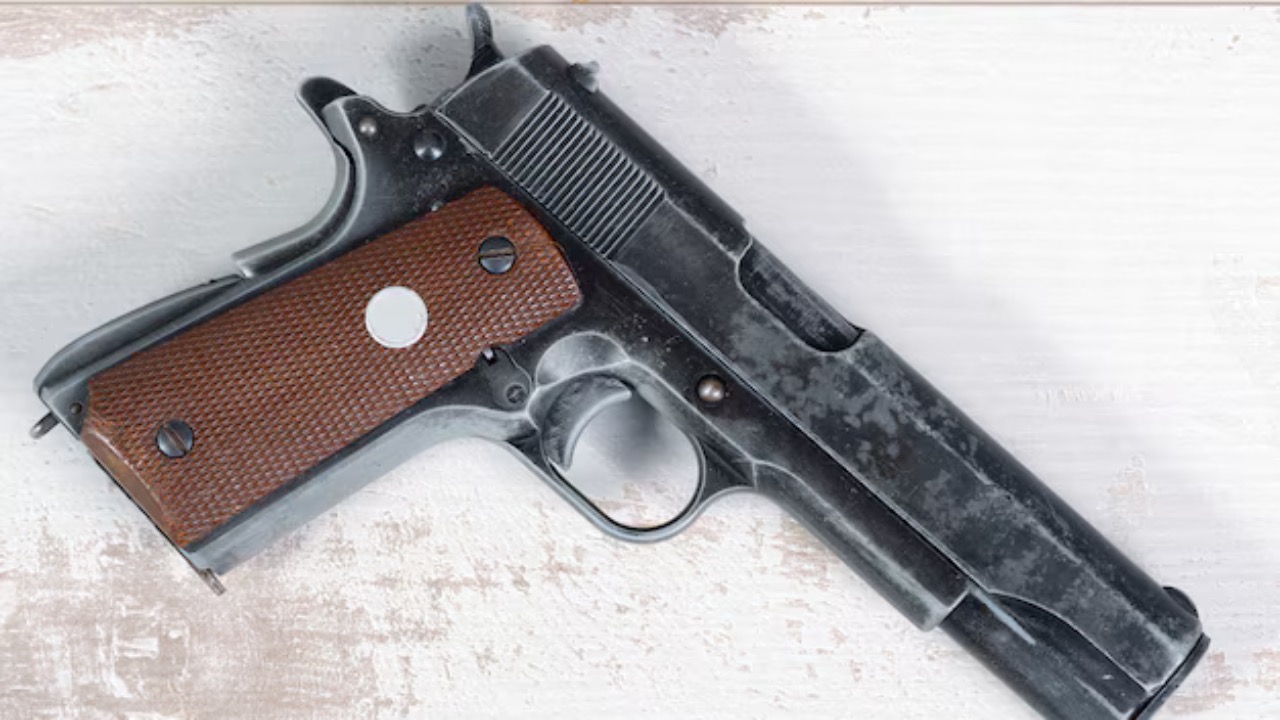
No single designer illustrates generational staying power better than John Browning. His work at the turn of the 20th century produced pistols, rifles, and machine guns that are still manufactured, issued, and copied. The M1911 pistol, Browning Hi Power, and various Browning machine gun designs have outlived multiple wars and political eras, yet their core mechanical layouts remain intact.
An overview of Browning designs still highlights how many of his creations are not museum pieces but working tools. The short recoil tilting barrel system he refined in the M1911 appears, with minor variations, in countless modern semi-automatic pistols. Military inventories and civilian markets still absorb updated versions of his rifles and shotguns, partly because armorers and shooters already understand how to run and fix them.
Browning’s success points to several traits that help a firearm design endure. His actions are mechanically simple enough to manufacture at scale, yet strong enough to handle powerful cartridges. Parts are accessible for cleaning and repair. Most of all, his designs proved themselves under hard use, from trench warfare to police duty. Once a pattern has that kind of track record, it becomes very difficult for a new, unproven layout to dislodge it, especially when replacement would require retraining users and rebuilding supply chains.
Kalashnikovs, SKS rifles, and the power of “good enough”
On the rifle side, the SKS and AK families show how ruggedness and production economics can lock in a design for generations. Both emerged in the mid 20th century, chambered for intermediate cartridges that balanced recoil and range. A technical comparison of SKS vs AK notes that the SKS was designed in 1945 and the AK-47 followed shortly after, yet derivatives of these rifles are still built and fielded.
Later data in the same comparison frames the AK pattern as a global workhorse, with production stretching from the late 1940s into the present in multiple countries. The article’s specifications table, which labels the SKS as “Designed” in 1945 and tracks AK-47 service into the 1949 to 1974 range for the Soviet Union and 1949 to present elsewhere, underlines how long these basic forms have persisted. The exact figures 47 and 194 in that context are not abstract model numbers but markers of how early the pattern stabilized.
The SKS uses a tilting bolt and fixed magazine, while the AK uses a rotating bolt, detachable magazines, and a long-stroke gas piston. Both are overbuilt for reliability rather than precision. That tradeoff matters. In harsh environments with inconsistent maintenance, a rifle that is “good enough” in accuracy but nearly impossible to kill will outcompete a more refined but delicate competitor. Once factories and training manuals are set up around that philosophy, the rifles become part of a system that resists change.
Modern companies such as Kalashnikov USA and Riley Defense still produce AK-style rifles for civilian buyers, while surplus SKS carbines trade hands as affordable entry-level options and collectibles. Auction data that tracks SKS price trends shows that even a mid century semi-automatic carbine can retain and grow its market value when its design is trusted and its history is well known.
Old mechanisms that never really went away
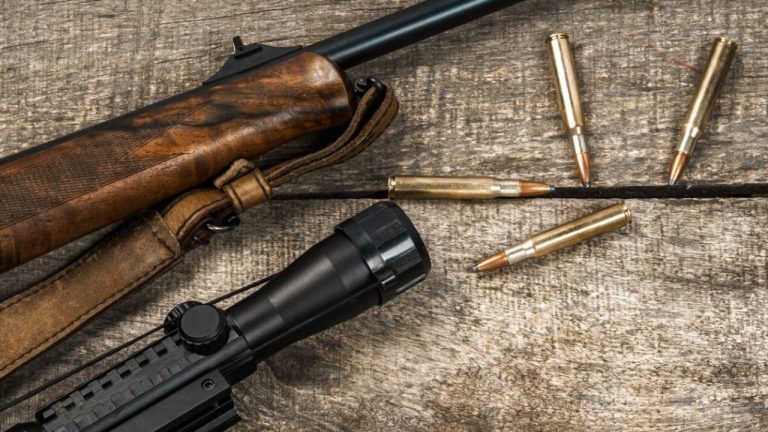
Some firearm layouts are so fundamentally sound that they barely change at all. The double barrel break-action shotgun is a prime example. A historical note from the same museum overview points out that the basic concept of a side-by-side double, with two barrels hinged to a receiver, is still in use today in high-end sporting guns favored by many discriminating hunters and competitive shooters.
The reason is not nostalgia alone. Break-action doubles are mechanically transparent, easy to inspect for safety, and naturally balanced. They handle a wide range of loads without complex gas systems or moving bolts. For clay target sports and upland hunting, where two carefully chosen shots matter more than high capacity, the old layout still fits the job better than many newer designs.
Even in handguns, where polymer frames and accessory rails dominate marketing, several long running patterns keep resurfacing. The 1970s era Beretta 92, based on the 1938 Walther P 38, remains in production and in service, a fact highlighted in a forward looking piece on future handguns. That link between the Beretta 92 and the Walther P 38 shows how one successful pattern can spawn descendants for decades, each iteration updating materials and ergonomics while keeping the same locked breech and open slide DNA.
Materials, maintenance, and the physics ceiling
One reason gun designs do not churn as fast as smartphones is that the physics of burning powder and pushing bullets through steel barrels has not changed. A discussion among competitive shooters on whether guns have points out that ammunition design, not just the guns themselves, sets hard constraints. As long as cartridges remain brass cases filled with smokeless powder and capped with bullets, designers are working inside a mature technology space.
Materials have improved, however, and that affects how long a given pattern can last. Modern steels, surface treatments, and polymers allow barrels and frames to survive higher round counts with less weight. A Quora contributor, introduced as Jul and described as Answering as a former materials engineer and now a historian of technology, explains that older mass produced handguns were often harder to disassemble and maintain because machining and design priorities were different. Newer pistols are designed from the start for easier field stripping, which extends practical service life because owners are more likely to keep them clean.
Longevity is not just theoretical. A Reddit thread on whether a modern gun will still work centuries from now includes comments from owners who have guns over 100 years old that still function. One poster cites personal experience with a collection that includes Marlin Model and rifles, which continue to run as long as parts are replaced when they wear. That kind of durability encourages owners and manufacturers to stick with proven patterns instead of chasing novelty.
Another Quora discussion, framed by a user identified as Jul and opening with “There” to emphasize uncertainty, notes that no one actually knows the true lifespan of many firearms because some models built several centuries ago are still serviceable. The same response argues that the biggest obstacle to long term use might be ammunition availability rather than the gun’s steel itself. This logic helps explain why designers and buyers favor cartridges with stable supply and why guns chambered in those rounds tend to stay relevant.
Economics, logistics, and training inertia
Even a brilliant new design faces a wall of practical resistance. Armies, police forces, and large civilian markets invest heavily in training, spare parts, magazines, and accessories. Swapping to a fresh platform means retraining every user, rewriting manuals, and rebuilding logistics pipelines. Unless the new gun offers a dramatic improvement in reliability, accuracy, or safety, decision makers often decide that the disruption is not worth it.
Online discussions among gun owners echo this logic. A Reddit thread that asks why most modern guns seem to trace back to designs that are at least 25 years old features comments that highlight how existing patterns already meet most needs. One user, posting in Feb and later Edited, argues that until technologies such as battery powered railguns become viable, traditional firearms will remain dominant because they are cheap, mature, and easy to support.
Another Quora answer, written by Jan and credited to Allen Jones, described as Working in the industry in gun and ammunition mfg and Author, makes a similar point. The response notes that They have evolved a lot while century old designs still work well enough that customers keep buying them. Incremental improvements in ergonomics, sights, and materials get layered onto familiar actions rather than forcing buyers to learn completely new systems.
Collectors create a different kind of inertia. A Reddit explanation tagged as ELI5 about why venerable firearms go out of production references older chamberings like .303 and .30-06 and compares them with newer 6.5 Creedmoor rounds. The comment argues that while cartridges such as Creedmoor offer better long range performance at 500 meters and beyond, many shooters still value historical calibers and original rifles. The specific numbers 303 and 6.5, along with the Creedmoor name, have become part of a cultural vocabulary that ties ballistics to identity. Manufacturers respond by keeping certain patterns alive or reviving them in limited runs, even if newer options exist on paper.
Why some designs fade while others thrive
Not every clever firearm lasts. Some fail because they arrive just as doctrine shifts. Others rely on cartridges that fall out of favor or on manufacturing techniques that become too expensive. A Quora thread on why older guns were harder to disassemble, opened with the word Sorry in the author’s preface, suggests that cost and production methods once favored complex machining over user friendly takedown. As maintenance expectations changed, those designs became less attractive even if they shot well.

Leo’s been tracking game and tuning gear since he could stand upright. He’s sharp, driven, and knows how to keep things running when conditions turn.