Why the term “modern sporting rifle” no longer fits
In the span of a few decades, rifles built on the AR-15 pattern have gone from niche curiosities to one of the most visible symbols in American life, praised as versatile tools by some and condemned as instruments of mass violence by others. The phrase “modern sporting rifle” emerged as a way to describe these guns in calmer, more technical language, but the term now carries its own political baggage and obscures as much as it clarifies. As the technology, culture and public debate around these firearms have evolved, I believe the label has drifted too far from reality to be useful.
The words we use for weapons matter because they shape how lawmakers regulate them, how owners defend them and how non‑owners imagine them. “Modern sporting rifle” was meant to defuse the emotionally charged phrase “assault weapon,” yet it has hardened into a talking point that glosses over the rifles’ military lineage, their role in high‑profile crimes and their central place in a broader culture war. To understand why the label no longer fits, it helps to look at how it was built, what it leaves out and how both supporters and critics are now straining against its limits.
How “modern sporting rifle” was built as a counter‑narrative

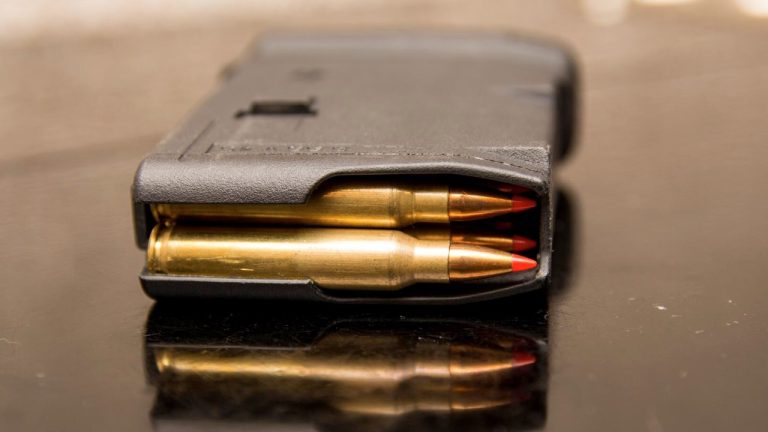
The phrase did not appear organically in hunting camps or at local gun clubs, it was coined as part of a deliberate messaging strategy. Industry advocates describe “modern sporting rifle,” often shortened to MSR, as a neutral way to group AR‑15 and similar semi‑automatic rifles that are sold to civilians and used for everything from target shooting to home defense. On its own website, the trade group that popularized the term defines a Modern Sporting Rifle as a family of semi‑automatic firearms that share features with military designs but are marketed for lawful civilian use, a framing that emphasizes continuity with traditional sports rather than rupture.
That same organization reinforces the point in a separate explainer titled “Modern Sporting Rifle: The Facts,” which stresses that AR‑15 and other semi‑automatic rifles fire one round per trigger pull and have been legal for civilian ownership since 1934. By foregrounding longevity and lawful status, the narrative tries to counter the idea that these guns are a sudden, aberrant threat. The goal is clear: replace the contested phrase “assault weapon,” which has no consistent technical definition, with a label that sounds contemporary yet benign.
Why the “sporting” frame no longer matches how AR‑15s are used
Even if the term began as a defensive rebrand, it still hinges on the idea that these rifles are primarily sporting tools, and that is increasingly hard to square with how they are actually used and perceived. A detailed overview of AR‑15‑style rifles notes that Colt began selling its semi‑automatic Colt AR‑15 to civilians in 1964, adapting a military platform for the commercial market. That history means the core design was never a hunting rifle that later got “tactical” styling; it was a combat rifle that was softened for sport, and the lineage still shapes how the public sees it.
At the same time, the rifles’ popularity has exploded far beyond traditional hunting circles. A recent explainer on what an AR‑15 is and why it is so common reports that The National Rifle Association through its Institute for Legislative Action has called AR‑15s the most commonly used rifles in marksmanship competitions, home defense and hunting, and has cited survey data that about 1 in 20 U.S. adults owned an AR‑15. Those figures underscore that these guns are multi‑purpose tools woven into everyday life for millions of people, not niche “sporting” implements in the narrow sense that word once carried.
The “modern” label is already dated in a fast‑moving gun market
Beyond the sporting claim, the word “modern” itself is starting to feel like a relic. In firearms history, what counts as cutting‑edge changes quickly. Lever‑action rifles were once the height of innovation, yet a technical history of lever action designs notes that Another explanation for their limited military adoption was the early difficulty of handling high‑pressure smokeless powder in the 1880s. That kind of detail is a reminder that every “modern” system eventually becomes a dated solution to yesterday’s engineering problems.
AR‑pattern rifles are now more than half a century removed from the original Colt AR‑15, and the basic architecture has changed less than the marketing language around it. A practical guide for new shooters describes a modern sporting rifle as a lightweight, accurate, modular semi‑automatic platform that can be tailored to different roles, from competition to home defense. Those traits are real, but they are now shared by a wide range of rifles and carbines that do not fit neatly into the MSR box. When everything from a budget 9 mm carbine to a high‑end precision gas gun can claim to be “modern,” the adjective stops telling readers anything specific.
Inside the gun community, the branding feels awkward and forced

One of the clearest signs that a label is losing its grip is when the people it is supposed to represent stop using it naturally. A long‑running blog aimed at hunters and recreational shooters argues that the phrase “Modern Sporting Rifle” was created to counter the emotionally loaded term “assault rifle,” which it calls “purposefully incorrect in its construction to portray more risk than is really there.” The author notes that, in that sense, the MSR label is important because it pushes back on a caricature and reminds readers that many gun owners simply enjoy these rifles at the range, a point he makes while explaining why It’s purposefully incorrect to treat every semi‑automatic rifle as if it were a machine gun.
Yet in the same piece, the same writer concedes that the term feels out of place in ordinary conversation. In a section explicitly labeled In Use, he says, “Personally, I think ‘MSR’ or ‘Modern Sporting Rifle’ don’t really belong at the gun club,” and admits that if he asks someone at the range what they are shooting, he will just say “AR” or “rifle,” not MSR. That kind of candid aside suggests that even sympathetic insiders see the phrase as a public relations construct rather than a living part of gun culture’s own vocabulary.
Advocates and critics are both pushing past “assault weapon” and MSR
The MSR label was designed in part to replace “assault weapon,” a term that has always been politically potent and technically fuzzy. A widely shared argument on a debate forum bluntly states that There is not now and has never been an industry definition of “assault weapon,” unlike “assault rifle,” and that no politically balanced, technically precise definition has ever taken hold. That critique cuts both ways: it underlines why gun owners bristle at the phrase, but it also exposes how MSR tries to sidestep the same definitional mess by retreating into a feel‑good word like “sporting.”
Inside enthusiast spaces, some shooters are experimenting with language that is more historically grounded and less obviously crafted for a press release. In one discussion about what to call these rifles instead of “assault rifle,” a commenter named jimk12345 simply answers Sturmgewehr, the German term that literally means “storm rifle,” and another user replies “Winner right here.” The exchange, which unfolded in Jul according to the thread metadata, is half joke and half serious, but it shows a willingness to acknowledge the martial roots of the platform rather than hide them behind the word “sporting.” When both critics and enthusiasts are looking for alternatives, it is a sign that the middle‑ground branding is not satisfying either side.
Even pro‑MSR voices admit the term is a tactical choice, not a neutral one
Supporters of the MSR label are increasingly candid that it is a strategic choice in a broader information fight. A recent essay aimed at women shooters argues that language around firearms is constantly contested, and that “Instead of trying to force someone to recant a lie they’ve been taught, newsmakers and influencers change the name of firearms to something more accurate and move on.” The author defends the decision to call these guns MSRs and urges the firearms community to stick with that phrasing, writing that the community could have simply called these firearms MSRs and moved on, a point she makes while explaining why the word “modern” matters in Nov commentary about public perception.
That argument is honest about the stakes, but it also confirms that MSR is not a neutral technical descriptor. It is a rhetorical tool chosen because it polls better than “assault weapon” and sounds less threatening than “tactical rifle.” When a term is adopted primarily to win an argument rather than to describe an object, it will always be vulnerable to the charge that it is spin. Over time, that perception can erode trust even among people who might otherwise be open to a more precise vocabulary.
What a more accurate vocabulary might look like
If “modern sporting rifle” is losing its usefulness, the obvious question is what should replace it. One starting point is to separate function from aesthetics and politics. Technical guides already describe these guns as semi‑automatic, magazine‑fed rifles that fire one round per trigger pull and can be configured for different roles, from hunting to competition to defense. A resource for new shooters, for example, defines a modern sporting rifle (MSR) as a platform designed to be lightweight and accurate, with controls that are easy to learn and accessories that can be swapped to suit the user. Those details could be preserved while dropping the “sporting” label and instead emphasizing configuration and caliber.
At the same time, any honest vocabulary has to acknowledge the rifles’ military heritage and their role in high‑profile violence, without collapsing every owner into a villain. The industry’s own fact sheets stress that AR‑15‑style rifles are semi‑automatic and have been legal for civilian ownership since 1934, but they also concede that these guns share features with military designs and are often singled out in policy debates. A more candid language might talk about “civilian AR‑pattern rifles” or “semi‑automatic centerfire carbines” and then specify whether the context is hunting, competition, policing or crime. That kind of specificity would not end the political fight, but it would at least move the conversation away from a catch‑all phrase that tries to be all things to all people and, in the process, no longer fits the reality it describes.

Leo’s been tracking game and tuning gear since he could stand upright. He’s sharp, driven, and knows how to keep things running when conditions turn.