
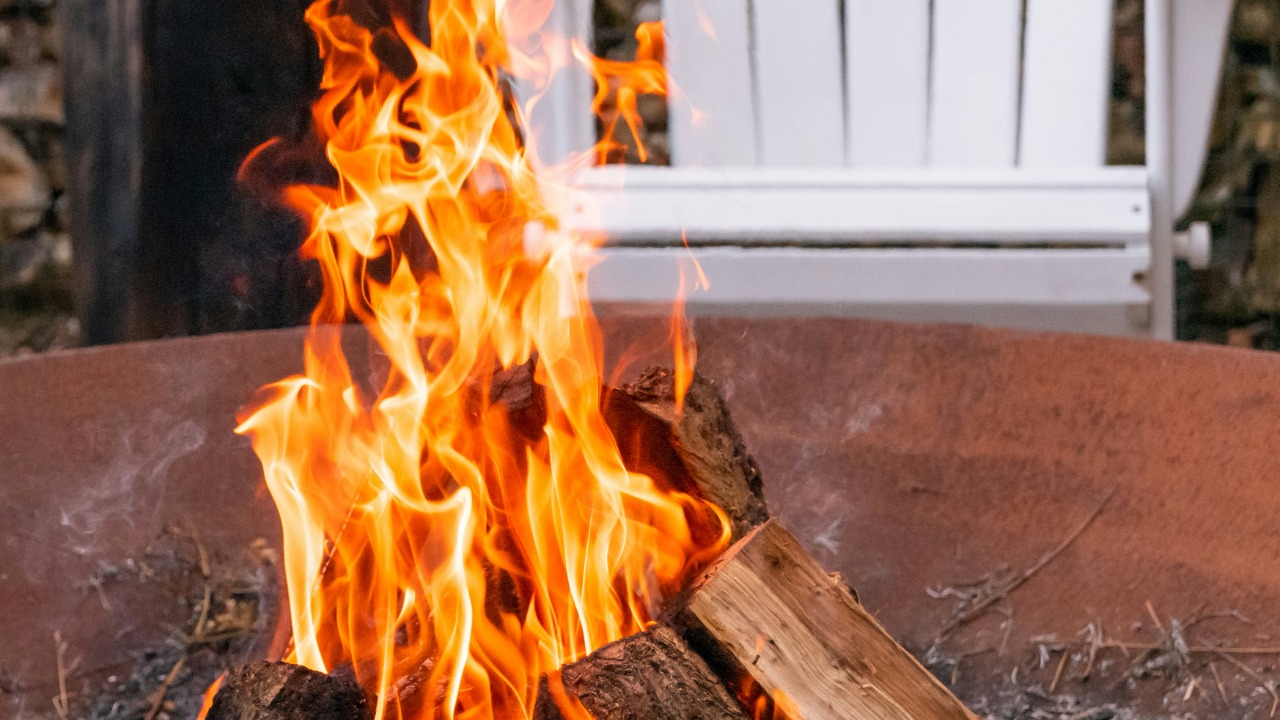
Why your backyard fire pit could still lead to hundreds in fines, even with approval
Backyard fire pits have become a staple of suburban life, a relatively cheap way to turn a patch of grass into an outdoor living room. Yet even when a homeowner has gone through the paperwork and secured local approval, the same cozy flames can still trigger hundreds of dollars in fines or even criminal charges. The gap between what a permit seems to promise and what fire codes actually allow is where many people get burned, financially and legally.
The rules that govern those flickering logs are layered, technical, and often enforced only after a neighbor complains or a drought sets in. I find that the homeowners who get into trouble are rarely reckless; they are usually people who thought “approved” meant “anything goes.” It does not. From strict burn bans to distance rules and overnight restrictions, the fine print around fire pits is increasingly unforgiving.
Permits are conditional, not a free pass
Local permits are often marketed as a simple green light, but in practice they function more like a probationary license that can be revoked or overridden. In Grand Rapids, for example, the city’s Recreational fire paperwork spells out that permission comes with detailed conditions, from what you can burn to how the fire must be contained. The document is not a one-time hall pass, it is a list of ongoing obligations that can trigger enforcement if ignored.
Other jurisdictions make that conditional nature explicit. One community guidance notes that Such a permit shall incorporate terms and conditions that reasonably safeguard public safety and property, and that language is a reminder that the fire department, not the homeowner, decides what is “reasonable.” The same notice stresses that, regardless of any paperwork, residents must still follow broader bylaws and are urged to check their municipality’s website for updates, which means a permit can quietly become more restrictive without a fresh application ever crossing your kitchen table.
Burn bans can override your approval overnight
The most jarring surprise for many homeowners is that a legally installed, fully permitted fire pit can become off limits overnight when a burn ban is declared. In Harris County, Texas, officials explained that when a ban is in effect, What it means is simple: No Outdoor burning is allowed except in an enclosure that contains all flames and sparks and complies with county fire code requirements. Even then, officials have repeatedly told residents that the burn ban is still in effect, a signal that the default answer during high risk periods is “no,” not “maybe.”
In parts of Florida, the stakes are even higher. Reporting on a recent “yard” law describes how American homeowners face $15,000 fines under a strict ban that is in place “until further notice,” driven by wildfire FIRE FEARS. A homeowner who proudly installed a code compliant fire pit last year can suddenly find that even a small evening blaze is treated as a serious violation, with penalties that dwarf the cost of the hardware itself.
Time-of-day and supervision rules trip people up
Even when the weather cooperates, many permits come with strict time windows and supervision rules that are easy to overlook. In Grand Rapids, the city’s When guidance explains that, with a valid Recreational Fire Permit, burning is allowed between 7 a.m. and 10 p.m., EXCEPT on high risk fire days. The same document requires that someone at least 18 years old be present at all times, which means a quick run to the store or leaving teenagers alone with the embers can technically void compliance.
The city’s permit instructions go further, treating safe use as a multi step process rather than a casual activity. In the application sequence, Step 8 literally tells residents to Enjoy their recreational fire, but immediately follows with “quick use guidelines” that remind them a responsible adult must be present at all times and that the fire must be fully extinguished before leaving. Here, enjoyment is framed as conditional on constant supervision, and ignoring that detail can turn a relaxed evening into a code violation if an inspector or police officer passes by after hours.
Distance, size and equipment rules are stricter than most people think
Beyond timing, the physical setup of a fire pit is tightly regulated, often in ways that clash with how backyards are actually laid out. Guidance for homeowners notes that many areas require at least 25 feet between the fire pit and any house, shed, vehicle, deck, or other combustible material, a buffer that can be impossible on narrow city lots. Minnesota’s state fire code echoes that standard, specifying that Recreational fires must be at least 25 feet from all buildings or Combustible materials, and that the area around the fire must be cleared of anything that could catch.
Some cities layer on equipment and size limits that are easy to miss in the fine print. In Kalamazoo, public safety rules require that a person have a garden hose connected to a reliable water source readily available for use, and that the size of the fire be kept within specific dimensions under the city’s Recreational fire permit program. The same guidance distinguishes between permitted recreational fires and outdoor fireplaces that can be used without a permit, a nuance that matters when an inspector decides whether your store bought metal bowl counts as a regulated installation or a simpler appliance.
State agencies and local codes can shut you down for safety
Even if a city clerk has stamped your application, higher level safety agencies can still decide that conditions are too dangerous for any backyard flames. In Michigan, for instance, fire pit manufacturers point out that Recreational fires may face prohibition if they are deemed unsafe by the Department of Natural, often shortened to DNR, during periods of hazardous conditions. That means a statewide fire danger rating can override a local permit, and a homeowner who lights up on a breezy evening in Detroit because “the city said it was fine” may still be violating state level restrictions.
Local fire codes add another layer of potential penalties. In Battle Creek, open burning regulations specify that Section 113.4 on Violation penalties allows the city to fine or even jail Persons who fail to comply with any requirement of the code. The language is broad by design, giving inspectors discretion to treat a non compliant fire pit as a serious offense rather than a minor nuisance, particularly if smoke or sparks threaten nearby homes.
Leaving the fire unattended can turn into a legal problem
One of the most common mistakes I see is homeowners assuming that once the flames die down, the legal risk disappears too. Safety experts warn that Why You Shouldn’t Leave a Fire Pit Burning is not just about safety, it is about Legal Restrictions. Leaving a fire pit burning unattended overnight is often prohibited outright, and if embers flare up and cause damage or environmental impact, the homeowner can be held liable for the consequences.
Municipal permits echo that concern by requiring that fires be fully extinguished and continuously monitored. In Grand Rapids, the recreational fire instructions that tell residents to enjoy their fire also stress that an adult must be present at all times and that the fire must be put out completely before anyone leaves the area, a standard reinforced in the city’s Step 8 guidelines. Kalamazoo’s rules similarly require a ready water source and limit fire size, which makes it easier for firefighters to argue that a homeowner who walked away from a smoldering pit was not just careless but out of compliance with the Recreational permit conditions they agreed to.
Fines, misdemeanors and liability can escalate quickly
When fire officials talk about penalties, they are not bluffing. In Highlands County, Florida, a public reminder on social media warns that Enforcement Violations are a misdemeanor punishable by a fine up to $500, up to 60 days in jail, or both. That warning is not limited to large brush fires; it applies to any outdoor burning that violates a ban, including a backyard pit that might look harmless to the person who lit it.
Private sector guidance for homeowners underscores that the financial risk does not stop with tickets. One overview of fire pit rules notes that Consequences for Violations can be severe, and that Ignoring burn bans can lead not only to hefty fines but also to civil liability for any damages or injuries to people and pets. In other words, the ticket from the fire marshal may be the least of a homeowner’s worries if a stray ember from a non compliant fire pit lands on a neighbor’s roof or triggers a medical emergency.
How municipalities justify cracking down on “approved” pits
From a legal standpoint, cities have wide latitude to enforce fire and safety rules even when a homeowner believes they have done everything right. One real estate law explainer notes that Generally, municipalities have the right to enforce building and zoning ordinances that address safety, fire risk, or blight, and that these are common reasons the government can issue a citation. That authority does not vanish when a permit is issued; instead, the permit is treated as one tool among many that cities use to manage risk, and it can be overridden when conditions change.
Community level guidance reinforces that logic by framing permits as flexible instruments rather than ironclad contracts. In one neighborhood discussion, residents are reminded that Regardless of any permit, they must still comply with evolving bylaws and should check the municipal website for updates, especially during dry spells or air quality alerts. That kind of language gives officials cover to crack down on “approved” pits when smoke complaints spike or wildfire risk rises, and it leaves homeowners with little recourse if they assumed last year’s approval would shield them from this year’s enforcement blitz.
What a genuinely compliant backyard fire looks like
For homeowners who still want to enjoy a backyard blaze without flirting with a misdemeanor, the safest approach is to treat the strictest rule as the baseline. That means siting the pit at least 25 feet from any structure or fuel, as recommended in both national homeowner guidance and Minnesota’s rules for Recreational fires, and keeping the surrounding area free of Combustible materials. It also means choosing an enclosure that fully contains flames and sparks, a standard echoed in Harris County’s explanation of what is allowed during a burn ban, and avoiding makeshift fire rings that do not meet county fire code requirements.
On the operational side, a compliant setup includes a connected garden hose or extinguisher within arm’s reach, a fire size that matches local limits, and a clear plan to douse the coals completely before the last adult leaves the yard, all of which are spelled out in Kalamazoo’s Recreational permit rules. It also requires constant attention to changing conditions, from statewide restrictions issued by the DNR to local advisories that warn residents when Consequences for Violations will be aggressively enforced. The result may feel less spontaneous than tossing a few logs into a ring of stones, but it is far less likely to end with a citation that costs more than the fire pit itself.

Leo’s been tracking game and tuning gear since he could stand upright. He’s sharp, driven, and knows how to keep things running when conditions turn.


