11 Caliber choices for pest control most landowners overlook
Most landowners reach for the same few rifles whenever pests start chewing crops or digging up pastures, but a lot of useful calibers never leave the safe. I have watched everything from rabbits in the garden to wild pigs in the hayfield, and the right cartridge can mean cleaner kills, less noise, and fewer angry neighbors. Here are 11 caliber choices for pest control most folks overlook, along with what recent reporting says they actually do well.
1) The Versatile .22 Long Rifle (.22LR)

The .22 Long Rifle (.22LR) is still the workhorse for small pests, and a 2022 varmint-caliber guide points out that its low recoil and cheap ammunition make it ideal for squirrels and rabbits. A separate small game hunting overview backs that up, listing rabbits, squirrels, and other small pests as the primary targets for a .22 rifle. For landowners, that means more trigger time, better marksmanship, and less flinching from new shooters who help with pest duty.
On working farms, the .22 LR has been described as a critical agricultural tool for Pest, Varmint Control, especially on rabbits, where its Quiet Utility and mild report keep livestock calm. A separate field guide notes that the .22 LR generally causes the least damage to edible meat compared with faster rimfires, which matters when rabbits or squirrels are headed for the pot. For landowners who want one rifle that can ride the tractor every day, .22 LR still earns that spot.
2) High-Speed .17 HMR for Precision Shots
The .17 HMR is often ignored in favor of .22 LR, but a 2021 rimfire review praises its flat trajectory on groundhogs out to 150 yards. That flat flight path lets a landowner hold dead-on across typical pasture distances instead of guessing high over a burrow. When you are trying to clean up a colony of groundhogs before they collapse a hayfield, that extra reach can mean fewer wounded animals and less time spent checking holes.
Because .17 HMR bullets are light and fast, they tend to fragment on impact, which reduces ricochet risk around barns and equipment compared with heavier rimfire rounds. The same reporting highlights how the cartridge’s rimfire precision lets shooters print tight groups, which translates directly into cleaner head or shoulder shots on small targets. For anyone who has watched groundhogs pop up at the far end of a field and felt undergunned with .22 LR, .17 HMR fills that gap neatly.
3) Powerful .223 Remington for Burrowing Pests
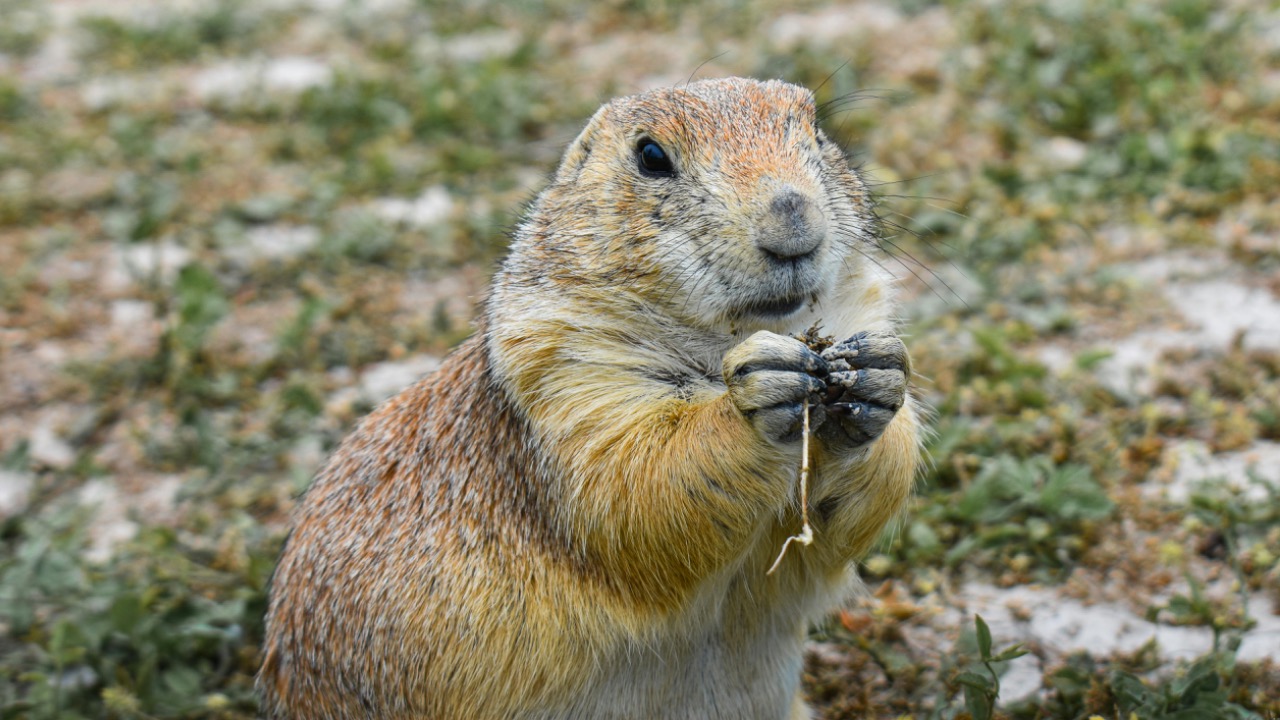
.223 Remington is usually thought of as a defensive or target round, but a 2019 guide on the cartridge points out how well it handles prairie dogs when loaded with 55-grain bullets at high velocity. Those bullets carry enough speed to stay flat across typical prairie dog town distances, which can stretch past 300 yards. For landowners in open country, that reach helps thin colonies that chew crops and undermine equipment roads.
The same reporting notes that .223 Remington offers a wide range of bullet designs, from lightweight varmint hollow points to tougher soft points. On burrowing pests like prairie dogs, the explosive varmint bullets reduce the chance of pass-throughs and keep energy in the animal. For operators who already own an AR-15 or bolt gun in .223, dedicating a specific varmint load can turn a “general purpose” rifle into a very effective pest-control tool without buying a new platform.
4) Military-Grade 5.56x45mm NATO on a Budget
5.56x45mm NATO is often lumped in with .223 Remington, but a 2023 feral-hog caliber rundown highlights one key difference for landowners: military surplus availability. That surplus pipeline keeps practice ammo relatively affordable, which matters when you are shooting multiple hogs in a night. The same reporting recommends 5.56 for feral hogs when paired with proper bullets, noting that controlled-expansion projectiles help the cartridge punch above its size.
For property owners who already run AR-15s, 5.56 NATO gives them a familiar platform for pest control, with magazines and parts that are easy to source. On wild pigs, quick follow-up shots are often more important than raw power, and a 30-round magazine of suitable hog loads can handle a sounder raiding a field. The budget angle also matters, since every dollar saved on ammo can go into fencing, traps, or night-vision gear that further protects the land.
5) Potent .22 WMR for Short-Range Predators
.22 WMR (Winchester Magnum Rimfire) sits between .22 LR and centerfire rounds, and a 2020 piece on overlooked rimfires points out that it can handle coyotes at short range. That extra punch over .22 LR comes from higher velocity and heavier bullets, which give better penetration on a coyote’s chest or shoulder. For landowners losing poultry or young goats to predators near the barn, .22 WMR offers a useful step up without jumping to a loud centerfire.
The same reporting stresses that .22 WMR is best kept to modest distances on coyotes, where shot placement can be controlled and angles are safe. In that role, it shines around feedlots, orchards, and farmyards where centerfire noise and overpenetration are real concerns. Because rifles and ammunition remain relatively affordable, .22 WMR is a practical choice for someone who wants more authority than .22 LR but still values rimfire simplicity.
6) Quiet 6.5 Grendel for Neighborly Control
6.5 Grendel is usually associated with mid-range target work, yet a 2022 analysis highlights its subsonic options for fox control without disturbing neighbors. Loaded subsonic, the cartridge can be paired with a suppressor to keep noise levels low while still pushing a heavy bullet with good sectional density. For landowners working near property lines or in semi-rural neighborhoods, that quieter report can prevent complaints while still solving a predator problem.
The same analysis notes that 6.5 Grendel’s case capacity and bore diameter make it well suited to heavy-for-caliber bullets at subsonic speeds. On foxes around poultry yards, that combination offers reliable penetration without the blast of a full-power centerfire. For anyone already running an AR-15 in Grendel for deer or hogs, adding a subsonic load gives the rifle a second life as a discreet pest-control tool when conditions demand it.
7) Suppressed .300 Blackout for Farm Use
.300 Blackout was built for suppressed shooting, and a 2021 report on farm pest work highlights how well it performs with 190-grain loads. Those heavy bullets stay subsonic, which keeps noise down when paired with a quality suppressor, yet they still carry enough mass to anchor pests cleanly. On working farms where livestock, workers, and neighbors are close by, that quieter signature can be the difference between solving a problem and starting an argument.
The same reporting points out that .300 Blackout runs in standard AR-15 magazines and bolts, which keeps costs down for landowners who already own the platform. With the right bullet, those 190-grain subsonic loads can handle everything from raccoons in the corn crib to larger varmints around silage pits. For operators who need to shoot at odd hours without waking the whole valley, .300 Blackout is one of the most practical suppressed options available.
8) Reliable 7.62x39mm for Larger Threats
7.62x39mm is best known for AK-pattern rifles, but a 2018 feature on budget calibers notes that it suits larger pests like wild pigs. The cartridge’s 123-grain bullets hit harder than 5.56 NATO at close range, which is where most hog encounters happen in thick cover or crop edges. For landowners dealing with rooted-up pastures and destroyed irrigation lines, that extra thump can make a real difference.
The same reporting emphasizes that AK platforms and similar rifles in 7.62x39mm are often affordable and rugged, which appeals to people who want a tool they are not afraid to scratch in the truck. With soft-point hunting loads, the cartridge offers reliable expansion on hog-sized targets without the recoil of larger big-game rounds. For budget-conscious operators who still need serious hog medicine, 7.62x39mm is hard to ignore.
9) Accurate .17 Hornet for Varmint Accuracy
.17 Hornet does not get much attention, but a 2020 test showed it delivering match-grade accuracy on woodchucks, with sub-MOA groups. That level of precision matters when you are threading shots through fence posts or shooting across long hayfields at small targets. For landowners who want to surgically remove problem woodchucks without disturbing livestock, .17 Hornet offers a very precise tool.
The same testing highlighted the cartridge’s mild recoil and efficient powder use, which make it comfortable for extended varmint sessions. On woodchucks and similar pests, the high-velocity .17-caliber bullets provide explosive terminal performance that keeps animals from crawling back to burrows. For shooters who already reload, .17 Hornet can be tuned for specific rifles, turning a niche cartridge into a serious accuracy asset on working ground.
10) Long-Range 6mm ARC for Extended Fields
6mm ARC is a newer option, and a 2023 bulletin notes that it is emerging as a long-range varmint round out to 600 yards with relatively low recoil. That combination of reach and shootability lets landowners engage pests across big alfalfa fields or prairie dog towns without stepping up to heavy magnums. For operators who manage wide, open properties, being able to reach 600 yards from a stable position can dramatically cut pest numbers.
The same bulletin points out that 6mm ARC was designed to run in AR-15 platforms while still pushing high-ballistic-coefficient bullets. On small varmints, those sleek 6mm projectiles buck wind better than lighter rimfire rounds, which is crucial when afternoon thermals kick up. For landowners who want a modern, efficient cartridge that doubles as a target round, 6mm ARC offers a strong balance between performance and recoil.
11) Fast .204 Ruger for Follow-Up Shots
.204 Ruger tends to sit in the shadow of .223, yet a 2019 review calls out its underappreciated role in rapid prairie dog follow-ups. With 32-grain bullets clocked at about 4,200 fps, the cartridge delivers a very flat trajectory and quick hits across typical dog-town distances. That speed lets shooters stay on target through the shot, spot impacts, and correct instantly, which is valuable when dozens of dogs are up at once.
The same reporting notes that .204 Ruger’s light recoil helps shooters run high-magnification optics without losing the sight picture. For landowners or leaseholders tasked with protecting crops from dense prairie dog colonies, that means more effective shooting and fewer wasted rounds. When paired with quality varmint bullets, .204 Ruger offers clean kills, minimal pelt damage on smaller pests, and a shooting experience that keeps fatigue low during long days in the field.

Asher was raised in the woods and on the water, and it shows. He’s logged more hours behind a rifle and under a heavy pack than most men twice his age.