15 calibers that are widely available and consistently effective
Walk into almost any sporting goods store in America and you’ll see certain cartridges on the shelf every single time. They aren’t always flashy or trendy, but they work. They’ve proven themselves on game, on steel, and in defensive roles year after year. When supply gets tight, these are usually the first to come back because manufacturers know they’ll move.
If you want something you can actually find, afford, and trust to perform, these calibers have earned their staying power. They cover everything from varmints and whitetails to elk, personal defense, and practical shooting. Here are fifteen that continue to deliver.
.308 Winchester

The .308 Winchester has been a staple for decades because it flat-out works. You get manageable recoil, solid barrel life, and dependable accuracy in a wide range of rifles. It handles deer and elk comfortably within ethical distances and performs well in short-action platforms.
Ammunition availability is rarely an issue. You’ll find bullet weights ranging from light 125-grain loads to 180-grain options for heavier game. It’s not the fastest cartridge on the shelf, but it’s predictable and forgiving. When you want something that performs without drama, the .308 keeps showing up.
.223 Remington
The .223 Remington remains one of the most common centerfire rifle cartridges in North America. It’s affordable, easy to shoot, and widely supported by manufacturers. For varmints, predators, and target work, it’s hard to beat.
Recoil is minimal, which lets you focus on fundamentals and see your hits. Modern bullet designs have expanded its usefulness in certain deer applications where legal, though it shines brightest on smaller game. If you want a cartridge you can shoot often without draining your wallet, the .223 earns its spot.
7mm Remington Magnum
The 7mm Remington Magnum has long been trusted for open-country hunting. It carries velocity well and maintains energy at extended ranges, making it suitable for elk and mule deer in big country.
You’ll feel more recoil than mid-sized cartridges, but the payoff is flat trajectory and strong terminal performance. Ammunition is widely available, with a broad selection of premium hunting loads. When distance becomes a factor and you need reach without stepping into ultra-magnum territory, the 7mm Rem. Mag. continues to hold its ground.
.30-06 Springfield
Few cartridges have the track record of the .30-06 Springfield. It has taken nearly every species of North American big game and continues to be widely chambered in modern rifles.
You can find loads from 125 to 220 grains, giving you flexibility across different hunts. Recoil is noticeable but manageable for most shooters. If you want one rifle cartridge that covers whitetails in the hardwoods and elk in the mountains, the .30-06 still makes a strong case.
6.5 PRC
The 6.5 PRC gained traction quickly because it offers higher velocity than some other 6.5 cartridges while maintaining efficient bullet performance. It’s well suited for longer shots on deer and elk-sized game.
Factory ammunition has become much easier to find in recent years. You get flatter trajectories and solid wind resistance with modern high-BC bullets. While it burns more powder than smaller cartridges, it rewards you with reach and consistency, especially in western hunting scenarios.
.22 Long Rifle
The .22 Long Rifle might be the most useful cartridge ever developed. It’s affordable, widely available, and chambered in countless rifles and pistols.
For small game, training new shooters, or maintaining fundamentals, nothing replaces it. Recoil and noise are minimal, which encourages practice. When shelves get picked clean, .22 LR still tends to reappear quickly because demand never fades. It’s a foundational caliber that continues to prove its value.
.270 Winchester
The .270 Winchester has been a mainstay for deer and elk hunters for nearly a century. It offers flat shooting performance and manageable recoil in a standard-length action.
Bullet weights typically run between 130 and 150 grains, providing a good balance of speed and penetration. Ammunition is widely stocked across the country. If you hunt open country and want a cartridge that stretches comfortably past typical woods ranges, the .270 remains dependable.
12 Gauge
The 12 gauge isn’t a rifle cartridge, but it deserves mention for sheer versatility. You can hunt waterfowl, turkey, deer, and upland birds with the right load.
Ammunition options are nearly endless, including birdshot, buckshot, and slugs. Shotguns chambered in 12 gauge are common and affordable. Whether you’re in a duck blind or tracking whitetails in slug-only country, the 12 gauge continues to prove its worth year after year.
9mm Luger
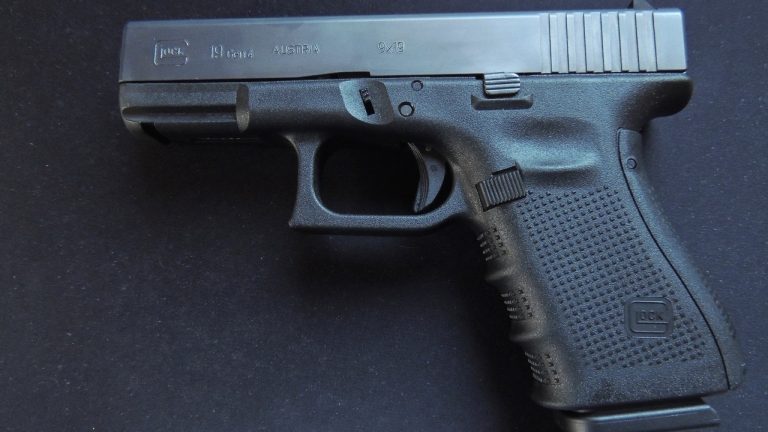
The 9mm Luger dominates the handgun market for good reason. It offers manageable recoil, strong defensive performance with modern hollow points, and high magazine capacity in compact pistols.
Ammunition is widely produced and often more affordable than other defensive calibers. Law enforcement and civilian shooters alike rely on it. If you’re looking for a practical handgun caliber that balances control and effectiveness, 9mm remains the standard.
.45 ACP
The .45 ACP has a long history in both military and civilian use. It delivers heavier bullets at moderate velocities and has a reputation for reliable performance at defensive distances.
Recoil is more pronounced than 9mm, and magazine capacity is typically lower, but many shooters appreciate the push-style recoil impulse. Ammunition remains widely available. If you prefer a larger-diameter bullet in a proven platform, the .45 ACP continues to serve well.
10mm Auto
The 10mm Auto has seen renewed interest in recent years, especially among backcountry hunters and anglers. It offers higher velocity and energy than most service pistol cartridges.
With proper loads, it can serve for defensive use and even protection against medium-sized predators. Recoil is stout, but manageable with practice. Ammunition availability has improved significantly. If you want a semi-auto handgun cartridge with serious punch, 10mm brings capability beyond typical carry rounds.
.243 Winchester
The .243 Winchester remains a go-to for younger or recoil-sensitive hunters. It’s flat shooting and well suited for deer and varmints with appropriate bullet selection.
Recoil is light, which helps you stay on target and build confidence. Ammunition is easy to find, and rifles chambered for it are common. While bullet weight options are narrower than larger calibers, the .243 continues to be effective within its intended range.
.300 Winchester Magnum
The .300 Winchester Magnum has built its reputation on power and reach. It carries energy well downrange and is commonly used for elk, moose, and large-bodied deer.
Recoil is significant, and rifles tend to be a bit heavier to manage it. Still, ammunition is widely available, and nearly every major rifle manufacturer chambers it. If you want authority at distance, the .300 Win. Mag. continues to deliver.
20 Gauge
The 20 gauge offers many of the benefits of the 12 gauge with lighter recoil and often lighter shotguns. It’s effective for upland birds, turkey, and even deer with slugs in appropriate setups.
Ammunition is easy to find, and modern loads perform far better than older generations. For shooters who want versatility without the heavier recoil of a 12, the 20 gauge remains a practical choice.
.44 Magnum
The .44 Magnum has long been associated with hunting revolvers and lever guns. It delivers strong energy at moderate ranges and is suitable for deer and hogs with proper loads.
Recoil is sharp in lighter revolvers, but manageable with practice. Ammunition remains widely produced, including both full-power and reduced loads. If you want a handgun or carbine caliber that carries real authority in the field, the .44 Magnum continues to prove effective.

Asher was raised in the woods and on the water, and it shows. He’s logged more hours behind a rifle and under a heavy pack than most men twice his age.