5 German WWII technologies that permanently changed modern warfare
When people talk about military technology in the Second World War, the conversation often drifts toward tanks, planes, and battlefield tactics. But behind those headlines were engineering ideas that shaped the way wars are fought even today. Germany’s wartime research pushed the limits of what was possible under extreme pressure, and many of those breakthroughs carried forward long after the war ended.
You can still see the fingerprints of these developments in modern weapons, aircraft, and military planning. Some of them were rushed into service late in the war, while others were experimental projects that didn’t fully mature until decades later. Either way, they left a permanent mark. Here are several German technologies from WWII that continue to influence modern warfare in ways many people don’t realize.
The First Practical Assault Rifle Concept
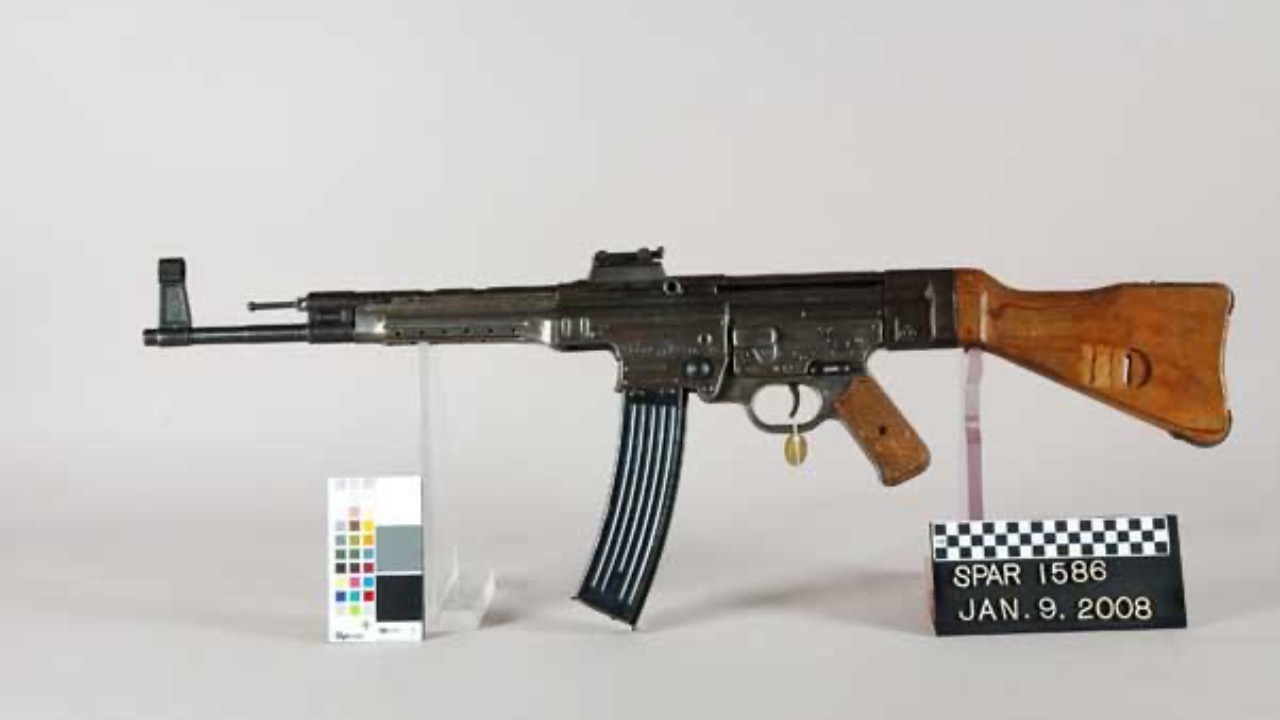
Before the war, infantry weapons largely fell into two categories: full-power rifles and pistol-caliber submachine guns. German engineers pushed for something that sat between those two extremes, and that effort produced the StG 44. Chambered in an intermediate cartridge, it gave soldiers controllable automatic fire with far more range than a submachine gun.
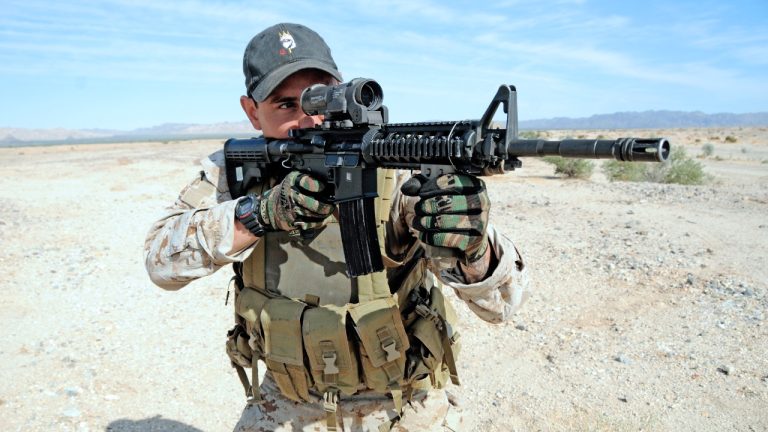
When you look at modern infantry rifles, you’re seeing the continuation of that idea. The concept of an intermediate cartridge paired with a select-fire rifle became the foundation for postwar designs across the world. Militaries realized that most combat happened at moderate distances, where controllability and volume of fire mattered more than the raw power of traditional rifle cartridges. The shift in thinking reshaped infantry doctrine and weapon design for the rest of the twentieth century.
Guided Anti-Tank Missiles
Late in the war, Germany experimented with wire-guided weapons designed to strike armored vehicles from a distance. One of the most notable was the Ruhrstahl X-7, an early guided anti-tank missile that used wires trailing behind the projectile to transmit steering commands from the operator.
The system never saw widespread use before the war ended, but the concept proved sound. After the conflict, both Western and Soviet engineers studied the idea closely. Modern anti-tank guided missiles still rely on many of the same principles—an operator guiding the weapon toward its target during flight. When you watch footage of today’s infantry units disabling armored vehicles with portable missiles, you’re looking at technology that traces its roots to those late-war German experiments.
Infrared Night Fighting Equipment
Night fighting has always been a challenge, but German engineers made significant strides with early infrared systems during the final years of the war. Equipment such as the Vampir infrared sight allowed soldiers to detect targets in darkness by projecting infrared light that was invisible to the naked eye but visible through a specialized scope.
The system was bulky and limited in range, but it demonstrated that night combat could move beyond flares and searchlights. Modern night-vision and thermal imaging equipment evolved along different technological paths, yet the core idea remains the same: giving soldiers the ability to see and fight effectively after dark. Today, night operations are standard practice for military forces, and those early experiments played a role in pushing the concept forward.
Jet-Powered Combat Aircraft
Propeller-driven aircraft dominated the early years of the war, but Germany introduced the world’s first operational jet fighter with the Messerschmitt Me 262. The aircraft’s speed advantage over piston-engine fighters showed what jet propulsion could achieve in combat aviation.
Although the Me 262 arrived too late to alter the outcome of the war, it forced military planners everywhere to rethink the future of air combat. After the war, engineers across several countries adopted jet propulsion as the new standard for military aircraft. Within a few years, jet fighters replaced propeller-driven designs almost entirely in front-line service. Modern air forces—from interceptors to multirole fighters—still rely on the same basic propulsion concept that first appeared in operational form during the final stages of the conflict.
Wire-Guided Glide Bombs
Germany also experimented with precision-guided bombs that could be steered toward targets after release. Weapons like the Henschel Hs 293 and Fritz X used radio control to guide a bomb during its descent, allowing operators to adjust its path and improve accuracy against ships and fortified positions.
These early guided weapons introduced the idea that bombs didn’t have to follow a fixed ballistic path. While the systems were crude by modern standards, they showed that remote guidance could significantly improve strike effectiveness. Today’s precision-guided munitions—whether GPS-guided bombs or laser-guided missiles—follow the same general philosophy. The ability to steer a weapon after launch changed aerial warfare, making targeted strikes far more precise than the unguided bombing campaigns of earlier eras.

Asher was raised in the woods and on the water, and it shows. He’s logged more hours behind a rifle and under a heavy pack than most men twice his age.