ATF seizes thousands of firearms amid shifting federal enforcement priorities
When the Bureau of Alcohol, Tobacco, Firearms and Explosives announces large-scale firearm seizures, it usually signals more than a single investigation. It reflects broader enforcement priorities shaped by the Department of Justice and the administration in power. In recent years, those priorities have shifted toward regulating unserialized firearms, cracking down on trafficking networks, and tightening oversight of federally licensed dealers.
If you follow firearms policy closely, you’ve seen how quickly enforcement focus can change. Seizures in the thousands don’t happen in a vacuum. They’re often tied to coordinated operations, regulatory reinterpretations, and political pressure that filters down to field agents and local task forces.
A Renewed Focus on “Ghost Guns”
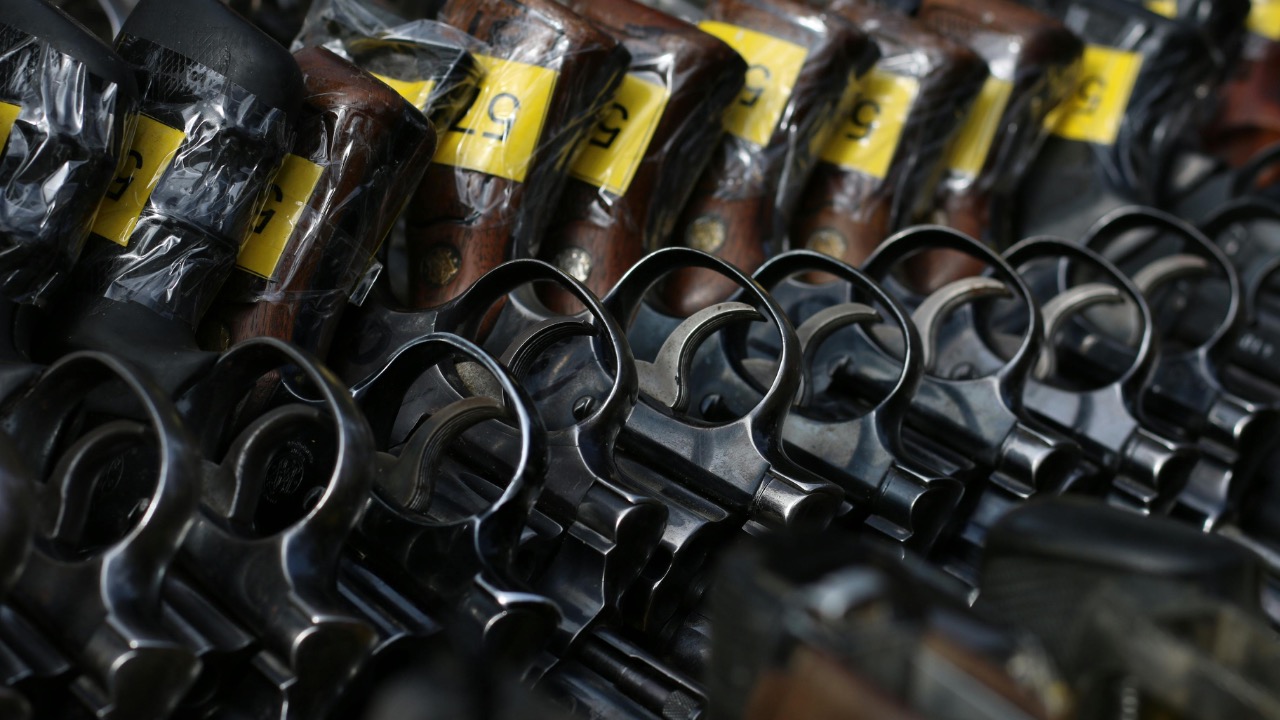
One of the biggest drivers behind recent seizures has been the crackdown on unserialized firearms, often referred to as “ghost guns.” Rule changes finalized in 2022 redefined certain frames and receivers as regulated firearms, bringing previously unregulated kits under federal oversight. That change expanded ATF authority to seize incomplete receivers sold without serial numbers.
If you’re a hobby builder or small dealer, that shift matters. Items once treated as parts are now considered firearms under federal law. Enforcement actions tied to these rules have led to thousands of confiscated components, especially in urban areas where local prosecutors coordinate with federal agents on gun crime initiatives.
Dealer Compliance Inspections Are Up
ATF has increased inspections of Federal Firearms Licensees in recent years, particularly under a stricter “zero tolerance” policy for recordkeeping violations. Clerical errors that once resulted in warnings can now trigger license revocation proceedings. When licenses are revoked, inventory is often seized during the investigation phase.
For you as a gun owner, that can mean disruptions at your local shop. For dealers, it raises the stakes of compliance. The agency maintains that accurate records are essential to tracing crime guns. Critics argue that minor paperwork errors are being treated as major violations. Either way, inspections are playing a larger role in firearm seizures.
Interstate Trafficking Task Forces
Large seizure numbers often come from joint federal-state trafficking investigations. These cases target organized groups accused of buying firearms in states with looser regulations and transporting them to cities with stricter laws. Multi-agency task forces pool intelligence, conduct surveillance, and execute coordinated warrants.
If you look at press releases tied to these operations, you’ll notice they frequently involve dozens of defendants and hundreds of firearms. These aren’t routine patrol seizures. They’re months-long investigations built around conspiracy charges, straw purchasing allegations, and illegal resale networks. When they culminate, the firearm counts add up quickly.
Pistol Braces and Regulatory Reinterpretation
The ATF’s shifting stance on pistol stabilizing braces has also contributed to enforcement actions. After years of fluctuating guidance, a final rule reclassified many braced pistols as short-barreled rifles under the National Firearms Act, unless registered or modified. That reinterpretation changed the legal status of millions of firearms overnight.
If you own one, you understand how confusing the guidance has been. Enforcement related to noncompliance has varied by region and circumstance, but seizures have occurred in cases where braced firearms were tied to other alleged violations. Regulatory reinterpretations don’t always create new laws, but they can dramatically change how existing ones are enforced.
Expanded Use of Gun Tracing Data
ATF’s National Tracing Center has taken on a more prominent role in recent years. Firearms recovered at crime scenes are traced back to original retail sales, helping investigators identify trafficking patterns. When patterns emerge, they can trigger broader enforcement sweeps involving multiple suspects and properties.
For lawful owners, tracing is largely invisible unless your firearm is recovered after being stolen. But on the enforcement side, tracing data supports search warrants and seizure operations. As tracing technology and data-sharing improve, it becomes easier for federal agents to connect dots across jurisdictions, leading to larger cumulative firearm counts in coordinated cases.
Emphasis on Repeat Offenders
Federal prosecutors have placed increased emphasis on charging repeat offenders under statutes that carry enhanced penalties for firearm possession. When those cases are built federally rather than locally, ATF typically plays a central investigative role. Firearms connected to those defendants are seized as evidence.
If you track sentencing data, you’ll see that federal gun charges often carry longer potential penalties than comparable state charges. That reality influences charging decisions. It also means that firearms tied to repeat offender investigations are more likely to end up in federal custody rather than being handled solely at the local level.
Coordination with State-Level Gun Initiatives
Federal enforcement doesn’t operate in isolation. In states that pass new firearm restrictions, ATF often coordinates with local agencies to interpret overlapping authority. That cooperation can increase seizure activity when state and federal priorities align, particularly in metropolitan areas facing political pressure over violent crime.
If you live in one of those regions, you’ve probably seen joint press conferences announcing task force results. The numbers cited often reflect combined efforts. While ATF enforces federal law, the broader strategy frequently mirrors state-level priorities, especially when funding and manpower are shared across agencies.
Budget and Staffing Shifts
Enforcement intensity often follows funding. Recent federal budgets have directed additional resources toward gun violence prevention and regulatory enforcement. More agents, more inspectors, and more analytical staff naturally translate into more investigations and, in some cases, more seizures.
For you, that means enforcement trends may continue evolving as staffing levels change. Agencies act within the bounds of the laws Congress passes and the priorities set by leadership. When those priorities emphasize firearms oversight, seizure statistics tend to rise accordingly. It’s less about sudden policy swings and more about where manpower and political focus are directed at any given time.

Asher was raised in the woods and on the water, and it shows. He’s logged more hours behind a rifle and under a heavy pack than most men twice his age.