Officials confirm expanding range of large predators in the Midwest
Large carnivores are quietly reclaiming ground across the Midwest, and state agencies are now saying it out loud. From wolves and black bears to cougars and even urban coyotes, the region is seeing more big predators in places where a generation ago they were little more than campfire stories.
For hunters, farmers, and anyone who spends time outside, that shift is already changing how we move on the landscape. I see it as a long overdue correction after decades of heavy persecution, but it also brings real management questions, from livestock conflicts to how we keep people and predators out of each other’s way.
Predators return to a changed Midwest
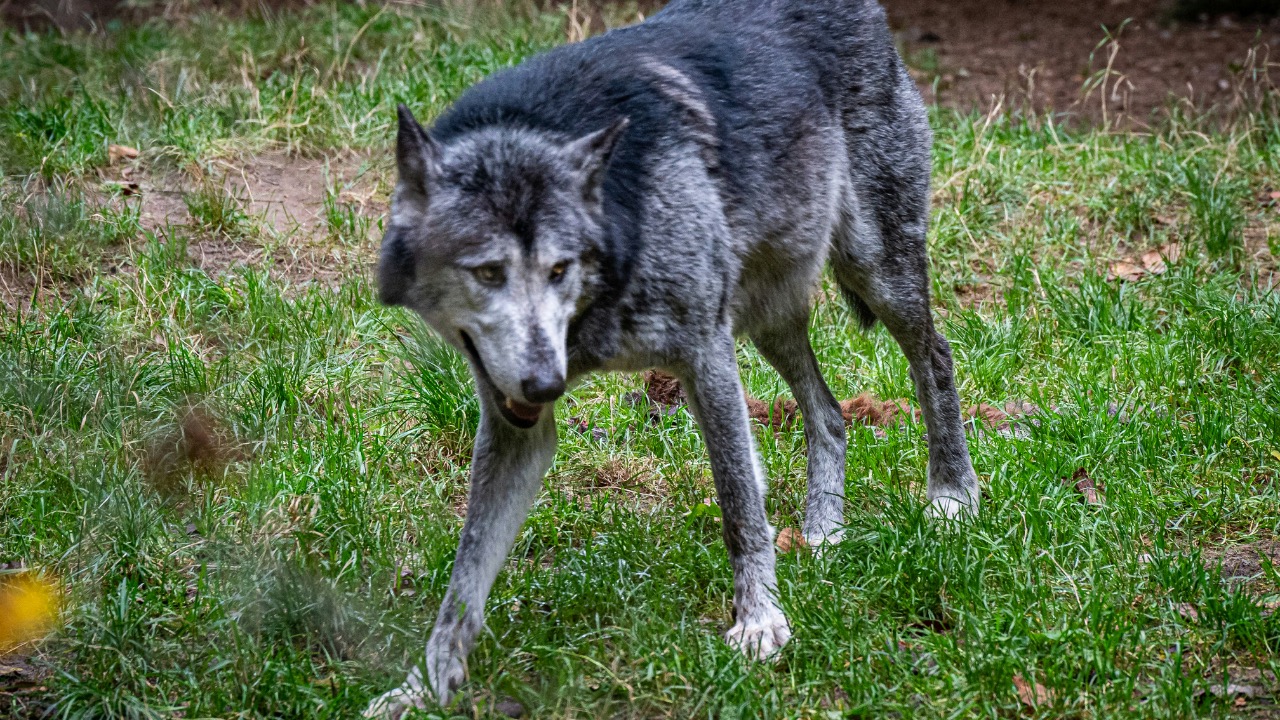
For most of the last century, the working assumption in much of the Corn Belt was simple: big predators were gone. Black bears, gray wolves, and mountain lions had been common across the Midwest before widespread settlement, but intensive hunting, trapping, and habitat loss pushed them out of states like Illinois, Iowa, and much of the central plains. Wildlife agencies now describe these species as “rare visitors” in some states, but that label is starting to feel outdated as sightings and confirmed animals tick upward across the region.
Illinois biologists note that Black bears, gray were once part of the normal wildlife mix, not outliers. The same story holds in neighboring states like Michigan and Minnesota, where remnant populations hung on in the North Woods even as the rest of the region emptied out. What is different now is that those remnant pockets are growing and young animals are dispersing into farm country, suburbs, and river corridors that have not seen them in living memory.
Wolves push beyond their northern strongholds
Wolves are the clearest example of a predator that has clawed its way back from the brink. In the western Great Lakes, protections under the Endangered Species Act and changing public attitudes allowed gray wolf numbers to rebound from near zero to a stable, wide ranging population. In Wolves Today During 2024–2025 overwintering period, Wisconsin estimated between 1,087 and 1,379 pack associated wolves, a number that would have been unthinkable a few decades ago and that now fills nearly all suitable habitat in that state.
Those wolves do not recognize state lines, and dispersers are increasingly turning up in places where they had been functionally absent for generations. Indiana’s wildlife agency notes in its Wolf history that gray wolves were listed as federally endangered in 1967 and under the Endangered Species Act in 1973, after being wiped out across most of the lower 48 outside parts of Minnesota, North Dakota, and South Dakota. Now, occasional confirmed wolves in states like Indiana and Illinois are almost always young animals dispersing out of core areas in Wisconsin and Wisconsin’s neighbors, testing new ground and reminding people that the species is no longer a relic of the past.
Cougars quietly reoccupy their historic range
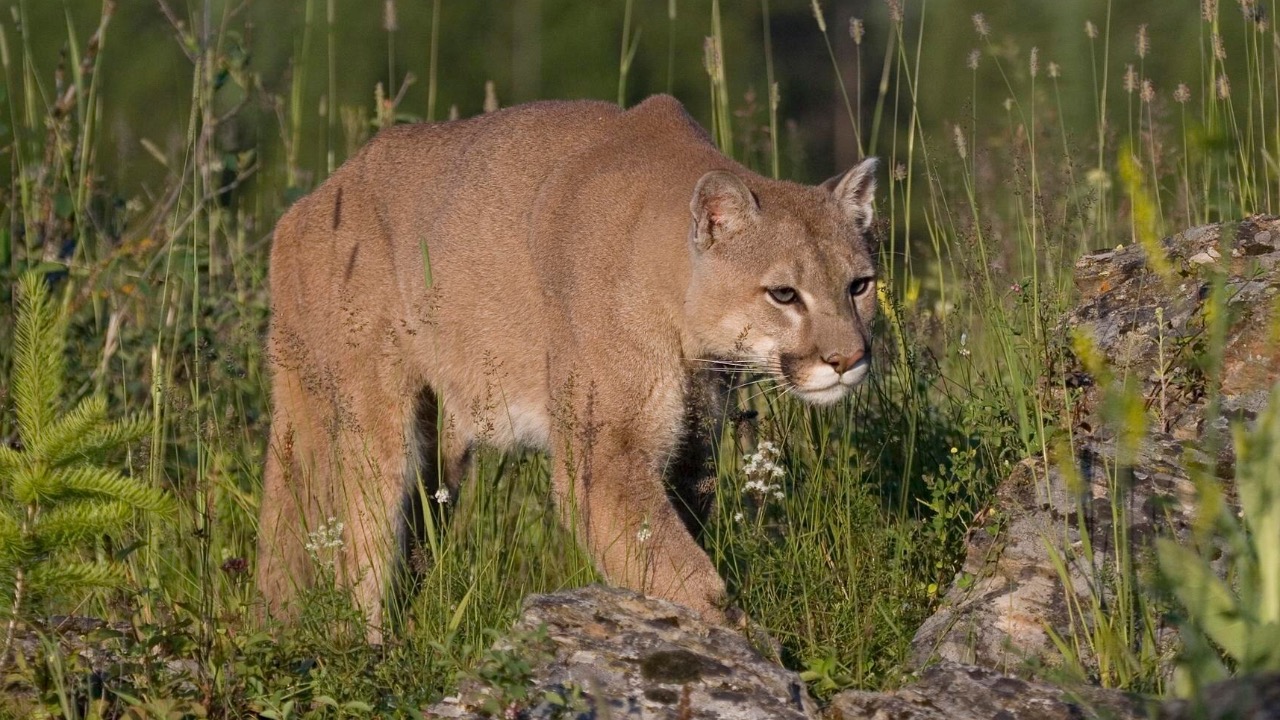
Cougars, or mountain lions, are following a slower but similar path. A landmark analysis of records across the central United States found 178 confirmed cougar occurrences in the Midwest between 1990 and the early 2010s, with the number of confirmations steadily increasing over that period. Most of those animals were young males dispersing out of established populations in the West, but the pattern showed a clear eastward push into states like Nebraska and Missouri and hinted at the possibility of re colonization if females eventually follow.
That slow burn is now showing up in state level reports. Wildlife staff in Michigan have logged a noticeable uptick in cougar reports, enough that the agency has set up a web based program where people can submit photos and locations for biologists to verify. In a recent briefing, officials walked through a surge in confirmed sightings and explained how they use those public submissions, trail cameras, and field checks to separate rumor from reality, a process highlighted in a Feb segment that underscored how many eyes are now on the landscape.
Black bears expand into farm country
Black bears are also pushing into places where row crops and cattle outnumber spruce and fir. In Illinois, biologists now treat bears as occasional but expected visitors, noting that they are part of the same suite of large carnivores, along with wolves and mountain lions, that historically roamed the Midwest. Most of the bears showing up in corn and soybean country are young males wandering out of established populations in northern forest states, following river corridors and timber patches that thread through farm country.
Nowhere is that more obvious than in Iowa, where black bears were once considered extirpated. The state’s Department of Natural Resources has documented a clear rise in sightings, and lawmakers are responding. A recent proposal would give black bears formal state protection and set up a furbearer season framework, with staff noting that on average there are five bear sightings annually in Iowa and that in 2024 there were eight sightings according to the DNR. Representative Lohse has been among those arguing that the state needs clear rules in place before bears become a regular fixture on trail cameras and in cornfields.
Iowa as a bellwether for returning carnivores
If you want to see how quickly perceptions can change, look at Iowa’s arc on predators. For years, the state was held up as textbook whitetail and pheasant country with virtually no large carnivores on the landscape. That is no longer accurate. Wildlife staff now acknowledge that the Sighting and presence of bears, wolves, bobcats, and mountain lions is up in the Midwest, including in Iowa itself, where these species are reappearing in areas they have not inhabited in years.
That trend is not limited to one corner of the state. Reports now come in from the wooded bluffs of northeast Iowa and the Missouri River breaks in the west, as well as scattered sightings in central counties where habitat is patchier. For a long time, any report of a wolf or mountain lion in Iowa was dismissed as misidentification or an escaped captive. Now, with trail cameras everywhere and agencies more willing to investigate, the state has become a bellwether for how quickly large carnivores can move back into heavily farmed landscapes when given half a chance.
Illinois, Michigan, and Minnesota see more big predators
Illinois sits at the crossroads of this shift. The state’s wildlife agency has gone from treating large carnivores as one off curiosities to building public guidance around them. Officials emphasize that black bears, gray wolves, and mountain lions were once common in Illinois and that occasional visitors are now expected as populations expand in neighboring states. That message is aimed at residents of both rural and suburban Illinois, where a bear in a bean field or a cougar on a trail camera can still light up social media.
Farther north, states with long standing predator populations are seeing those animals push into new corners. In Michigan, confirmed cougar reports are climbing, and black bears are increasingly common in the northern Lower Peninsula, not just the Upper Peninsula that most hunters associate with them. Minnesota continues to anchor the western Great Lakes wolf population, sending dispersers south and east. Together, these states are functioning as source areas, feeding a slow but steady trickle of predators into the agricultural Midwest.
Urban edges: coyotes and carnivores near cities
Predators are not only returning to timber and pasture. They are also learning to live on the edges of cities, where greenbelts, golf courses, and lakefront parks offer cover and a steady diet of rodents and trash. Coyotes are the poster child for that shift. In Illinois, a recent clip from Montrose Beach in Chicago showed a coyote calmly watching off leash dogs on the sand, a scene that would have been rare a few decades ago but now barely surprises city wildlife officers.
That same pattern is playing out around metro areas across the region, from the Twin Cities to Detroit and Des Moines. Green corridors along rivers and rail lines let predators slip into town, and once they are there, they quickly learn to work around people. For residents, that means adjusting habits, from keeping pets on leash to securing garbage. For agencies, it means explaining that coexistence is possible while still warning people to keep their distance from animals that look sick, aggressive, or unusually bold.
Why attacks remain rare even as encounters rise
Any time big predators show up near homes or trailheads, the first question people ask is about safety. The reality, backed up by decades of data, is that serious attacks remain rare, even as encounters increase. A broad review of carnivore incidents found that Generally, wild animals try to avoid contact with humans, as explained by Daniel Thornton, a Washington State University researcher who studies carnivore ecology and conservation. Most conflicts happen when animals are cornered, habituated to human food, or surprised at close range.
That does not mean there is no risk, only that the risk is manageable with some basic awareness. I tell people to think of large carnivores the way they think of chainsaws or river crossings: respect the danger, learn the rules, and you can operate safely. Keeping dogs leashed in known predator country, giving animals an escape route, and securing attractants like garbage and livestock feed go a long way toward preventing problems. Agencies across the Midwest are now building that message into their outreach as wolves, bears, and cougars become more common on the landscape.
Management, hunting, and what comes next
As predators expand, the management questions get more complicated. States that once treated wolves, bears, and cougars as theoretical visitors are now wrestling with how to classify them, when to protect them, and when to allow lethal control. In Iowa, the push to give black bears formal status and a potential furbearer season is one example of lawmakers trying to get ahead of the curve. Regional groups like MAFWA track developments such as mountain lion kittens documented in the central states, where the last time the kittens were seen their mother was missing and the fate of the kittens is unknown, underscoring how fragile early recolonization can be.
For hunters and landowners, the return of big predators is both challenge and opportunity. Wolves and cougars can change deer behavior and numbers, and bears can hit cornfields and beehives hard. At the same time, a landscape that can support apex predators is usually a healthier one overall, with more diverse habitat and better functioning food webs. As more wolves disperse out of Wisconsin, more cougars slip through the Missouri breaks, and more bears wander into Midwest river bottoms, I expect the region to keep moving toward a new normal where seeing a big predator track in the mud is no longer headline news, but part of what it means to live and hunt in the heart of the country.

Asher was raised in the woods and on the water, and it shows. He’s logged more hours behind a rifle and under a heavy pack than most men twice his age.