Rare animal color mutations that still exist in the wild
Color is one of nature’s most powerful survival tools, yet some animals carry genetic quirks that turn the usual rules upside down. From bubblegum-pink predators to half-male, half-female songbirds, these rare color mutations still appear in wild populations and can reshape how creatures hunt, hide, and find mates. I want to trace how these anomalies arise, why they persist in harsh environments, and what they reveal about evolution in real time.
Most of these animals are not separate species but unusual individuals born with mutations that alter how pigments are produced or distributed. In domestic settings, humans often favor such novelties and selectively breed them, while in the wild the same traits must run a gauntlet of predators, climate, and competition. That tension between vulnerability and advantage is what makes these living color experiments so compelling.
When color goes off script: mutations and natural selection
Color starts at the genetic level, where small changes can radically shift how an animal looks without altering its species identity. A single mutation can change how pigments like melanin are produced or where they end up in fur, feathers, or scales, which is why a cat with an unusual coat pattern is still very much a domestic cat. Pet breeders have learned that when there is a genetic mutation that causes a unique coat color, people tend to find that novelty appealing and may deliberately pair those animals so the trait spreads, as described in guides to spotted cat breeds.
Wild populations operate under a different logic. In domestic animals, a striking color can be locked in through artificial selection, while in the wild the same mutation is far more susceptible to elimination by predators or poor camouflage, as genetic work on reindeer notes for traits that humans favor in captivity but that natural selection trims in open ecosystems. Research on polymorphisms in wild and domestic reindeer explains that in domestic animals, such a mutation will be fixed through breeding, while in wild herds it is more susceptible to elimination due to natural selection, a pattern that applies broadly to color variants that either help or hinder survival.
Pink predators: strawberry leopards and erythrism
Few images capture the shock of unexpected color like a pale, pinkish leopard emerging from the brush. In South Africa, a rare “strawberry” leopard cub was documented with a coat that lacked the usual deep black rosettes and instead showed a muted, reddish tone. Biologists have linked this appearance to a genetic mutation called erythrism, which causes an absence of normal dark pigment or an overproduction of reddish pigments, leaving the animal with an overall strawberry hue, as reported when the strawberry leopard cub was photographed in South Africa.
Erythrism has been described as a rare mutation that can either block dark pigments or push red pigments into overdrive, producing animals that look as if they have been tinted with rust or rose. Conservation writers have contrasted such a pink-hued leopard with the more familiar black form, noting that unlike a leopard with melanism, this feline had a coat with light, pink coloration linked to an absence of normal dark pigments or an underproduction of those pigments, a pattern detailed in coverage of animal oddities. Genetic overviews of erythrism list causes that include mutations leading to missing normal pigment or excessive production of red pigment, and they show up not only in big cats but also in smaller mammals, birds, and even insects that take on an unexpected reddish cast.
From fuchsia fish to rosy insects: erythrism across species
Once you know to look for erythrism, the mutation appears in surprising corners of the animal world. Off Australia’s Lady Elliot Island, divers have documented a manta ray with a striking pink coloration, a reminder that pigment anomalies are not limited to land mammals. Such mutations are described as fairly common in the animal world, including among fish and humans with albinism, and one variant called erythrism can give animals a reddish hue that yields strawberry-blonde leopards and fuchsia grasshoppers, as explained in analysis of a rare pink manta.
Insects, which already rely heavily on color for camouflage, also carry these red-shifted surprises. Accounts of fuchsia grasshoppers illustrate how a single mutation can flip a normally green, leaf-mimicking body into something that looks almost artificial, a living highlighter against the vegetation. In some katydids, the usual rule is that the body is always green and the forewings have both the color and texture of a leaf when the insect rests on bushes or small trees, as described in field notes on Orthoptera, so a pink or red individual stands out dramatically. That visibility can be a disadvantage in predator-rich habitats, yet some of these insects still reach adulthood, which suggests that either their predators have gaps in their vision or that the mutation persists at low enough frequencies to avoid being completely purged.
When black is the new normal: melanism in squirrels, penguins and big cats
If erythrism pushes animals toward red, melanism pushes them toward deep black. Melanism is defined in genetic references as the congenital excess of melanin in an organism that results in dark pigment, and it has been documented in mammals, birds, and reptiles, including a melanistic black eastern grey squirrel, Sciurus carolinensis, that looks dramatically different from its gray relatives, as summarized in entries on melanism. Wildlife rehabilitators in Pennsylvania have described young orphaned squirrels whose color variation is due to a genetic variation called melanism, which causes fur to have darker pigmentation than normal and can produce animals that range from dark gray to jet black.
Melanism can reach even more dramatic extremes in birds and big cats. A wildlife photographer documented a king penguin that appeared almost entirely black, and the description notes that melanism is a genetic variation in which there is an excess of melanin that results in dark pigmentation, making such penguins estimated at roughly 1 in 250,000 individuals, a rarity highlighted in coverage of a melanistic king penguin. In Kenya’s Loisaba Conservancy, researchers following leopards have filmed an individual named Loshami, whose striking black coat is caused by melanism and still carries the classic rosette patterns visible in the right light, giving him a camouflage advantage in dense, shady habitat where a dark body blends into the understory.
Black panthers: not a species, but a color variant
Popular culture treats the black panther as a mysterious species, yet biologists are clear that the term usually refers to melanistic leopards or jaguars. Educational explainers describe a black panther as usually a jaguar or leopard born with melanism, a gene mutation that is dominant in jaguars and recessive in the ASIP gene for leopards, which means two leopard parents that look normal can still produce a dark cub if they both carry the recessive variant, as outlined in summaries of black panthers and. Other popular science explainers emphasize that black panthers are not a real species in the taxonomic sense, but rather what people call jaguars, leopards, or cougars that have excess pigmentation, basically the opposite of albinism.
Social media campaigns tied to International Jaguar Day have reinforced this message by pointing out that a “black panther” is a type of rare jaguar whose coat is so dark that you cannot see its spots, and that these majestic creatures are usually found in dense forests in Asia, Africa, and South America, where their dark color gives them, and by extension any melanistic leopard, incredible stealth in low light. Wildlife educators explain that melanism is the excess production of the pigment melanin, while the opposite mutation is considered albinism, which is the lack of melanin, and that both extremes can affect how animals interact with predators and prey, as noted in outreach pieces that contrast melanism and albinism in foxes, coyotes, and wolves.
White without being albino: leucism and spirit bears
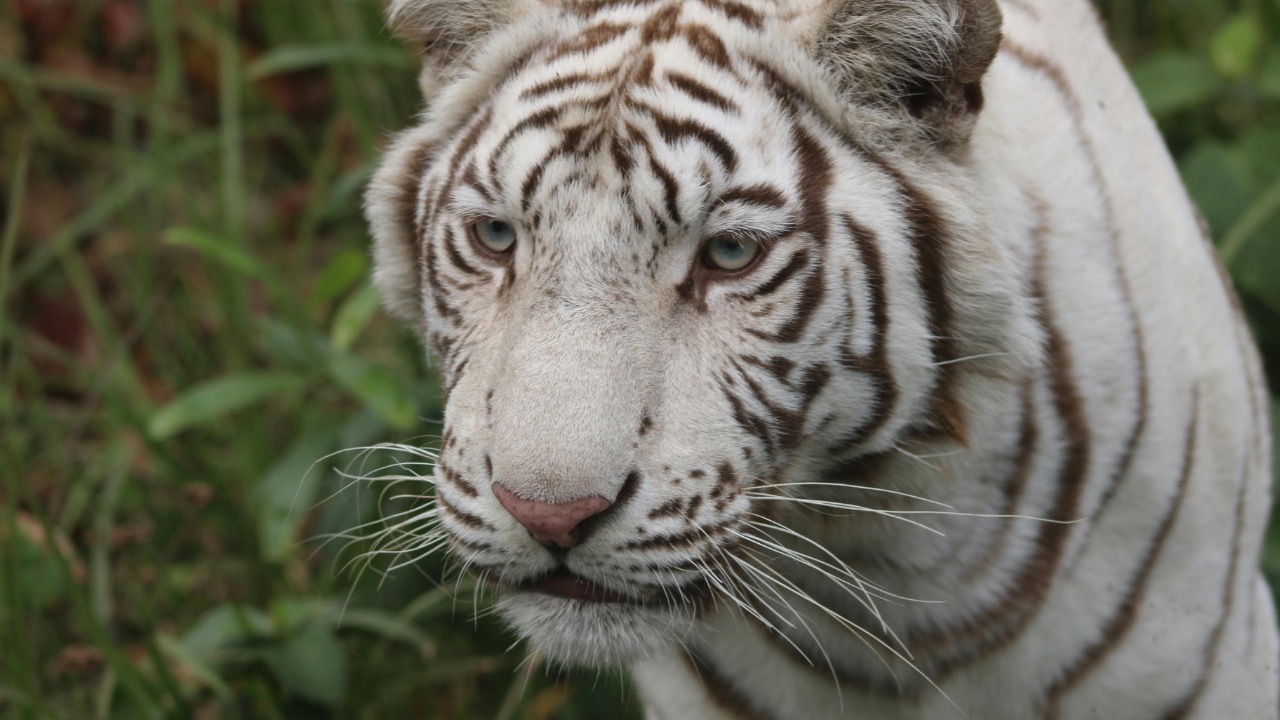
At the other end of the spectrum are animals that lose pigment almost entirely but are not true albinos. Geneticists describe leucism as a condition that is similar to albinism in that it is caused by a loss of pigment in skin, feathers, or fur, yet it differs because it does not affect the pigment of the eyes and can produce patchy or partial patterns rather than a fully white body, as explained in primers on Leucism. Wildlife educators reinforce that leucism is not the same as albinism, since albinism is the complete loss of pigmentation and affects the eyes, while leucism involves a partial loss that leaves eyes their normal color.
One of the most striking leucistic animals in the wild is the spirit bear of Canada’s Pacific coast. Photo essays from National Geographic’s “Fur, Feathers, and Scales: National Geographic’s Majestic Animals August 2011” describe the Kermode, or “spirit,” bear as neither polar bear nor albino, but a white form of black bear that carries a mutant gene, a distinction echoed in the caption that calls it “Neither polar bear nor albino” while highlighting its unique status in the Great Bear Rainforest. Field accounts from British Columbia add that these bears carry a recessive gene inherited from their black bear parents that gives them white fur, and that First Nations communities in the Great Bear Rainforest and on Princess Royal Island have guarded knowledge of these animals for generations, with one social media post noting 195K likes and 608 comments on a video of a spirit bear fishing in a stream, as documented in coverage of spirit bears In British Columbia.
Half one sex, half the other: gynandromorph color splits
Not every dramatic color split comes from pigment chemistry alone; some are written into an animal’s sex chromosomes. Gynandromorphy, sometimes called bilateral gynandromorphism, produces individuals that are literally divided down the middle, with one half male and the other half female. Educational posts describe how another weird thing in wildlife is gynandromorphy, where half of an animal is male and the other half is female, and how a good indication is when one side of a bird shows the bright male plumage and the other side shows the muted female colors, as explained in outreach that introduces Another weird thing in wildlife.
One northern cardinal in Erie, Pennsylvania, became a minor celebrity after birders noticed it looked as if it had been painted straight down the center. Reports describe a gynandromorphic, meaning half-male, half-female, northern cardinal that was spotted in Erie, Pennsylvania, with one half of its body bright red like a male and the other half brown like a female, a living illustration of how sex-linked color genes can split in a single individual, as detailed in coverage of the gynandromorphic cardinal. Scientists studying such birds note that in many species males are the colorful ones while females are drab for camouflage while nesting, so a perfect half-and-half individual becomes a vivid map of how those sex-specific genes are expressed.
Human taste versus wild pressures: why some colors spread
Humans have a long history of favoring unusual colors and patterns, which can push certain mutations to spread far beyond the frequencies they would reach in nature. Reptile enthusiasts, for instance, talk openly about their fascination with mutations while reminding each other not to forget the natural beauty of the wild type, even as they selectively pair snakes in order to produce more of a particular color morph, a practice described by breeders who manage house snake mutations. In domestic animals, geneticists note that when a mutation is desirable, it tends to be fixed through artificial selection and further breeding work, even if the same trait might be a liability in the wild.

Leo’s been tracking game and tuning gear since he could stand upright. He’s sharp, driven, and knows how to keep things running when conditions turn.