The Classic Handguns That Still Influence Today’s Designs
Spend enough time around gun counters, training classes, or armorers’ benches and you start to see the family resemblance. Modern pistols may wear polymer frames and optics-ready slides, but many of their core ideas trace back decades. Locking systems, trigger concepts, magazine layouts, and even grip angles didn’t appear out of thin air. They evolved.
If you carry or train with a modern handgun, you’re handling a piece of that lineage. These classic pistols didn’t fade into the background. They shaped how today’s sidearms are built, how they feel in your hand, and how they run under pressure.
Browning Hi-Power

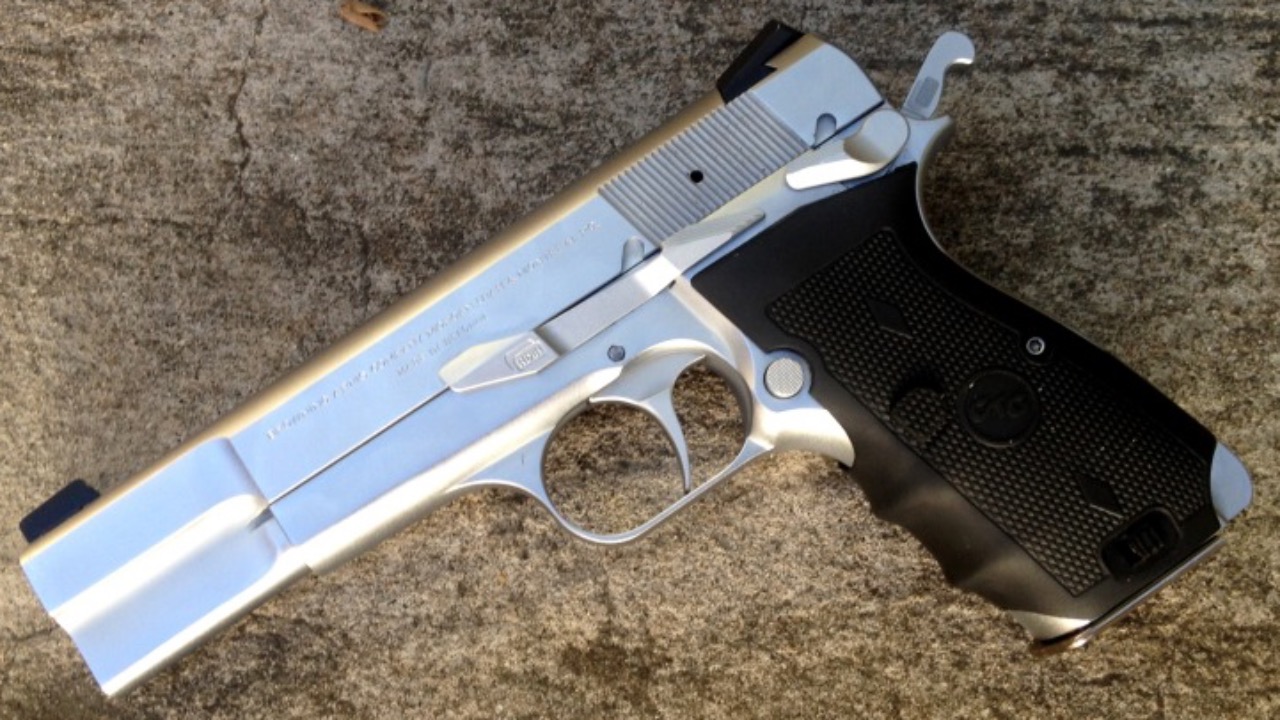
When you look at the Browning Hi-Power, you’re looking at one of the first successful high-capacity 9mm service pistols. Its double-stack magazine set the stage for what would later become standard capacity in duty and defensive guns. Before that, most service pistols carried far fewer rounds.
You still see its influence in modern double-stack grip profiles and magazine geometry. The Hi-Power’s locked-breech design and single-action trigger also set a benchmark for shootability. Even current metal-frame competition pistols owe a nod to the way this gun balanced capacity, ergonomics, and practical accuracy in one package.
CZ 75
The CZ 75 didn’t get widespread attention in the U.S. right away, but its internal slide rails and low bore axis quietly shaped a generation of pistols. By riding the slide inside the frame rather than outside it, the design lowered the reciprocating mass and changed how recoil impulse felt.
Modern competition pistols often chase that same flat-shooting characteristic. The CZ 75’s double-action/single-action trigger system, combined with its high-capacity magazine, also influenced countless European service pistols. If you shoot a metal-frame DA/SA gun today that tracks smoothly and sits low in your hand, you’re seeing the CZ’s fingerprints.
Walther P38
The Walther P38 introduced a double-action/single-action trigger system to military service on a large scale. That concept—long, heavier first pull followed by lighter subsequent shots—became a defining feature for duty pistols through the late 20th century.
You can trace that lineage through generations of service handguns. The P38 also used a locking block system that inspired later designs. While modern striker-fired guns dominate today, the DA/SA concept still shows up in duty and defensive pistols. That first heavy pull as a safety measure? The P38 helped make that mainstream.
Colt Single Action Army
The Colt Single Action Army may look like a relic to some, but its grip angle and natural pointability still influence modern handgun ergonomics. Pick up certain contemporary pistols and you’ll notice how naturally they align with your eye. That instinctive feel didn’t happen by accident.
The SAA also defined what a reliable, durable sidearm looked like for generations. Its strong lockwork and straightforward manual of arms shaped expectations for mechanical dependability. Even in an era of red dots and polymer frames, designers still study how that revolver sat in the hand and managed recoil with a high bore axis.
Luger P08
The Luger P08 stands out for its toggle-lock system, but its lasting impact goes deeper. Its grip angle is often cited as one of the most intuitive ever put on a handgun. That angle influenced later semi-automatic pistols and continues to spark debate among shooters comparing modern designs.
It also helped popularize the 9x19mm cartridge, which is now the dominant handgun caliber worldwide. Without the Luger’s early adoption and military service, the 9mm might not have gained traction as quickly. When you load a modern 9mm service pistol, you’re participating in a lineage that runs straight through that distinctive toggle-top.
Smith & Wesson Model 10
The Smith & Wesson Model 10 doesn’t get flashy attention, but it shaped the service revolver era. Its swing-out cylinder and double-action trigger became the standard configuration for American law enforcement sidearms for much of the 20th century.
Even as semi-autos took over, the Model 10’s trigger system and cylinder release design influenced revolvers that followed. Modern defensive revolvers still echo its layout. If you run a compact .38 Special today, you’re handling a direct descendant of the mechanical ideas that made the Model 10 a duty staple for decades.
Browning 1911
It’s impossible to talk about influence without bringing up the 1911. Its short-recoil, tilting-barrel system became the blueprint for the majority of modern semi-automatic pistols. Strip down most centerfire handguns today and you’ll recognize the basic mechanics.
The 1911 also set expectations for trigger quality. That straight-to-the-rear single-action pull remains the benchmark many shooters compare against. Grip safeties, thumb safeties, and even slide stop placement on modern pistols trace back to this design. Over a century later, it still shapes how engineers think about reliability, control, and shootability in a fighting handgun.

Asher was raised in the woods and on the water, and it shows. He’s logged more hours behind a rifle and under a heavy pack than most men twice his age.