Fourteen remarkable facts about the American bald eagle
The American bald eagle is one of the world’s most recognizable animals, yet much of what people think they know about this raptor is incomplete or simply wrong. Behind the patriotic imagery is a complex predator with unusual habits, extraordinary senses, and a conservation story that reshaped environmental law. These fourteen facts trace how the species became a national icon and why its biology still surprises scientists and birdwatchers alike.
From its not-actually-bald head to its record-breaking recovery from the brink of extinction, the bald eagle combines spectacle with resilience. Learning how it lives, hunts, mates, and migrates offers a sharper view of both the bird itself and the ecosystems that now depend on its return.
Size, strength, and that not-so-bald head
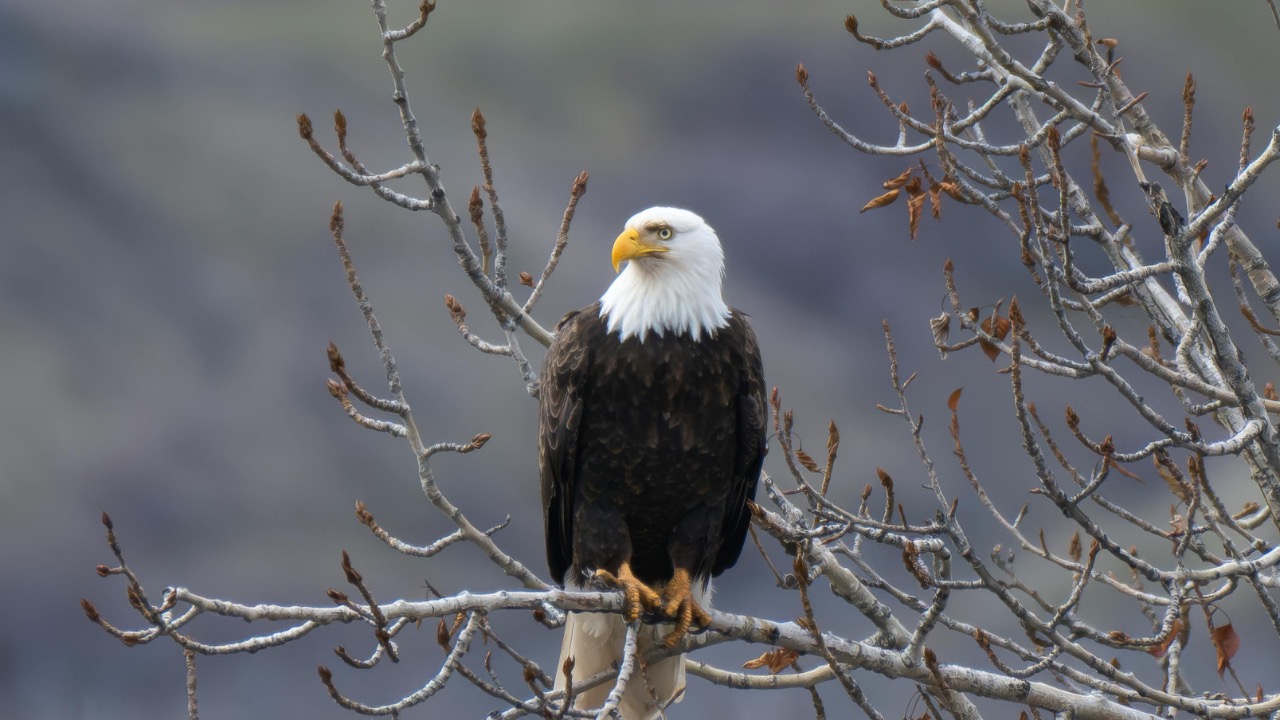
The bald eagle is a heavyweight among birds of prey, and the size difference between the sexes is striking. According to federal Physical Characteristics, bald eagles are large, powerful birds, with females sometimes reaching a wingspan of up to 8 feet, while Male birds typically span closer to 6 feet. Females may weigh as much as 16 pounds, which makes them significantly heavier than the smaller Male birds that share their territories. Field guides further refine the picture, describing Both sexes with a Length between 71 and 96 centimeters and a wingspan of about 2.04 meters, figures that underline just how imposing a mature bird appears in flight in the Description section.
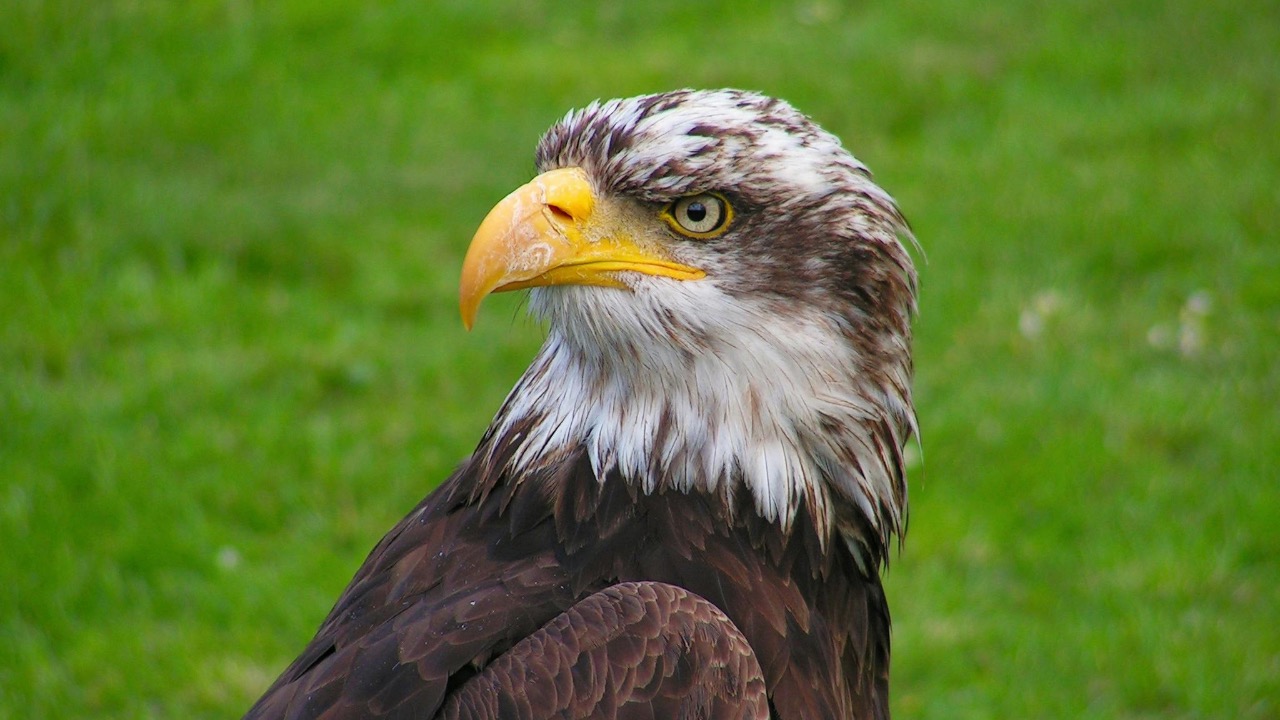
Despite the name, the head of an adult is fully feathered, a bright white cap that contrasts with the dark chocolate body. The word Bald is widely explained as a deviation of an older term meaning white-headed, a point repeated in several modern Fun Facts lists and in children’s references that trace the name to an old English or Engli root for “white.” Juveniles, by contrast, are mottled brown and do not develop the iconic white head and tail until they are several years old, which means many people have probably seen young bald eagles without realizing it. Even the basic identity of the national bird can be confusing in popular culture, as sound designers often substitute the shrill call of a smaller hawk for the more staccato ki-ki-ker vocalization described in official Bald profiles.
Vision, flight, and hunting tactics
The bald eagle’s reputation as a top predator begins with its eyes. A human with perfect eyesight is said to have 20/20 vision, while Jun reports on research indicating that Bald eagles can reach 20/4 or 20/5, meaning they can see four or five times more clearly than a person at the same distance. Each eye can focus independently, which allows a bird to track prey while still monitoring the wider landscape, and that visual acuity extends to spotting fish or waterfowl from hundreds of feet above a lake in the nine bald eagle overview. This combination of telescopic vision and a high vantage point makes the species a master of ambush, capable of identifying a vulnerable fish near the surface of the water long before it has any chance to flee.
Once a target is locked in, the bird’s flight performance takes over. Bald Eagles can soar at around 30 miles per hour using powerful wing beats, according to a detailed Bald Eagles FAQ, and they can dive much faster when they stoop toward prey. Some popular accounts of eagle behavior, including a Jan short video that lists Amazing Facts About Bald Eagles, claim that eagles reach speeds of 200 m per hour in steep dives, although such figures are often debated among field biologists. What is clear is that the bird’s long, broad wings and large tail give it both lift and maneuverability, allowing it to skim the surface of rivers, snatch fish with its talons, and climb back into the air in a single smooth motion.
Diet, scavenging, and surprising behavior
Popular mythology casts the bald eagle as a tireless hunter that always takes its own prey, but field observations suggest a more opportunistic strategy. Detailed behavioral summaries describe how Even though the bird is a symbol for freedom in the United States, it is known for harassing smaller birds and stealing the fish they have already caught, a habit that has been documented by observers working with the Cornell Lab of Ornithology and summarized in Even though they style explainers. Bald eagles will also feed on carrion when fresh kills are scarce, particularly in winter, which makes them both predators and scavengers depending on the conditions.
Their menu extends far beyond fish. Reports compiled in Fascinating Bald Eagle Facts That Make It The Coolest Bird describe how Few other raptors match their willingness to target waterfowl, small mammals, and even reptiles when the opportunity presents itself in Fascinating Bald Eagle. On coastal shorelines, they are frequently seen patrolling beaches for washed-up carcasses, while inland populations may key on spawning runs of salmon or concentrations of ducks. This flexible diet helps explain how the species could rebound once pesticides were restricted and habitat protections expanded, since it can pivot quickly to whatever prey is most abundant in a given watershed.
Mating for life, massive nests, and site fidelity
Few aspects of bald eagle life capture public imagination more than their pair bonds. Conservation groups that focus on the national bird emphasize that Bald eagles are generally monogamous, often mating for life, and that Pairs return to the same partner annually to breed, a pattern highlighted in a Jan feature on Celebrating Our National. Social media clips from field projects add more color, with one Jan reel explaining that Bald pairs reinforce their bond through synchronized flights and mutual nest building. The American Bald Eagle is renowned for its remarkable fidelity to a single nesting site, returning year after year to the same mature tree or cliff ledge that The American Bald Eagle pair has painstakingly built and maintained over decades, according to a detailed description on a Pennsylvania nest watch page that highlights American Bald Eagle.
The nests themselves are among the largest structures built by any bird. Each year, partners add new sticks and fresh vegetation, which can eventually produce a platform wide enough to hold a person and heavy enough to test the strength of the supporting branches. A Jan 8, 2026, Instagram reel notes that Bald pairs that are seen bringing sticks to the same nest season after season are displaying a clear sign of an established pair, and biologists use that behavior as a shorthand for long-term territory occupancy in Pairs return. Site fidelity has a cost, since storms or human disturbance that damage a long-used nest can disrupt breeding for an entire season, but it also allows conservation managers to map and protect critical territories year after year.
From near extinction to conservation icon
The bald eagle’s status as a national symbol has not insulated it from human impact. By the middle of the twentieth century, habitat loss, persecution, and pesticide contamination had pushed the species in the lower 48 states to the edge of collapse, prompting emergency protections and intensive monitoring. A later assessment by the Fish and Wildlife Service found that by 2020 there were about 316,700 bald eagles across the contiguous United States, roughly four times their numbers a decade earlier, according to a detailed analysis of how the Fish and Wildlife tracked the rebound. Another review, published by Defenders of Wildlife, reported that in 2021 the U.S. Fish and Wildlife Service estimated that in the lower 48 there were 316,700 individuals, of which 71,467 were breeding pairs, a figure that appears in a Fish and Wildlifeconservation success story.

Leo’s been tracking game and tuning gear since he could stand upright. He’s sharp, driven, and knows how to keep things running when conditions turn.