Lawmakers revisit concealed carry rules as permit disputes rise
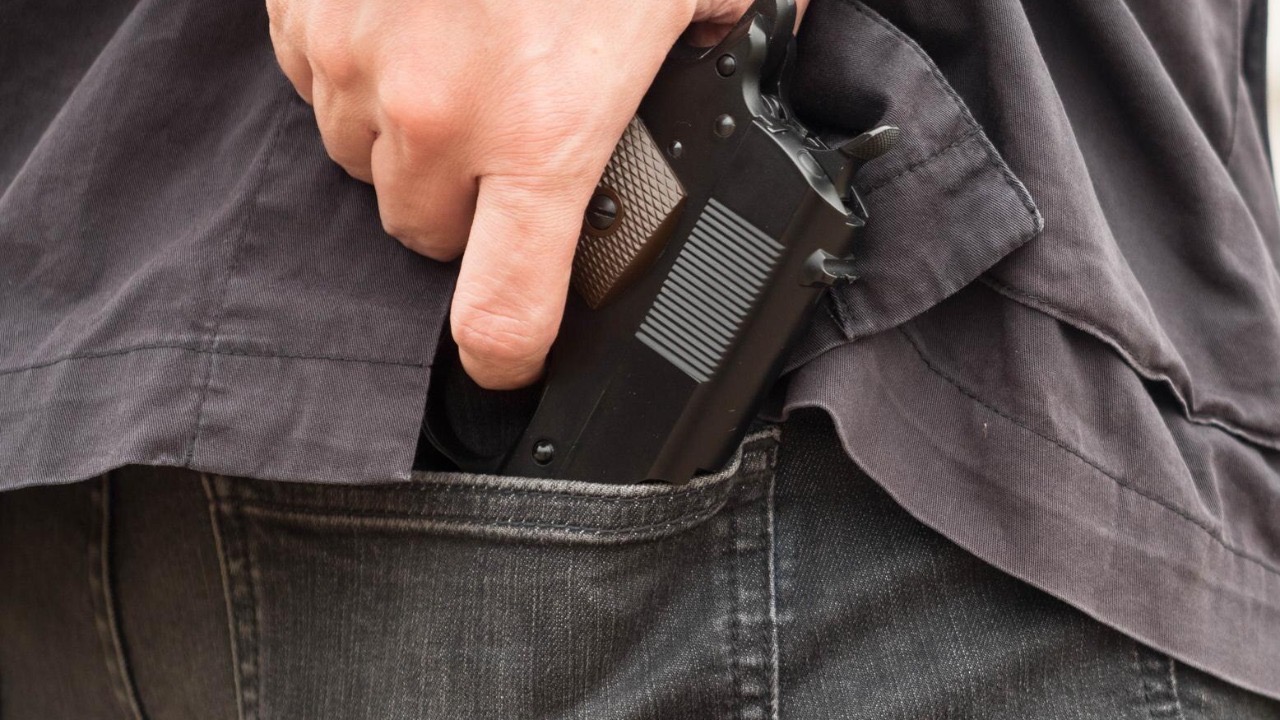
Lawmakers across the country are reopening fights over who can carry a hidden firearm in public, and under what conditions, as disputes over permits and enforcement accelerate. From statehouses to federal courts, the rules that once quietly governed concealed handguns are being rewritten, tested and, in some cases, stripped away entirely.
The renewed clash over concealed carry is driven by a mix of Supreme Court precedent, partisan campaigns and a growing divide between states that want tighter vetting and those that want to remove permits altogether. The result is a patchwork that leaves gun owners, police and judges wrestling with sharply different visions of the Second Amendment.
The Bruen shock and its aftermath
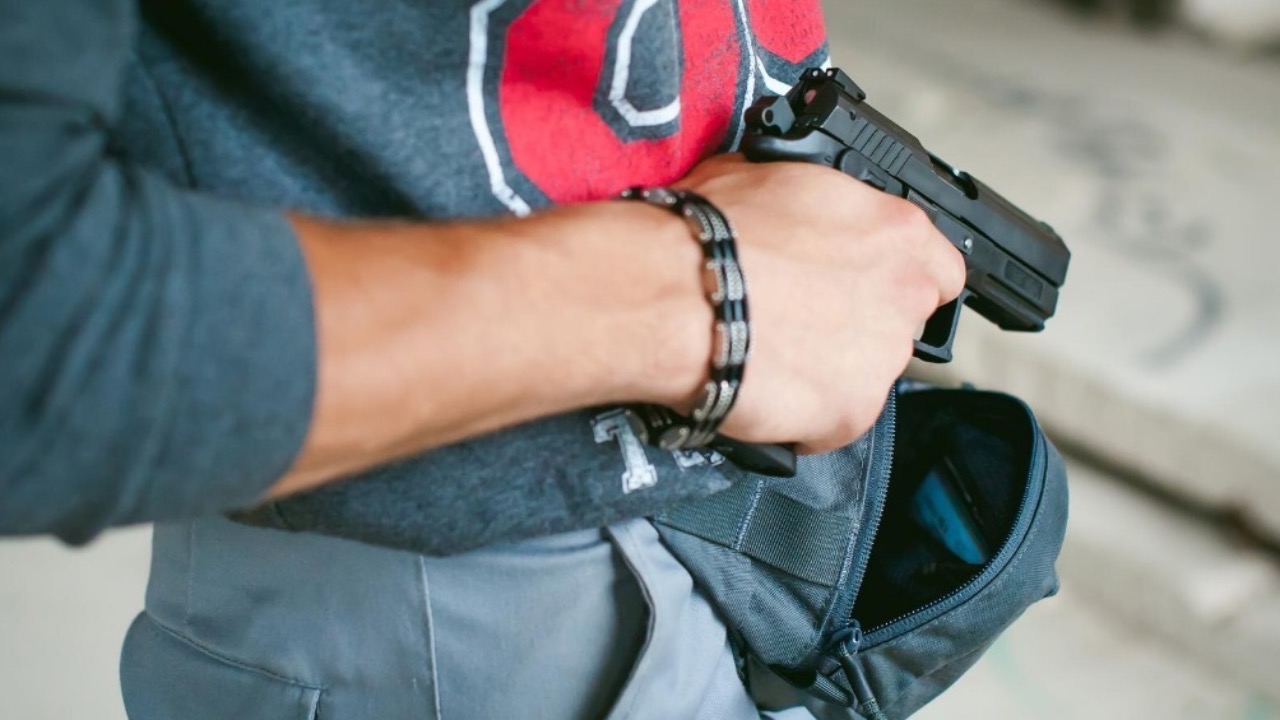
The modern fight over carry permits traces directly to the Supreme Court, which in a 6-3 decision struck down New York’s requirement that applicants show “proper cause” to carry a concealed handgun in public. In that ruling, the Supreme Court held that New York’s discretionary system placed an unconstitutional burden on law-abiding citizens and reset how lower courts must evaluate gun laws, focusing on historical tradition rather than contemporary policy arguments, as detailed in coverage of the Jun decision.
Legal analysts quickly warned that the same reasoning could reach beyond carry permits to other licensing systems, including permit-to-purchase laws that require buyers to clear extra hurdles before acquiring a firearm. Those concerns were spelled out after the Supreme Court’s move in June, when experts said the reasoning in the Bruen ruling threatened permit-to-purchase schemes as well, a point examined in detail in an analysis of SCOTUS’s Bruen Ruling.
New York responded with a new statute that tried to rebuild its licensing system around the Court’s historical test, defining sensitive locations and imposing fresh vetting rules. That updated law has already been back before federal judges, who have been sorting through which modern restrictions have enough historical analogues from before or soon after the Civil War to survive, a debate tracked in litigation over post Civil War.
States tighten rules while courts push back
Some states have tried to adapt to Bruen by codifying detailed standards for who may carry and where. In New Jersey, the Senate and General Assembly of the State of New Jersey advanced Bill A4769, which opens with a section labeled “Be It Enacted” and sets out findings in which The Legislature declares its intent to regulate public carry in response to the Supreme Court. The measure, described in the official text of Bill A4769, adds a new section that spells out sensitive locations and training rules, signaling how far a blue state is willing to go while staying inside the new constitutional framework.
New York has taken a similar path, with lawmakers moving to define “sensitive locations” more precisely and layering in extra steps for obtaining a carry permit. Those steps include new categories of places where firearms are banned and additional disclosure obligations, all framed as an effort by Lawmakers to balance individual rights with public safety concerns.
Courts, however, have not given states a free hand. The Second Circuit Court of Appeals ruled on Friday against portions of New York’s revamped gun laws, including a rule that required permit applicants to disclose their social media accounts. That decision from The Second Circuit Court of Appeals underscored skepticism toward some newer vetting tools and left other parts of New York’s regime intact, as described in reporting on New York’s law.
Another federal court went further and blocked enforcement of the social media requirement outright, describing it as a major piece of New York’s post Bruen framework that had raised constitutional concerns from the moment it was introduced. That injunction against the online disclosure rule, described in detail in litigation over Another major piece, highlights how judges are trimming the most aggressive post Bruen experiments.
Red states race to drop permits
While blue states refine permit standards, conservative legislatures are moving in the opposite direction. In North Carolina, the NC House has voted to roll back concealed carry rules, with supporters pointing out that nearly all other Republican led states in the United States have already repealed similar permitting requirements. That push, framed as pressure on GOP lawmakers to follow suit, is detailed in coverage of how Nearly all other states have already moved.
In Michigan, a group of Republicans in the state house has introduced bills to end the concealed carry permit requirement, arguing that Michigander Second Amendment rights are being infringed as long as residents must seek state permission to carry. Sponsors say Michigander Second Amendment protections should follow the person rather than the permit, an argument captured in coverage of Republicans and echoed in a parallel report where a group of Republicans in the state house again describes Michigander Second Amendment rights as under threat while unveiling similar legislation, as seen in another broadcast.
Elsewhere, a group of Republican lawmakers has unveiled a bill package to remove the permit requirement to carry a concealed pistol, presenting it as a straightforward expansion of gun rights. That proposal, outlined in coverage of Republican lawmakers, reflects a broader trend in which red states frame licensing itself as an infringement rather than a safety tool.
Evidence and warnings about permit-free carry
Public health advocates and researchers are pushing back with data. A major synthesis of gun policy research has found that some states require people to demonstrate a need to carry a concealed weapon or allow law enforcement discretion in deciding who may receive a permit, and that changes to these rules can affect violent crime and other outcomes. Those findings, summarized in a review that begins by noting that Jan assessments show some states still rely on discretionary standards, are laid out in an analysis of Some states require.
Advocacy groups point to real world shifts when states drop permits. One organizer described learning that her state would probably pass a law allowing concealed carry with no permit and warned that it would not be the first to see higher rates of violence after such a change, including an increase in firearm workplace homicides. That warning, shared in a Dec post that summarized “everything we know” about outcomes when permitting is removed, appears in a social media discussion hosted by Dec advocates.
Medical groups have weighed in as well, linking permissive carry policies to broader public health risks. In one analysis, an editor noted that by a 234 to 193 vote in the House of Represe, lawmakers in Congress adopted a resolution in the wake of the Supreme Court’s Jun ruling that criticized the decision and warned about its impact on gun violence, as described in coverage of how the 234 to 193 tally reflected a sharp partisan divide.
National reciprocity and interstate friction
With state rules moving further apart, some lawmakers in Washington want a federal override. The Constitutional Concealed Carry Reciprocity Act of 2025, introduced in the 119th Congress, would establish a federal statutory framework that lets people carry or possess concealed firearms across state lines if they are allowed to do so in their home state. The bill asserts that states must respect the right established by this bill, effectively treating a home state permit as valid nationwide, according to the official summary of the Constitutional Concealed Carry proposal.
Opponents argue that such reciprocity would drag permissive standards into states that have chosen stricter vetting, while supporters say it would protect travelers from criminal liability when they cross invisible borders. The conflict is not hypothetical. In New England, Massachusetts’ top court upheld the arrest of a New Hampshire gun owner who crossed into the state with a firearm, even though the owner relied on a permit that was valid back home. The decision referenced the earlier Supreme Court ruling that declared New York’s requirement for “proper cause” unconstitutional and described it as an overly restrictive burden on law abiding citizens, as summarized in the account of how New York’s requirement shaped the debate.

Asher was raised in the woods and on the water, and it shows. He’s logged more hours behind a rifle and under a heavy pack than most men twice his age.