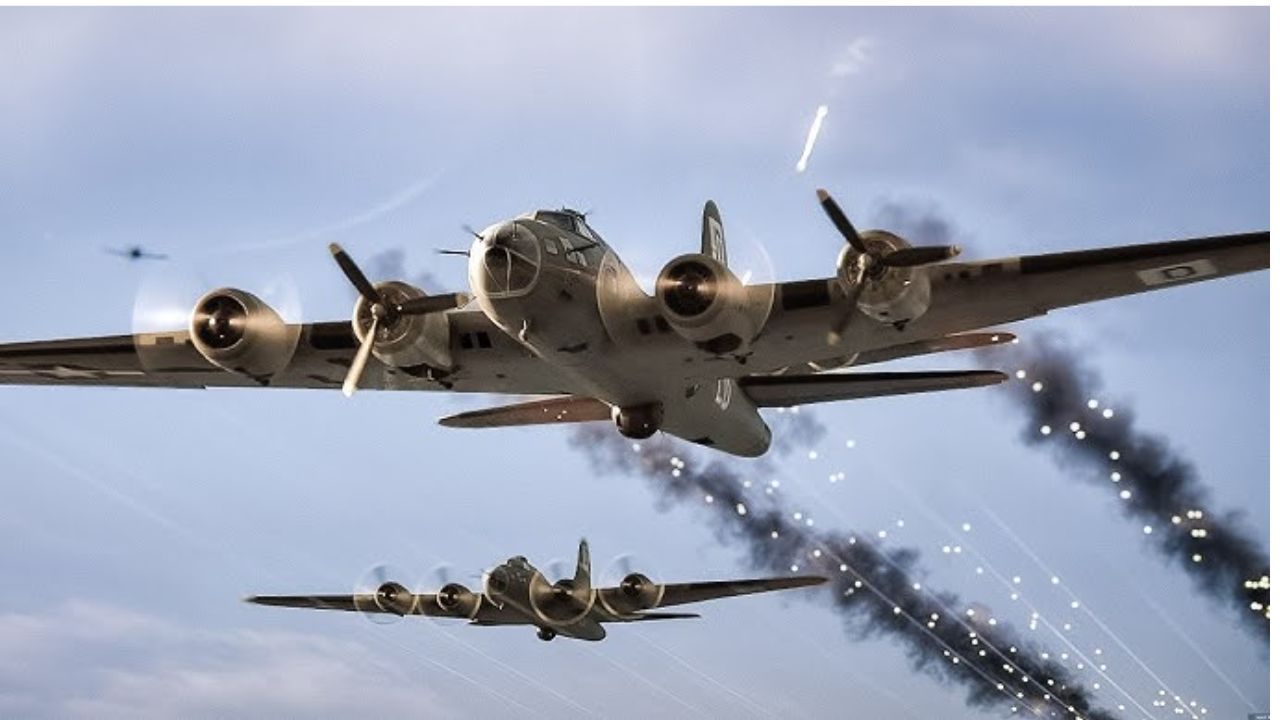
The Bloody 100th: 13 B-17s took off, only one made it back
The 100th Bomb Group of the United States Army Air Forces earned its grim nickname in a single morning of combat, when 13 B-17s lifted off for Germany and only one came back. That mission, part of a wider Allied effort to batter German industry and morale, turned a hard-fighting unit into a symbol of sacrifice. More than eight decades later, the story of that lone survivor still shapes how the air war over Europe is remembered.
The unit that became “The Bloody Hundredth”
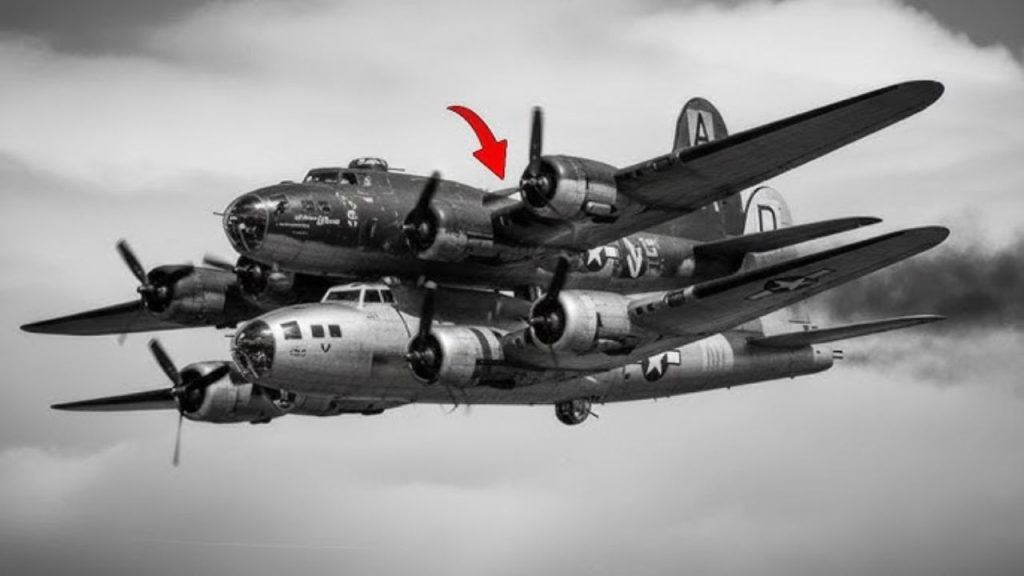
The 100th Bomb Group belonged to the heavy bomber arm of the Army Air Forces, flying B-17 Flying Fortresses from bases in Britain against targets deep inside Germany. Within the Eighth Air Force, the Group soon stood out for the scale of its losses. Veterans and historians trace the origin of its nickname to a period the Eighth Air Force later called Black Week, when sustained daylight raids brought devastating casualties.
On one of those missions, the Group sent 13 aircraft into combat and saw only a single B-17 return to base. Commenters and former crew families have remarked that when a unit sends out 13 planes and crews and only gets 1 back, the Group almost inevitably acquires a nickname like the Bloody 100th. A discussion among enthusiasts, including Neal Jefferis and Dave Klingensmith When, captures how that loss pattern hardened into legend among those who study the air campaign.
The 100th Bomb Group flew as part of a broader Allied strategy that aimed to destroy German industrial capacity and break the enemy’s ability to wage war. That strategy relied heavily on formations of B-17s and B-24s that crossed hostile airspace in daylight, accepting severe risk from fighters and flak in exchange for more accurate bombing of factories, rail yards, and oil facilities. With its repeated exposure to heavily defended targets, the 100th became one of the most famous of these units.
Targeting the Ruhr Valley and worker housing
One of the most controversial aspects of the Allied air campaign was the decision to strike not just factories but also the homes of those who worked in them. Historians have described how planners justified attacks on worker housing by arguing that disrupting the lives of railway and industrial employees would cripple the transport network and production chain inside Germany. A detailed examination of the air war explains that by targeting the homes of railway workers, Allied leaders believed they were disrupting Germany’s railways, even as others condemned the human cost of such raids on German cities like Germany.
The 100th Bomb Group took part in this strategy. Over the industrial heartland, its B-17s were tasked with hitting facilities and neighborhoods that supported the war machine. One account describes the Group targeting worker’s housing in the Ruhr Valley, a dense industrial region that included vital steel and coal operations. The source notes that the Group launched 13 planes on such a mission, with one flown by a reflective and scholarly 1st Lt, a detail that hints at the mix of youth and intellect inside those aluminum fuselages. The Ruhr Valley, crisscrossed by canals and rail lines, represented the kind of high-value objective that justified repeated, punishing sorties.
These raids were not only about destroying buildings. They were meant to grind down the German system that kept trains running, coal moving, and armaments flowing to the front. The men of the 100th Bomb Group knew that their targets often sat in the middle of civilian districts. That knowledge added a moral weight to missions already framed by the expectation of heavy losses.
Black Week and the road to Münster
The mission that would cement the Bloody 100th reputation came in the middle of a brutal sequence of operations. Veterans later marked that period as Black Week, a stretch of raids when the Eighth Air Force pressed deep into German airspace despite intense opposition. A commemorative post notes that 82 years before its writing, on October 8th 1943, Black Week began for the Eighth Air Force, setting the stage for the disasters that followed for units like the 100th Bomb Group.
Within days, the Group was ordered to join an Allied bombing raid on Münster, a city in northwestern Germany that combined rail links, industry, and administrative functions. According to a detailed mission summary, the Group put up 18 aircraft along with 2 from the 390th BG for the attack on Munster. The wider formation included other Bombardment Group elements, but the 100th’s contingent would suffer disproportionately.
Another account of the same operation explains that the “pass” in question was an Allied bombing raid on Münster, Germany, and that of the 18 aircraft supplied by the United States Army Air Forces 100th Bomb Group, only a single bomber made it back to base. This statistic helps explain how the Group’s reputation as the Bloody Hundredth took hold. The combination of deep penetration into Germany, limited fighter escort, and coordinated Luftwaffe interception created conditions in which entire squadrons could be shredded in a single mission.
Thirteen B-17s into a bright blue sky
Within that larger raid, a subset of the Group’s force illustrates the horror in stark numbers. One narrative describes how, on the mission to Münster, 13 planes of the 100th Group took off into what observers described as a bright blue sky. The formation climbed and assembled over England, then crossed the North Sea toward Germany. Of the 13 planes of the 100th Group that took off for Münster, only one, a B-17 nicknamed Rosie’s Riveters, returned to base. Ground crews who waited on the runway watched in disbelief as the sky remained empty, then finally saw a single bomber limp home.
The phrase “disaster in a bright blue sky” captures the contrast between the clear weather and the violence that unfolded at altitude. Clear conditions favored bombing accuracy but also exposed the B-17s to enemy fighters. German interceptors could see the formations from far away and vector in repeatedly. The 100th’s aircraft, locked into tight box formations to concentrate defensive fire, had little room to maneuver once the attacks began.
Reports from the mission describe wave after wave of fighters slashing through the bomber stream, followed by heavy flak as the surviving aircraft approached the target. Crews who flew that day recalled seeing aircraft explode, fall in flames, or peel away trailing smoke. The loss of 12 out of 13 planes in that part of the Group’s formation was not just a statistic. It meant that entire crews disappeared in minutes, leaving empty hardstands back at base and stunned comrades trying to process the scale of the loss.
The lone survivor and its crew
The single returning aircraft from that 13 plane contingent became an instant legend on the airfield. Accounts identify it as Rosie’s Riveters, a B-17 that staggered back with severe damage and wounded men aboard. Those on the ground saw it approach low, engines faltering, and then skid to a halt with its landing gear barely holding. The survival of any aircraft from that slaughter felt miraculous to the crews who watched.
Another detailed narrative focuses on a different surviving B-17 from the same raid, Royal Flush, which was piloted by Robert “Rosie” Rosenthal. In that account, the aircraft landed with wounded crewmen aboard, and Rosenthal jumped out of his aircraft to check on his men and report what had happened over the target. The description of the aircraft skidding to a halt, then the pilot immediately turning to his crew, illustrates the mix of professionalism and shock that marked the end of such missions. Rosenthal’s actions after landing became part of the lore that surrounds the 100th Bomb Group’s experience at Münster.
These stories, whether centered on Rosie’s Riveters or Royal Flush, share a common thread. A lone B-17, riddled with holes and carrying injured airmen, represented not just survival but also testimony. The crew could describe the attack patterns, the flak bursts, the moment when formation mates vanished. Their debriefings provided the only firsthand account of what had happened to the rest of the Group in the target area.
How the nickname “Bloody 100th” was born
The Münster raid did not occur in isolation. The 100th Bomb Group had already suffered heavy casualties on earlier missions, and Black Week compounded that toll. Yet the image of sending out 13 planes and seeing only one return crystallized the Group’s reputation. A later summary of the air war notes that the birth of the moniker the Bloody 100th came about on October 10th 1943, describing it as the third day of relentless attacks that left the unit with staggering losses. The phrase “Bloody 100th” captured both the casualty count and the sense that fate had singled the Group out.
Online discussions among historians and enthusiasts echo this interpretation. One contributor points out that when a unit experiences a pattern where 13 planes depart and only 1 comes back, it is no surprise that a label like Bloody 100th sticks. Another observer connects the nickname directly to the Münster mission, arguing that the destruction of so many aircraft in a single raid cemented the Group’s identity within the Eighth Air Force and beyond.
Later retrospectives on the 100th Bomb Group describe how the unit endured staggering losses while continuing to fly deep penetration raids. A focused article on the Group explains that it became known as The Bloody Hundredth because of its casualty rate and the psychological impact of missions like Münster. These accounts emphasize that the nickname was not a piece of propaganda invented after the fact. It emerged organically from the way airmen talked about the unit on the ground and in mess halls across the bomber bases of Britain.
From wartime memory to modern retellings
The story of the 100th Bomb Group, and especially the mission where only one B-17 came home, has continued to attract attention in documentaries, books, and online media. A video titled When Only One B-17 Came Home has circulated widely, using animation and narration to walk viewers through the mission profile, the attack, and the desperate return of the surviving aircraft. The video invites viewers to Follow and Wishlist a related game on Steam, showing how digital creators now use interactive media to bring historical air combat to new audiences.
Other modern summaries on mainstream platforms revisit the same mission under headlines such as When Only One B-17 Came Home or How a single B-17 escaped certain death. One clip explains that on October 10, 1943, during the third day of continuous United States bombing raids, the 100th Bomb Group found itself at the center of a ferocious Luftwaffe response that left a single B-17 struggling back to base. These pieces often focus on the human experience inside the aircraft, describing gunners firing until their guns jammed, pilots wrestling damaged controls, and medics trying to stabilize wounded crewmen at altitude.

Leo’s been tracking game and tuning gear since he could stand upright. He’s sharp, driven, and knows how to keep things running when conditions turn.