How Carlos Hathcock tracked and eliminated two of Vietnam’s deadliest snipers
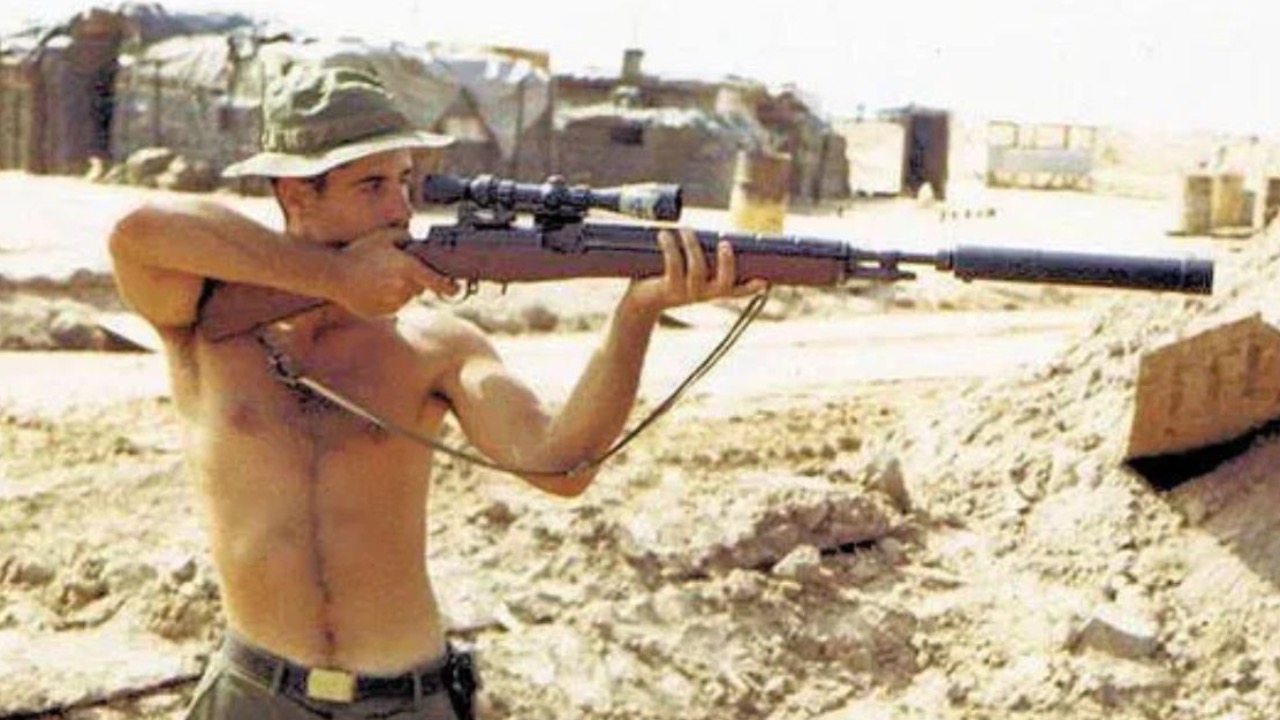
Carlos Hathcock grew up hunting in the woods of Arkansas before he ever picked up a rifle for the Marine Corps. By the time he reached Vietnam in 1966, he had already proven himself as one of the best shots the service had. Operating out of Hill 55 near Da Nang, he racked up confirmed kills that made him a target. The North Vietnamese and Viet Cong knew him as the White Feather because of the small plume he wore in his bush hat. They put a price on his head and sent their own skilled marksmen to hunt him down. Two of those stood out as among the most dangerous they had in the area. Hathcock tracked each one through the same jungle they used against American patrols. He studied their patterns, waited through long stretches of nothing, and took the shots when the moment came. Those encounters became part of the stories Marines still tell about patience and survival in a war that often felt invisible.
Learning the Jungle on His Own Terms
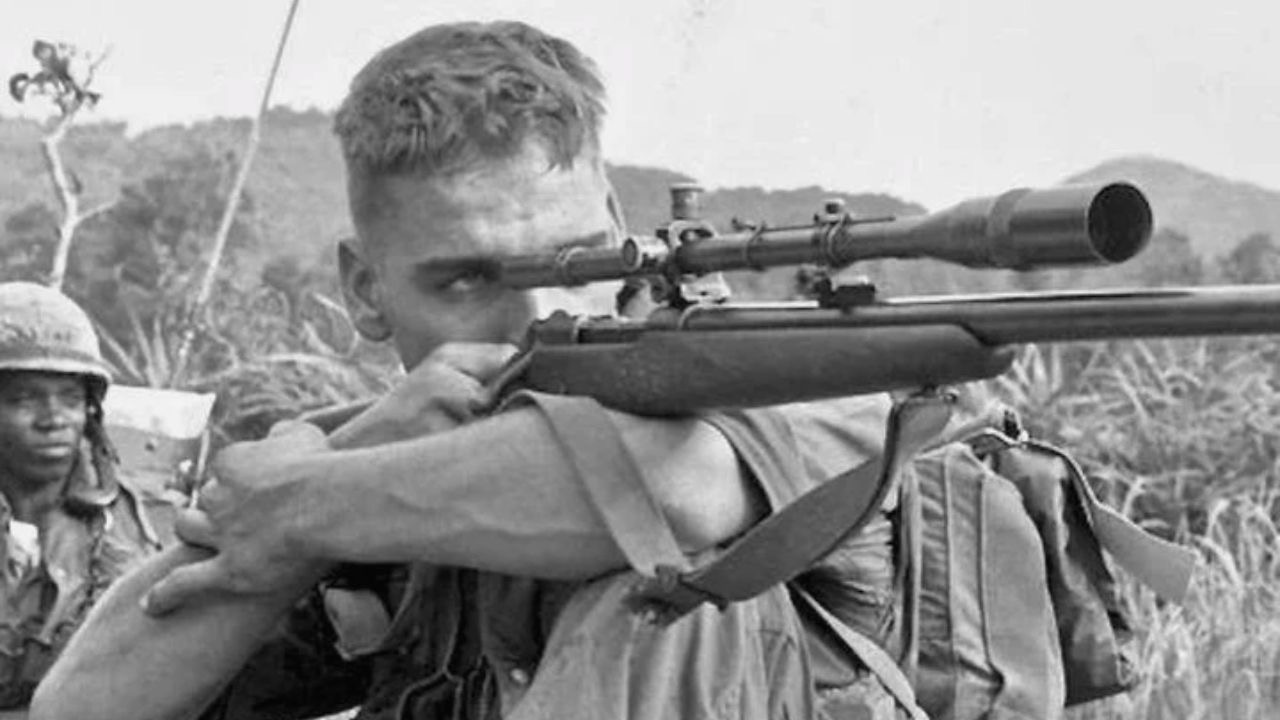
You step into the thick vegetation around Hill 55 and everything changes. Sounds carry differently, and movement has to slow to a crawl if you want to stay alive. Hathcock spent weeks learning exactly how the enemy moved through that terrain. He watched how patrols used the tree lines and how they set up positions to watch American bases. His spotter worked beside him, scanning for any sign of activity. They built hides that blended into the undergrowth so well that patrols sometimes walked right past without noticing. This was not about rushing in with firepower. It was about becoming part of the landscape for hours or days at a time. Hathcock kept his movements small and deliberate. He learned to read the wind, the light, and the way shadows fell across open patches. That knowledge gave him the edge when he started receiving reports about a particularly ruthless sniper operating in the same sector.
The Female Sniper Known as Apache
Reports filtered back to the Marine lines about a woman leading a small sniper team near Hill 55. She had a reputation for capturing soldiers and dragging out their suffering in ways that went beyond standard interrogation. Marines who heard the screams from her direction knew her by the name Apache. Hathcock took those accounts personally after one of her victims died within earshot of the wire. He and his spotter began piecing together her patterns from the timing of attacks and the locations of bodies. They noted how her group moved at dawn and dusk, sticking close to the trails that fed into the hills. This was not random harassment. She picked targets that would draw attention and then vanished back into the same dense cover Hathcock had come to know so well. He decided it was time to turn the hunt around.
Following Her Team for Days
Hathcock and his partner slipped out before first light and covered ground inch by inch. They avoided trails and stayed low whenever they heard voices. Over several days they closed the distance on the area where Apache’s platoon was last reported. They watched from a distance as the group paused near a small clearing. Movement gave them away at one point when one member stopped in a way that left no doubt about gender. Hathcock adjusted his position slowly, keeping his rifle steady against any branch that might shift. The wait stretched into hours while the platoon rested and prepared to move again. He kept his breathing even and his eyes on the spot where she had been. Every small sound from the jungle around them reminded him how close the whole group was. One wrong move and the roles would reverse in an instant.
The Moment the First Shot Landed
When the opportunity finally arrived, Hathcock took it without hesitation. He centered his scope on the figure he had tracked across the terrain and squeezed the trigger. The shot carried clean through the humid air and dropped her where she stood. The rest of the platoon scattered immediately, but the damage was done. Hathcock and his spotter held their position long enough to confirm the result before easing back toward friendly lines. That single round ended the threat she posed to Marines in the area. Word spread quickly through the units at Hill 55. The woman who had caused so much fear was gone. Hathcock did not celebrate or linger on the details afterward. He simply noted the kill in his log and prepared for whatever came next. The jungle had claimed another hunter, and the balance shifted for a short time.
Word of a New Threat Reaches the Lines
Not long after, intelligence pointed to another skilled sniper working the same region. This one was a man the Marines started calling Cobra. He had been sent specifically to find and eliminate Hathcock. Cobra began picking off Marines near the base in an effort to draw his target out into the open. Hathcock heard the reports and recognized the tactic. He had used similar methods himself. The enemy sniper was patient and methodical, leaving just enough evidence to show he was operating close by. Hathcock felt the shift in pressure immediately. This was no longer about random patrols or distant shots. It had become a direct contest between two men who understood each other’s craft. He and his spotter geared up once more, this time knowing the other side was watching for any sign of the White Feather.
Closing In on the Cobra Sniper
They moved out and began the slow process of stalking through the same stretches of jungle where Cobra had been active. Hathcock chose routes that kept them downwind and out of obvious sight lines. They paused often to listen for any unnatural quiet or the faint click of metal on metal. At one point a small mistake nearly cost them everything when Hathcock’s foot caught on a root. The sound carried, and Cobra fired in response. The bullet struck nearby but missed. Both sides adjusted and circled back around the area. Hathcock kept his eyes moving across every possible hiding spot. He knew the other man would be doing the exact same thing. The sun shifted and light began to play differently through the leaves. That change in angle revealed what he had been waiting for.
A Glint Decides the Duel
A brief flash caught Hathcock’s attention, the kind made by a scope catching the sun at the wrong moment. He did not hesitate. He lined up his own rifle and sent the round straight at the reflection. The bullet traveled the length of Cobra’s scope and struck him in the eye, killing him instantly. Hathcock and his spotter moved in carefully afterward and recovered the enemy rifle as proof. The duel that had stretched across days ended in a single precise shot. Cobra would not be hunting Marines anymore. Hathcock returned to base with the knowledge that he had faced the best the other side had sent and come out ahead. Those two encounters, against Apache and then Cobra, showed how personal the sniper war could become. They also left a mark on Hathcock that stayed with him long after he left Vietnam.

Asher was raised in the woods and on the water, and it shows. He’s logged more hours behind a rifle and under a heavy pack than most men twice his age.