Which calibers keep zero when a rifle lives in a truck or side-by-side
When a rifle lives behind a truck seat or in the rack of a side-by-side, it takes more abuse in a week than many safe queens see in a year. Potholes, washboard roads, temperature swings and constant vibration all conspire to knock a scope off target. The question most owners really care about is simple: which calibers, and which setups, actually keep their zero in that environment.
To answer that, I have to look beyond caliber charts and into how recoil, mounting hardware, rifle design and even air density interact. The pattern that emerges is clear enough: light recoil and solid mounts matter more than raw power, but certain cartridges and platforms are inherently friendlier to a hard‑ridden truck or UTV gun than others.
Why “truck life” is brutal on zero
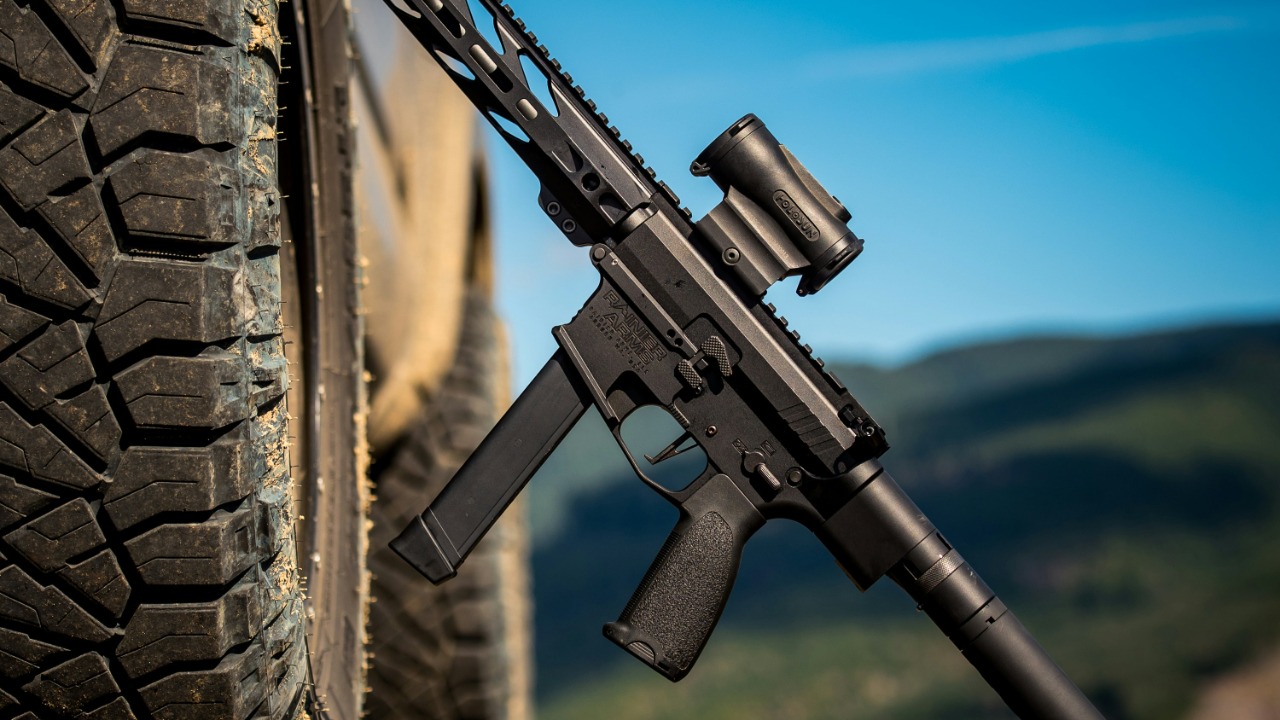
The first thing I weigh is not caliber at all, but the mechanical reality of a rifle bouncing around in a vehicle. Every bump flexes stocks, rattles optics and hammers screws. Scope rings and bases that are marginal on a bench can start to creep when they are hit with both repeated recoil and constant vibration, which is exactly the abuse a behind‑the‑seat rifle sees. One manufacturer notes that Our rings and bases are specifically designed and tested to handle repeat recoil and heavy usage, precisely because lesser hardware can slip and let the optic walk under stress.
On top of that, there are several distinct ways a rifle can lose zero that have nothing to do with the cartridge. Loose screws, misaligned bases and soft materials all fall under basic Mounting Issues such as Torque, Alignment and Materials. Internal optic failures also show up as wandering impact, summarized bluntly as “There Might Be Some Internal Failure.” In a truck or side‑by‑side, all of these problems are more likely to surface, which is why I treat rugged mounts and a proven scope as the non‑negotiable foundation before I even start comparing calibers.
Light recoil, stable zero: rimfire and mild centerfire
Once the hardware is squared away, recoil becomes the next big variable in whether a rifle holds its point of impact. A heavy magnum slamming into its mounts over and over will eventually find any weakness, while a mild cartridge barely nudges the system. Reporting on truck rifles highlights exactly this tradeoff, describing how Light Recoil is directly tied to a Stable Zero when the gun lives in a vehicle. The logic is straightforward: less violent rearward movement means less chance of rings slipping, bases shifting or stocks compressing.
That is why the same analysis singles out “Light Recoil, Stable Zero, The Case for Rimfire and Mild Centerfire” as a sweet spot for truck duty. If a rifle is mostly for varmints, pests or informal targets, a .22 LR or other rimfire is far easier to keep on target than a thumping big‑game round, especially when the gun is constantly stashed behind a seat. The piece notes that a compact rimfire is also physically easier to stash behind a, which reduces the odds of it being banged around or used as an improvised pry bar for gear.
Real‑world UTV choices: why some shooters pick .22
Theory is one thing, but I pay close attention to what experienced UTV owners actually run every day. In one detailed account of a side‑by‑side setup, the writer explains, “Here is what I came up with for my needs,” before walking through the decision process. The final choice for a daily‑toting rifle in that UTV was a Savage Model A22 semi‑automatic .22 LR, chosen precisely because it could ride along all day without beating itself or its optic to death.
That same UTV discussion, which refers to the vehicle simply as a UTV, underscores how a low‑recoil rimfire can cover a wide range of real‑world tasks, from dispatching pests to dealing with small predators, while still holding zero despite constant vibration. The author, identified as Sam, notes that within that rifle’s domain “all bets” are effectively covered, which is another way of saying the cartridge and platform are matched to the environment. For a reader who wants a gun that simply works every time the door opens, that kind of lived‑in endorsement of a .22 LR truck or UTV rifle carries more weight than any ballistic table.
AR‑15s, pistol calibers and the middle ground
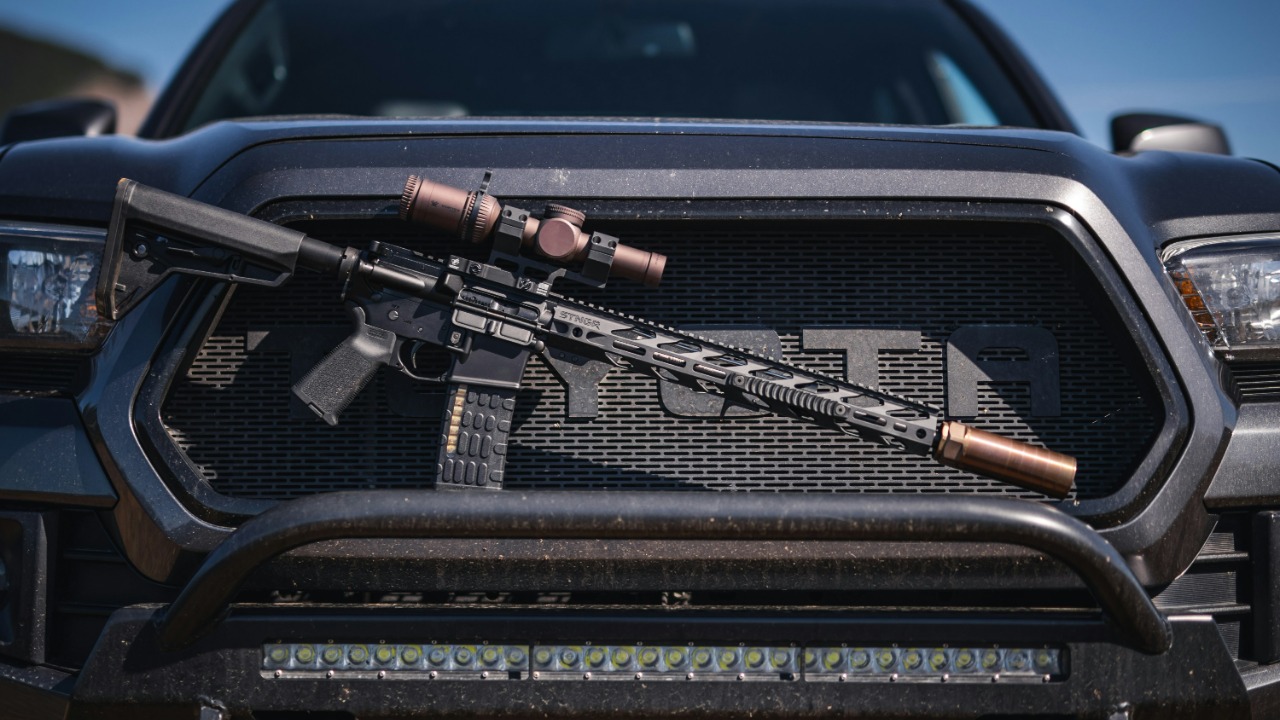
Not everyone is content with rimfire performance, especially in ranch country where coyotes, feral hogs or even two‑legged threats are part of the calculus. That is where intermediate cartridges and pistol calibers come in as a middle ground between feather‑light recoil and serious terminal effect. The AR platform in particular has become a default choice, with one analysis flatly stating that The AR‑15 stands out as a vehicle gun because it combines power, reliability and versatility. In practical terms, that means a 5.56 or .223 rifle that is compact enough to maneuver inside a cab, yet soft‑shooting enough that it does not punish mounts the way a .300 magnum would.
There is also a growing niche for pistol‑caliber carbines in this role, particularly AR‑9 style builds. A detailed Pistol Caliber Carbine lists platforms like the Sig Sauer MPX, specifying Caliber and Capacity figures such as “Caliber: 9mm | Capacity: 35+1.” A 9 mm carbine like that offers extremely low recoil, high magazine capacity and a simple manual of arms, all of which help a truck gun stay controllable and keep its zero. In my view, these intermediate and pistol calibers represent the practical ceiling for a rifle that has to live in a vehicle full‑time without constant re‑zeroing.
How environment and elevation quietly move your zero
Even if the rifle, caliber and mounts are perfect, the environment can still shift point of impact in ways that look like a “lost zero.” Long‑range shooters talk constantly about Density Altitude, which is the combination of elevation, temperature and humidity that determines how “thick” the air is. In one discussion, a shooter admits they had to use Google to fully understand how this works, but the practical takeaway is simple: lower altitudes and lower temperatures mean denser air, which slows the bullet more and increases drop.
The same thread spells it out clearly, noting that Lower altitudes and give more drag on the bullet and more bullet drop, while higher, warmer conditions mean less drag and less drop. For a truck rifle that might be zeroed at a home range in the valley and then carried up into the mountains in a side‑by‑side, that can translate into several inches of vertical shift at practical distances. In my judgment, this is another argument for moderate calibers with predictable trajectories and for confirming zero whenever a vehicle gun is used in a dramatically different environment than where it was sighted in.
Mounts, materials and why some calibers are harder on gear
Caliber still matters, but mostly in how hard it hits the mounting system. A detailed breakdown of why rifles lose zero lists several mechanical culprits, including bases that are not properly torqued, rings that are out of Alignment and soft Materials that deform under stress. Those What Can Cause to lose zero are all magnified when a high‑recoil cartridge is involved, because every shot is a stress test. In a truck gun context, that means a .338 or .300‑class rifle is far more likely to shake something loose over time than a .223 or 9 mm, even if both are mounted with the same care.
Optic makers and trainers also point out that different loads within the same caliber can change point of impact. One technical note explains that, depending on rifle, even different .223 ammunition can cause a different POI, a reminder that the cartridge label is only part of the story. That same guidance, framed under News about why scopes lose zero, reinforces my view that consistency is as important as caliber. A mild cartridge that is always fed the same load and anchored in quality mounts will usually hold zero better in a truck than a heavier round that is constantly swapped between different bullet weights and bargain hardware.
Putting it together: matching caliber to how the rifle rides
When I put all of this reporting side by side, a clear hierarchy emerges. At the most stable end are rimfire and very mild centerfire cartridges, which generate so little recoil that even modest mounts can keep up. The “Light Recoil, Stable Zero, The Case for Rimfire and Mild Centerfire” framing from Jan captures that logic neatly. In the middle sit 5.56, .223 and 9 mm carbines, especially in platforms like the AR‑15 and Sig Sauer MPX, which balance manageable recoil with real‑world effectiveness. At the far end are heavy hunting and magnum calibers that can certainly ride in a truck, but demand top‑tier mounts and more frequent confirmation of zero.
Real‑world choices reflect that spectrum. Sam’s decision to run a Savage Model A22 in a UTV, the growing popularity of AR‑15 truck guns and the detailed capacity figures in the Sig Sauer MPX entry of the Caliber and Capacity chart all point in the same direction. For a rifle that lives in a vehicle, the calibers that truly keep their zero are the ones that do not beat up their own optics, are paired with robust hardware like the precision‑designed bases that say They can handle heavy usage, and are used with an understanding of how Density Altitude and environment quietly nudge bullets off course. In that sense, the “best” truck caliber is less a magic number and more a disciplined pairing of mild recoil, solid mounts and realistic expectations for how a hard‑ridden rifle behaves.
Supporting sources: Untitled, Untitled, Untitled, Untitled, Why a Rifle, Why Your Scope, Why the AR-15, Best Pistol Caliber, UTV Guns –, What caliber actually, What caliber actually, How does elevation, What caliber actually, UTV Guns –, Why the AR-15, Best Pistol Caliber, Why a Rifle, Why Your Scope, How does elevation.

Leo’s been tracking game and tuning gear since he could stand upright. He’s sharp, driven, and knows how to keep things running when conditions turn.