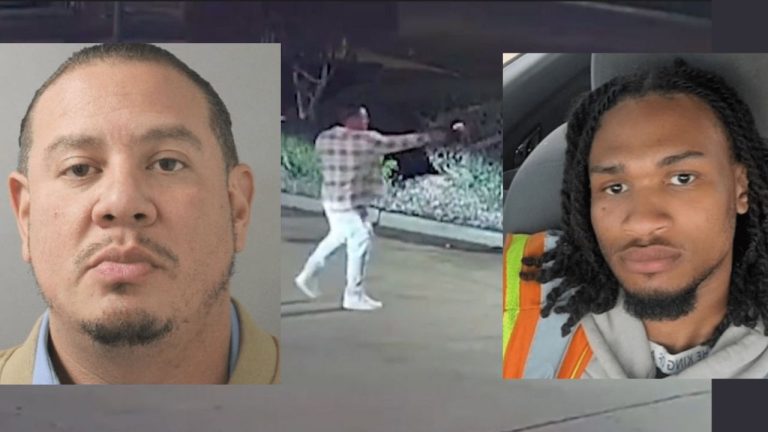
A Florida man pardoned by Biden later faced state charges tied to the same case
A Florida clemency case that once looked like a clean second chance has turned into a test of how far presidential mercy really reaches. Oscar Freemond Fowler walked out of federal custody after President Joe Biden commuted his sentence, only to be arrested days later on state charges that trace back to the same underlying conduct.
The clash between federal clemency and state authority has now become a political flashpoint in Florida, a legal stress test of the Supreme Court’s dual sovereignty doctrine, and a warning about the limits of what a president’s signature can actually guarantee.
The man at the center: Oscar Freemond Fowler
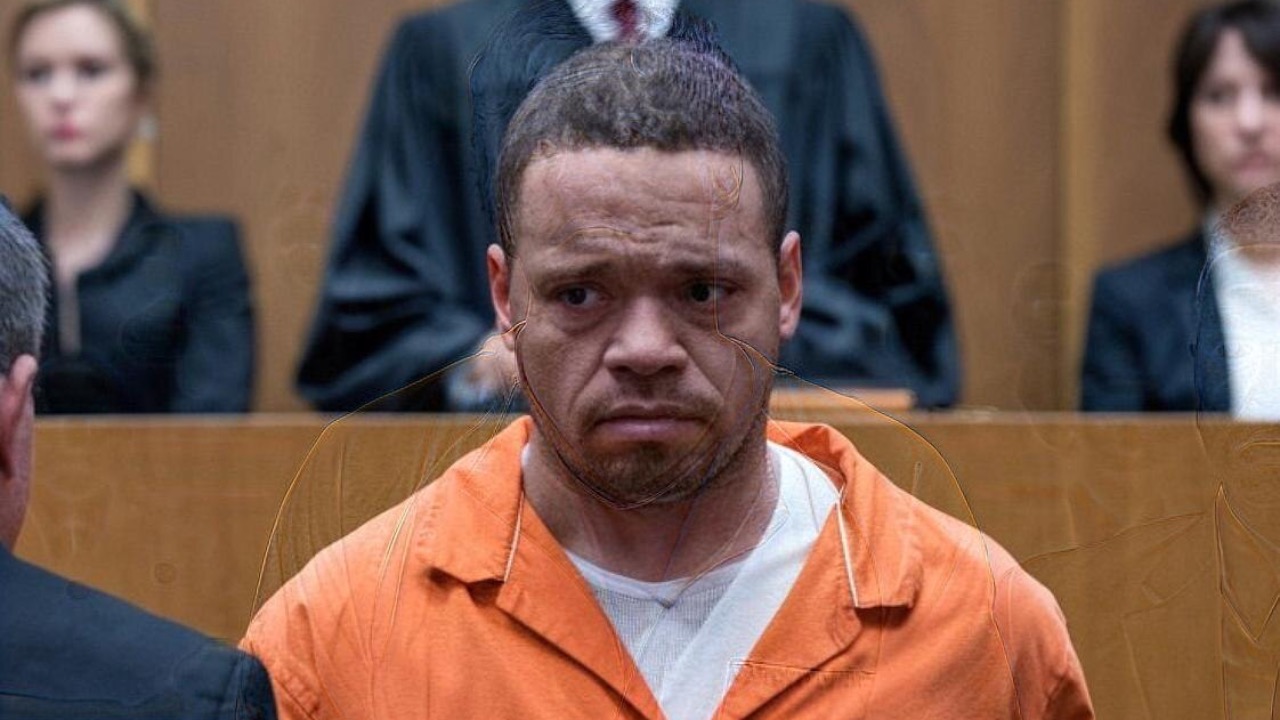
Oscar Freemond Fowler is not a first-time offender swept up in a technicality. Reporting describes him as a convicted felon with a criminal history stretching over more than a decade, including prior narcotics and firearms offenses that built the foundation for his later federal case. According to state officials, Fowler had become a familiar name in Florida’s criminal system long before his federal conviction.
That federal case stemmed from his status as a felon in possession of a firearm. Fowler pleaded guilty in 2024 to the federal weapons charge and received a 12 year, 6 month prison sentence, a substantial term that reflected both the firearm offense and his prior record. Coverage of the case notes that his history included cocaine trafficking allegations, which helped drive the length of the federal sentence and cemented his reputation among law enforcement as a repeat offender.
By early 2026, however, Fowler’s name would be known far beyond court dockets and police briefings. His case would be pulled into the national debate over Biden’s use of clemency, Florida’s aggressive posture on crime, and the legal space where federal forgiveness meets state power.
Biden’s late-term clemency and the autopen controversy
In the final days of his administration, Biden approved a wave of commutations and pardons that included Fowler. The White House used an autopen to execute many of those clemency documents, a mechanical device that reproduces the president’s signature once he has authorized its use. That method is not new in Washington, but its application to a large batch of criminal cases quickly became a political target in Florida.
State officials say Fowler’s federal sentence was cut short through one of those autopen actions, which allowed him to walk free years before his projected release date. The decision instantly placed him at the center of a broader fight over what critics describe as a rushed clemency push in the closing days of the Biden Administration.
Florida Attorney General James Uthmeier seized on the issue in Feb when he announced Fowler’s arrest and simultaneously ordered a sweeping review of the federal actions. Uthmeier said he had directed the Office of Statewide Prosecution to examine every auto penned commutation and pardon from the Biden Administration, casting the move as a public safety measure and a response to what he framed as a breakdown in federal screening. His announcement, described in a detailed state news release, turned a single clemency case into a statewide audit of presidential mercy.
Critics of the administration argue that the use of the autopen in this context, especially for individuals with extensive records like Fowler, reflects an impersonal and overly broad approach to freedom decisions. Supporters of clemency counter that the president retains full constitutional authority to commute sentences and that the method of signing does not change the legal force of those acts. In Fowler’s case, however, the debate would soon shift from process to consequences.
Four days of freedom and a new arrest
Fowler’s time outside custody was remarkably brief. According to detailed accounts, Oscar Freemond Fowler was a free man for only four days. He was released from federal custody on February 19, then taken back into custody soon afterward as Florida authorities moved on a new set of state charges tied to the same underlying conduct.
Those charges center on firearms and narcotics. State officials say Fowler was charged with possessing a firearm as a convicted felon and with drug offenses that include intent to sell or distribute. Local reporting specifies that he was arrested by the St. Petersburg Police Department on two counts related to intent to sell and deliver cocaine, along with a state felon in possession count. The quick turnaround from federal release to state arrest gave Florida officials a vivid example for their critique of Biden’s clemency choices.
In a public statement, Uthmeier described Fowler as a “dangerous criminal” and argued that freeing him through a federal commutation had put Floridians at risk. The attorney general’s office framed the case as proof that the Biden Administration’s use of the autopen was not just a procedural quirk but a decision with immediate safety implications for communities in Florida.
What the new state case looks like
The state case against Fowler is severe on its face. Florida officials say that if he is convicted of the new charges, he faces up to 45 years in the Florida Department of Corrections. That figure appears in multiple public statements about the case, and the number 45 has become a shorthand in Florida political rhetoric for the stakes of the prosecution.
Local coverage from St. Petersburg describes how Fowler was taken into custody Monday by the St. Petersburg Police Department and booked on state charges that mirror the conduct underlying his federal conviction. Those reports recount that officers recovered a firearm and cocaine, and that prosecutors charged him with two counts of intent to sell and deliver narcotics along with the weapons offense.
The potential 45 year exposure under Florida law is far longer than the 12 year, 6 month federal sentence that Biden shortened. It reflects the state’s sentencing structure for repeat offenders in gun and drug cases, as well as the discretion prosecutors have when stacking counts. For Florida officials, that maximum term is central to their argument that state courts, not the White House, should have the final word on someone with Fowler’s record.
At the same time, the new prosecution raises questions about proportionality and double punishment. Fowler already admitted guilt in federal court for being a felon in possession of a firearm. The state case now seeks to impose its own penalty for overlapping conduct, which is legally permissible but politically fraught.
How the Supreme Court made this possible
The legal foundation for Florida’s move comes from a 2019 decision by the Supreme Court in Gamble v. United Sta. In that case, the Court reaffirmed the “separate sovereigns” doctrine, which holds that the federal government and the states are distinct legal entities that can each prosecute the same person for the same underlying act without violating the Constitution’s protection against double jeopardy.
In plain terms, Gamble v. United Sta says that a federal conviction does not bar a state from bringing its own case based on the same conduct, and vice versa. The opinion confirmed that the Double Jeopardy Clause applies only within a single sovereign’s system, not across federal and state lines. Legal analysts have cited that ruling in explaining why Florida can proceed against Fowler even after his federal case was resolved and his sentence commuted.
One analysis of the Fowler case notes that the 2019 Supreme Court ruling provides the legal basis for his rearrest on the same charges, since each sovereign is entitled to enforce its own criminal laws regardless of what the other has done. The same coverage points out that the doctrine applies even when the federal government has granted clemency, because a commutation affects only the federal sentence, not any potential state liability.
That logic is at the heart of the current standoff. The federal government, acting through Biden’s clemency power, decided Fowler should no longer serve a 12 year, 6 month term in federal prison. Florida, invoking its own sovereignty and relying on Gamble, is now seeking to impose a separate punishment that could reach 45 years. The law allows that tension, but it also exposes how fragmented American criminal justice can be.
The political fight in Florida
Florida’s response to Fowler’s release has been as political as it is legal. Attorney General James Uthmeier has used the case to attack Biden’s broader clemency agenda and to argue for a tougher state posture toward federally released offenders. In his Feb announcement, Uthmeier said he had ordered the Office of Statewide Prosecution to review every auto penned commutation and pardon from the Biden Administration, signaling that Fowler might be only the first of several high profile confrontations.
The attorney general’s office has also highlighted the case through official channels, including a detailed announcementthat framed Fowler as a “dangerous criminal” whose release was a direct result of Biden’s decisions. That framing has been echoed in conservative media, which has described Fowler as a “career criminal” and used his case to question the vetting behind the clemency push.
Local outlets in Florida have added another layer, quoting officials who say The Biden Administration’s use of the autopen is putting Floridians at risk by allowing dangerous felons back on the street. One report from Pinellas County highlighted that The Biden clemency decision was followed within days by Fowler’s arrest in St. Petersburg, a timeline that state officials treat as evidence of flawed judgment in Washington.
On the other side of the debate, supporters of clemency argue that individual bad outcomes should not dictate national policy on mercy, especially for nonviolent offenders. They point out that presidents of both parties have used clemency to correct harsh sentences and that the vast majority of beneficiaries do not return to serious crime. In Fowler’s case, however, the political narrative in Florida has focused almost entirely on risk and on the symbolism of a man freed by Biden who is now facing up to 45 years in state prison.
Federal mercy, state power, and what Fowler’s case signals
The Fowler saga captures a broader structural reality about American criminal law. A presidential commutation can shorten or erase a federal sentence, but it cannot erase state charges, prevent future state prosecutions, or guarantee that a person will not face new legal jeopardy for the same conduct. Gamble v. United Sta did not create that arrangement, but it confirmed and strengthened it.
For defendants, that means federal clemency is only one piece of the puzzle. A person with exposure under both federal and state law can receive mercy from Washington and still face a lengthy state term, as Fowler’s potential 45 year sentence in the Florida Department of Corrections makes clear. For policymakers, the case raises the question of whether federal and state authorities should coordinate more closely when presidents consider clemency for individuals with significant state exposure.

Leo’s been tracking game and tuning gear since he could stand upright. He’s sharp, driven, and knows how to keep things running when conditions turn.