Animals behaving in ways scientists didn’t expect
From mountain rivers to farmyards and city parks, animals keep challenging neat scientific categories. Behaviors once thought impossible for certain species are turning up on camera and in field notebooks, forcing researchers to rethink how animals solve problems, respond to humans and even play.
Recent reports describe fish climbing waterfalls, bees rolling balls for no obvious reward and cows manipulating objects like tools. Taken together, these discoveries suggest that intelligence, flexibility and curiosity are more widely shared across the animal kingdom than many scientists once assumed.
Bumblebee catfish that climb waterfalls
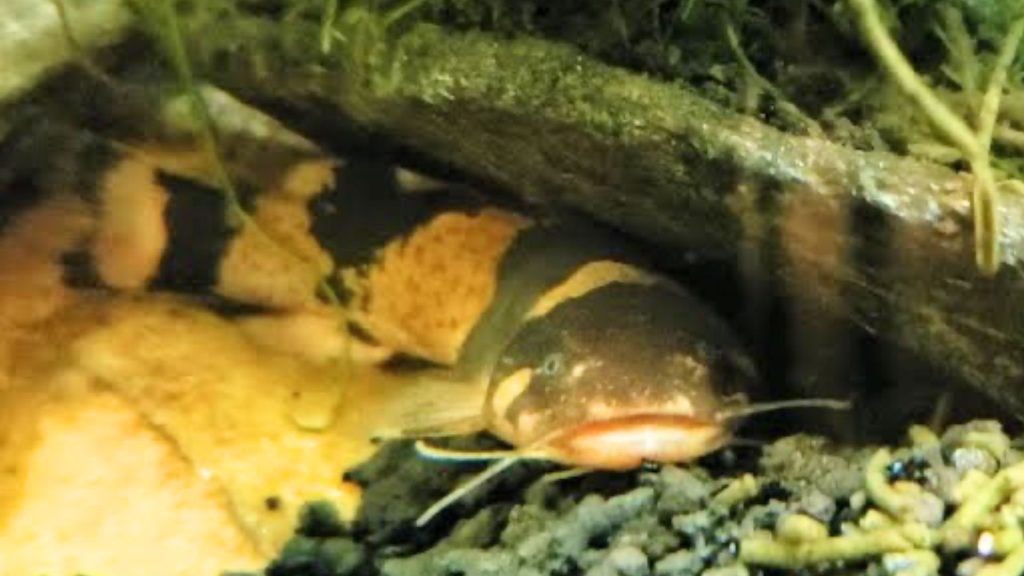
Among the most striking new observations is a “massive aggregation” of small bumblebee catfish seen scaling waterfalls in Brazil. Scientists watching the South American species Rhyacoglanis paranensis described hundreds of individuals working their way up rock faces, apparently heading upstream to spawn. The fish pressed their bodies close to the wet stone and used rapid fin movements to inch upward, a behavior more often associated with salmon than with small tropical catfish.
Follow-up coverage framed these bumblebee catfish as part of a broader pattern of unexpected movement strategies. A later summary of 2025 fieldwork noted that “Remarkable animal behaviors emerged globally in 2025. Bumblebee catfish ascended waterfalls in Brazil, while Canadian wolves engineered new hunting tactics with human-made fishing equipment.” That account linked the Brazilian scene to a wider rethinking of how animals exploit human structures and natural obstacles to reach breeding grounds or food.
For river managers, the sight of Rhyacoglanis paranensis climbing vertical rock has practical implications. If small fish can traverse barriers that were assumed to be impassable, then models of gene flow, population connectivity and even hydropower impacts may need revision.
Bees that roll balls for fun
Bees already have a reputation for complex navigation and social communication, yet their apparent capacity for play has caught many researchers off guard. In one laboratory setup, scientists placed small wooden balls in a chamber near a feeding area used by bumblebees. The insects were trained to pass through the space to reach sugar water, but the balls were irrelevant to the reward.
Even after the experimenters removed any incentive to touch the objects, the bees kept returning to roll the balls. According to a description of the work, “To prove this researchers conducted some experiments with wooden balls. They had small wooden balls laying around in a chamber the bees had to pass through to get to a feeding area.” The account credits HaDi MaBouDi and Lars Chittka with the design, and notes that the bees continued the behavior even when it cost them time.
The study adds a new layer to what is already known about bumblebees. Earlier work had shown that these insects can learn simple rules and navigate complex mazes. The ball rolling suggests that at least some individuals engage in actions that resemble play, with no clear survival payoff. That possibility strengthens arguments that insects can experience something like enjoyment or curiosity, topics that were once confined to studies of mammals and birds.
Cows caught using tools
Another surprise arrived from a far more familiar animal. In a widely shared report, scientists were amazed because tool use is usually associated with animals like monkeys, crows and dolphins. Cows, often seen as passive grazers, were filmed manipulating objects in ways that appeared deliberate and goal directed.
The footage, highlighted in a social media post that opened with “Scientists didn’t expect this but they caught it on camera,” showed cows interacting with items in their environment to solve practical problems. The report framed this as a direct challenge to long standing assumptions about cattle cognition, which has typically been studied in the context of welfare and productivity rather than innovation.
These observations fit a broader critique summarized in a reflection that began, “My primary complaint was that animal behaviorists were very slow to acknowledge intelligence and consciousness in animals. Things have changed, but there is still a long way to go.” The author invoked Douglas Adams’ famous joke about humans and dolphins to argue that dismissing everyday animals as simple-minded risks blinding science to much of how they could develop.
Singing mice and scheming ants
Not all surprises involve large bodies or dramatic landscapes. Researchers working with laboratory rodents have known for years that mice vocalize at high frequencies, but closer analysis has revealed that male mice serenade females with complex songs as part of their courtship rituals. A feature on unexpected animal behavior described how mice produce structured sequences of notes that qualify as song by several scientific definitions. Male individuals vary their patterns depending on social context, although humans cannot hear these performances without special equipment. “Male mice serenade females with complex songs as part of their courtship rituals. Sadly, we can’t hear these romantic displays unaided,” the report explained.
In the insect world, scientists have recently documented queens of two ant species, Lasius orientalis and Lasius umbratus, taking over other colonies in a form of social parasitism. A summary of these findings noted that parasitic ants grab power by infiltrating foreign nests and displacing an otherwise indispensable mother. The behavior reveals a level of strategic aggression and social manipulation that had not been fully appreciated in these particular species.

Asher was raised in the woods and on the water, and it shows. He’s logged more hours behind a rifle and under a heavy pack than most men twice his age.