Authorities shut down unapproved lake search, fueling speculation
Authorities in Los Angeles abruptly halted an unapproved search of a notorious urban lake, turning a local curiosity into a flashpoint over transparency, safety and who gets to investigate suspected crimes. The shutdown has stirred speculation among residents who have long traded stories about what might lie beneath the murky water and now wonder why officials moved so quickly to stop a private effort to find out.
At the same time, the episode taps into a broader national anxiety about hidden threats in and around lakes, from urban parks to remote border waters. As officials clamp down on unsanctioned searches, they are trying to balance public safety and investigative integrity against a public appetite for answers that official channels have not fully satisfied.
The businessman, the lake and a city’s uneasy curiosity
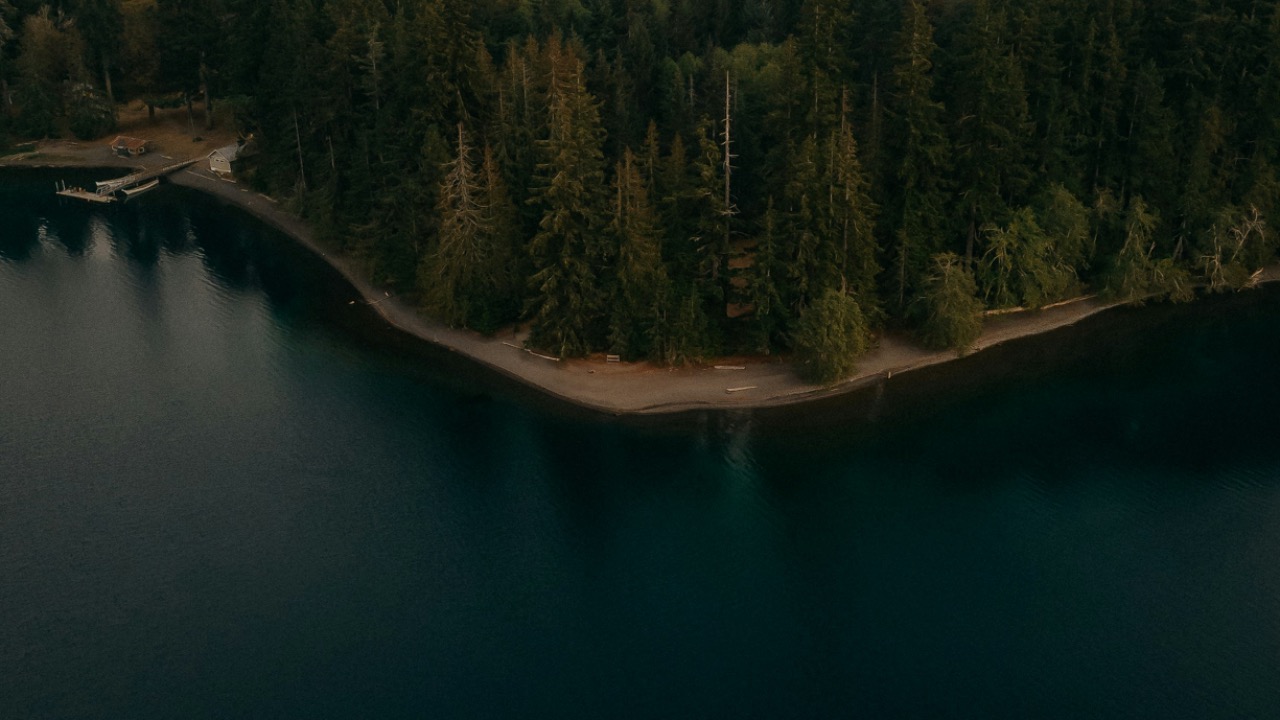
The confrontation at the water’s edge began with a local businessman who decided to act on long standing rumors that bodies and weapons had been dumped in a lake at MacArthur Park. Residents in LOS ANGELES have heard variations of these stories for years, and the businessman’s plan to use his own resources to scan the lake promised, at least in theory, to test whether the whispers matched reality. When Authorities intervened and ordered him to stop, the move instantly reframed his project from a quirky civic crusade into a contested moment about who controls access to potential evidence.
MacArthur Park has long been a symbol of both neighborhood resilience and official neglect, a place where families picnic a short walk from corners known for drug dealing and occasional violence. The idea that the lake itself might hold physical traces of that history, including possible bodies and guns, has given the water an almost mythic status in local lore. By shutting down the businessman’s search of the lake at MacArthur Park for bodies and guns, officials did more than enforce a rule, they interrupted a rare attempt by a private citizen to test the stories that have shaped how many Angelenos see this patch of green in the middle of the city.
How officials justified the shutdown
From the perspective of city and law enforcement leaders, allowing an unsanctioned sweep of a suspected dumping ground would have been a serious breach of protocol. Authorities are responsible for securing potential crime scenes, preserving evidence and ensuring that any search is conducted by trained personnel who understand chain of custody rules. When they stepped in to halt the businessman’s effort in LOS ANGELES, they signaled that even a well intentioned private search could contaminate evidence, compromise future prosecutions or put untrained volunteers at risk in a lake that may contain hazards beyond what is visible from the shore.
Officials also have to weigh liability and public safety in a park that draws families, commuters and unhoused residents throughout the day. Allowing a private team to deploy equipment in the water without formal oversight could expose the city to legal claims if someone were injured or if property were damaged. By asserting control over the lake and insisting that any search be coordinated through official channels, Authorities framed their intervention as a necessary step to protect both the integrity of potential investigations and the safety of everyone who uses MacArthur Park.
Why the public suspects more than safety is at stake
For many residents who watched the episode unfold, the rapid shutdown of the search looked less like routine risk management and more like an attempt to keep uncomfortable truths buried. Communities that have lived with crime and uneven policing often view sudden bursts of procedural rigor with skepticism, especially when those procedures appear only after a private effort threatens to expose what might be in the water. In that context, the businessman’s thwarted plan has become a proxy for deeper questions about whether officials are truly committed to uncovering whatever lies beneath the surface of the lake.
That skepticism is amplified by the park’s history as a gathering place for people who feel overlooked by city institutions, from street vendors to day laborers and families squeezed by rising rents. When Authorities move decisively to stop a search but seem slower to address everyday safety concerns, it feeds a narrative that the system is more interested in controlling information than in delivering justice. The result is a surge of speculation, with residents trading theories about what might have been found if the businessman had been allowed to continue and whether the shutdown was really about safety or about shielding past failures from view.
MacArthur Park’s long shadow in Los Angeles
To understand why this particular lake search resonated so strongly, it helps to see MacArthur Park as more than a backdrop. The park sits in a dense, immigrant rich stretch of LOS ANGELES where public space doubles as living room, marketplace and refuge. Over decades, it has been the site of protests, cultural festivals and high profile clashes, including moments when police tactics came under intense scrutiny. That layered history means any new confrontation between residents and Authorities in the park carries echoes of earlier battles over who is welcome, who is watched and whose concerns are taken seriously.
The lake itself is central to that story. It is a defining feature of the neighborhood’s geography, a body of water ringed by palm trees and apartment buildings that has appeared in films, music videos and political rallies. Yet it has also been a dumping ground, both literally and figuratively, for problems the city has struggled to solve. When a local businessman tried to search the lake at MacArthur Park for bodies and guns, he was tapping into a widely shared sense that the water might hold clues to crimes that never received closure. The decision to halt that search therefore landed not as a narrow regulatory call but as another chapter in a long running debate over transparency and accountability in one of the city’s most scrutinized public spaces.
From LA’s lake to a national pattern of guarded waters
The tension between public curiosity and official control at MacArthur Park mirrors a broader national pattern in how authorities manage sensitive activity around lakes and waterways. In recent years, federal and state agencies have treated certain bodies of water as potential theaters for security threats, from smuggling to surveillance, and have responded aggressively when they perceive an unvetted risk. That instinct to secure the perimeter, whether around an urban park lake or a remote border reservoir, often leaves local communities feeling excluded from decisions that directly affect their environment.
One high profile example unfolded over Lake Huron, where an unidentified object was tracked and then shot down after officials determined it posed a potential hazard. The incident, which became the fourth such downing since Feb. 4 of that year, underscored how quickly the government is willing to act when it believes the airspace above a lake could be compromised. In that case, the decision to destroy the object over water was framed as a way to minimize risk to people on the ground, but it also meant that key details about what was targeted and why remained literally submerged, accessible only to specialized recovery teams.
Security, secrecy and the Lake Huron precedent
The Lake Huron episode highlighted how national security concerns can justify a high degree of secrecy around what happens in and above major waterways. After the unidentified object was downed, officials offered limited public information while specialized units worked to locate and retrieve debris from the lake. That approach, which prioritized controlled recovery over public visibility, parallels the instinct local Authorities showed in LOS ANGELES when they moved to prevent an unsanctioned search of MacArthur Park’s lake. In both cases, the message was clear: sensitive operations on or under the water are the domain of vetted teams, not private actors.
Political oversight of these decisions has been intense. Rep. Mike Turner, who serves as chairman of the House Intelligence Committee, publicly questioned whether the administration had become, in his words, somewhat trigger happy in its response to unidentified objects over North American airspace. His criticism captured a broader unease about how quickly officials resort to force or strict control when confronted with ambiguous threats. The Lake Huron incident, which followed several other shoot downs since Feb. 4, showed how rapidly security agencies can escalate when they perceive risk, even as lawmakers and the public push for more transparency about what was actually in the sky and why it warranted such a response.
Who gets to search, and who gets to know
When I look at the clash in MacArthur Park alongside the Lake Huron precedent, a common thread emerges around who is trusted to look for answers and who is expected to accept them secondhand. In both situations, officials asserted that only trained, authorized teams should conduct searches, whether for bodies and guns in an urban lake or for debris from an unidentified object in a vast inland sea. That stance is grounded in real concerns about safety and evidence handling, yet it also concentrates power over information in the hands of a relatively small circle of agencies and contractors.
For residents around MacArthur Park, that concentration of control can feel like a continuation of long standing patterns in which communities are asked to live with the consequences of crime and enforcement but are rarely invited into the investigative process. For people watching events over Lake Huron, the pattern plays out at a national scale, with the public learning about unidentified objects and shoot downs only through carefully curated briefings. In both cases, the core question is not just whether Authorities are doing their jobs, but whether they are willing to share enough about those jobs to earn lasting trust.
The geography of suspicion, from city park to border lake
Geography shapes how these tensions play out. MacArthur Park sits in the heart of LOS ANGELES, surrounded by dense housing, small businesses and transit lines, which means any visible police action or unusual activity on the lake quickly becomes neighborhood news. The businessman’s attempt to search the water unfolded in full view of passersby, smartphone cameras and local gossip networks, so the decision to halt his work immediately fed a cycle of speculation. In a place where residents already feel that their neighborhood is under constant surveillance yet under protected, the sight of Authorities shutting down a search struck many as a symbol of skewed priorities.
By contrast, the downing of an unidentified object over Lake Huron occurred in a vast, sparsely populated environment where direct public observation was limited. Recovery operations took place far from most communities, and information flowed primarily through official briefings rather than eyewitness accounts. Yet even there, the combination of limited visibility and high stakes fueled suspicion about what was really in the sky and how the government chose to respond. Whether in a crowded city park or over a remote border lake, the less people can see for themselves, the more they are inclined to fill the gaps with their own theories.
Historical layers beneath the surface
Lakes that become flashpoints for controversy rarely start as blank slates. MacArthur Park’s lake is part of a broader landscape of Los Angeles history that includes waves of migration, political protest and cultural reinvention. The park’s surroundings have been documented in everything from city planning records to cultural archives, including references in resources that catalog notable places like MacArthur Park itself. Those layers of meaning make the water more than a physical hazard zone; it is also a repository of memory, rumor and unresolved stories that residents carry with them every time they walk past the shoreline.

Asher was raised in the woods and on the water, and it shows. He’s logged more hours behind a rifle and under a heavy pack than most men twice his age.